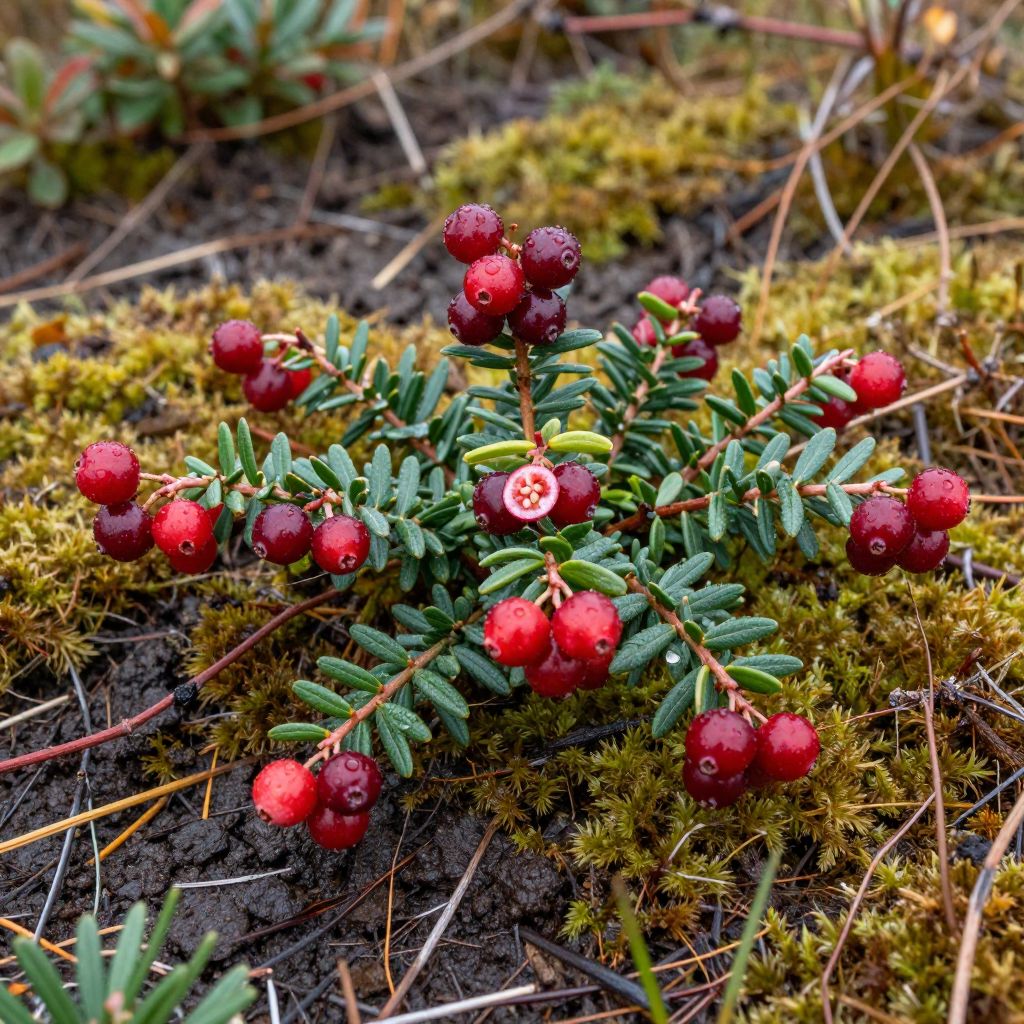
Do cranberries have seeds? Yes—cranberries do have seeds, and they’re part of the fruit’s normal development. If you cut open a cranberry, you’ll usually find several small seeds inside, though they’re tiny and not very noticeable when the berries are used fresh or processed.
For gardeners, the more important question is how cranberries grow, how to start them, and what conditions they need to produce fruit. Cranberries are a specialized bog plant, so success depends less on the seeds themselves and more on giving the plant the right acidic, moist, sunny environment.
Do cranberries have seeds?
Yes. Cranberries (Vaccinium macrocarpon) contain small seeds inside each berry, usually more than one per fruit. The seeds are edible, but they are soft and easy to miss. In home gardening, cranberries are usually grown from cuttings or established plants rather than from seed because seed-grown plants take much longer to mature.
What cranberry seeds are like
Cranberry seeds are tiny, pale, and embedded in the flesh of the berry. They are not hard like pits, and they do not usually affect eating quality. In most cases, you’ll only notice them if you slice the fruit open or if you’re trying to save seed for propagation.
Why you rarely hear about cranberry seeds
- They are small and unobtrusive, so they do not stand out in the fruit.
- Commercial growers usually propagate cranberries vegetatively, not from seed.
- Seed-grown plants are slower and less predictable than rooted cuttings.
Can you grow cranberries from seed?
You can, but it is usually not the easiest route for home gardeners. Cranberry seed germination can be slow and uneven, and seedlings may take several years before they are large enough to fruit. If you want a practical harvest, buying healthy plants or rooted cuttings is usually the better choice.
When seed propagation makes sense
- You want to experiment with propagation as a learning project.
- You have access to fully ripe fruit and can handle slow germination.
- You do not mind waiting a long time for results.
Best growing conditions for cranberries
Cranberries need conditions that mimic their natural bog habitat: acidic soil, consistent moisture, full sun, and good drainage. They do not grow well in ordinary garden soil unless it has been adjusted and kept evenly moist. The root zone should stay damp, but not waterlogged for long periods.
Soil and pH
- Use acidic soil with a low pH, ideally in the range cranberries prefer.
- A mix rich in organic matter can help, but it must still drain well.
- Avoid heavy clay unless you are growing in a raised bed or specially prepared area.
Sunlight
Cranberries produce best in full sun. A site with at least 6 hours of direct light is a good target in many climates. In hotter regions, a little afternoon protection may help prevent stress, but too much shade usually reduces flowering and fruiting.
Moisture and drainage
Moisture is essential, but standing water can cause root problems if drainage is poor. The goal is steady moisture with enough air around the roots. If your soil holds water for long periods, consider a raised bed, berm, or container setup designed for acid-loving plants.
How to plant cranberries successfully
Because cranberries are not a typical backyard crop, planting them correctly matters more than simply dropping them into the ground. Start with healthy plants, prepare acidic soil, and keep the root area weed-free. Small planting mistakes can slow growth for a long time.
- Choose a sunny site with acidic, moisture-retentive soil.
- Clear weeds and grass thoroughly before planting.
- Work in organic matter that suits acid-loving plants, if needed, while keeping drainage in mind.
- Set plants at the same depth they were growing previously.
- Water well after planting so the root zone settles evenly.
- Mulch lightly with an acid-friendly material to help conserve moisture and suppress weeds.
Container growing option
If your garden soil is unsuitable, cranberries can be grown in a large container or raised bed. Use a deep, wide planter with drainage holes and an acidic growing mix. Containers dry out faster than ground beds, so you’ll need to monitor moisture carefully during warm weather.
Watering and maintenance tips
Cranberries need consistent moisture, especially while establishing and during fruit development. The soil should feel evenly damp, not dusty dry. At the same time, avoid letting the plant sit in stagnant water unless you are using a specialized bog-style setup that is designed for that purpose.
Practical watering habits
- Check the soil with your finger before watering.
- Water deeply when the top layer begins to dry.
- Mulch to slow evaporation and reduce temperature swings.
- Adjust often during heat, wind, or container growing.
Feeding the plants
Cranberries are light feeders compared with many vegetables and ornamentals. Too much fertilizer can push leafy growth at the expense of fruit and may harm the plant. If your soil is already rich, you may need very little feeding; if it is poor, use a product appropriate for acid-loving plants and follow label directions carefully.
Pruning and vine care
Cranberries grow as low, trailing vines. Light pruning helps keep them productive and prevents the bed from becoming overly tangled. The goal is not to shape them like shrubs, but to encourage healthy runners and renewal growth.
What to remove
- Dead, damaged, or weak stems.
- Overly dense growth that blocks light and airflow.
- Weeds that compete with the vines for moisture and nutrients.
Good airflow helps reduce disease pressure, especially in damp climates. Keep the bed tidy, but avoid aggressive cutting that removes too much healthy growth at once.
Common pests and diseases
Cranberries can face problems from insects, fungal diseases, and poor growing conditions. Many issues start when the bed stays too wet, too crowded, or too shaded. Healthy plants in the right site are much less likely to struggle.
Watch for these problems
- Fruit rot or moldy berries in persistently wet conditions.
- Leaf spotting or dieback when airflow is poor.
- Insect feeding on new growth or developing fruit.
- Weed competition, which is especially damaging in young plantings.
Simple prevention steps
- Keep the bed weed-free.
- Water at the base rather than soaking foliage unnecessarily.
- Space plants so air can move through the bed.
- Remove damaged fruit and stems promptly.
Harvesting cranberries
Harvest timing depends on variety and climate, but ripe cranberries are typically firm and fully colored. Do not assume every red berry is ready at the same time. Taste and texture matter, and some berries may color before they are fully mature.
How to tell they are ready
- The berries have reached their mature color.
- They feel firm rather than soft.
- They detach with a gentle tug or are easy to pick cleanly.
If you are growing cranberries for the first time, expect modest yields at first. Young plants often spend more energy establishing runners than producing a heavy crop.
Common mistakes to avoid
Most cranberry growing failures come from treating them like ordinary garden berries. They are different enough that a standard berry patch approach often leads to weak growth or poor fruiting.
- Planting in neutral or alkaline soil without adjustment.
- Letting the bed dry out repeatedly.
- Using too much fertilizer.
- Growing in deep shade.
- Ignoring weeds, which can quickly overtake young vines.
- Expecting fast fruit from seed-grown plants.
Should you save cranberry seeds?
You can save seeds from ripe berries, but it is usually more of a propagation experiment than a reliable gardening method. If you do try it, use fully ripe fruit, clean the seeds carefully, and be prepared for slow, uneven germination. For most gardeners, rooted plants are the simpler and more dependable choice.
Conclusion
So, do cranberries have seeds? Yes, they do—but the real gardening challenge is not the seeds, it is meeting the plant’s needs for acidity, moisture, sun, and careful maintenance. If you want to grow cranberries successfully, start with healthy plants, prepare the site well, and keep the root zone evenly moist without letting it become soggy.
If you’d like to keep building your berry-growing skills, look for more guidance on acidic-soil plants, raised-bed growing, and caring for moisture-loving fruiting vines.