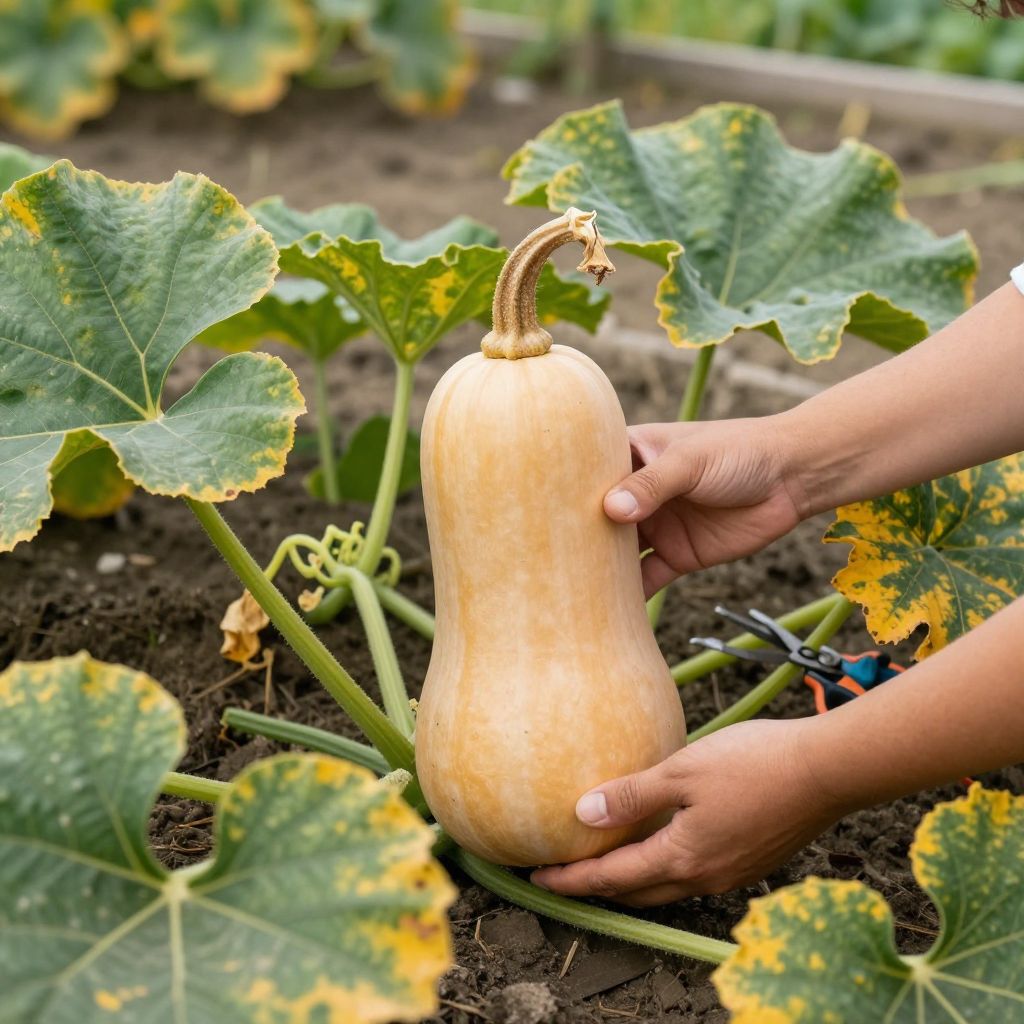
Wondering when to pick butternut squash so it’s sweet, fully mature, and stores well? The timing matters: harvest too early and the flesh can be bland and watery; wait too long and frost or rot can damage the fruit. The best cue is a combination of color, rind hardness, and the condition of the vine.
With a few simple checks, you can harvest at the right stage and avoid disappointing squash. Below, you’ll learn exactly what to look for, how weather affects timing, and how to cut, cure, and store butternut squash for the best quality.
When to pick butternut squash?
Pick butternut squash when the skin has turned a deep tan, the rind is hard enough that you can’t easily pierce it with a fingernail, and the stem is dry and corky. Most fruits are ready in late summer to fall, usually after they’ve fully matured on the vine and before hard frost threatens.
How to tell butternut squash is ready
Don’t rely on calendar dates alone. Different varieties, planting times, and weather patterns can shift harvest by weeks.
1. Check the color
Ripe butternut squash usually changes from pale green to a consistent tan or buff color. A little green tint near the stem can happen, but the fruit should look mostly mature and not glossy.
2. Test the rind
The skin should be firm and resistant. Press a fingernail into the rind; if it dents easily, the squash likely needs more time. A mature rind helps the squash store longer and reduces bruising during handling.
3. Look at the stem
A dry, woody, corky stem is a strong sign of maturity. If the stem is still green and flexible, the squash may still be sizing up and sweetening.
4. Judge the vine
When the vine begins to yellow, dry, or decline naturally, fruit often finishes ripening. That said, vine decline does not always mean every squash is ready, so check each fruit individually.
5. Use days to maturity as a guide, not a rule
Seed packets often list days to maturity, but weather, soil fertility, and growing conditions can speed up or slow down development. Cool summers, drought stress, or poor pollination can all delay harvest.
Seasonal timing: what month should you harvest?
In many gardens, butternut squash is harvested from late summer into fall. The exact month depends on when you planted, your climate, and how warm your season has been.
- Warm climates: Harvest may begin earlier if vines mature quickly.
- Cooler climates: Fruit may need a longer season and can be close to frost before it finishes.
- Short seasons: Early-maturing varieties are often the safest choice.
If frost is forecast and the squash is nearly mature, it’s usually better to harvest slightly early than to lose the crop. Light frost can damage vines and reduce storage quality, while a hard frost can injure the fruit itself.
How to harvest butternut squash correctly
Use clean, sharp pruners or a knife and leave a short stem attached to the fruit. A long stem helps prevent rot during storage, so handle the squash carefully and avoid twisting it off the vine.
- Choose a dry day if possible.
- Inspect the squash for mature color and a hard rind.
- Cut the stem, leaving about 1 to 2 inches attached.
- Lift and carry the fruit gently; don’t drag it by the stem.
- Set it down on a dry surface out of direct rain.
Never pull or break the squash from the vine if you can avoid it. A torn stem creates an easy entry point for rot and shortens storage life.
What if the squash is not fully ripe?
If frost is coming and the fruit is close to ready, you can still harvest it and let it cure indoors. Butternut squash picked a little early may not sweeten much after harvest, so the closer it is to maturity on the vine, the better.
Signs it was picked too early
- Pale or patchy skin
- Soft rind that dents easily
- Green, tender stem
- Watery flesh and weak flavor after storage
If the fruit is far from mature, it may not store well. In that case, use it sooner rather than expecting long keeping quality.
Curing butternut squash for better storage
Curing helps toughen the rind and heal small surface wounds. This step is especially useful if you want to store squash for weeks or months.
Basic curing steps
- Keep harvested squash in a warm, dry, well-ventilated place.
- Aim for temperatures around 80 to 85°F if possible.
- Allow good air circulation so the fruits don’t touch tightly.
- Cure for about 10 to 14 days, or until the rind feels firmer.
After curing, move the squash to a cooler storage area. A cool, dry space with moderate humidity is usually best, but avoid damp basements or places where condensation forms.
Common mistakes when deciding when to pick butternut squash
Many harvest problems come from judging by size alone. Large squash can still be immature, while smaller ones may be fully ready if the variety naturally stays compact.
- Picking by size only: Size varies by cultivar and growing conditions.
- Ignoring the stem: A green stem often means the fruit needs more time.
- Harvesting after heavy frost: Cold damage can shorten storage life.
- Leaving the stem too short: This can invite rot.
- Storing damaged fruit with healthy ones: One bad squash can spoil others nearby.
Growing conditions that affect harvest timing
Healthy vines tend to produce better-matured fruit on time. If your squash is slow to ripen, the issue may be in the growing conditions rather than the harvest window.
Sunlight
Butternut squash needs full sun for strong growth and fruit development. Less sunlight can delay ripening and reduce sweetness.
Soil and compost
Rich, well-drained soil with added compost supports steady growth. Too much nitrogen can cause lush vines with fewer mature fruits, so balanced soil is better than overly rich feeding.
Watering
Consistent moisture helps plants set and size fruit, especially during flowering and early fruit development. Irregular watering can stress vines and lead to poor fruit fill or premature decline.
Drainage
Poor drainage can weaken roots and encourage disease. Squash growing in soggy soil often struggles to finish fruit properly.
Pests and diseases that can affect ripening
Insect damage and disease can shorten the harvest window, so it helps to inspect vines regularly.
- Squash bugs: Can weaken vines and cause early decline.
- Cucumber beetles: May damage foliage and spread disease.
- Powdery mildew: Reduces leaf health and can limit fruit maturity.
- Vine borers: Can suddenly collapse plants and force an early harvest.
If vines are declining from pests or disease, harvest any fruits that are as mature as possible. Healthy-looking squash can still cure and store well if the rind is firm and the stem is intact.
How long will butternut squash store?
Properly cured and stored squash can last for weeks or even longer, depending on variety and storage conditions. The key is to keep the fruit dry, unbruised, and separated enough for air movement.
Check stored squash regularly. Use any fruit with soft spots, mold, or a shriveling stem first, since those are signs the squash is breaking down.
Quick harvest checklist
- The skin is deep tan or buff.
- The rind is hard and resists a fingernail.
- The stem is dry, woody, and attached.
- The fruit sounds dull rather than hollow when tapped.
- Frost is not imminent, or you’ve harvested ahead of it.
Final advice
The best time to pick butternut squash is when the fruit is fully colored, the rind is hard, and the stem has dried down. Check each squash individually, harvest before hard frost, and cure the fruits before storage for the best flavor and keeping quality.
If you’d like to improve next season’s harvest, it also helps to review how to grow squash in rich, well-drained soil and common squash pests and disease prevention so your vines have the best chance to mature on time.