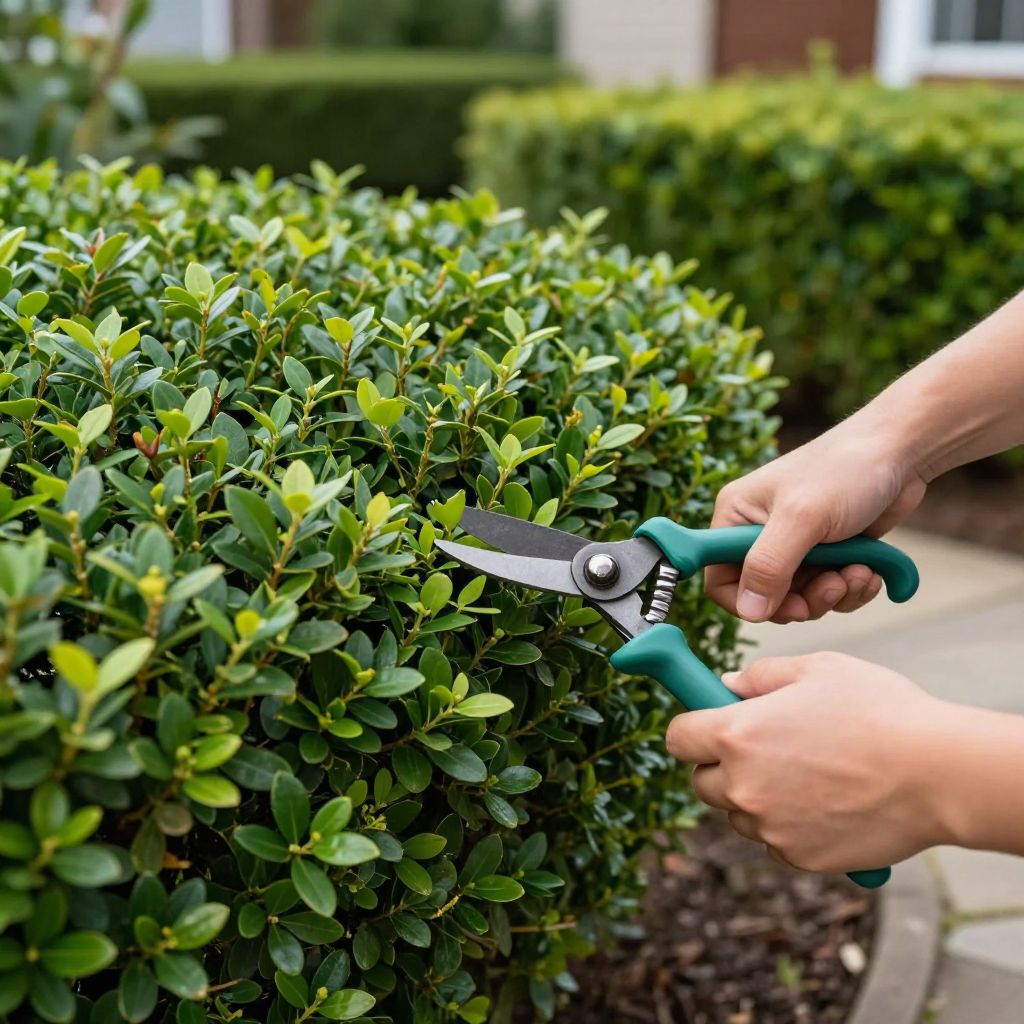
Wondering when to trim boxwoods so you keep their shape without stressing the plant? Timing matters because boxwoods respond best to light, regular pruning rather than hard cutting at the wrong season. The goal is to keep the shrub dense, healthy, and attractive while avoiding tender new growth that can be damaged by heat, cold, or drought.
In most gardens, the best time to trim boxwoods is in late spring to early summer, after the first flush of growth has finished. You can also do a light touch-up later in summer, but avoid heavy pruning in late fall or during extreme heat, because that can leave the plant vulnerable and slow to recover.
When to trim boxwoods?
The best time to trim boxwoods is usually after the spring flush of growth, once the new shoots have lengthened and the plant has settled into active growth. For most regions, that means late spring through early summer. Light shaping can be done again in mid- to late summer, but avoid major pruning in fall or winter.
Why timing matters for boxwood pruning
Boxwoods are slow to moderate growers, and they hold their shape well when pruned correctly. If you trim too early, a late frost can damage the fresh growth. If you trim too late, new shoots may not harden off before cold weather arrives.
Good timing also helps you avoid stressing the shrub during periods of heat or drought. Boxwoods can recover from pruning, but they do best when they have enough moisture and mild weather to push out new growth.
Best seasons for trimming
- Late spring: Ideal for the main shaping cut after the first growth flush.
- Early summer: Still a good window for light pruning and refining edges.
- Mid-summer: Acceptable for a small touch-up if needed, especially for formal hedges.
- Fall: Usually avoid major pruning, since tender growth may be damaged by cold.
- Winter: Avoid routine trimming unless you are removing broken, dead, or diseased branches.
How often should you trim boxwoods?
Most boxwoods only need pruning once or twice a year. Formal hedges may need a light trim more often to keep crisp lines, while foundation shrubs and specimen plants often look best with minimal pruning.
Less is usually better. Boxwoods keep their natural density when you trim them lightly and consistently instead of cutting them back hard all at once.
How to trim boxwoods the right way
Boxwoods respond best to careful shaping that preserves healthy foliage near the outer and inner parts of the plant. Try to avoid cutting deep into old bare wood unless you know the shrub can resprout from that area, because some boxwoods recover slowly from severe cuts.
Step-by-step pruning approach
- Inspect the shrub for dead, damaged, or diseased branches.
- Remove those problem stems first with clean, sharp pruners.
- Step back and decide the shape you want before making more cuts.
- Trim the outer growth lightly, shortening shoots to maintain form.
- Keep the top slightly narrower than the base so lower branches receive light.
- Make small, even cuts rather than removing large sections at once.
Tools that work best
- Hand pruners: Best for precise cuts on individual stems.
- Hedge shears: Useful for formal hedges or broad shaping.
- Loppers: Helpful for thicker stems that pruners cannot handle.
- Gloves: Good for protecting your hands from scratches and sap.
Keep tools sharp and clean. Clean blades make smoother cuts and reduce the chance of spreading disease from one plant to another.
How much can you cut back?
For routine maintenance, trim only the soft, current season’s growth. A light cut of a few inches is often enough to keep the shrub neat. If a boxwood has become overgrown, it is usually safer to renovate it gradually over several seasons rather than cutting it back severely in one year.
Severe pruning can leave boxwoods thin and patchy, especially if you cut into old wood with few leaves. If you need to reduce size significantly, remove a little at a time and watch how the plant responds.
What to avoid when trimming boxwoods
- Do not shear during extreme heat. Fresh cuts and tender growth can scorch more easily.
- Avoid pruning right before frost. New growth may be damaged before it hardens off.
- Do not remove too much at once. Heavy cutting can leave the shrub sparse and stressed.
- Avoid cutting into bare old wood unless necessary. Recovery may be slow or uneven.
- Do not prune a drought-stressed plant. Water it first and wait for better conditions if possible.
Boxwood care after trimming
After pruning, give the shrub steady moisture if the weather is dry. Boxwoods prefer evenly moist, well-drained soil, not soggy ground. A layer of mulch can help moderate soil temperature and conserve moisture, but keep mulch a few inches away from the stems.
If the plant is in full sun or exposed to wind, watch it more closely after trimming. Freshly cut shrubs can dry out faster, especially during hot spells.
Aftercare checklist
- Water deeply if rainfall is lacking.
- Check that the soil drains well and does not stay waterlogged.
- Mulch lightly to reduce moisture loss.
- Watch for browning, leaf drop, or patchy regrowth.
- Delay any additional pruning until the plant has recovered.
Common boxwood problems to watch for
Pruning is a good time to inspect boxwoods for pests and disease. Catching problems early can prevent them from spreading through a hedge or landscape bed.
Signs of trouble
- Yellowing or bronzing leaves: May point to stress, poor drainage, or winter damage.
- Leaf spotting or dieback: Could indicate disease, especially if branches are thinning.
- Webbing or chewing damage: May suggest insect activity.
- Interior leaf drop: Often caused by dense shading inside the shrub, which can be improved with light pruning and better air circulation.
If you suspect disease, remove affected debris and avoid pruning the plant when foliage is wet. Good airflow and careful sanitation help reduce spread.
Pruning boxwoods by plant type and use
Not all boxwoods need the same approach. A formal hedge, a rounded foundation shrub, and a small topiary each benefit from slightly different trimming habits.
Formal hedges
Trim these more regularly to maintain straight lines and even density. Keep the base wider than the top so sunlight reaches the lower branches.
Informal shrubs
Use selective pruning to preserve a natural shape. Remove only the shoots that break the outline or crowd the plant.
Topiary or clipped shapes
These need more frequent light trimming to preserve the design. Make small cuts often rather than waiting for a large flush of growth.
Can you trim boxwoods in summer?
Yes, but light summer pruning is best. If you trim in summer, do it on a mild day and avoid cutting during a heat wave or drought. Summer shaping works well for touch-ups, but it should not replace the main pruning window in late spring or early summer.
If your boxwood is newly planted, wait until it is established before doing much shaping. Young shrubs need time to root in before they can handle repeated pruning.
How to tell if your boxwood needs trimming
Boxwoods usually need pruning when they start to lose their clean outline, produce uneven shoots, or shade themselves too heavily. You may also notice the plant becoming wider at the top than the bottom, which can reduce light to the lower branches.
Trim when the new growth has softened the shape but before the plant becomes overgrown. That timing keeps the job small and helps the shrub look naturally tidy.
Final pruning tips for healthy boxwoods
The best rule for boxwood pruning is simple: trim after spring growth, keep cuts light, and avoid stressing the plant with harsh weather or severe cutting. A little regular shaping goes a long way toward keeping boxwoods dense, balanced, and attractive.
If you want to improve your shrubs this season, inspect them now, remove any dead wood, and plan your main trim for the next mild window in late spring or early summer. For more practical garden care, you may also find related advice in how to prune shrubs correctly and choosing the right mulch for landscape beds.