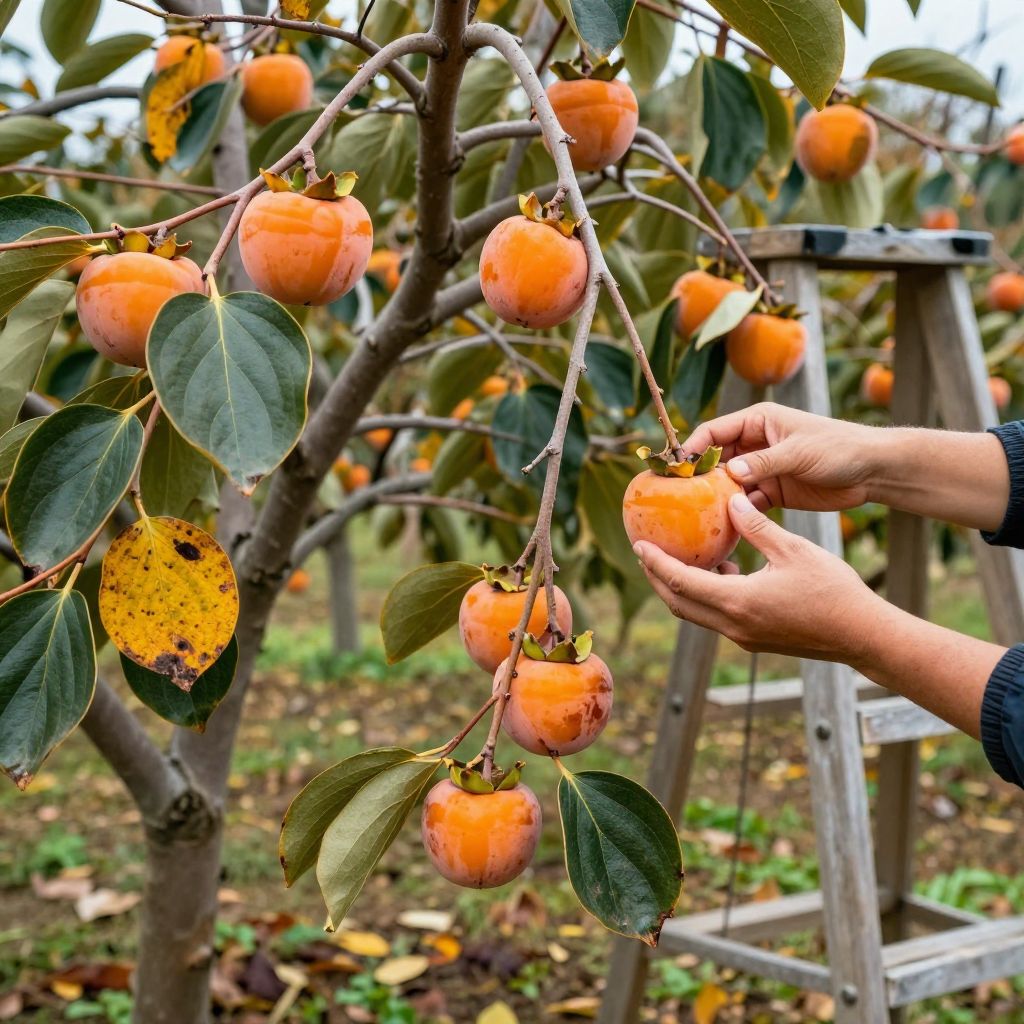
Wondering when are persimmons in season, and how to tell when the fruit is truly ready to pick? The short answer is that persimmons usually ripen in fall, but the exact window depends on the type of persimmon, your climate, and the weather that season.
If you grow persimmons, the best harvest timing is based on fruit color, softness, and flavor, not the calendar alone. A little patience pays off, because picking too early often leads to astringent, unpleasant fruit, while waiting for full maturity gives the best texture and sweetness.
When are persimmons in season?
Persimmons are typically in season from early fall into early winter, with harvest times often ranging from September through November in many climates. Asian persimmons (Diospyros kaki) usually ripen earlier than American persimmons (Diospyros virginiana), but local temperatures, tree age, and variety can shift the timing by several weeks.
How to tell when persimmons are ready to harvest
Do not rely on size alone. Persimmons are ready when they have developed full color, softening flesh, and a ripe flavor appropriate to the type you are growing.
For astringent persimmons
- Wait until the fruit is very soft, often nearly jelly-like.
- The skin should be fully colored, usually orange to deep orange-red.
- The fruit may be best picked after it softens on the tree or after a light frost, depending on the variety and climate.
For non-astringent persimmons
- They can be eaten when firm, but flavor improves as they fully color up.
- Look for glossy skin and a deep orange tone.
- Even firm fruit should feel heavy for its size and come off the stem easily when mature.
Important: Astringent persimmons are not pleasant until fully ripe. If you harvest them too early, the fruit can taste harsh and mouth-drying even if it looks colored.
What affects persimmon season timing?
The season can vary quite a bit from one garden to another. Your local climate, the type of persimmon, and how much sun the tree receives all influence ripening.
Climate and weather
- Warm regions often see earlier ripening.
- Cooler areas may push harvest later into autumn.
- A mild fall can extend the picking window, while an early hard freeze can shorten it.
Tree age and growing conditions
- Young trees may bear fewer fruit and ripen unevenly.
- Trees in full sun usually ripen fruit more reliably than trees in partial shade.
- Soil that drains well supports healthier roots and steadier fruit development.
Variety differences
Different cultivars ripen at different times, even within the same species. If you are planting a persimmon tree, check the expected harvest season for the cultivar before buying so you can match it to your climate and harvest goals.
Growing conditions that help persimmons ripen well
Healthy trees produce better fruit and more predictable harvests. Persimmons are fairly adaptable, but they perform best when their basic needs are met.
Sunlight
Give persimmon trees full sun for the best fruit quality. More light usually means better color development and sweeter fruit.
Soil and drainage
- Use well-drained soil to prevent root stress.
- Heavy, waterlogged ground can weaken growth and reduce fruit quality.
- Adding compost to poor soil can improve structure, but avoid overdoing it in already rich ground.
Watering
Young trees need consistent moisture while they establish, especially during dry spells. Mature trees are more drought-tolerant, but prolonged dryness can reduce fruit size and increase drop.
Water deeply rather than often and lightly. The goal is to moisten the root zone, then let the surface dry slightly before watering again.
Mulching
A 2- to 4-inch layer of mulch helps conserve moisture and moderate soil temperature. Keep mulch a few inches away from the trunk to reduce rot and pest problems.
How to harvest persimmons the right way
Harvesting carefully helps protect the fruit and the tree. Persimmons bruise easily when ripe, especially astringent types that are soft at peak maturity.
- Check fruit color and softness before picking.
- Use clean, sharp pruners or gently twist fruit from the stem if it releases easily.
- Handle ripe fruit lightly and place it in a shallow container.
- Sort out damaged fruit first, since bruised persimmons soften quickly.
If the fruit is high in the canopy, use a stable ladder and harvest on a dry day. Wet fruit is more slippery and more likely to bruise.
Common mistakes when judging persimmon season
Many gardeners miss the best harvest window because they expect persimmons to behave like apples or peaches. Persimmons have their own ripening habits.
- Picking too early: This is the most common mistake, especially with astringent types.
- Waiting only for a hard freeze: Frost may help in some climates, but it is not the only sign of ripeness.
- Ignoring fruit type: Astringent and non-astringent persimmons are harvested differently.
- Letting fruit overripe on the ground: Fallen fruit attracts pests and spoils quickly.
Pests and diseases that can affect harvest timing
Problems on the tree can delay ripening or reduce the quality of the crop. Regular inspection during late summer and fall helps you catch issues early.
What to watch for
- Birds and wildlife: Ripe fruit is attractive to birds, squirrels, and other animals.
- Fruit drop: Stress from drought, poor pollination, or weather swings can cause premature drop.
- Splitting or rot: Excess moisture and damaged fruit can lead to decay.
- Insect damage: Small punctures or feeding scars can shorten storage life.
Practical fixes
- Harvest promptly once fruit is ready.
- Remove fallen fruit from under the tree.
- Use netting if birds are taking too much of the crop.
- Keep the tree healthy with proper spacing, sun, and drainage.
Can you grow persimmons in a home garden?
Yes, persimmons can be a rewarding fruit tree for home gardens if you have enough space and the right climate. They are often valued for their ornamental shape, fall color, and relatively low maintenance once established.
Planting tips for better future harvests
- Choose a site with full sun and room for the mature canopy.
- Plant in soil that drains well and is not prone to standing water.
- Give young trees regular care during the first few growing seasons.
- Prune lightly to maintain structure and remove crossing or damaged branches.
Good early care helps the tree establish a strong framework, which can improve flowering and fruiting later on. A well-placed tree is also easier to harvest when the season arrives.
Pruning and maintenance for better fruiting
Persimmons usually do not need heavy pruning, but light annual maintenance can improve air circulation, reduce breakage, and make harvesting easier.
- Remove dead, damaged, or crossing branches during dormancy or after harvest, depending on your climate.
- Thin crowded growth to let light reach the interior canopy.
- Avoid severe pruning, which can encourage excessive leafy growth instead of fruiting.
Tip: If your tree is producing lots of leafy growth but little fruit, too much shade, overly vigorous pruning, or excess nitrogen may be part of the problem.
Storing persimmons after harvest
Once harvested, persimmons continue to soften, especially astringent types. How you store them depends on how ripe they are when picked.
- Keep firm fruit at cool room temperature until it softens.
- Refrigerate ripe fruit if you need to slow further softening.
- Check stored fruit often and remove any that show bruising or mold.
Do not pile soft persimmons deeply in a container. Shallow storage reduces bruising and helps you use the fruit before it breaks down.
Quick seasonal checklist for persimmon growers
- Watch for color change in late summer and fall.
- Test fruit softness before harvesting astringent types.
- Harvest promptly once fruit is fully ripe or nearly ripe, depending on cultivar type.
- Protect fruit from birds and falling damage.
- Keep the tree watered during dry spells and mulched for root health.
So, when are persimmons in season? In most gardens, expect the main harvest in fall, with exact timing shaped by your climate and the type of tree you grow. If you want a better crop next year, observe your tree this season, note when the fruit colors and softens, and adjust your care based on what you see. For more fruit-tree timing and care, you may also want to read our related guides on fruit tree pruning basics and how to improve garden soil drainage.