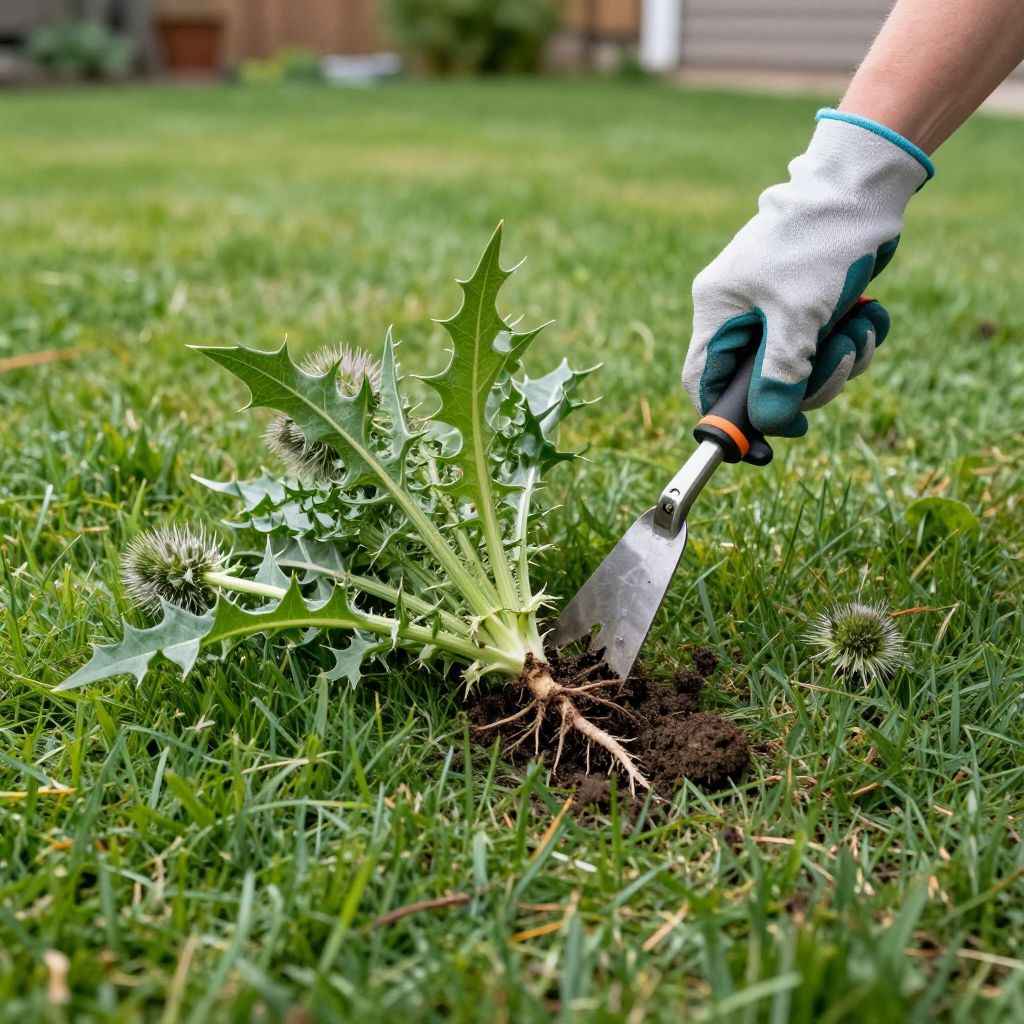
What kills thistles but not grass? The short answer is a selective broadleaf herbicide, used carefully so it targets thistles without harming your lawn. For many gardeners, the best long-term fix also includes digging out roots, mowing before seed heads form, and improving turf density so thistles have less room to return.
The right approach depends on the thistle type, how established it is, and whether you’re treating a lawn, pasture, or mixed planting. A good plan combines the right product or tool with timing, persistence, and follow-up.
What kills thistles but not grass?
Selective broadleaf herbicides containing ingredients such as 2,4-D, MCPP, dicamba, or triclopyr can kill many thistles without injuring established grass when used exactly as directed. They work best on actively growing thistles, especially when plants are young and before they flower. Always read the label first, because not every grass species tolerates every product.
Why thistles are so hard to control
Thistles are tough because many types have deep taproots, spiny leaves, and a strong ability to regrow if the root is left behind. Some also spread by seed very easily, so even one missed plant can create a larger problem next season.
Common thistle habits that matter
- Deep roots: pulling the top growth alone often leaves the plant alive.
- Seed spread: mature flower heads can release many seeds to wind and water.
- Rosette stage: young plants form a low circle of leaves before sending up stalks.
- Perennial regrowth: established plants can return from root pieces.
Best control options for lawns
If thistles are growing in grass, the most practical solution is usually a selective broadleaf herbicide labeled for lawn use. These products are designed to damage broadleaf weeds while leaving most turfgrasses unharmed.
What to look for on the label
- “Broadleaf weed killer” or “lawn weed control”
- Active ingredients such as 2,4-D, MCPP, dicamba, or triclopyr
- Use instructions for your specific turf type
- Warnings about temperature, rainfall, and reseeding intervals
Important: “Safe for grass” does not mean safe for every grass in every situation. New lawns, stressed lawns, warm-season turf, and specialty grasses may react differently, so the label matters more than the brand name.
When herbicides work best
- When thistles are young and actively growing
- When daytime temperatures are moderate, not extreme
- When the lawn is not drought-stressed
- When the plant has enough leaf area to absorb the spray
For larger patches, spot-treat individual plants instead of spraying the whole lawn. That reduces turf stress and helps protect nearby ornamentals, vegetables, and shrubs from accidental drift.
How to treat thistles without harming grass
Whether you use a spray, a spot treatment, or a hand tool, the goal is the same: damage the thistle’s growing points while keeping the turf as undisturbed as possible. A careful, repeatable method works better than a one-time heavy application.
- Identify the thistle. Make sure you are dealing with a broadleaf thistle and not another spiny weed.
- Treat early. Young rosettes are easier to control than tall, flowering plants.
- Pick calm weather. Avoid windy days to reduce drift onto desirable plants.
- Apply to actively growing foliage. Do not spray drought-stressed or recently mowed plants if the label advises against it.
- Repeat if needed. Some thistles need a follow-up treatment later in the season.
Application mistakes to avoid
- Spraying on a hot, windy day
- Using a non-selective weed killer near grass
- Applying too little or too much product
- Ignoring the label’s rainfast and mowing instructions
- Letting thistles go to seed before treatment
Non-chemical ways to remove thistles
If you prefer not to use herbicide, you can still reduce thistles, but you’ll need more patience and follow-up. Non-chemical methods work best on small infestations and young plants.
Digging and cutting
Use a sharp spade, dandelion fork, or weeding knife to remove as much root as possible. For taprooted thistles, loosen the soil first if it is dry and compacted, then lift the plant carefully so the root breaks as little as possible.
- Remove plants after rain or watering when soil is softer.
- Wear thick gloves and long sleeves to avoid spines.
- Bag seed heads immediately so they do not spread.
- Check the area again in a few weeks for regrowth.
Smothering and mowing
In non-lawn areas, repeated cutting or smothering can weaken thistles over time. In lawns, regular mowing helps prevent flowering and seed production, but mowing alone usually will not eliminate established perennial thistles.
How to keep thistles from coming back
Thistle control is easier when the lawn or garden is dense and vigorous. Bare soil, thin turf, and compacted ground give thistle seeds the open space they need.
Strengthen the grass
- Fill thin areas: overseed bare spots with a grass type suited to your climate.
- Aerate compacted soil: especially in heavily used lawns.
- Mow at the right height: taller grass shades weed seedlings better than scalped turf.
- Water deeply when needed: encourage deeper roots rather than frequent shallow watering.
- Avoid overfertilizing: too much nitrogen can weaken turf and favor weeds.
Healthy grass is one of the best long-term defenses against thistles. Even if you remove the current plants, bare or weak turf can quickly become reinfested from nearby seed sources.
Watch for seed heads
If you see thistle buds forming, remove the plant before the flowers open and set seed. This is especially important along fence lines, driveways, field edges, and neglected corners where weeds often start.
Special situations: flower beds, paths, and vegetable gardens
In beds and vegetable plots, you usually cannot rely on a grass-safe selective herbicide, because desirable plants are broadleaf too. In these areas, the safest options are hand removal, careful spot treatment with a non-selective weed killer only where no desirable plants are present, or mulching to block new seedlings.
Mulch and edging help
- Apply a clean mulch layer to reduce seed germination.
- Keep edges neat so thistles do not creep in from borders.
- Pull seedlings while they are small and before roots deepen.
In vegetable gardens, cultivate lightly and often enough to catch seedlings early. Do not let thistles mature between rows, because once they start flowering, control becomes much harder.
How to tell if your treatment worked
Successful thistle control usually shows up in stages. Leaves may yellow or curl, growth slows, and the center of the plant stops pushing new leaves. Complete death can take time, especially on larger or perennial plants.
Signs you may need a second round
- New leaves appear from the crown after treatment
- The plant stays green while surrounding weeds die
- Flower stalks keep developing
- Fresh seedlings appear nearby
If a plant survives, do not assume the method failed completely. Many thistles need repeated control because the root system is large or because nearby seeds keep germinating.
What not to do
Some common mistakes make thistle control harder and can damage your lawn.
- Do not spray without identifying the weed first.
- Do not use a product labeled for brush or total vegetation near turf.
- Do not mow immediately before treating if the label says to wait for leaf growth.
- Do not leave cut flower heads on the ground.
- Do not ignore repeated seedlings along borders and open patches.
Practical takeaway
If you want to know what kills thistles but not grass, start with a selective broadleaf herbicide labeled for your turf, then back it up with mowing, digging, and better lawn care. The fastest results come from treating young plants early and preventing seed spread. For more lawn and weed-control help, you may also want to read about lawn weed identification and control and how to improve thin grass so weeds do not return.