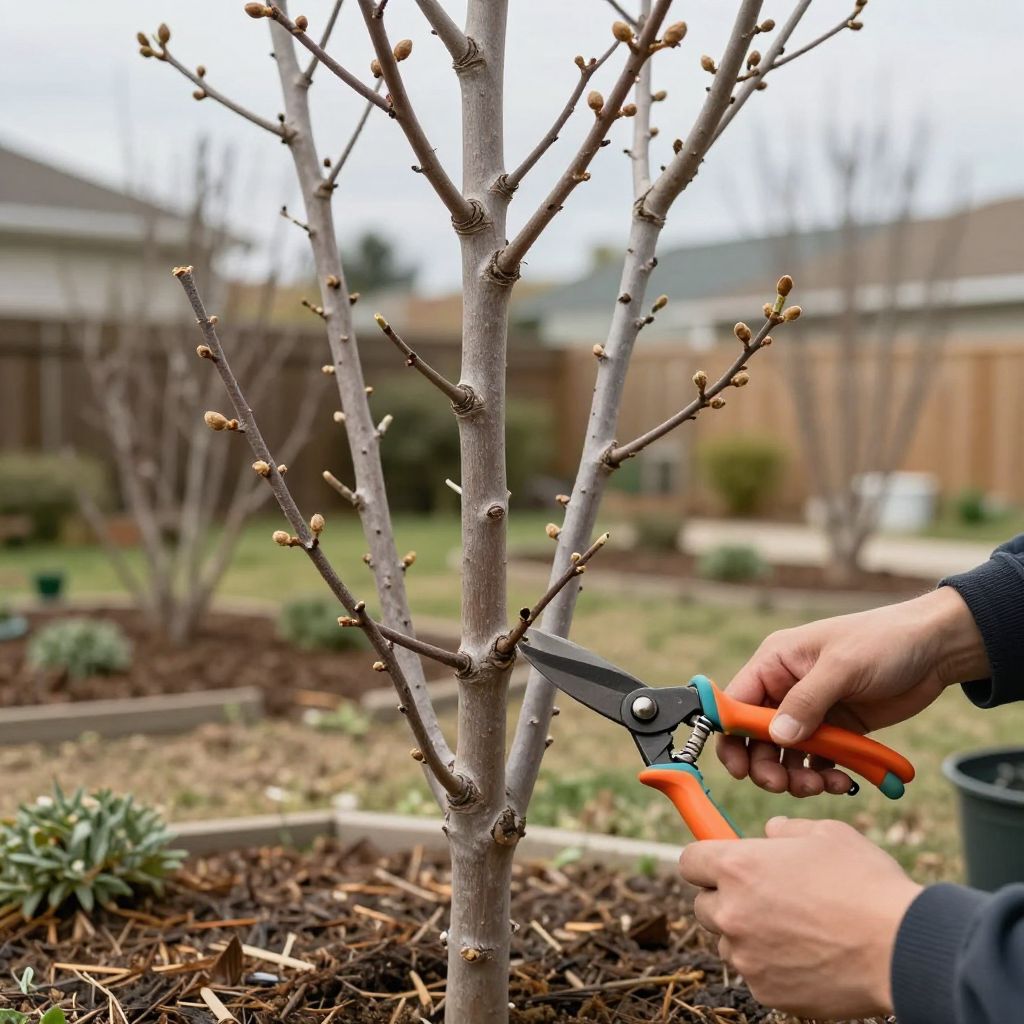
If you’re wondering when to prune crepe myrtle, timing matters more than most gardeners realize. Prune at the right time and you’ll help the plant flower well, keep its shape, and avoid unnecessary stress.
The short answer: prune crepe myrtle in late winter to early spring, before new growth starts. Avoid heavy pruning in fall, and don’t “top” the tree, which weakens the plant and leads to awkward regrowth.
When to prune crepe myrtle?
The best time to prune crepe myrtle is late winter to early spring, while the plant is dormant and before buds begin to swell. In most climates, that means after the coldest weather has passed but before active growth starts. Light cleanup can also be done in summer if needed, but major pruning should wait for dormancy.
Why timing matters for crepe myrtle pruning
Crepe myrtle blooms on new wood, so pruning before spring growth helps shape the plant without sacrificing the current season’s flowers. If you prune too early in fall, tender new shoots may form and be damaged by frost. If you prune too late in spring, you may remove developing flower buds and delay blooming.
Good timing also helps the plant recover faster. Dormant pruning reduces stress, makes branch structure easier to see, and lets you remove dead or crossing stems before the plant leafs out.
How to prune crepe myrtle the right way
Start with the right tools
- Hand pruners for stems up to about 1/2 inch thick
- Loppers for larger branches
- A pruning saw for thick, woody stems
- Gloves and clean tools to reduce disease spread
Before you begin, wipe blades with rubbing alcohol or a disinfectant cleaner, especially if you’re moving between plants. Clean cuts heal better than torn bark.
Follow a simple pruning plan
- Remove dead, damaged, or diseased wood first.
- Cut out branches that cross or rub against each other.
- Thin out crowded stems to improve airflow and light.
- Keep the natural vase or multi-stem form if that suits the plant.
- Shorten only overly long shoots, making cuts just above an outward-facing bud or branch junction.
For mature crepe myrtles, focus on structure rather than size reduction. A few careful cuts usually do more good than a hard chop.
How much should you remove?
As a general rule, remove no more than about one-third of the plant in a single season. Younger plants may only need light shaping, while established shrubs or small trees may need selective thinning. If the plant is very overgrown, spread major corrective pruning over two or more seasons.
What not to do when pruning crepe myrtle
The most common mistake is “crepe murder,” the practice of cutting all stems back to stubs. This creates weak, crowded regrowth and spoils the plant’s natural shape. It can also lead to more suckers and fewer strong flowering branches.
- Don’t top the plant just to force it shorter.
- Don’t prune heavily in fall unless you are removing broken or hazardous wood.
- Don’t leave long stubs that can die back and invite decay.
- Don’t remove too much at once from an already stressed plant.
If a crepe myrtle is too large for its space, pruning alone may not solve the problem. In that case, consider whether the plant needs more room or whether a smaller variety would have been a better fit.
Seasonal pruning tips for better blooms
Late winter to early spring
This is the main pruning window. The plant is dormant, branch structure is visible, and you can shape it before growth begins. In colder areas, wait until the risk of severe freeze has passed.
Summer
Only make light corrective cuts in summer. Remove broken branches, spent flower clusters if you prefer a tidier look, or small suckers from the base. Avoid major pruning once the plant is actively blooming unless there is a clear reason.
Fall
Fall is usually the wrong time for pruning crepe myrtle. Fresh cuts can stimulate new growth that may be damaged by cold weather. Save most pruning for late winter unless you are dealing with storm damage or a safety issue.
How climate affects pruning time
Your local climate should guide the exact timing. In mild regions, late winter pruning may happen earlier. In colder areas, wait until the worst freezes are over. If you garden in a place with unpredictable spring weather, prune when the plant is still dormant but close enough to spring that new growth will not be exposed to a hard freeze for long.
If your crepe myrtle is in a container or in a very exposed site, be a little more conservative. Potted plants and wind-exposed plants can dry out or suffer cold injury more easily after pruning.
Pruning young vs. mature crepe myrtle
Young plants
For newly planted crepe myrtles, less is more. Remove only damaged stems and any awkward crossing branches. Let the plant establish a strong framework before you shape it heavily.
Mature plants
Older crepe myrtles often need selective thinning to improve airflow and reduce crowding. Remove a few of the oldest stems at the base if the plant is congested, but keep the overall structure balanced and natural.
Common crepe myrtle problems pruning can help with
- Poor airflow: Thin crowded growth to reduce humidity inside the canopy.
- Weak, whippy shoots: Avoid topping, which often causes this problem.
- Dead wood: Remove it early so the plant can direct energy into healthy stems.
- Misshapen growth: Correct it gradually with selective cuts rather than drastic shortening.
Pruning is not a cure-all, but it can improve the plant’s structure and reduce stress-related issues when done correctly.
After-pruning care
Once you finish pruning, give the plant a little support rather than overdoing maintenance. Water deeply if the soil is dry, especially if spring weather is warm and windy. A 2- to 3-inch layer of mulch can help conserve moisture and moderate soil temperature, but keep mulch a few inches away from the trunk.
Do not rush to fertilize unless your soil is known to be poor or a soil test suggests a need. Too much nitrogen can push leafy growth at the expense of flowers.
Quick troubleshooting guide
If your crepe myrtle didn’t bloom well last year
Check whether it was pruned too late, topped hard, or planted in too much shade. Crepe myrtles bloom best in full sun, and heavy shade often reduces flowering.
If it sends up lots of suckers
Remove suckers at the base as soon as you see them. Repeated topping or severe pruning can encourage this problem, so switch to lighter, selective cuts.
If it looks overgrown
Resist the urge to cut everything back at once. Thin and shorten gradually over one to three seasons so the plant can recover without a flush of weak growth.
Simple pruning checklist
- Wait until late winter or early spring
- Use sharp, clean tools
- Remove dead, damaged, and crossing branches first
- Thin crowded growth for light and air
- Avoid topping and severe stubbing
- Make gradual changes on large or neglected plants
Conclusion
If you remember one thing about when to prune crepe myrtle, make it this: prune in late winter to early spring, before new growth begins, and keep cuts selective. That approach protects blooms, preserves the plant’s natural shape, and reduces stress. If your plant is overgrown, start with a light pruning plan this season and improve it gradually.
For more seasonal plant care guidance, you may also want to read about how to prune flowering shrubs and basic spring garden maintenance.