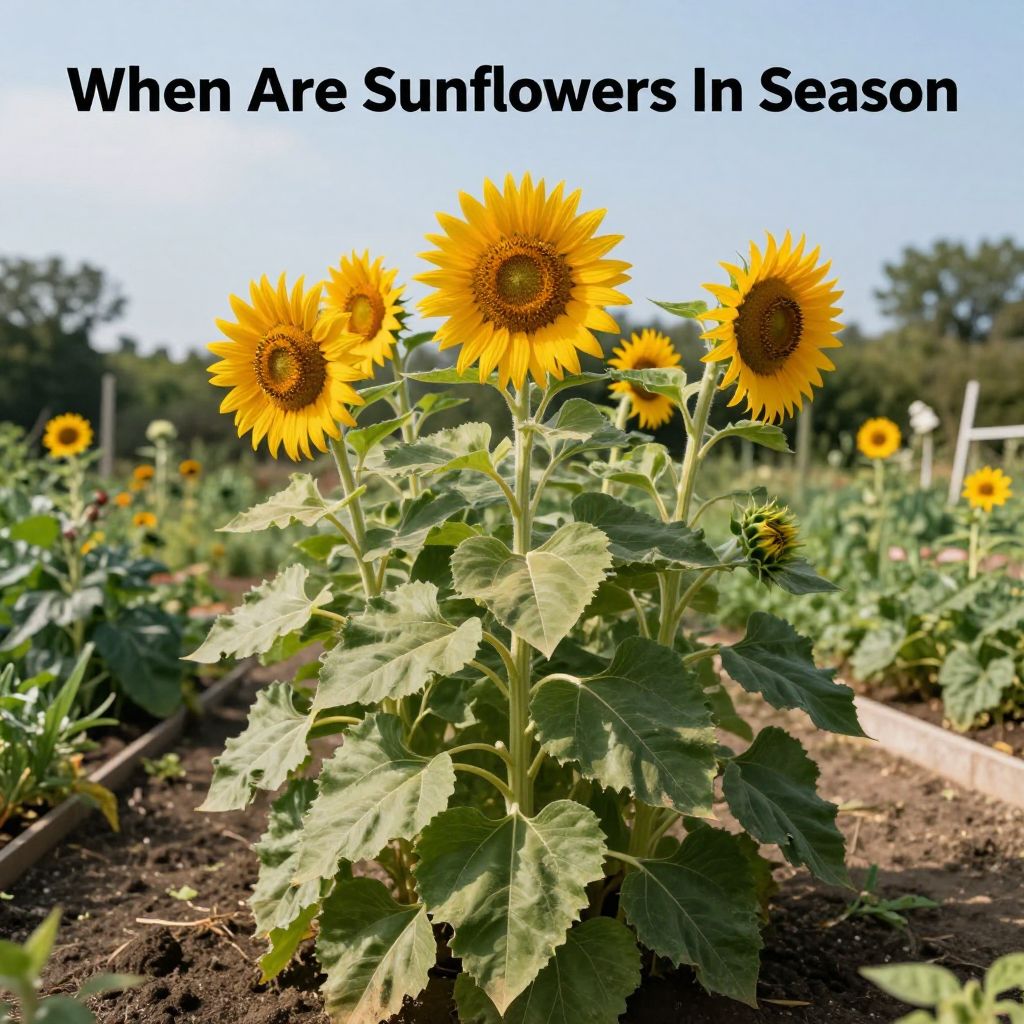
When are sunflowers in season? In most gardens, sunflowers are a warm-season annual that blooms from mid-summer into early fall, with exact timing depending on when you sow the seed and how long the variety takes to mature. If you stagger plantings, you can extend the bloom window for weeks.
The best season for sunflowers starts once the soil has warmed and frost risk has passed. With the right site, steady moisture while young, and good spacing, you can grow tall, healthy plants that flower reliably and support pollinators, birds, and a bright late-season display.
When are sunflowers in season?
Sunflowers are typically in season from summer through early autumn. Outdoors, they are usually planted after the last frost in spring and bloom about 70 to 120 days later, depending on the variety. In many climates, peak flowering happens from July to September, but later sowings can push bloom into October.
Understanding sunflower timing by climate
Sunflower season is not the same everywhere. Your local frost dates, summer heat, day length, and the variety you choose all affect when plants flower.
Spring planting in cool climates
In cooler regions, wait until the soil is at least 50°F to 60°F before sowing outdoors. Sunflower seeds rot or sit idle in cold, wet soil, so patience pays off.
- Sow after the danger of frost has passed.
- Choose fast-maturing varieties if your growing season is short.
- Expect blooms later in summer, often from late July onward.
Spring and early summer in warm climates
In warmer areas, you can often plant earlier, and some gardeners sow in succession every 2 to 3 weeks for a longer bloom season. In hot climates, very late plantings may bloom during intense heat, which can shorten flower life.
- Plant early enough for flowering before the hottest part of summer if possible.
- Provide regular water during establishment.
- Use mulch to help keep roots cooler and soil moisture steadier.
Late sowing and fall flowers
You can sow sunflowers later in the season if you count backward from your first expected frost. The seed packet maturity days help you estimate whether a late planting will have time to bloom.
Rule of thumb: add the variety’s days to maturity, then include a little extra time for slower growth in cool weather. If frost arrives first, the plant may never flower.
How to plant sunflowers for the best season of bloom
Sunflowers are easy to start from seed and do best when planted directly where they will grow. They dislike root disturbance, so direct sowing is usually simpler and more reliable than transplanting.
- Pick a sunny site with at least 6 to 8 hours of direct sun.
- Prepare loose, well-drained soil and remove weeds.
- Sow seeds about 1 inch deep, unless the packet says otherwise.
- Space plants according to mature size, often 6 to 24 inches apart.
- Water gently after planting and keep the soil evenly moist until sprouting.
Soil and drainage
Sunflowers tolerate many soil types, but they perform best in soil that drains well. Heavy, soggy ground can stunt seedlings and increase disease problems.
- Work in compost to improve structure and moisture retention.
- Avoid overly rich soil if you want to prevent floppy stems in some tall varieties.
- If your soil stays wet, plant on a slight mound or raised bed.
Sunlight and spacing
Full sun is essential for strong stems and large blooms. Crowded plants compete for light, which can lead to weak growth and smaller flowers.
If you want cut flowers, space plants so each stem gets enough light and air circulation. Good spacing also helps reduce mildew and leaf spot.
How long do sunflowers take to bloom?
Most sunflowers bloom in about 10 to 16 weeks from seed, though some dwarf types flower sooner and giant types take longer. The exact season depends on the cultivar, weather, and growing conditions.
What affects bloom time
- Variety: dwarf and early-flowering types mature faster than giant types.
- Temperature: warm soil speeds germination and early growth.
- Watering: drought stress can slow development.
- Light: insufficient sun delays flowering and weakens stems.
If you want a longer sunflower season, sow a second batch 2 to 3 weeks after the first. This simple succession planting spreads flowering over a wider window instead of giving you one short burst.
Sunflower care through the growing season
Once sunflowers are established, they are fairly low-maintenance. The main tasks are watering during dry spells, keeping weeds down, and watching for pests or weather stress.
Watering
Water deeply when the top few inches of soil dry out, especially while plants are young and during bud formation. Established plants are somewhat drought-tolerant, but consistent moisture supports better flowering.
- Water at the base rather than overhead when possible.
- Mulch around plants to reduce evaporation and weeds.
- Avoid frequent shallow watering, which encourages weak roots.
Feeding
Sunflowers usually do not need heavy fertilizing. Too much nitrogen can produce tall, leafy plants with fewer flowers and weaker stems.
If your soil is poor, mix in compost before planting. In average garden soil, that is often enough for a healthy crop.
Staking tall varieties
Some sunflowers grow very tall and may need support in windy sites or loose soil. Staking is especially useful if you grow single-stem giants or if storms are common in your area.
- Use a sturdy stake placed early, before roots spread too much.
- Attach stems loosely with soft ties.
- Check ties as the plant grows so they do not cut into the stem.
Common problems that affect sunflower season
When sunflowers fail to bloom on time, the cause is often environmental rather than a serious disease. Identifying the issue early can save the planting or help you adjust next season.
Slow germination
Cold soil is a common reason seeds sprout slowly or unevenly. Birds and rodents may also dig up seeds before they emerge.
- Wait for warmer soil before sowing.
- Cover seeds lightly and water gently.
- Protect the planting area if wildlife is a problem.
Leggy, weak stems
Sunflowers grown in partial shade often stretch toward the light and become floppy. Overcrowding and too much nitrogen can cause the same problem.
- Move or replant in a brighter location next time.
- Thin seedlings if they are too close together.
- Reduce fertilizer if foliage is lush but stems are weak.
Pests and diseases
Young sunflower seedlings can be bothered by slugs, cutworms, and birds. Later in the season, aphids, mildew, and leaf spots may appear, especially in crowded or damp conditions.
- Use row cover early if birds or insects are damaging seedlings.
- Keep the area weed-free for better airflow.
- Remove badly diseased leaves and dispose of them, not in the compost pile if disease is severe.
Important: avoid planting sunflowers in the same spot year after year if disease has been a problem. Rotating planting areas helps reduce recurring issues.
Harvesting sunflowers at the right time
If you are growing sunflowers for cut flowers or seed heads, timing the harvest matters. Cut flowers last longest when the bloom is just opening, while seed heads should stay on the plant until the seeds mature.
For cut flowers
Harvest in the cool part of the day, ideally when petals are just starting to open. Place stems immediately in clean water.
- Use sharp pruners or a clean knife.
- Cut stems long enough for arranging.
- Strip leaves that would sit below the water line.
For seeds and wildlife
If you want seeds for birds or saving, let the flower heads mature on the plant. The back of the head turns yellow to brown, and the seeds become plump and firm.
Covering maturing heads with breathable mesh or paper can help protect seed crops from birds and squirrels if needed.
How to extend sunflower season in your garden
You do not have to settle for one short flush of blooms. With a little planning, you can enjoy sunflowers for much of the warm season.
- Stagger sowings: plant every 2 to 3 weeks in spring and early summer.
- Mix varieties: combine early dwarf types with taller, later-blooming kinds.
- Match planting time to frost dates: count backward from fall frost for late sowings.
- Keep plants healthy: sun, spacing, and steady moisture all improve bloom timing.
Quick checklist for successful sunflower season
- Wait until frost danger has passed.
- Plant in full sun and well-drained soil.
- Sow seeds about 1 inch deep.
- Keep soil moist until seedlings are established.
- Thin or space plants to avoid crowding.
- Watch for pests and support tall stems if needed.
Conclusion
Sunflowers are in season from summer into early fall in most gardens, but your exact bloom time depends on planting date, variety, and local climate. Start with warm soil, full sun, and good spacing, then stagger sowings if you want a longer display. If you are planning your next bed, check your frost dates and sow your first batch when conditions are right.
For more practical planting help, you may also want to read about how to grow sunflowers and using a planting calendar for your local frost dates.