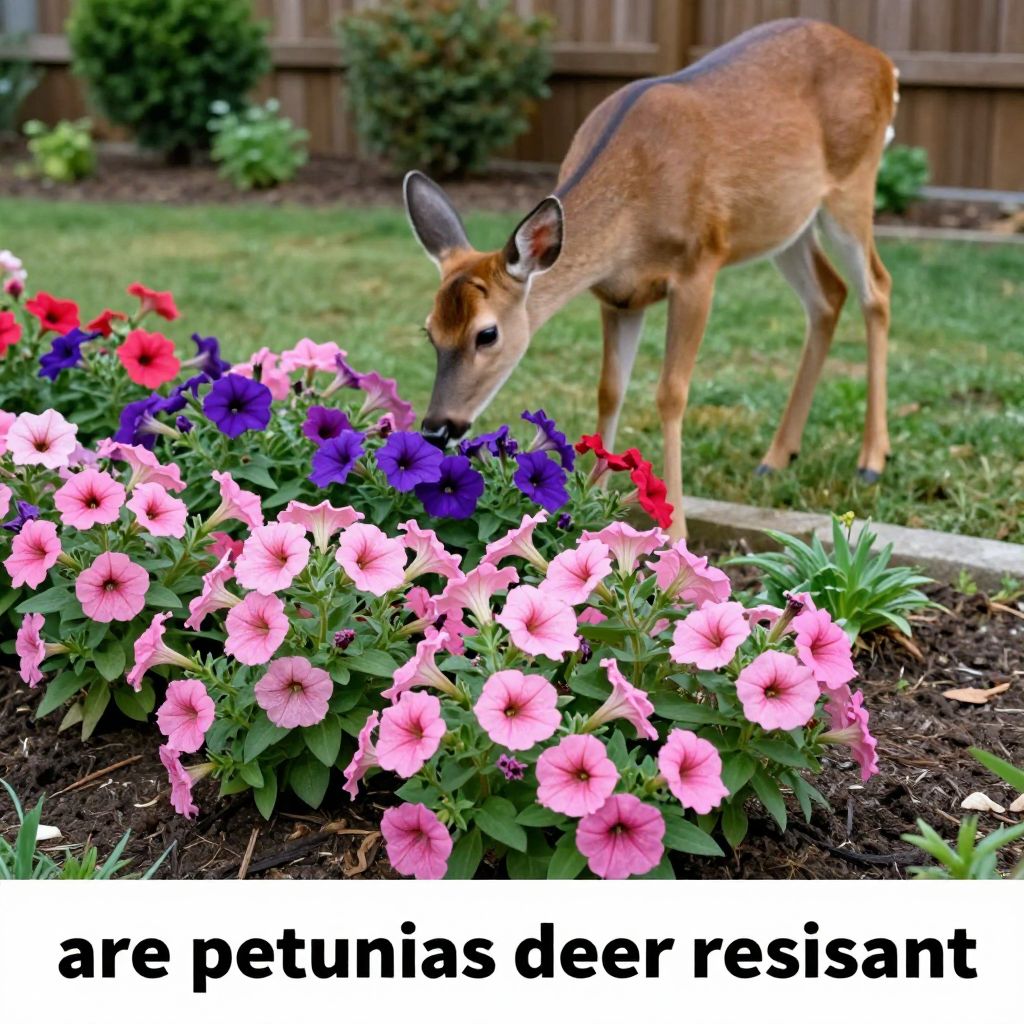
Are petunias deer resistant? In many gardens, yes—petunias are usually considered low on a deer’s preferred menu. That said, “deer resistant” does not mean deer-proof, and hungry deer may still sample them, especially when other food is scarce.
If you want petunias to stay attractive through the season, it helps to understand why deer often pass them by, when they might still get nibbled, and how to grow them so they recover quickly if browsing happens.
Are Petunias Deer Resistant?
Petunias are generally regarded as deer resistant rather than deer proof. Their slightly sticky foliage, strong scent, and soft but not especially palatable texture often make them less appealing than many ornamentals. However, local deer pressure, weather, and food availability can change their behavior, so no plant is completely safe.
Why Deer Usually Leave Petunias Alone
Deer choose plants based on taste, texture, moisture, and what is easiest to reach. Petunias often rank lower than tender vegetables, hostas, daylilies, and many annuals because they do not offer the same high-value forage deer prefer.
What makes petunias less attractive
- Fuzzy or sticky foliage that can feel unpleasant to browse.
- Noticeable scent that some deer avoid.
- Continuous flowering habit that does not make them a top food source.
- Low nutritional payoff compared with more tender plants.
Even so, deer are opportunistic. A petunia bed near a wooded edge, along a deer trail, or in a dry summer with limited forage can still be sampled.
When Petunias Get Nibbled Anyway
Deer browsing on petunias is more likely when pressure is high. Young transplants, newly planted containers, and beds close to cover can be especially vulnerable because deer are cautious but willing to test easy targets.
Situations that increase browsing
- Gardens near woods, hedgerows, or stream corridors.
- Long dry periods when natural forage is scarce.
- Newly planted petunias with tender growth.
- Properties with a regular deer route or heavy local population.
If deer are very active in your area, think of petunias as a lower-risk choice, not a guaranteed safe one.
How to Grow Petunias So They Recover Well
Healthy petunias bounce back better from light browsing, heat stress, and wind damage. Give them strong growing conditions from the start so they can keep blooming even if a deer takes a bite or two.
Sunlight and site selection
Petunias bloom best in full sun, which usually means at least 6 hours of direct light daily. In hotter climates, some afternoon shade can help flowers last longer and reduce stress.
Choose a spot with good air movement but not constant harsh wind. Petunias in containers near a sunny porch or patio are often easier to protect than those planted at the edge of a large open bed.
Soil and drainage
Petunias prefer soil that drains well and stays evenly moist, not soggy. Heavy clay or compacted soil can lead to weak growth and root problems.
- Work in compost to improve soil structure if your ground is poor.
- Avoid planting in low spots where water collects.
- Use a quality potting mix for containers, not garden soil.
Good drainage matters because stressed plants are less able to recover from browsing and more likely to develop disease.
Watering basics
Water petunias when the top layer of soil begins to dry, especially during establishment and hot weather. Container plantings usually need water more often than in-ground beds because pots dry quickly.
Try to water at the soil level rather than soaking the flowers and foliage. Wet leaves can encourage disease, and consistent moisture at the roots supports steady blooming.
Feeding and maintenance
Petunias are heavy bloomers and may benefit from regular feeding, depending on your soil and planting method. Use a balanced approach rather than overdoing nitrogen, which can produce lots of foliage but fewer flowers.
Deadheading is helpful for many types, though some modern petunias are self-cleaning. If plants become leggy, a light trim can encourage fresh growth and more flowers.
How to Protect Petunias from Deer
If deer are a regular problem, combine several tactics. No single method is perfect, but a layered approach often works better than relying on one deterrent alone.
Physical barriers
- Fencing is the most reliable option for high-pressure areas.
- Low decorative borders may help with casual browsing but usually will not stop determined deer.
- Protect young beds with temporary netting or garden cages while plants establish.
For containers, placing pots on a deck, porch, or raised area can reduce access, especially if deer are browsing at ground level.
Deer deterrents
Repellents can help, especially when used before deer become accustomed to the area. Results vary, and you usually need to reapply after rain or according to the product label.
Common strategies include:
- Commercial deer repellents.
- Motion-activated sprinklers in larger gardens.
- Planting petunias near less palatable or strongly scented plants, though this is not a guarantee.
Rotate deterrents when possible. Deer can get used to one method if it is used the same way all season.
Smart placement in the landscape
Put petunias closer to the house, patio, or other human activity if deer are shy about approaching those areas. Avoid placing them right along wooded edges or obvious deer paths.
In mixed beds, you can also use petunias as a lower-risk filler plant among more deer-resistant choices, but do not assume nearby plants will fully protect them.
What to Do If Deer Eat Your Petunias
Light browsing is usually not fatal. Petunias can often recover if the roots are healthy and the growing conditions are good.
Quick recovery steps
- Trim ragged stems back to healthy growth if needed.
- Water deeply if the soil is dry, but do not keep it soggy.
- Remove damaged flowers and leaves that may rot.
- Feed lightly if the plant looks depleted and the soil is poor.
- Protect the area immediately so deer do not return to the same plants.
If the plant has been stripped severely, give it time. New growth may appear from lower stems if the roots are intact and the weather is favorable.
Common Petunia Problems That Can Look Like Deer Damage
Not every torn petunia is the work of deer. Other pests and environmental stress can create similar symptoms, so it helps to inspect the plant before deciding on a fix.
Look for these clues
- Deer damage: torn or cleanly bitten stems, missing flowers, damage higher on the plant, tracks or droppings nearby.
- Rabbit damage: cleaner cuts close to the ground, especially on young plants.
- Insect damage: holes, stippling, or chewed leaves without missing whole stems.
- Weather damage: shredded blooms after heavy rain, wind, or hail.
Checking the pattern of damage helps you choose the right response. If you treat a deer problem like a disease, or a disease like deer browsing, the plant may keep declining.
Best Uses for Petunias in Deer-Prone Gardens
Petunias still earn a place in many gardens because they bloom generously and fit many designs. The key is to use them where browsing risk is lower and maintenance is easy.
Good planting options
- Containers on porches, patios, or decks.
- Raised beds near the home.
- Mixed annual borders with some protection.
- Window boxes and hanging baskets, if deer cannot reach them.
In high-pressure deer areas, containers can be the practical choice because they are easier to move, protect, and monitor.
Simple Care Tips for Stronger Blooms
Healthy petunias are more likely to keep flowering after stress. A few basic habits go a long way.
- Plant in full sun for the best bloom production.
- Use well-drained soil or a quality container mix.
- Water consistently, especially in hot weather.
- Pinch or trim leggy growth to encourage branching.
- Watch for aphids, caterpillars, and fungal issues in humid conditions.
Avoid overfertilizing with nitrogen. Too much leafy growth can reduce flowering and create softer, more vulnerable plants.
Conclusion: Should You Plant Petunias If Deer Visit Your Yard?
Yes, you can still grow petunias in deer country, especially if you choose a protected site and use deterrents where needed. They are usually deer resistant, but not immune to browsing.
If you are planning a bed or container today, start by placing petunias in the sunniest, most protected spot you have, then add a deterrent or barrier if deer pressure is common. For more help choosing what deer tend to avoid, you may also want to read what to feed deer so you can better understand their habits and garden pressure.