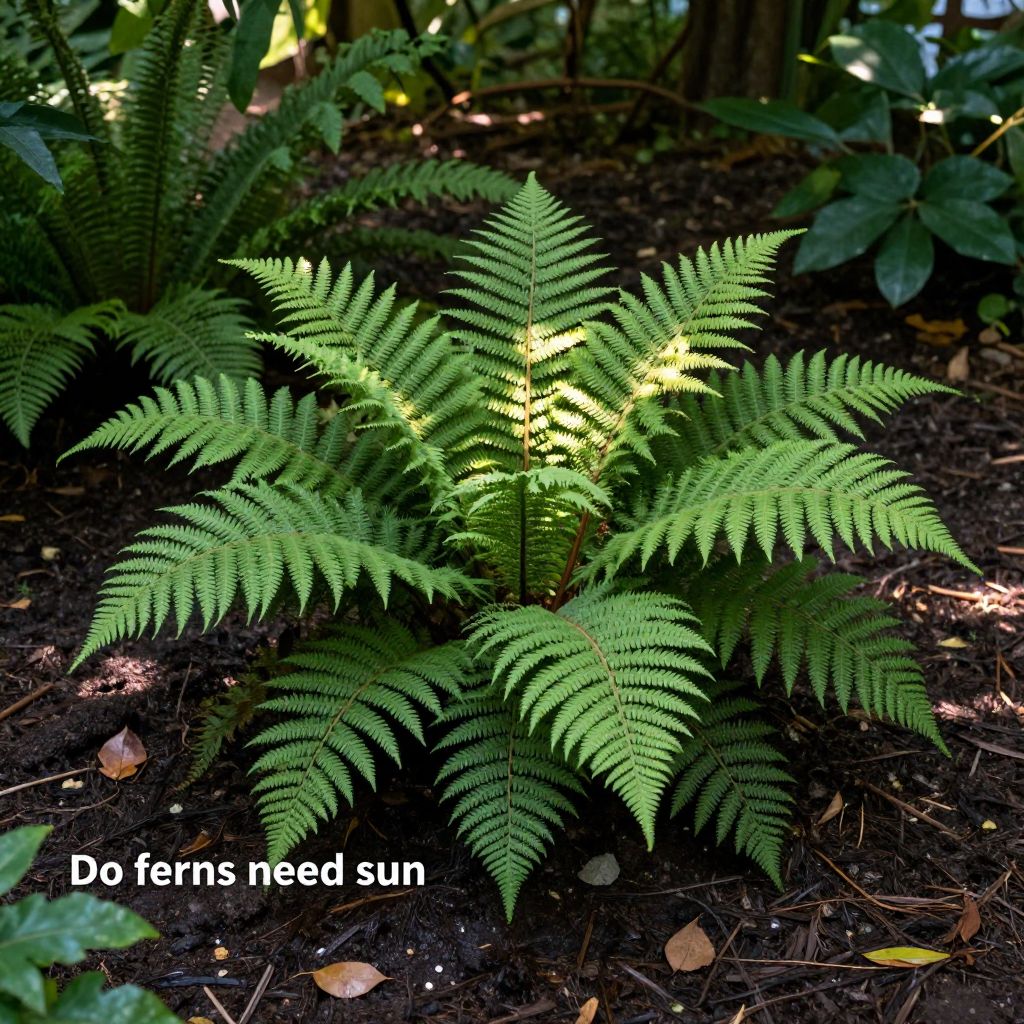
Do ferns need sun? Usually, they prefer bright, indirect light rather than direct sun. Most garden and house ferns grow best in dappled shade, woodland light, or filtered morning light, and too much hot sun can scorch their fronds quickly.
That said, the answer depends on the fern species, where it is growing, and how much moisture the plant has. If you match the light to the fern’s natural habitat, you can grow healthy, lush foliage indoors or outdoors with far fewer problems.
Do ferns need sun?
Most ferns do not need direct sun and actually suffer in it. They need light to grow, but usually in the form of filtered, indirect, or morning sun. A few species tolerate more light than others, but strong afternoon sun often causes browning, curling, and dry fronds.
How much light do ferns really want?
Think of ferns as plants of the forest floor. In nature, they often grow under trees, along shaded banks, or in humid crevices where sunlight is broken up by leaves and branches.
For most common ferns, the best light is:
- Bright indirect light indoors
- Dappled shade outdoors
- Morning sun with afternoon shade for some tougher types
If a fern gets too little light, it may grow slowly, become sparse, or stretch toward the light source. If it gets too much direct sun, the fronds may bleach, crisp, or develop brown patches.
Signs the light is too strong
- Fronds look scorched or faded
- Leaf edges turn brown and crispy
- Soil dries out very quickly
- New growth is smaller than expected
Signs the light is too low
- Slow growth during the active season
- Long, weak stems or sparse fronds
- Plant leans toward a window or opening
- Older fronds yellow and drop more easily
Indoor ferns: best window and room conditions
Indoors, ferns usually do best near an east-facing window, a north-facing window, or a few feet back from a bright south- or west-facing window. The goal is strong light without hot rays hitting the foliage for long periods.
A sheer curtain can help soften bright windows. If your fern sits in a very dark room, it may survive for a while but often loses fullness and vigor over time.
Indoor placement tips
- Keep ferns out of direct midday sun through glass.
- Rotate the pot every week or two so growth stays even.
- Move the plant closer to light in winter if days are short.
- Avoid placing it right above heating vents or near dry air sources.
Humidity matters just as much as light for indoor ferns. Even if the light is perfect, dry air can cause frond tips to brown. Grouping plants together, using a pebble tray, or placing the pot in a naturally humid room can help.
Outdoor ferns: sun, shade, and the right site
Outdoors, most ferns prefer shade or part shade, especially in warm climates. A spot with filtered light under trees, along the north side of a building, or where morning sun is followed by afternoon shade is often ideal.
In cooler climates, some ferns can handle more sun if the soil stays evenly moist. In hot, dry regions, even “part sun” can be too intense unless the plant has excellent moisture and protection from afternoon heat.
Good outdoor light situations
- Under open tree canopy with moving shade
- Beside a fence or wall that blocks harsh afternoon sun
- In a woodland border with rich, moist soil
- In a sheltered courtyard with bright but indirect light
Sun tolerance depends on moisture. A fern in full morning sun with constantly moist soil may cope better than one in the same light with dry, compacted soil. Light and water work together.
Which ferns handle more sun?
Some fern types are naturally more sun-tolerant than others, especially when grown in cool weather or moist soil. Even then, “more sun” usually means gentler morning sun, not harsh all-day exposure.
Examples of ferns that are often a bit more adaptable include many Dryopteris species, some Polystichum types, and certain native ferns suited to your region. Still, local climate and soil moisture make a big difference, so watch the plant rather than relying on a label alone.
If you are unsure about your fern, start it in shade and gradually increase light only if the plant looks healthy and the soil stays moist enough.
Soil, moisture, and drainage for healthy fern growth
Ferns need soil that holds moisture but does not stay waterlogged. A loose, humus-rich mix is ideal because it supports roots while still draining enough air to prevent rot.
For garden beds, improve poor soil with compost or leaf mold. For containers, use a potting mix that retains moisture well but still drains freely. Fern roots dislike both bone-dry soil and soggy conditions.
What good fern soil looks like
- Rich in organic matter
- Moist but not muddy
- Loose enough for air movement
- Mulched to reduce evaporation outdoors
Watering needs change with light. A fern in brighter light will usually dry out faster than one in shade, so check the soil often instead of following a fixed schedule. Water when the top layer begins to feel slightly dry, but before the root ball dries out completely.
How to tell if your fern is getting the right amount of sun
The best way to judge fern light is by looking at the foliage and growth pattern over time. Healthy ferns usually have rich color, steady new frond development, and a full shape without crispy edges.
- Check the fronds for scorch, fading, or dryness.
- Look at new growth to see whether it is strong and evenly formed.
- Notice how quickly the potting mix or soil dries after watering.
- Observe the plant at different times of day, especially midday and late afternoon.
- Adjust the location gradually if the fern seems stressed.
If you move a fern from shade to brighter light, do it slowly over one to two weeks. Sudden changes can shock the plant, especially if it was growing in low light and then faces direct sun.
Common mistakes when growing ferns in sun
The most common mistake is assuming all shade-loving plants can sit in the same light. Ferns vary, but most are not sunbathing plants, and direct hot rays often do more harm than good.
- Placing ferns in afternoon sun without protection
- Letting the soil dry out completely between waterings
- Using heavy soil that stays wet and sour
- Putting indoor ferns too close to hot windows or radiators
- Moving the plant too quickly from shade to bright light
Another mistake is overcompensating for brown fronds by watering more and more. If the real problem is sun scorch, extra water will not fix it. First correct the light, then fine-tune moisture.
Pruning and maintenance for sun-stressed ferns
When fronds are badly scorched or fully brown, you can trim them off to improve appearance and encourage fresh growth. Use clean, sharp scissors or pruners and remove only dead or damaged fronds.
Do not cut healthy green fronds just because they are slightly faded. Ferns need their foliage to photosynthesize, and overpruning can weaken the plant further.
Simple maintenance routine
- Remove dead fronds at the base as needed.
- Keep mulch or potting mix evenly moist.
- Check for pests on stressed plants.
- Refresh container soil or divide crowded clumps when necessary.
Pests and diseases that can follow too much sun
Sun-stressed ferns are more vulnerable to pests and disease because dry, weakened foliage is easier to damage. Spider mites can be a problem indoors, especially in dry air, while stressed outdoor plants may attract other opportunistic pests.
Root rot is more likely when a fern is overwatered in an attempt to rescue it from sun damage. If the plant is declining, inspect both the light and the drainage before adding more water.
Healthy airflow, proper spacing, and the right light level reduce many problems. A fern that is comfortable in its site is far less likely to struggle.
How to move a fern to a better light level
If your fern is in the wrong place, adjust it gradually. Ferns respond better to small changes than dramatic moves.
- Choose a new site with filtered light or gentler sun.
- Move the plant a little at a time if possible.
- Keep the soil evenly moist during the transition.
- Watch new growth for improvement over the next few weeks.
If the fern is indoors, a simple shift of a few feet can make a big difference. Outdoors, moving it under a tree, to the east side of a structure, or into deeper shade may solve scorch problems quickly.
Conclusion: the best answer for fern light
So, do ferns need sun? They need light, but usually not direct sun. Most do best in bright, indirect light or dappled shade, with moist soil and protection from hot afternoon rays. If your fern looks scorched or sparse, adjust the light first and then fine-tune watering.
For more practical plant care ideas, you may also want to read about shade garden planting tips and how to improve garden soil with compost.