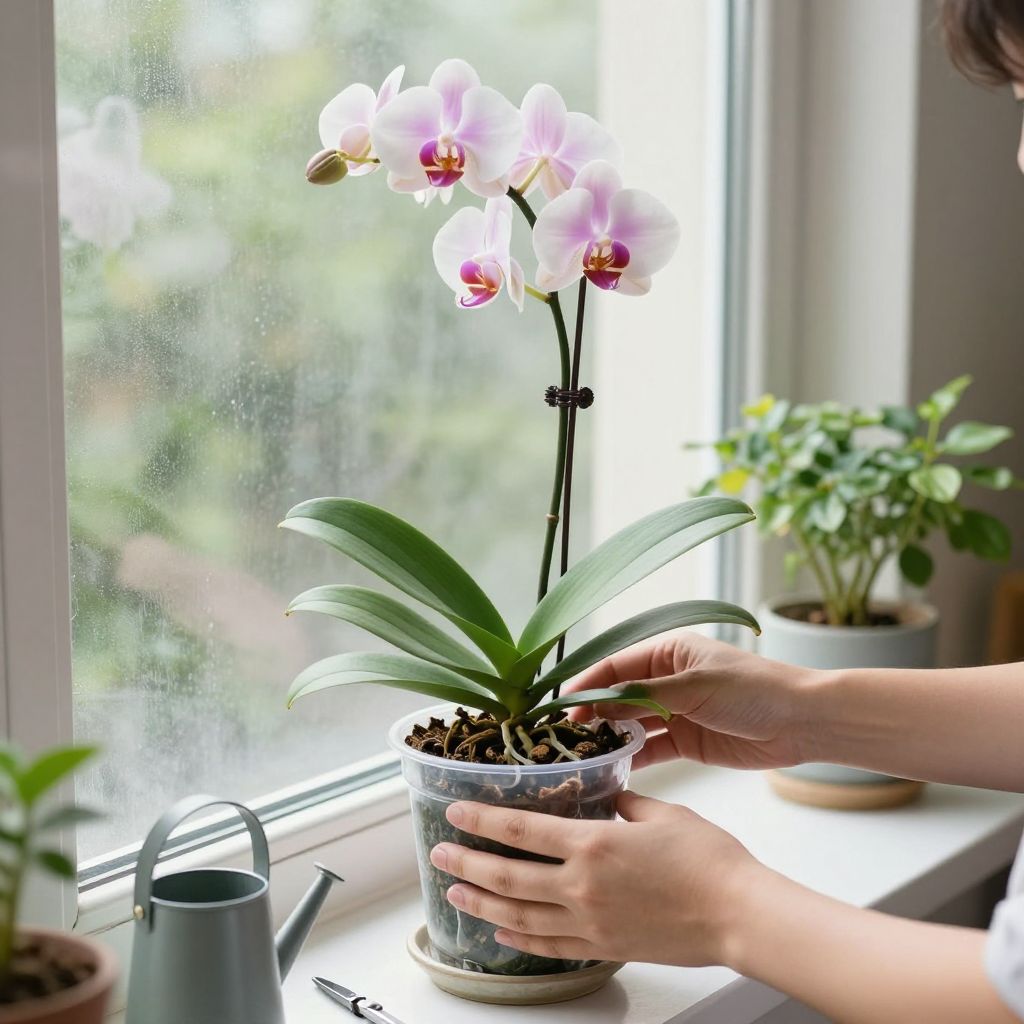
Are orchids hard to take care of? Not usually—if you understand what they need, they can be easier than many houseplants. Most orchids fail from too much water, poor light, or heavy potting mix, not because they are naturally difficult.
The good news is that common orchids, especially Phalaenopsis (moth orchids), are very manageable indoors. With the right pot, airy mix, bright indirect light, and careful watering, you can keep them healthy and encourage repeat blooms.
Are orchids hard to take care of?
Orchids are not hard to care for once you match their growing conditions to the type you own. The main challenge is that they grow differently from typical houseplants: they need excellent drainage, plenty of air around the roots, and watering only when the mix is nearly dry, not on a fixed schedule.
What makes orchids different from other houseplants?
Many orchids are epiphytes, which means they naturally grow on trees rather than in dense soil. Their roots need air as much as moisture, so standard potting soil usually suffocates them. That is why orchid care feels different from caring for pothos, peace lilies, or succulents.
Key orchid care basics
- Light: bright, indirect light for most indoor orchids
- Water: only when the potting mix is close to dry
- Potting mix: chunky orchid bark, sphagnum moss, or a blend made for orchids
- Pot: one with drainage holes, often a clear plastic pot inside a decorative cachepot
- Airflow: gentle air movement helps prevent rot and disease
Choosing the right orchid for a beginner
If you are new to orchids, start with a forgiving type. Phalaenopsis orchids are usually the easiest because they tolerate normal indoor temperatures and bloom for a long time. Other orchids can be rewarding too, but they may need more specific light, humidity, or temperature changes.
Good beginner choices
- Phalaenopsis (moth orchid)
- Paphiopedilum (slipper orchid), if you can provide moderate light and even moisture
- Dendrobium types, if you can give them bright light and understand their seasonal growth cycle
What to look for when buying
- Firm leaves with no mushy spots
- Roots that are plump, not black and hollow
- A plant with at least one healthy growing point
- No signs of pests on leaf undersides or in the crown
- A potting mix that is not sour, compacted, or waterlogged
How to care for orchids indoors
Indoor orchid care is mostly about light, watering, and potting mix. If you get those three right, the plant usually does well. Temperature and humidity matter too, but they are easier to manage than most beginners expect.
Light
Most orchids do best in bright, filtered light. An east-facing window is often ideal, while a south- or west-facing window may need a sheer curtain to soften strong sun.
- Leaves should be medium green, not dark green and floppy.
- Too much sun can cause yellowing or reddish scorch patches.
- Too little light often leads to weak growth and poor flowering.
Watering
Water orchids thoroughly, then let excess water drain away completely. The right timing depends on the pot size, mix, humidity, and season, so do not rely on a rigid weekly schedule.
- Check the potting mix with your finger or by lifting the pot.
- Water when the mix is nearly dry but before the roots shrivel badly.
- Never let the pot sit in standing water.
- Avoid leaving water in the crown of Phalaenopsis orchids, which can cause rot.
Humidity and airflow
Orchids appreciate moderate humidity, but they also need moving air. A small fan on a gentle setting or normal household airflow is often enough.
- Group plants together to raise local humidity slightly.
- Use a pebble tray if your home is very dry, but keep the pot above the water line.
- Do not trap orchids in stagnant, damp corners.
Temperature
Many common indoor orchids prefer comfortable room temperatures rather than extremes. Avoid placing them right against cold windows in winter or beside heating vents in summer.
- Stable temperatures help prevent bud drop.
- A slight nighttime drop can support flowering in some orchids.
- Sudden drafts or heat blasts can stress the plant.
What kind of potting mix do orchids need?
Orchids need a loose, airy mix that drains quickly. Regular potting soil holds too much moisture and usually leads to root rot. The best mix depends on the orchid type and your home conditions, but bark-based mixes are a common starting point.
Common orchid media
- Fir or pine bark: drains well and allows air around roots
- Sphagnum moss: holds more moisture, useful in dry homes or for smaller plants
- Perlite or charcoal: sometimes added to improve structure and drainage
When to repot
Repot when the mix breaks down, smells sour, or stays wet too long. Many orchids benefit from repotting every one to two years, but the exact timing depends on the plant and the condition of the medium.
- Remove the orchid from the pot and gently shake off old mix.
- Trim away dead, mushy, or hollow roots with clean scissors.
- Place the plant in a clean pot with fresh orchid mix.
- Keep the crown above the mix and do not bury the base deeply.
- Water lightly after repotting, then monitor closely for a few weeks.
How to encourage orchids to bloom again
Getting an orchid to rebloom is often the part that feels hardest, but it usually comes down to light and seasonal cues. A healthy plant with good roots and enough light is much more likely to flower again.
Helpful reblooming tips
- Give brighter indirect light during the growing season.
- Feed lightly during active growth with a fertilizer made for orchids, following the label.
- Do not overwater after flowering; the plant still needs oxygen at the roots.
- For some orchids, cooler nights can help trigger flower spikes.
After blooms fade, some Phalaenopsis orchids can rebloom from a node on the old spike, while others do better if the spike is cut back or removed. If the spike turns brown and dry, trim it near the base with clean pruners.
Common orchid problems and how to fix them
Most orchid problems are easy to diagnose once you look at the roots, leaves, and potting mix. Acting early matters more than using strong treatments later.
Yellow leaves
A lower leaf yellowing occasionally is normal as the plant ages. Several yellow leaves, especially with soft roots, often points to overwatering or root rot. Too much direct sun can also cause leaf damage.
Wrinkled leaves
Wrinkled leaves usually mean the orchid is not taking up enough water. The cause may be underwatering, but it can also be damaged roots that cannot absorb moisture properly.
Bud blast
Bud blast is when flower buds dry up and fall off before opening. Common causes include sudden temperature changes, drafts, low humidity, or moving the plant too often.
Root rot
Root rot is one of the most common orchid killers. Roots turn brown, mushy, or hollow, and the plant may look limp even when the mix is wet.
- Remove the plant from the pot.
- Cut away rotten roots with sterile scissors.
- Repot in fresh, airy mix.
- Reduce watering until new roots begin growing.
Pests
Orchids can attract mealybugs, scale, spider mites, and aphids, especially in dry indoor air. Check leaf joints, undersides, and flower spikes regularly.
- Wipe small infestations off with a cotton swab dipped in rubbing alcohol.
- Rinse leaves gently with water if needed.
- Isolate infected plants from others.
- Repeat treatment as needed, because pests often hide in crevices.
Outdoor orchids: are they harder?
Outdoor orchids can be more demanding because weather changes are less predictable. In mild climates, some orchids can grow outside part of the year, but they still need protection from harsh sun, heavy rain, cold snaps, and drying wind.
Outdoor care considerations
- Choose a sheltered spot with dappled light.
- Protect orchids from direct afternoon sun.
- Make sure rainwater drains quickly from pots and mounts.
- Bring tender orchids inside before cold weather arrives, based on your local climate.
Simple orchid care routine for beginners
If you want a low-stress routine, keep it simple and observe the plant rather than following a strict calendar. Orchids respond best when you adjust care to what the roots and leaves are telling you.
- Check light first: bright, indirect light is usually best.
- Inspect the roots and potting mix before watering.
- Water only when the mix is nearly dry.
- Empty any excess water from saucers or cachepots.
- Look for new roots, new leaves, or a flower spike as signs of healthy growth.
- Repot when the mix breaks down or the plant outgrows the container.
Common mistakes to avoid
- Using regular potting soil instead of orchid mix
- Watering on a fixed schedule without checking the plant
- Leaving the orchid in a decorative pot with no drainage
- Placing it in hot direct sun or deep shade
- Letting water sit in the crown or saucer
- Repotting too often or too aggressively
So, are orchids hard to take care of?
Orchids are not hard if you treat them like orchids instead of ordinary houseplants. Give them airy roots, careful watering, and the right light, and they become far less mysterious. Start with a Phalaenopsis, watch the roots and leaves closely, and adjust care to your home conditions.
If you want to keep learning, you may also enjoy reading about how to repot houseplants correctly and choosing the best indoor plant light for your home.