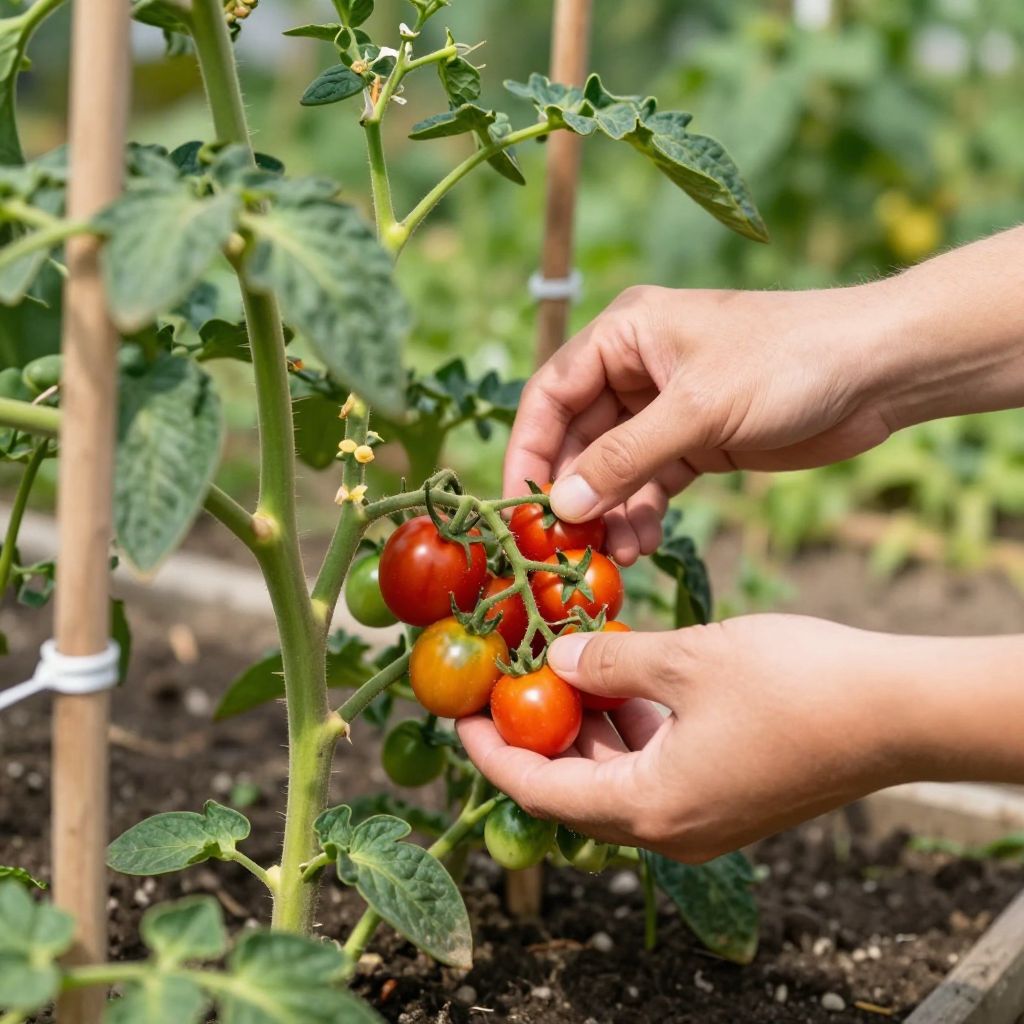
Wondering when to pick cherry tomatoes so they taste sweet, not bland or mealy? The right harvest time depends on color, variety, weather, and how ripe you want them to be. Cherry tomatoes can be picked a little early and finished indoors, or left on the vine for peak flavor if conditions are dry and warm.
If you harvest at the right stage, you’ll get the best balance of sweetness, texture, and shelf life. If you wait too long, fruit can split, soften, or attract pests, so it helps to know the signs of ripeness and how to check them correctly.
When to pick cherry tomatoes?
Pick cherry tomatoes when they have reached full color for their variety, feel slightly soft with a gentle squeeze, and detach easily from the vine with a light twist. For the best flavor, harvest in the morning after the fruit has cooled, and pick often to encourage more production.
How to tell cherry tomatoes are ripe
Color is the first clue, but it should be matched with texture and ease of picking. A ripe cherry tomato is usually evenly colored, glossy, and firm enough to hold its shape, but not hard.
Signs your tomatoes are ready
- Full color: Red, yellow, orange, purple, or another mature color depending on the variety.
- Gentle give: The fruit feels slightly soft when pressed lightly, not rock-hard.
- Easy release: It comes off with a small twist or snip.
- Good flavor development: The fruit smells tomato-like and tastes sweet rather than starchy.
- Even ripening: The skin is mostly uniform in color, with no large green shoulders unless that is normal for the cultivar.
Cherry tomatoes often ripen quickly once they start coloring up. In warm weather, a cluster can move from green to ready in just a few days, so check plants regularly.
What “ripe” means for different uses
- For eating fresh: Wait until fully colored and fully flavored.
- For short-term storage: Pick when nearly ripe if rain, pests, or splitting are a concern.
- For indoor finishing: Harvest when fruit has started to color but is still firm.
Seasonal timing: how weather changes harvest time
Cherry tomato harvest timing shifts with temperature, sunlight, and rainfall. In hot, bright weather, fruit ripens quickly. In cool, cloudy, or wet conditions, ripening slows and flavor may be less intense if fruit is picked too early.
Warm, sunny weather
When days are warm and nights stay mild, cherry tomatoes may need checking every day or two. Fruit can go from nearly ripe to overripe quickly, especially on vigorous plants with lots of clusters.
Cool or rainy weather
Cool weather slows ripening, and extended rain can increase splitting or disease pressure. If frost is approaching, it’s better to harvest fruit that has started to color and let it finish indoors.
End of season
As the season winds down, prioritize fruit that is blushing or turning from green to its mature color. Fully green cherry tomatoes usually won’t develop the same flavor indoors, though they can be used in some kitchens once they begin to change color.
How to harvest cherry tomatoes without damaging the plant
Use a gentle hand when picking. Cherry tomato vines can be productive for a long time, and rough harvesting may snap stems or bruise fruit.
- Inspect clusters from several angles.
- Choose fruit that has reached mature color and feels slightly soft.
- Hold the stem cluster with one hand to steady it.
- Twist the tomato gently until it separates, or snip the stem with clean scissors or pruners.
- Place fruit in a shallow container to avoid crushing.
Do not pull hard on the fruit. If it resists, it is probably not ready yet, or the stem is stronger than expected. Snipping is often the safest option for heavy clusters.
Should you pick cherry tomatoes before they are fully ripe?
Yes, you can pick them slightly early if weather, pests, or cracking are becoming a problem. Cherry tomatoes continue to ripen off the vine once they have started to color, though flavor is usually best when they finish ripening on the plant.
Best stage for indoor ripening
Choose fruit that is at the breaker stage or just beginning to color. These tomatoes are mature enough to finish ripening, unlike hard green fruit that is still developing.
- Keep them at room temperature.
- Place them out of direct sun.
- Check daily and remove any fruit that softens too quickly.
- Do not refrigerate them unless they are already fully ripe and you need to slow deterioration.
If you want the best flavor, let as many tomatoes as possible ripen on the vine. Indoor finishing is a backup, not the ideal method for peak sweetness.
Common mistakes when deciding when to pick cherry tomatoes
Many gardeners miss the harvest window because the fruit looks smaller than expected or because they wait for a perfect uniform color that never arrives. Knowing the common mistakes helps you avoid disappointment.
1. Picking too early
Unripe cherry tomatoes may be firm, pale, and less sweet. They can finish ripening indoors only if they have begun to color, so very green fruit usually stays bland.
2. Waiting too long
Overripe fruit may split, soften excessively, or fall from the vine. Birds, insects, and rodents may also find it before you do.
3. Harvesting after heavy rain
Sudden moisture changes can cause cracking. If rain is expected after a dry spell and fruit is already close to ripe, pick it a bit early.
4. Ignoring the variety’s mature color
Not every cherry tomato turns red. Some mature to yellow, orange, pink, deep purple, or even striped patterns. Check the seed packet or plant label if you are unsure what “ripe” should look like.
What affects cherry tomato ripening on the vine?
Several growing conditions influence when to pick cherry tomatoes, because they affect both ripening speed and flavor development. Healthy plants in good light tend to produce sweeter, more evenly ripened fruit.
Sunlight
Cherry tomatoes need full sun for strong fruiting. In partial shade, ripening may be slower and fruit may be less sweet.
Watering
Even moisture helps reduce cracking and blossom-end issues. Letting the soil swing from very dry to very wet can stress the plant and affect fruit quality.
Soil and nutrients
Rich, well-drained soil supports steady growth. Excess nitrogen can push leafy growth at the expense of fruit ripening, so a balanced approach is better than overfeeding.
Airflow and pruning
Good airflow helps leaves dry faster after rain or watering, which can lower disease pressure. Light pruning and staking can also make fruit easier to see and harvest.
Troubleshooting: why cherry tomatoes may not seem ready
If your fruit stays green for a long time, the issue is often environmental rather than a picking problem. Look at the plant’s overall health before assuming the tomatoes are not maturing.
- Too much shade: Move containers or improve light exposure if possible.
- Cool nights: Ripening slows naturally in cooler weather.
- Heavy foliage: Excess leaves can hide fruit and reduce air movement.
- Overfertilizing: Too much nitrogen may delay fruiting and ripening.
- Stress from drought: Irregular watering can reduce fruit quality and increase splitting.
If the plant is healthy but the season is ending, harvest any fruit that has started to blush. You can also remove some of the smaller, late-set flowers so the plant focuses energy on ripening existing fruit.
How often should you harvest?
Check cherry tomato plants every one to three days during peak season, and more often in hot weather. Frequent picking keeps fruit from overripening and encourages the plant to keep producing.
A plant loaded with ripe clusters can benefit from a full harvest pass, followed by a second look a day or two later. The more often you pick, the easier it is to catch fruit at its best stage.
Quick harvest checklist
- Has the fruit reached its mature color for the variety?
- Does it feel slightly soft, not hard?
- Does it release easily with a twist or snip?
- Is the weather dry enough to harvest safely?
- Do you need to pick early because of frost, pests, or cracking?
Conclusion
The best time to pick cherry tomatoes is when they are fully colored, slightly soft, and easy to remove from the vine. If weather or pests are a concern, harvest at the first blush of color and let them finish indoors. Check your plants often, pick gently, and you’ll get better flavor and a longer harvest.
For more help with productive tomato plants, you may also want to read how to grow tomatoes and how to prune tomato plants.