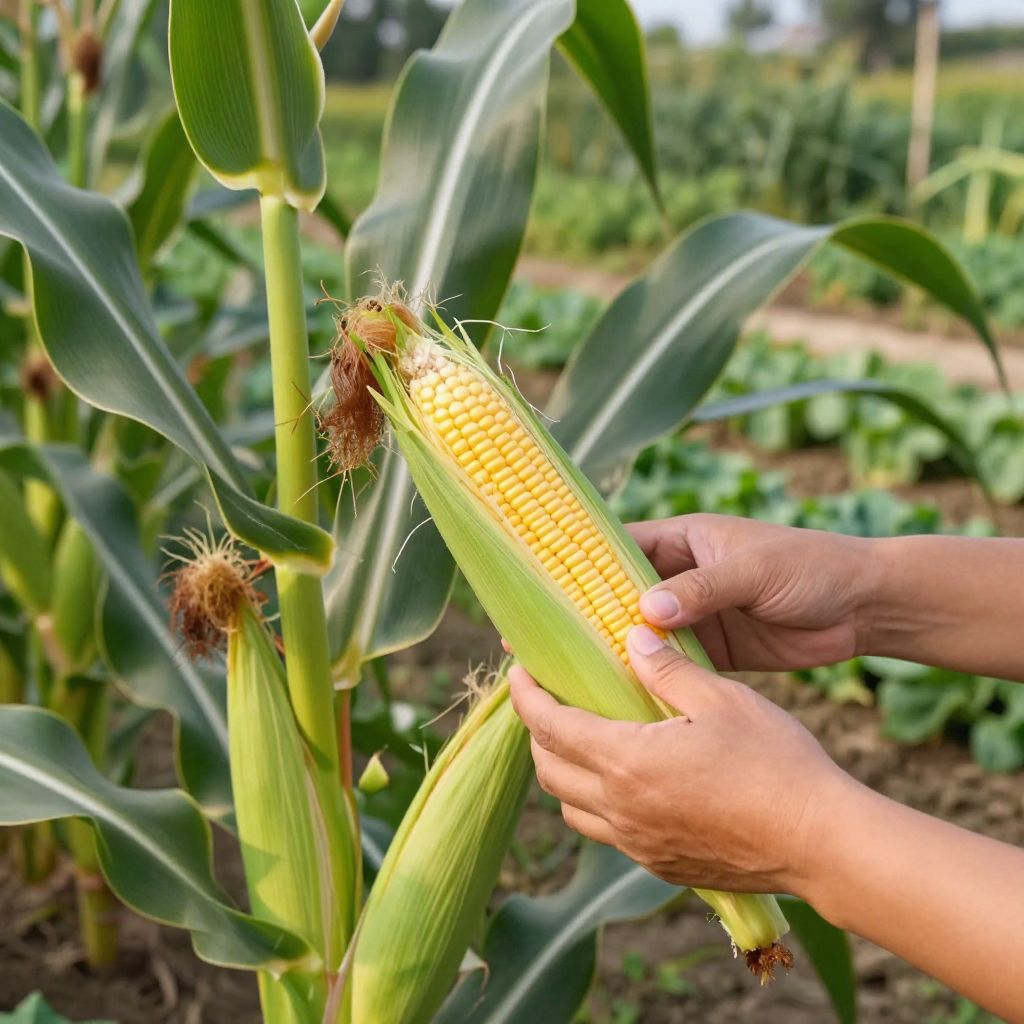
Wondering when to pick corn so it tastes sweet and tender instead of starchy? Timing matters more than many gardeners realize, because sweet corn changes quickly once the ears are fully formed. Pick too early and the kernels may be underdeveloped; wait too long and the sugars begin turning to starch.
The good news is that corn gives clear signs when it is ready. With a few simple checks, you can harvest at the best stage for flavor and texture, whether you are growing a small backyard patch or a larger vegetable bed.
When to pick corn?
Pick corn when the ears are fully filled out, the silks have turned brown and dry, and the kernels are plump and milky when punctured with a fingernail. For sweet corn, this is usually about 18 to 24 days after the silks first appear, but weather, variety, and growing conditions can shift that window.
How to tell corn is ready to harvest
Corn does not ripen much after harvest, so the best time to pick is when the ear is at peak eating quality. Look for several signs together rather than relying on just one.
Visual signs of readiness
- Silks have dried and browned at the ear tip.
- The ear feels full and firm from tip to base.
- The husks are still green, but they may begin to feel less tight.
- The ear is positioned well-filled all the way to the end, not tapered and empty.
Kernel test
Gently peel back a small section of husk and press a kernel with your fingernail. If a milky liquid comes out, the corn is ready or very close. If the liquid is watery, wait a few more days. If the kernel feels doughy or hard, you may have waited too long for peak sweetness.
Feel and size clues
Ripe ears usually feel heavy for their size. The kernels should be swollen and arranged in neat rows all the way to the tip. If the tip is poorly filled, the ear may still need time, or pollination may have been incomplete.
How long corn takes to mature
Most sweet corn varieties mature in roughly 60 to 100 days from planting, depending on the type. The harvest window is much shorter than the growing time, so keep a close eye on the crop as ears begin to form.
What affects timing
- Variety: Early, midseason, and late types mature at different rates.
- Temperature: Warm weather speeds development; cool weather slows it down.
- Water availability: Drought stress can reduce ear fill and delay good harvest quality.
- Soil fertility: Corn is a heavy feeder and needs steady nutrients to size up properly.
- Planting date: Successive plantings can stagger harvests across the season.
Best time of day to pick corn
Harvest corn in the early morning if you can. Sugar levels are often highest then, and the ears stay crisp longer after picking. If morning harvest is not possible, pick as soon as you notice the ears are ready rather than leaving them on the plant for another day.
How to harvest corn properly
Harvesting corn is simple, but using the right technique helps avoid damaging the stalks and nearby ears.
- Hold the ear firmly with one hand.
- Use the other hand to support the stalk if needed.
- Twist the ear downward and away from the stalk in a quick motion.
- Check that the ear snaps free cleanly from the plant.
- Place harvested ears in shade as soon as possible.
If the ear does not release easily, it may not be fully ready. Forcing it can damage the plant and reduce the quality of nearby ears.
What happens if you pick corn too early or too late?
Timing mistakes affect flavor more than almost anything else in sweet corn production. Understanding the difference helps you decide whether to wait or harvest now.
If you pick too early
- Kernels may be small and underfilled.
- The ear can taste watery or bland.
- The cob may seem light and loosely packed.
If you pick too late
- Kernels become starchy and less sweet.
- The texture turns tough or chewy.
- The ear may feel overly firm, and the milk inside the kernels becomes thicker or doughier.
Sweet corn is at its best for only a short period. Once it reaches peak ripeness, the flavor begins to decline quickly, especially in hot weather.
Different types of corn and harvest timing
Not all corn is harvested for the same reason or at the same stage. Make sure you know what kind you are growing before deciding when to pick.
Sweet corn
This is the common garden corn grown for fresh eating. Harvest it at the milk stage, when kernels are plump and juicy.
Popcorn
Leave popcorn on the plant until the ears are fully mature and the husks are dry. Kernels need to dry down properly before storage and popping.
Ornamental or field corn
These types are often grown for decoration, animal feed, or drying. Harvest timing depends on the intended use, but they are usually left longer than sweet corn.
Seasonal timing: how weather changes harvest windows
Local climate has a big effect on when to pick corn. Warm spells can make ears mature quickly, while cool nights can slow the process and extend the harvest window slightly.
In hot weather
Check ears daily once silks begin to brown. Sweet corn can move from perfect to overmature in just a few days during heat waves.
In cooler weather
Ripening may take longer, and the best harvest window can stretch a bit. Still, keep checking regularly, because maturity can vary from ear to ear on the same plant.
After rain or irrigation changes
Sudden changes in moisture can affect kernel fill. Consistent watering during ear development helps produce fuller ears and more reliable harvest timing.
Growing conditions that help corn ripen well
Good harvest timing starts with healthy plants. Corn performs best when it gets strong sun, steady moisture, and fertile soil from planting through ear fill.
Sunlight
Corn needs full sun, ideally at least 6 to 8 hours per day. Shaded plants often produce smaller ears and may mature unevenly.
Soil and compost
Plant corn in well-drained soil that has been enriched with compost or other organic matter. Rich soil supports strong stalk growth and better ear development.
Watering
Keep soil evenly moist, especially when tassels and silks appear and ears are filling. Drought stress at this stage can lead to poor pollination and incomplete kernels.
Spacing and pollination
Corn is wind-pollinated, so plant it in blocks rather than a single long row when possible. Better pollination means fuller ears and more consistent readiness at harvest.
Common problems that affect when to pick corn
Sometimes corn looks close to ready but does not taste right. A few common issues can explain why.
Poor pollination
If the ear has missing kernels or a blank tip, pollination may have been incomplete. This does not always mean the ear is unsafe to eat, but it can reduce quality and make timing less predictable.
Birds and pests
Birds, raccoons, and corn earworms can damage ears before harvest. Check plants often once silks emerge, and use physical protection if wildlife pressure is common in your area.
Drought stress
Water stress can shorten ears and reduce kernel fill. If the plant looks healthy but the ear seems underdeveloped, moisture may have been inconsistent during a critical growth stage.
Overripe ears
Sometimes the plant is still green, but the kernels have already passed peak stage. That is why the milk test is so useful; it tells you more than husk color alone.
How to store corn after picking
Freshly picked corn is best eaten soon after harvest. Sugar levels begin to decline quickly, so handling matters.
- Move ears to shade immediately after picking.
- Keep husks on until you are ready to cook or use the corn.
- Refrigerate as soon as possible if you are not eating it right away.
- Use sweet corn within a day or two for the best flavor.
If you want the sweetest taste, harvest and use the corn the same day. That is when the kernels are at their most tender and flavorful.
Quick checklist for harvest day
- Silks are brown and dry.
- Ears feel full and firm.
- Kernels are plump all the way to the tip.
- A punctured kernel releases milky juice.
- The ear twists off the stalk cleanly.
Final tips for getting the timing right
When learning when to pick corn, the best habit is to check ears closely every day once silks begin to dry. Corn can shift from perfect to past its prime very quickly, especially in warm weather. Use the silk color, ear fullness, and milk test together for the most reliable result.
For more practical vegetable-growing guidance, you may also find it helpful to read about how to grow sweet corn and harvesting vegetables at peak ripeness.