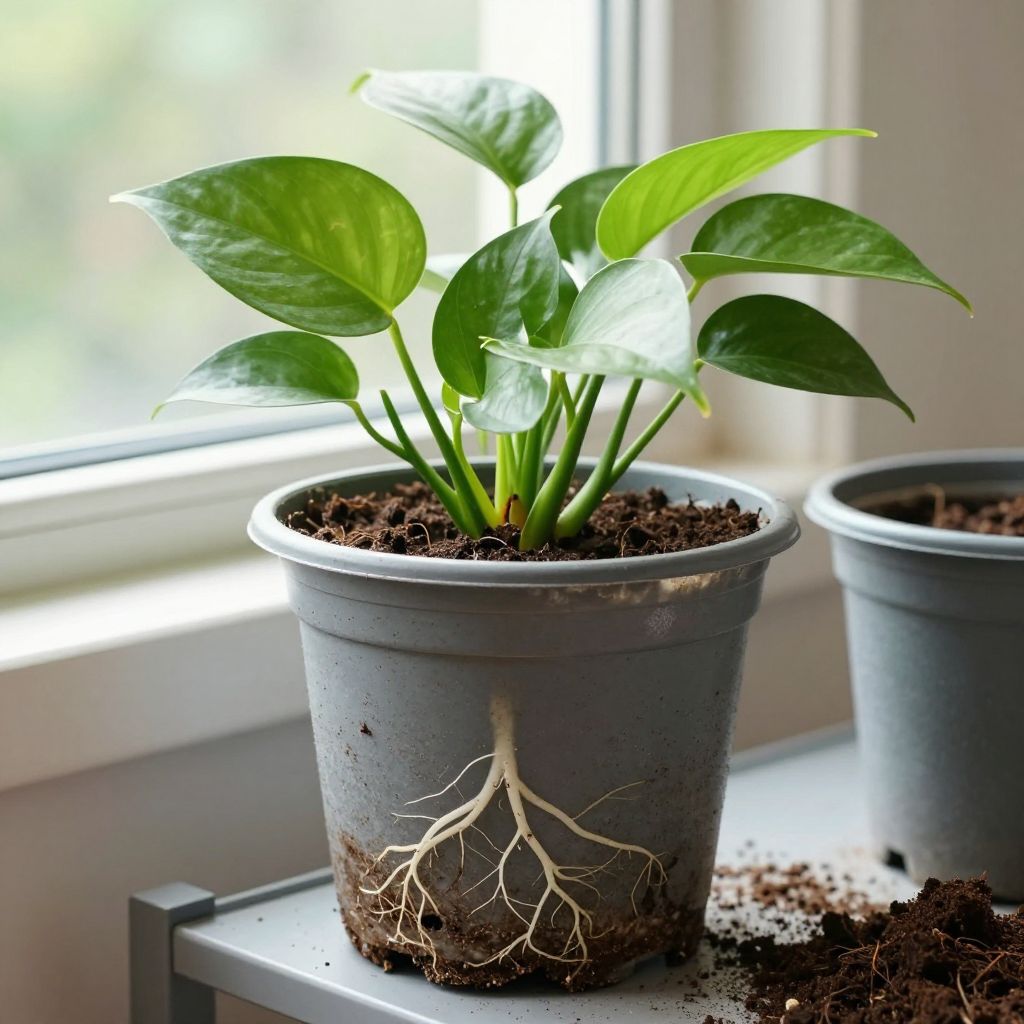
Do pothos like to be root bound? Yes, to a point. Epipremnum aureum generally tolerates slightly crowded roots better than many houseplants, and a snug pot can even help it focus on leafy growth instead of stretching into a bigger root system.
But “root bound” should not mean cramped, dry, and stressed. If the roots are circling tightly, water runs straight through, or growth has stalled, it is time to repot or refresh the plant.
Do pothos like to be root bound?
Pothos usually do best when they are a little snug in their pot, not severely root bound. A mildly crowded root ball can support steady growth and reduce the chance of overwatering, but once roots fill the container and the plant starts drying out too fast or declining, it needs more space or fresh mix.
Why pothos often handle snug pots well
Pothos are adaptable tropical vines that grow in many indoor conditions. In a slightly tight pot, they often put energy into producing vines and leaves rather than expanding roots aggressively.
That said, “happy in a small pot” is not the same as “fine forever.” A pothos that is too root bound can become stressed because the roots have little room to absorb water and nutrients.
Signs a pothos is comfortably snug
- Growth is steady, even if not fast.
- The plant needs watering a little more often, but not daily.
- Leaves stay firm and healthy.
- Roots may be visible at the drainage holes, but they are not choking the pot.
Signs it is too root bound
- Water runs through the pot almost immediately.
- The pot dries out very quickly after watering.
- Roots are circling densely around the outside of the root ball.
- Leaves yellow, wilt, or become smaller.
- Growth slows dramatically even in good light.
- The pot may bulge, crack, or feel packed solid with roots.
How to tell if your pothos needs repotting
The easiest test is to slide the plant from its pot and look at the root ball. Healthy roots are usually white to tan and firm. If you see a thick mat of roots wrapping around the outside and very little potting mix left, the plant is root bound enough to benefit from repotting.
Another clue is watering behavior. If you water thoroughly and the plant is bone dry again within a day or two, the root mass may be taking up most of the pot.
Quick check before you repot
- Water the plant lightly the day before, if the soil is very dry.
- Tip the pot and gently slide the plant out.
- Look for roots circling the outside and bottom.
- Check whether the soil has broken down into a compact, tired mix.
- If the root ball is dense but still healthy, move up one pot size.
What happens if a pothos stays root bound too long?
A slightly snug pothos is usually fine, but a severely root bound plant can struggle. The roots may become so crowded that water and oxygen movement are limited, which can lead to stress, weak growth, and more sensitivity to pests or rot if watering becomes inconsistent.
Common problems include:
- Frequent wilting between waterings
- Yellowing leaves from stress or poor root function
- Stunted vines with fewer new leaves
- Dry, compacted potting mix that no longer absorbs water evenly
- Roots pushing the plant upward or out of the container
How to repot a root bound pothos
If your pothos is crowded but otherwise healthy, repot it into a container only one size larger. For most houseplants, that means choosing a pot about 1 to 2 inches wider in diameter than the current one. Going too large can leave excess wet soil around the roots and increase rot risk.
Step-by-step repotting
- Choose a pot with drainage holes.
- Use a well-draining indoor potting mix.
- Gently loosen the outer roots with your fingers.
- Trim any dead, mushy, or black roots with clean scissors.
- Set the plant at the same depth it was growing before.
- Fill around the root ball with fresh mix and press lightly.
- Water thoroughly, then let excess drain away.
Do not bury the stem deeper than before. Pothos stems can rot if planted too low, especially in a mix that stays wet.
If the plant is extremely root bound
When roots are a dense mat, you may need to tease them apart gently before repotting. If the root ball is very tight, you can make a few shallow vertical cuts along the sides with a clean knife or pruners to encourage outward growth.
Be careful not to remove too much root mass at once. A stressed pothos may need time to recover after a major root disturbance.
Best potting mix and container choices
Pothos prefer a loose, airy mix that drains well but still holds some moisture. A quality indoor potting mix often works well, especially if it contains ingredients like coco coir, bark, or perlite.
Good container features
- Drainage holes to prevent waterlogging
- A pot only slightly larger than the root ball
- A stable shape for trailing vines
- Material that matches your watering habits
Terracotta can dry faster and may suit people who tend to overwater. Plastic or glazed pots hold moisture longer, which can help in bright rooms or dry climates, but they require more careful watering.
Watering a pothos that is root bound
Root bound pothos usually need more frequent watering than plants with more space, but the exact timing depends on light, temperature, humidity, pot size, and mix. Rather than following a fixed schedule, check the top inch or two of soil and lift the pot to judge its weight.
If the plant is root bound, water may move through the pot quickly without soaking the root ball evenly. In that case, water slowly in stages, allowing the mix to absorb moisture before adding more.
Watering tips for crowded roots
- Water until it drains from the bottom.
- If the mix is very dry, water in two passes a few minutes apart.
- Empty saucers so the pot does not sit in water.
- Do not let the plant swing between bone dry and soggy.
Light, pruning, and growth habits
Even a root bound pothos still needs good light to grow well. Bright, indirect light usually supports the best leaf size and vine length indoors. Lower light can make the plant grow more slowly, which may seem like it is “fine” in a snug pot, but it may also become leggy.
How pruning helps
Pruning can keep a pothos manageable and encourage fuller growth. If your plant is getting long and sparse, trim back vines just above a node. Those cut pieces can often be rooted in water or soil for propagation.
Pruning does not replace repotting if the roots are severely crowded, but it can reduce top-heavy stress and improve shape after a repot.
Fertilizing a root bound pothos
A pothos in a small pot may use nutrients faster, but fertilizer is not a fix for cramped roots. If the plant is root bound, repotting and fresh mix matter more than feeding.
Use a balanced houseplant fertilizer only during active growth, and follow the product label. If the plant is stressed, newly repotted, or growing slowly in winter, hold off on fertilizing until it resumes healthy growth.
Common mistakes to avoid
- Choosing a pot that is far too large, which can keep soil wet too long.
- Ignoring drainage holes.
- Using heavy garden soil instead of a light potting mix.
- Repotting into a mix that is already old and compacted.
- Pulling apart roots too aggressively.
- Watering on a rigid schedule instead of checking the plant.
Pests and disease issues in root bound pothos
Root bound pothos are not automatically more pest-prone, but stressed plants can be more vulnerable. Common indoor pests include spider mites, mealybugs, and scale. Check leaf joints, undersides, and stems regularly, especially after moving the plant or repotting.
Overly wet soil after repotting can also invite root rot. If leaves yellow and stems feel soft, inspect the roots right away. Healthy pothos roots should be firm, not mushy or foul-smelling.
Simple troubleshooting guide
- Leaves yellowing after repotting: reduce watering and check drainage.
- Plant wilts quickly: root ball may be too dry or too crowded to absorb water evenly.
- Brown leaf tips: check for inconsistent watering, low humidity, or mineral buildup.
- Slow growth: assess light first, then roots and pot size.
Can you keep a pothos slightly root bound on purpose?
Yes, many gardeners do. A mildly snug pot can be a practical choice for a pothos that is already healthy and not drying out too fast. This is especially useful if you want to limit size or reduce how often you repot.
The key is to monitor the plant closely. Once the root system starts affecting watering, growth, or leaf health, the pot is no longer just “snug” — it is crowded enough to need attention.
Conclusion: the best balance for pothos
Pothos like being a little root bound, but not severely cramped. If your plant is healthy, you can let it stay snug for a while; if it dries out quickly, stops growing, or shows stressed leaves, repot it one size up into fresh, well-draining mix.
For more practical houseplant care, you may also want to read about how to repot houseplants without shocking them and the best indoor potting mix for healthy roots.