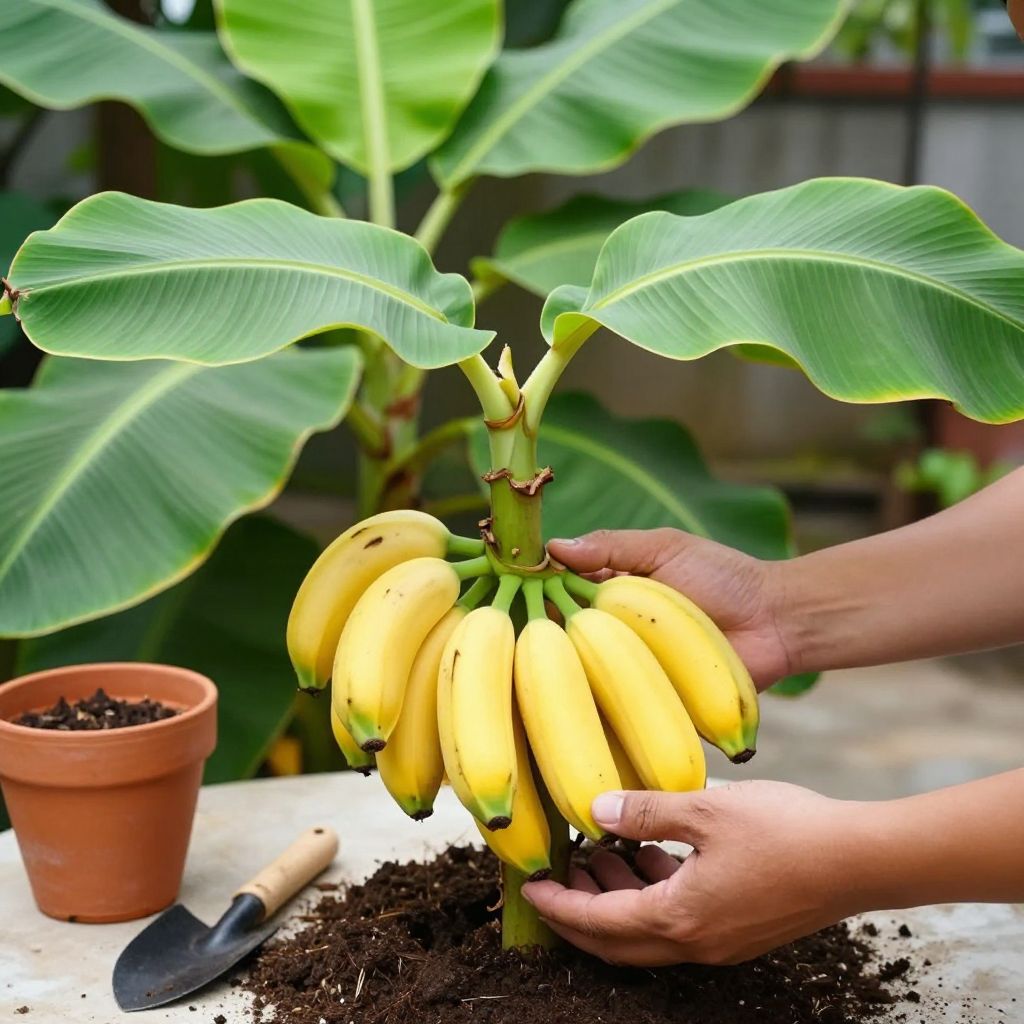
Can you grow a banana tree from a banana? Not from the fruit you buy and eat. The edible banana is usually seedless, so it won’t sprout into a banana plant in the way a bean or apple seed might. To grow bananas at home, you normally start with a pup, corm, or tissue-cultured plant.
If you want to try banana growing, the good news is that it’s very doable in the right climate or in a large container indoors. With warmth, moisture, rich soil, and steady care, a banana plant can grow fast and become an impressive tropical feature.
Can You Grow A Banana Tree From A Banana?
No, not from the supermarket banana fruit itself. Most edible bananas are sterile and nearly seedless, so the fruit does not contain viable seeds for starting a plant. Instead, banana plants are propagated from offsets called pups, or from nursery-grown tissue culture plants.
How Banana Plants Actually Grow
What people call a banana “tree” is really a giant herbaceous plant, not a woody tree. The visible stem is a pseudostem made of tightly wrapped leaf bases, and the plant spreads underground from a corm. That’s why propagation usually comes from the base of an existing plant rather than from fruit.
Why the fruit won’t usually work
- Commercial bananas are bred for edible flesh and low seed production.
- Many fruits contain only tiny, undeveloped seed traces.
- Even when seeds are present in some wild bananas, they are not the same as the common dessert bananas you buy at the store.
What to use instead
- Pups: small shoots that emerge from the parent plant’s base.
- Corm divisions: sections of the underground stem with growth points.
- Tissue-cultured plants: nursery-started plants that are clean and vigorous.
The Best Way To Start A Banana Plant
If you want reliable results, start with a healthy pup or a nursery plant. This gives you a true banana plant that can establish quickly and grow much faster than anything you could attempt from fruit.
- Choose a healthy pup that is 2 to 4 feet tall, if possible, with its own roots starting to form.
- Separate it carefully from the mother plant using a clean spade or knife.
- Keep some roots attached if you can, since that improves survival.
- Plant immediately in moist, well-drained soil or a large container.
- Water deeply and keep the plant evenly moist while it establishes.
If you buy a nursery plant, look for firm stems, green leaves, and no signs of rot, wilting, or heavy pest damage. A small plant may take longer to fruit, but it is often easier to establish than a large, stressed specimen.
Growing Conditions Bananas Need
Banana plants grow best in warm, frost-free conditions with plenty of moisture and rich soil. They are heavy feeders and fast growers, so weak soil or drought quickly shows up as slow growth, yellowing leaves, or poor fruiting.
Sunlight
Give bananas full sun for best growth and fruiting, though very hot climates may benefit from light afternoon shade. Indoors, place the plant in the brightest spot you have, ideally near a south- or west-facing window.
Temperature
Bananas prefer warm temperatures and dislike cold snaps. Growth slows in cool weather, and frost can seriously damage the plant. If you garden in a marginal climate, grow bananas in containers so you can move them under cover when temperatures drop.
Soil and drainage
Bananas like fertile soil that holds moisture but still drains well. A loamy mix enriched with compost works well. Poor drainage is a common cause of root and corm rot, especially in containers and heavy clay soils.
- Use a deep planting hole or large pot.
- Mix in compost or well-rotted organic matter.
- Avoid soggy, compacted soil.
- Mulch around the plant to conserve moisture.
How To Plant A Banana Pup Or Young Plant
Planting correctly helps the banana establish quickly and reduces stress. Whether you are planting in the ground or in a container, the goal is the same: warm roots, steady moisture, and enough room to grow.
In the ground
- Choose a sheltered, sunny site with rich soil and room for the plant to spread.
- Dig a wide hole and loosen the surrounding soil well.
- Set the plant at the same depth it was growing before.
- Backfill with soil and compost, then water thoroughly.
- Apply mulch, but keep it a few inches away from the pseudostem.
In a container
- Use a large pot with drainage holes.
- Choose a high-quality potting mix with compost added if needed.
- Plant the banana at the same depth as before.
- Water until excess drains from the bottom.
- Place the pot where it gets strong light and warmth.
Important: bananas do not like to dry out completely, but they also do not tolerate standing water. Good drainage is just as important as regular watering.
Watering And Feeding For Strong Growth
Bananas grow fast and use a lot of water and nutrients. If the plant is underfed or repeatedly drought-stressed, leaf size shrinks and fruiting can suffer. Keep the soil evenly moist and feed regularly during active growth.
Watering tips
- Water deeply when the top inch or two of soil begins to dry.
- Increase watering during hot, windy weather.
- Reduce watering in cool, cloudy periods when growth slows.
- Container plants usually need more frequent watering than in-ground plants.
Feeding tips
Use compost, well-rotted manure, or a balanced fertilizer suited to fruiting plants, following the label directions. Rather than guessing at exact amounts, adjust feeding to your soil, pot size, and plant vigor. Rich organic matter is especially helpful in poor soils.
Watch the leaves for clues. Pale leaves can point to low fertility, while brown leaf edges may mean drought, salt buildup, or irregular watering.
Pruning And Ongoing Maintenance
Banana plants need light maintenance more than heavy pruning. The main goal is to keep the clump healthy and productive while preventing overcrowding and removing damaged growth.
What to remove
- Dead, torn, or badly diseased leaves.
- Excess pups if the clump becomes crowded.
- Spent fruiting stems after harvest.
How to manage pups
Bananas often produce several pups around the mother plant. In a home garden, it is usually best to keep one strong replacement pup and remove extras so the clump does not become overcrowded and weak.
Use a clean, sharp spade or knife for removal. If you want to propagate more plants, let the pup grow a bit before separating it so it has a better chance of surviving on its own.
Common Problems And How To Fix Them
Most banana growing problems come from cold, poor drainage, inconsistent watering, or pests. Catching issues early makes a big difference because banana plants can decline quickly if their growing conditions are poor.
Yellow leaves
Some yellowing of older leaves is normal, but widespread yellowing can mean overwatering, underwatering, low fertility, or cold stress. Check the soil first, then adjust moisture and feeding.
Brown leaf edges
Leaf scorch often points to dry air, underwatering, wind, salt buildup, or root stress. Improve watering consistency and protect the plant from harsh exposure.
Soft or rotting base
This usually signals too much water or poorly drained soil. Improve drainage, reduce watering, and remove badly rotted tissue if possible. In severe cases, you may need to replant a healthy pup in better soil.
Slow growth
Bananas need warmth, light, and nutrients. If the plant is stagnant, it may be too cool, too shaded, or underfed. Container plants are especially vulnerable to cramped roots and depleted potting mix.
Pests And Diseases To Watch For
Bananas can attract common garden pests, especially in warm climates and indoor settings. Regular inspection helps you catch problems before they spread.
- Aphids: cluster on tender growth and can distort new leaves.
- Spider mites: more common in dry indoor air; leaves may look speckled.
- Mealybugs: white, cottony insects that hide in leaf joints.
- Scale insects: small, immobile bumps on stems and leaves.
For pest control, start with a strong spray of water, remove heavily infested leaves, and use appropriate low-toxicity controls if needed. Keep the plant clean and avoid crowding, which helps pests and disease spread more easily.
Fungal and bacterial problems are more likely when plants are wet for long periods, crowded, or growing in poorly drained soil. Good spacing, airflow, and careful watering are your best defenses.
Can You Grow A Banana Plant Indoors?
Yes, you can grow a banana plant indoors, especially a dwarf type or a young plant kept in a large container. It will need very bright light, warmth, humidity, and enough root space to stay vigorous.
Indoor care basics
- Place it in the brightest window available.
- Rotate the pot so growth stays even.
- Use a large container with excellent drainage.
- Increase humidity if indoor air is very dry.
- Watch closely for spider mites and mealybugs.
Indoor bananas may not fruit easily unless conditions are excellent, but they can still make a striking foliage plant. If you want fruit, outdoor warmth and strong light are usually much better.
Harvesting And What To Expect
Bananas do not ripen on the plant in the same way many fruits do. Once a bunch forms, the plant usually puts its energy into filling the fruit, and the stem that fruited will eventually decline while pups continue the cycle.
Do not expect a newly planted banana to fruit quickly. Timing depends on climate, variety, plant size, and growing conditions. In cooler or indoor settings, the plant may remain ornamental for a long time before ever producing a bunch.
Conclusion
You cannot grow a banana tree from the banana fruit you eat, but you absolutely can grow a banana plant from a pup or nursery start. If you want success, focus on warmth, rich soil, steady moisture, and good drainage. Start with a healthy pup, and you’ll be much closer to growing your own bananas.
For more practical tropical plant care, you may also enjoy reading about growing bananas in the home garden and banana plant care basics.