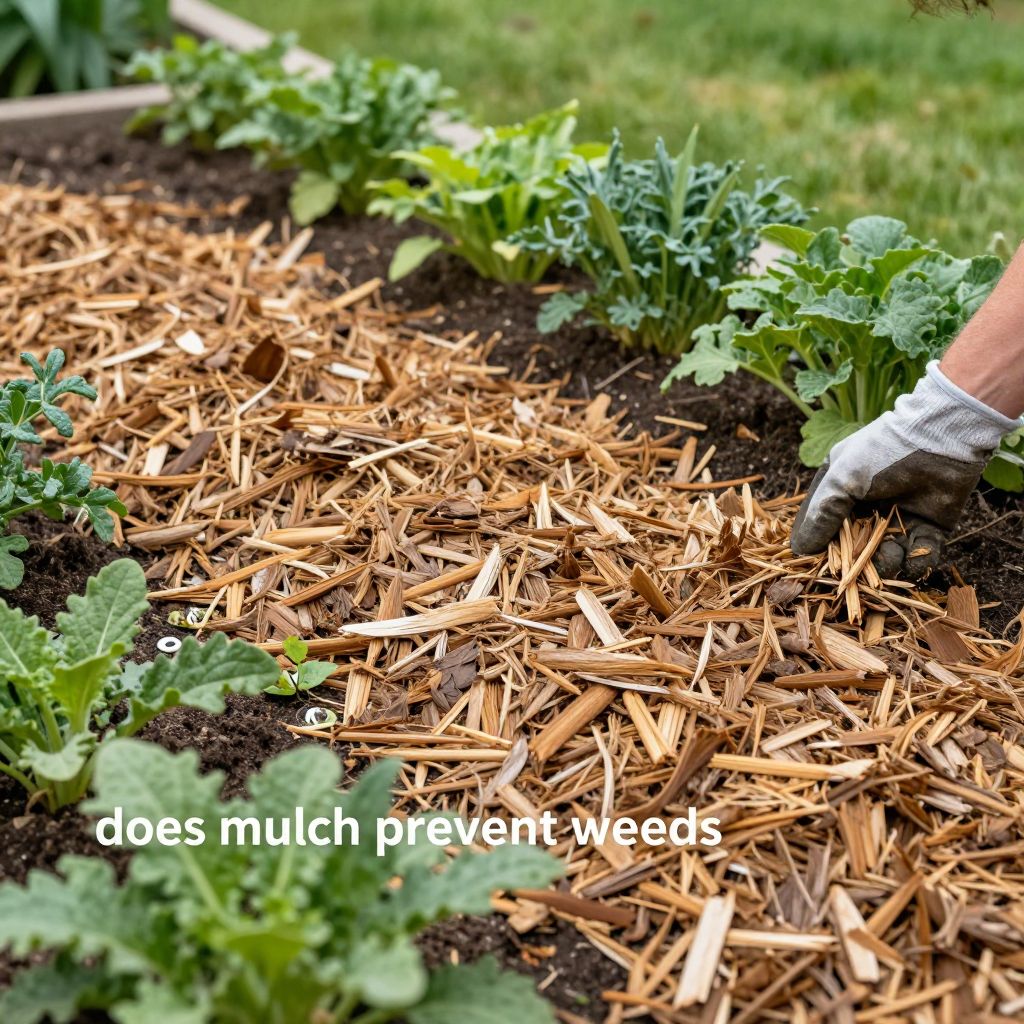
Does mulch prevent weeds? Yes, mulch can greatly reduce weed growth, but it does not make a bed weed-proof. A good mulch layer blocks light from reaching many weed seeds, helps soil hold moisture, and makes any weeds that do appear easier to pull.
The best results come from using the right mulch, applying it at the right depth, and keeping weeds under control before mulching. If you skip those steps, weeds can still push through or grow on top of the mulch layer.
Does mulch prevent weeds?
Mulch prevents many weeds by shading the soil surface and slowing seed germination. It works best when you start with a weed-free bed, use a 2 to 4 inch layer of organic mulch, and refresh it as it breaks down. Mulch suppresses weeds, but it does not stop every perennial weed or windblown seed.
How mulch helps control weeds
Weeds need light, moisture, and open soil to get established. Mulch interrupts that process by covering the soil and creating a barrier between weed seeds and sunlight.
What mulch does well
- Blocks light from reaching many annual weed seeds
- Keeps soil surface cooler and more evenly moist
- Makes hand-pulling easier because roots loosen more readily in moist soil
- Reduces soil splash onto leaves, which can help with some disease prevention
- Improves the look of beds and borders while plants fill in
What mulch does not do
- It does not kill established perennial weeds with deep roots or rhizomes
- It does not stop every seed from germinating
- It does not replace regular garden maintenance
- It can still allow weeds to grow if applied too thinly or over existing weeds
Best mulch types for weed control
Different mulches work in different ways. For weed suppression, the best mulch is usually the one that stays in place, covers the soil well, and suits your planting area.
Organic mulches
Organic mulches break down over time and improve soil structure as they decompose. They are a strong choice for most flower beds, shrub borders, and vegetable gardens.
- Shredded bark or bark chips: long-lasting and good for ornamental beds
- Wood chips: excellent for pathways and around trees and shrubs
- Straw: useful in vegetable gardens, especially around crops like strawberries or tomatoes
- Leaf mold or shredded leaves: affordable and soil-friendly, though lighter and easier to blow away
- Compost: useful as a top dressing, but usually best combined with another mulch for stronger weed suppression
Inorganic mulches
Inorganic materials can suppress weeds well, especially in pathways or low-maintenance areas, but they do not improve soil the way organic mulch does.
- Landscape fabric: can reduce weeds when installed correctly, but weeds may still grow in dust and debris that collect on top
- Gravel or stone: useful for dry landscapes and paths, though weeds can still seed into the surface over time
- Rubber mulch: long-lasting, but not ideal for every planting bed and does not feed the soil
How to mulch so weeds stay down
Good weed control depends as much on preparation as on the mulch itself. If you mulch over existing weeds, many will simply keep growing.
- Remove existing weeds first. Pull annual weeds by hand and dig out roots of perennial weeds as thoroughly as possible.
- Water the bed if soil is dry. Moist soil makes weeding easier and helps plants recover from disturbance.
- Edge the bed if needed. A clean edge helps keep grass from creeping into the mulch.
- Apply mulch evenly. Aim for about 2 to 4 inches for most organic mulches.
- Keep mulch a few inches away from stems and trunks. Leave space around plant crowns, tree trunks, and woody stems to prevent rot and pest problems.
How deep should mulch be?
For most beds, 2 to 4 inches is enough. A thinner layer may not suppress weeds well, while a much thicker layer can block air and water from reaching roots.
- Fine mulch such as shredded bark often works well at 2 to 3 inches
- Coarser mulch such as wood chips may need 3 to 4 inches for good coverage
- Very light mulch like shredded leaves may need topping up more often
Common mistakes that let weeds come back
Even good mulch can fail if it is used the wrong way. These are the most common reasons weeds still appear.
Mulching over weeds
If you cover a weedy bed without removing the weeds first, many will grow through the mulch or survive underneath it. Some tough perennials can even spread more aggressively.
Using too little mulch
A thin layer leaves enough light for weed seeds to germinate. If you can easily see a lot of bare soil, the mulch is probably too shallow.
Letting mulch decompose too far
Organic mulch breaks down over time. As it thins, weed pressure rises again, so check beds regularly and top up when needed.
Allowing weeds to seed into the mulch
Windblown seeds can land in mulch and sprout in the top layer of dust or composted debris. Pull these weeds early before roots anchor deeply.
Using contaminated mulch
Some mulch or compost contains weed seeds if it was not fully processed. If you notice many weeds appearing soon after mulching, the material itself may be part of the problem.
Does mulch stop all kinds of weeds?
No. Mulch is strongest against small annual weeds that sprout from seed. It is less effective against tough perennial weeds, grasses with spreading roots, and weeds already established in the soil.
Annual weeds
These are usually the easiest to suppress with mulch. Examples include many quick-germinating garden weeds that rely on exposed soil and sunlight.
Perennial weeds
Perennials like bindweed, quackgrass, and nutsedge can push through mulch or spread from underground roots. These often need repeated removal, digging, or smothering over time.
Woody seedlings
Tree seedlings and volunteer shrubs may also emerge through mulch if they germinate from seed carried by wind or birds. Pull them while they are small.
Mulch in vegetable gardens, flower beds, and around trees
Where you use mulch changes how you apply it. The same product can work differently depending on the planting area.
Vegetable gardens
Mulch helps keep soil moist and reduces weed competition around crops. Use a lighter, easy-to-move mulch such as straw, shredded leaves, or composted material, and keep it from touching tender stems.
Flower beds and borders
Shredded bark, bark chips, and leaf mulch are common choices here. They help keep beds tidy and reduce hand weeding between perennials and shrubs.
Around trees and shrubs
Mulch works especially well under trees and shrubs because these areas are often difficult to weed by hand. Keep mulch in a broad ring, but do not pile it against the trunk. A mulch “volcano” can trap moisture and harm bark.
Seasonal care and maintenance
Weed pressure changes through the year, so mulch care should change too. In many gardens, the biggest flushes of weeds happen in warm, moist weather and after soil disturbance.
- Spring: remove early weeds before applying fresh mulch
- Summer: check for thin spots and pull weeds before they bloom and seed
- Fall: top up mulch if it has broken down, especially in perennial beds
- After heavy rain or wind: rake mulch back into place if it has shifted
If you garden in a wet climate, mulch may break down faster and need more frequent topping up. In dry climates, a thicker layer may help conserve moisture, but you still need to leave room for water to reach the soil.
Tools and techniques that make mulching more effective
Simple tools can make weed control easier and help you apply mulch evenly.
- Hand fork or weeding knife for removing roots
- Gloves for pulling weeds and spreading mulch
- Rake for leveling mulch and clearing debris
- Wheelbarrow or tarp for moving mulch efficiently
- Garden hose or watering can to settle mulch lightly after application if the soil is dry
For best results, weed first, mulch second, and then inspect the bed every couple of weeks during active growth. Catching small weeds early is much easier than fighting a mature infestation.
When mulch is not enough
Sometimes a bed has such a heavy weed problem that mulch alone will not solve it. In that case, use mulch as part of a larger plan.
- Clear existing weeds thoroughly before re-mulching
- Use cardboard or newspaper under organic mulch in some beds, if appropriate for your planting plan
- Repeat hand weeding before weeds set seed
- Improve plant spacing so desirable plants can shade the soil as they grow
- Consider whether a perennial weed needs digging out rather than simply covering
Mulch is a tool, not a one-step cure. It works best when your plants are healthy, the soil drains well, and the bed is maintained regularly.
Conclusion
So, does mulch prevent weeds? Yes, it reduces them significantly when you use it correctly, but it will not eliminate every weed. Clear the bed first, apply the right depth, keep mulch away from stems, and top it up as it breaks down. That simple routine will save you a lot of weeding time.
If you want to improve your garden bed even further, look for more practical guides on soil preparation, compost use, and bed maintenance to help your mulch work as effectively as possible.