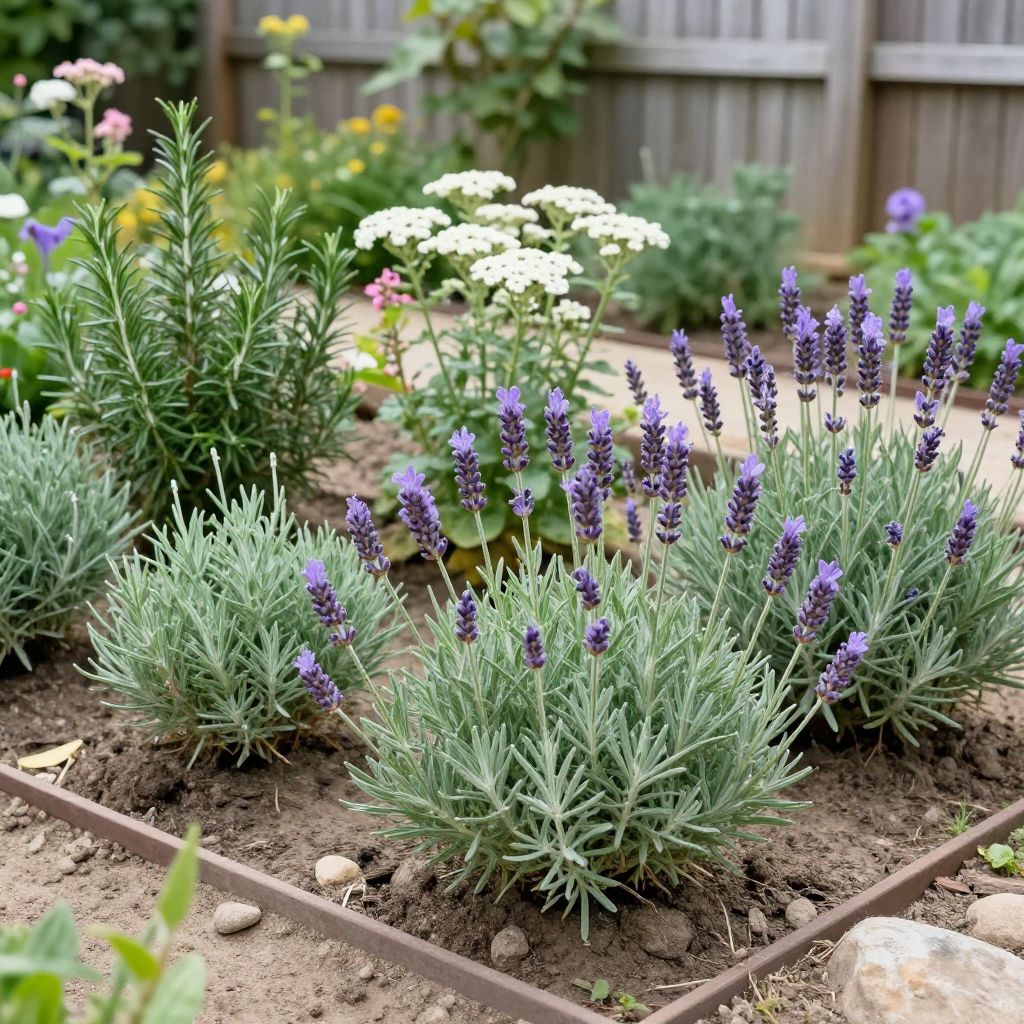
What should you plant with lavender so your border looks good and your plants actually thrive? The best companions are other sun-loving, drought-tolerant plants that prefer lean, well-drained soil and won’t crowd lavender’s roots or shade its foliage.
Choose plants that share lavender’s growing needs, and you’ll get a healthier bed with less watering, fewer disease problems, and a more balanced design. The key is to match light, drainage, and growth habit rather than simply picking plants that look pretty together.
What to plant with lavender?
The best plants to grow with lavender are drought-tolerant companions that like full sun and sharply drained soil, such as rosemary, thyme, salvias, yarrow, sedum, catmint, and ornamental grasses. Avoid thirsty, shade-loving plants or anything that needs rich, constantly moist soil, because those conditions can weaken lavender quickly.
Why companion planting matters with lavender
Lavender is not a plant that likes to be fussed over. It performs best in bright sun, airy conditions, and soil that drains quickly after rain or watering.
If you pair it with plants that need frequent moisture or rich compost, one of the plants will usually suffer. The most successful combinations are based on similar cultural needs, not just color or texture.
What lavender needs to stay healthy
- Full sun for most of the day.
- Well-drained soil that does not stay wet.
- Moderate to low fertility.
- Good air circulation around the stems.
- Light watering once established, depending on climate and soil.
When you understand those needs, it becomes much easier to choose good neighbors for lavender.
Best plants to plant with lavender
1. Rosemary
Rosemary and lavender make a classic pairing because they enjoy the same sunny, dry conditions. Both prefer soil that drains well and both look attractive in a Mediterranean-style border.
Plant them with enough space for air movement. Rosemary can become woody and wide, so give each plant room to mature without crowding lavender.
2. Thyme
Thyme is one of the easiest low-growing companions for lavender. It stays compact, tolerates lean soil, and can help fill gaps at the front of a border or along a path.
Use creeping thyme or common thyme where you want a soft edge. Keep it out of the center of larger lavender clumps so it does not get shaded out.
3. Salvias
Many ornamental salvias pair beautifully with lavender because they like sun, drainage, and relatively low maintenance. Their flower spikes also echo lavender’s shape, which creates a cohesive look.
Choose salvias that suit your climate and local growing conditions. Some are perennial, while others are treated as annuals in colder regions.
4. Catmint
Catmint, or Nepeta, is a reliable companion for lavender in sunny borders. It has a softer, billowing habit that contrasts nicely with lavender’s more upright form.
It can spread, so give it space and trim it back if it starts to spill too far into the lavender’s crown.
5. Yarrow
Yarrow thrives in poor to average soil and full sun, making it a strong match for lavender. Its flat flower clusters add a different texture that complements lavender’s spires.
In very fertile soil, yarrow may grow taller and flop more, so avoid overfeeding the bed.
6. Sedum
Sedums, especially low-growing types, are excellent in dry, sunny sites. They bring a different leaf shape and bloom later than lavender, extending seasonal interest.
They are especially useful in gravel gardens, raised beds, and other sharply drained spaces.
7. Ornamental grasses
Compact ornamental grasses can soften the look of lavender while still respecting its need for sun and drainage. Their movement adds contrast to lavender’s more structured form.
Choose grasses that won’t become too dense or too tall for the space. Avoid vigorous types that will crowd the lavender over time.
8. Echinacea and other drought-tolerant perennials
In the right soil, drought-tolerant perennials such as coneflower can work well with lavender, especially in mixed pollinator borders. They offer a longer bloom season and attract beneficial insects.
Just make sure the bed is not overwatered. Lavender dislikes the richer, wetter conditions that many perennial borders are given.
Plants to avoid planting with lavender
Not every attractive plant is a good companion. Lavender can struggle if nearby plants need different care.
- Moisture-loving plants such as hostas, astilbes, and many ferns.
- Plants that need rich, highly amended soil.
- Shade plants that will stretch toward the sun and crowd lavender.
- Fast-spreading, aggressive plants that can smother the crown.
- Anything that requires frequent overhead watering.
If you plant lavender beside thirsty plants, you may end up watering too much for the lavender or too little for the other plants. That mismatch is one of the most common reasons companion plantings fail.
How to design a lavender companion bed
Match plant size and spacing
Lavender needs room for air to move through the planting. Crowding increases humidity around the stems and can encourage disease or weak growth.
As a general rule, leave enough space for mature size, not just the size of the plant in the nursery pot. Smaller companions should sit at the front or between larger lavender plants without blocking airflow.
Use repetition for a clean look
Lavender looks best when repeated in groups rather than planted as a single isolated shrub. Repeating the same companion plants nearby creates a calm, cohesive border.
For example, you might alternate lavender with clumps of catmint or rosemary, then add a lower edging plant such as thyme at the front.
Think about color and texture
Lavender’s gray-green foliage pairs well with silvery leaves, blue flowers, purple tones, and soft whites. It also contrasts nicely with fine grasses and the broader leaves of some drought-tolerant perennials.
Try to avoid overly busy combinations. A few repeated textures usually look better than many unrelated plants competing for attention.
How to plant lavender with companions
- Choose a sunny site. Aim for the brightest part of the garden, especially in cooler climates.
- Check drainage. If water sits in the bed after rain, improve the site or use raised planting.
- Prepare the soil lightly. Lavender usually prefers soil that is not heavily enriched. If your soil is very poor, a small amount of compost can help, but do not overdo it.
- Set spacing carefully. Leave room for each plant’s mature width and for air to move between them.
- Plant at the same depth. Keep the crown of lavender above soggy soil and avoid burying the stem.
- Water in once. Give a thorough watering after planting, then let the soil begin to dry before watering again.
- Mulch lightly. Use a thin layer of gravel or coarse mulch rather than heavy, moisture-holding mulch right against the crown.
If your soil is clay-heavy, consider planting lavender in a raised bed, slope, or gravelly border where water drains away more quickly.
Soil, compost, and drainage tips
Lavender is often damaged more by too much care than too little. Rich compost and dense mulch can hold extra moisture around the roots, which is not ideal for this plant.
What works best
- Well-drained sandy, loamy, or gravelly soil.
- A small amount of compost only if the soil is very poor.
- Raised beds or mounded planting in wet climates.
- Gravel mulch or stone chips in dry gardens.
If your soil is heavy, improve drainage first rather than trying to “feed” lavender into success. Good drainage matters more than rich fertility.
Watering and seasonal care
Newly planted lavender needs regular attention until roots establish, but mature plants prefer a lighter touch. The same is true for many of its companions, though exact watering depends on your weather, soil type, and season.
Watering guidelines
- Water newly planted companions deeply, then allow the top layer of soil to dry before watering again.
- Once established, water only when the plants show signs of needing it and the soil has dried out.
- In rainy climates, drainage and airflow matter more than added irrigation.
- In hot, windy, or sandy sites, container-grown or newly planted lavender may need more frequent checks.
Watch the plants rather than relying on a fixed schedule. Lavender prefers drying cycles, while overwatering can lead to root problems and weak growth.
Pruning and maintenance
Lavender benefits from regular light pruning after flowering, and many of its best companions also appreciate trimming to keep their shape. Pruning helps maintain airflow and prevents the bed from becoming woody or tangled.
Remove spent flower stems and trim back soft growth, but avoid cutting deeply into old woody stems on lavender. If you prune too hard into bare wood, the plant may not reshoot well.
Common problems when planting with lavender
Yellowing or wilting plants
This often points to too much water, poor drainage, or a plant that simply does not suit the site. Check whether the problem is affecting lavender, the companion plant, or both.
If the soil stays wet for long periods, move the plant or improve drainage rather than increasing fertilizer.
Leggy growth and poor flowering
Too little sun is a common cause. Lavender and its companions need open, bright conditions to flower well and stay compact.
If nearby plants have grown taller and started shading the lavender, thin or move them before the bed becomes crowded.
Fungal issues
Dense planting, poor airflow, and wet foliage can encourage disease. Keep the bed open and avoid overhead watering where possible.
Remove damaged stems promptly and dispose of diseased material rather than leaving it in the bed.
Can you grow lavender in pots with other plants?
Yes, but container planting is trickier because different plants in the same pot must share the same water and soil conditions. Lavender in pots usually does best with other drought-tolerant plants that need excellent drainage.
If you combine it in a container, choose a large pot with drainage holes and use a gritty, free-draining mix. Avoid pairing lavender with plants that need frequent watering, because the pot will stay too wet for the lavender.
Good companion combinations to try
- Lavender + rosemary + thyme for a classic herb garden look.
- Lavender + catmint + ornamental grass for a soft, pollinator-friendly border.
- Lavender + sedum + yarrow for a dry, low-maintenance bed.
- Lavender + salvias + thyme edging for a long-blooming sunny planting.
These combinations work because the plants share similar needs. That usually means less maintenance and better long-term performance.
Conclusion
If you want to know what to plant with lavender, start with sun-loving, drought-tolerant plants that enjoy lean, well-drained soil. Rosemary, thyme, salvias, catmint, yarrow, sedum, and compact grasses are all strong options when matched to your climate and space.
Before planting, check your drainage, give each plant enough room, and avoid overwatering. If you want more ideas for a low-water garden, look for related guidance on growing rosemary and creating a drought-tolerant border.