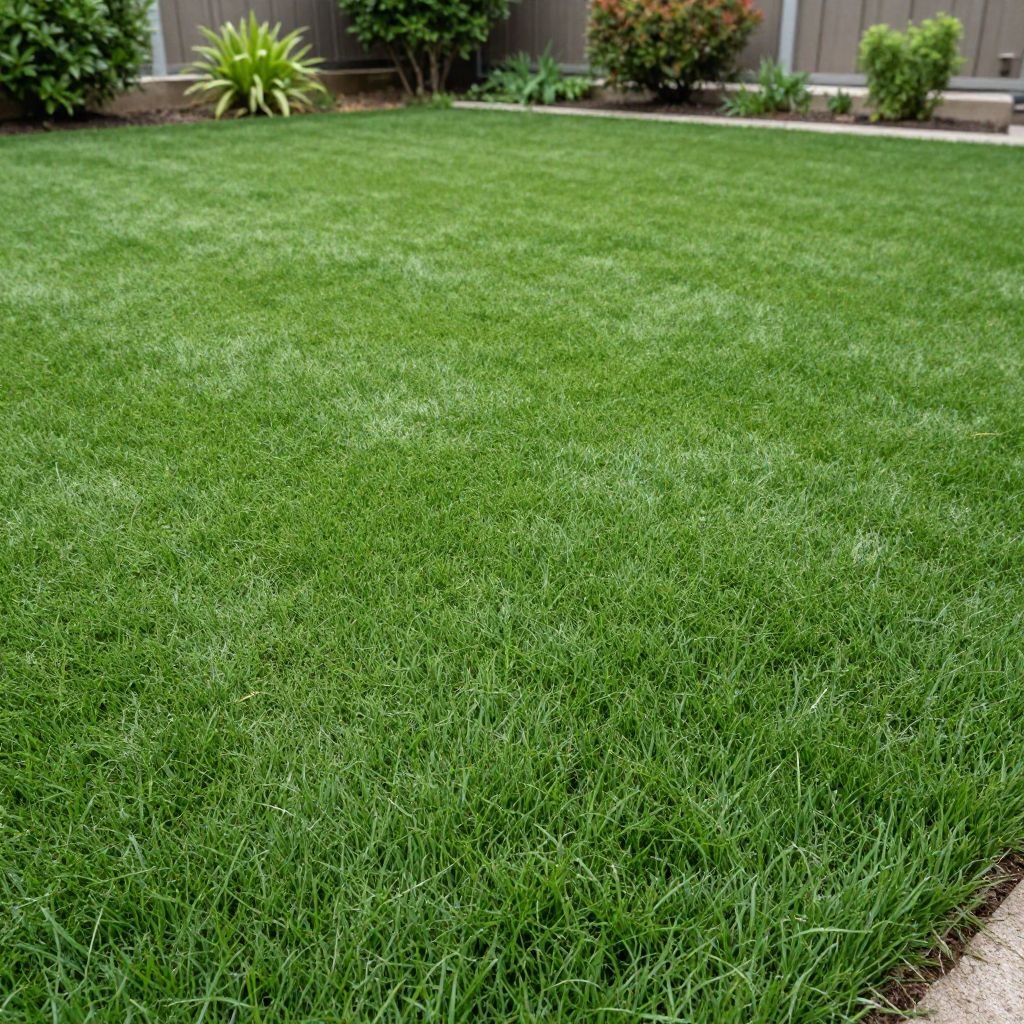
If you’ve ever wondered, “What is turf grass?” the short answer is that it’s grass grown and maintained to form a dense, even ground cover for lawns, sports fields, parks, and other managed landscapes. It’s chosen for durability, uniform appearance, and the ability to tolerate regular mowing and foot traffic.
For home gardeners, turf grass is less about one single plant and more about a group of grass species and cultivars used for lawn surfaces. Knowing how to identify it and care for it well helps you choose the right lawn type, solve problems faster, and avoid wasting water, fertilizer, and effort.
What is turf grass?
Turf grass is any grass species maintained as a closely mown, living carpet. Common turf grasses include cool-season types such as Kentucky bluegrass, perennial ryegrass, and tall fescue, and warm-season types such as bermudagrass, zoysiagrass, and St. Augustinegrass. The best choice depends on your climate, sun exposure, soil, and how much wear the lawn gets.
How to identify turf grass in your yard
Identifying turf grass starts with looking at the blades, growth habit, and whether the lawn spreads by seed, rhizomes, or stolons. Most turf grasses have narrow leaves, a fibrous root system, and a dense growth pattern when healthy.
Key features to look for
- Leaf width: Fine-textured grasses have narrow blades; coarse-textured grasses have wider blades.
- Growth habit: Some spread by underground stems (rhizomes), some by above-ground runners (stolons), and some mainly by bunching.
- Color: Healthy turf is usually medium to deep green, though color varies by species and season.
- Blade tips and texture: Soft, stiff, glossy, or rough blades can help narrow the ID.
- Seed head shape: If the lawn is allowed to grow taller, the flowering stalks can offer clues.
Common turf grass groups
- Cool-season grasses: Best suited to cooler spring and fall conditions. They often struggle in intense summer heat without extra care.
- Warm-season grasses: Grow most actively in warm weather and usually go dormant or brown in cool seasons.
If you’re unsure what you have, compare your lawn to local extension guides or ask a garden center or county extension office. Accurate identification matters because mowing height, watering needs, and seasonal care differ a lot between turf types.
Where turf grass grows best
Most turf grasses perform best in full sun, well-drained soil, and moderate fertility. Some types tolerate partial shade, but no turf grass thrives in deep shade for long. Poor drainage, compacted soil, and heavy shade are among the most common reasons lawns thin out.
Growing conditions that matter most
- Sunlight: Many turf grasses need at least 6 hours of direct sun daily.
- Soil drainage: Waterlogged soil weakens roots and encourages disease.
- Soil texture: Turf can grow in clay, loam, or sandy soil, but each needs different management.
- Soil pH: Most lawns do best in slightly acidic to neutral soil, though exact needs vary by grass type.
- Traffic: High-use areas need tougher, faster-recovering grasses and better maintenance.
If your lawn struggles in shade or soggy spots, it may not be a maintenance problem alone. In those areas, consider pruning trees for more light, improving drainage, or replacing turf with a ground cover better suited to the site.
How to plant or establish turf grass
You can establish turf grass from seed, sod, plugs, or sprigs, depending on the species. Seed is usually the most economical, while sod gives the fastest finished lawn. The right method depends on your budget, timeline, climate, and the grass type you want.
Choosing the right establishment method
- Seed: Good for many cool-season lawns and some warm-season lawns.
- Sod: Best when you want instant coverage or need quick erosion control.
- Plugs or sprigs: Common for spreading warm-season grasses that establish gradually.
Basic steps for a successful start
- Clear the area of weeds, debris, and stones.
- Loosen compacted soil and level low spots.
- Improve poor soil with compost if needed, working it into the top layer.
- Check drainage before planting; fix standing water first if possible.
- Install seed, sod, plugs, or sprigs according to the grass type and local recommendations.
- Keep the surface evenly moist during establishment without saturating it.
One of the biggest mistakes is planting the wrong turf grass for your region. A beautiful lawn in one climate may fail in another, so match the grass to your local temperatures, rainfall patterns, and winter conditions.
Watering turf grass the right way
Established turf grass usually does better with deep, less frequent watering than with daily light sprinkling. Deep watering encourages deeper roots, while shallow watering can create weak, surface-level roots and more stress during heat or drought.
Practical watering tips
- Water early in the day when possible to reduce evaporation and disease pressure.
- Water enough to moisten the root zone, not just the surface.
- Adjust for rainfall, soil type, slope, and current weather.
- New seed or sod needs more frequent moisture until established.
Signs of under-watering include bluish-gray color, curled blades, and footprints that remain visible. Signs of over-watering include spongy soil, moss, shallow roots, and increased fungal problems.
Mowing and maintenance basics
Mowing is one of the most important parts of turf grass care. Cutting too short stresses the lawn, weakens roots, and invites weeds. A good rule is to mow often enough that you remove only a small amount of leaf blade at one time.
Better mowing habits
- Keep mower blades sharp for a clean cut.
- Follow the recommended mowing height for your grass type.
- Never remove more than about one-third of the leaf blade in a single mowing.
- Leave clippings on the lawn if they are short and not clumping.
Regular mowing helps turf grass stay dense, but scalping can cause brown patches and weed invasion. If your lawn looks ragged after mowing, the blade may be dull, the mower set too low, or the grass too tall for a single cut.
Soil, compost, and fertilizer needs
Turf grass grows best in healthy soil with good structure, adequate organic matter, and balanced nutrients. A soil test is the most reliable way to know what your lawn actually needs, especially before adding lime, fertilizer, or major soil amendments.
How compost helps
- Improves soil structure over time.
- Supports moisture retention in sandy soil.
- Helps loosen heavy soil when used correctly.
- Can be topdressed in a thin layer on established lawns.
Use compost sparingly on existing turf so you don’t smother the grass. A thin topdressing is usually more helpful than a thick layer. Avoid overfertilizing, which can cause excessive growth, thatch buildup, and more disease pressure.
Common turf grass problems and fixes
Most lawn problems come from a few repeat causes: poor mowing, improper watering, compacted soil, low fertility, pests, disease, or the wrong grass for the site. Careful observation usually tells you more than guessing based on color alone.
Frequent issues you may see
- Thinning patches: Often linked to shade, compaction, traffic, or poor drainage.
- Weeds: Usually move in where turf is weak or bare.
- Brown spots: Can come from drought, pet urine, disease, or insect damage.
- Thatch: A layer of stems and roots that builds up when growth outpaces breakdown.
- Moss: Often a sign of shade, wet soil, or compacted ground rather than a moss problem alone.
Pests and diseases
Depending on your region, turf grass may be affected by grubs, chinch bugs, sod webworms, fungal leaf spots, rust, or root diseases. The best first step is to identify the pattern of damage before treating.
- Check for insects by lifting a section of turf or inspecting the thatch layer.
- Look for irregular patches, chewed blades, or areas that lift easily from the soil.
- Improve airflow, drainage, and mowing practices to reduce disease pressure.
Avoid treating every brown patch as a pest problem. Many lawns recover with better watering, mowing height, and soil care once the real cause is corrected.
How turf grass spreads and recovers
Many turf grasses recover from wear by spreading through rhizomes, stolons, or both. Others mainly fill in by tillering, which means producing more shoots from the base of the plant. This is why some lawns repair quickly after damage while others stay thin.
What this means for you
- Rhizomatous grasses can spread underground and fill gaps over time.
- Stoloniferous grasses spread across the soil surface and root at nodes.
- Bunch-type grasses may need overseeding or plugs to repair bare areas.
If your lawn has bare spots, overseeding or plugging may be necessary rather than waiting for the grass to spread on its own. The best repair method depends on the species you already have.
When to renovate or replace turf grass
Sometimes a lawn is so shaded, compacted, or poorly matched to the site that repeated patching does not solve the problem. In that case, renovation or replacement may be more practical than constant repair.
Consider renovation if you notice
- Large areas of persistent thin growth.
- Severe compaction or standing water.
- Heavy shade that cannot be reduced.
- Repeated disease or pest damage despite good care.
- A grass type that clearly struggles in your climate.
Before replacing a lawn, test the soil, evaluate drainage, and decide whether turf grass is truly the best ground cover for the site. In some places, a lower-maintenance landscape bed, native ground cover, or mulched area may be a better long-term choice.
Conclusion
So, what is turf grass? It’s the managed grass layer that creates a lawn or playing surface, and it performs best when matched to the right climate, soil, and use. Start by identifying your grass type, then focus on mowing height, drainage, watering, and soil health for a stronger lawn.
If you want to improve your lawn further, the next helpful step is learning how to test your soil and how to choose the right grass type for your climate.