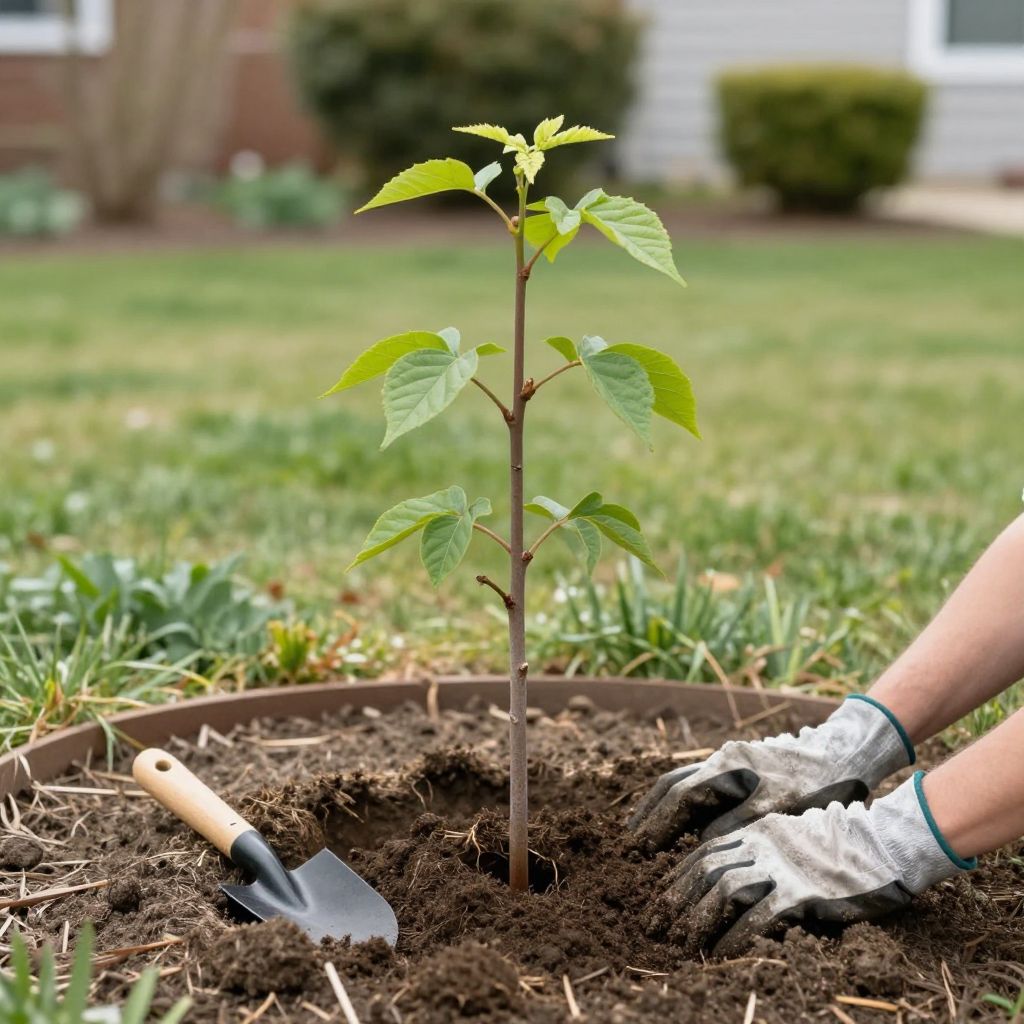
What is a sapling, and how do you tell one from a seedling or a young tree? In gardening, the term usually refers to a young tree that has moved beyond the tiny seedling stage but is still immature and establishing itself. Knowing how to identify and care for a sapling helps you plant it correctly, protect it from stress, and give it the best start in the landscape.
Saplings are common in gardens, orchards, hedgerows, and woodland plantings. They need different care than mature trees because their roots, trunks, and branches are still developing, so placement, watering, and protection matter a great deal.
What is a sapling?
A sapling is a young tree, usually larger and more established than a seedling but not yet a mature tree. It typically has a thin trunk, a developing root system, and flexible branches. In gardening, saplings need consistent moisture, good soil contact, and protection from heat, wind, animals, and physical damage while they settle in.
How to identify a sapling
Identifying a sapling is mostly about size, structure, and stage of growth rather than a strict age. A sapling often has a single main stem, a noticeable trunk, and a height that can range from a few feet to much taller depending on species and growing conditions.
Common visual signs
- Single central stem or trunk rather than many soft stems from the base.
- A trunk that is still thin and flexible, often easy to bend slightly by hand.
- Young bark that is smooth, thin, or lightly textured.
- Branches beginning higher up the stem, with a developing canopy.
- A root ball or root system that is still relatively small compared with the top growth.
Sapling vs. seedling vs. mature tree
- Seedling: very young plant grown from seed, often with soft stems and only a few leaves.
- Sapling: a young tree that has formed a trunk and is actively building structure.
- Mature tree: a fully established tree with thicker bark, a stronger trunk, and a more stable root system.
Because tree species vary so much, a sapling may look different from one plant to another. A young oak, maple, fruit tree, or pine will not all share the same height or branching pattern, so use overall structure rather than size alone.
How to plant a sapling successfully
Planting a sapling well is one of the most important steps you can take. The goal is to help roots expand into surrounding soil while keeping the trunk stable and above the correct soil level.
Step-by-step planting guide
- Choose the right site. Match the tree to the available sun, soil drainage, and space for mature growth.
- Dig a wide hole. Make the hole about 2 to 3 times as wide as the root ball, but no deeper than the root ball itself.
- Check the planting depth. The root flare, where the trunk widens at the base, should sit at or slightly above the surrounding soil line.
- Loosen circling roots. If the roots are wrapped around the pot, gently tease them outward or make a few shallow vertical cuts if needed.
- Backfill with native soil. In most cases, use the soil you removed rather than filling the hole with rich potting mix alone.
- Water thoroughly. Soak the root zone after planting to settle soil around the roots.
- Mulch lightly. Apply 2 to 4 inches of mulch, keeping it a few inches away from the trunk.
What not to do
- Do not bury the trunk flare.
- Do not plant in a hole that is deeper than the root ball.
- Do not pile mulch against the bark.
- Do not add too much compost directly into the planting hole if your native soil is already suitable.
- Do not let roots dry out while you are preparing the site.
What growing conditions do saplings need?
Saplings need conditions that reduce stress while roots establish. The exact needs depend on the tree species, but most young trees do best in well-drained soil, appropriate sunlight, and protection from competition and physical damage.
Soil and drainage
Most saplings prefer soil that drains well enough to avoid standing water, but still holds some moisture. If water pools after rain or the soil stays soggy for long periods, roots may struggle and disease risk increases.
- If your soil is heavy clay, consider planting on a slight mound or choosing species suited to wetter ground.
- If your soil is very sandy, add mulch and monitor moisture more closely because it dries quickly.
- If the site is compacted, loosen the surrounding soil broadly before planting so roots can spread.
Sunlight
Light requirements vary by species. Some saplings need full sun to grow well, while others tolerate or prefer partial shade. Check the tree’s needs before planting, because a sun-loving sapling planted in deep shade may become weak and leggy.
Watering
Newly planted saplings usually need regular watering during establishment, especially in warm or windy weather. The best approach is to water deeply, then let the top layer of soil begin to dry before watering again.
- Water at the base, not over the leaves, when possible.
- Check soil moisture with your finger 2 to 3 inches down.
- Adjust frequency based on rainfall, temperature, wind, and soil type.
Overwatering and underwatering can both stress a sapling. Wilting does not always mean the soil is dry; it can also happen when roots are waterlogged and unable to function properly.
How to care for a sapling during the first year
The first growing season is often the most important for a sapling. Your job is to reduce competition, prevent damage, and keep conditions steady enough for roots to establish.
Mulching
Mulch helps conserve moisture, moderate soil temperature, and reduce weeds. Spread it in a ring around the tree, but keep it away from the trunk so bark stays dry and air can circulate.
- Use shredded bark, wood chips, leaf mulch, or similar organic mulch.
- Maintain a mulch layer about 2 to 4 inches deep.
- Refresh it as it breaks down, but do not build a thick mound.
Staking
Not every sapling needs staking. If the trunk stands on its own and the site is not extremely windy, it may be better to let the tree move naturally, which helps the trunk strengthen.
If staking is necessary, use soft ties and remove stakes once the tree is stable, usually after the first season or two depending on conditions.
Pruning
Prune sparingly on a sapling. Remove only broken, dead, crossing, or badly damaged branches unless you are shaping a fruit tree or following a specific training system.
- Use clean, sharp pruners or loppers.
- Make cuts just outside the branch collar.
- Avoid heavy pruning on a newly planted tree unless there is a clear reason.
Common sapling problems and how to fix them
Young trees often show stress before they fail. If you catch problems early, you can usually correct the issue before it becomes serious.
Yellowing leaves
Yellow leaves can be caused by overwatering, poor drainage, nutrient imbalance, transplant shock, or sometimes seasonal change. Check the soil first before assuming the tree needs fertilizer.
Leaf scorch or browning edges
This often points to drought stress, hot winds, reflected heat, or root damage. Deep watering and mulch usually help, but the site may also need more shelter.
Wilting despite wet soil
If the soil is consistently wet and the sapling still wilts, roots may be struggling from lack of oxygen or rot. Improve drainage if possible and avoid watering again until the root zone begins to dry slightly.
Broken bark or trunk damage
Young trunks are vulnerable to lawn equipment, string trimmers, animals, and accidental bumps. Keep a clear mulch ring around the tree and use a guard if deer, rabbits, or rodents are a problem.
Pests and diseases that affect saplings
Saplings can be more vulnerable than mature trees because they have less stored energy and less bark protection. The exact pests and diseases depend on tree species and local climate, but a few general problems are common.
Typical pest issues
- Aphids on tender new growth
- Caterpillars chewing leaves
- Scale insects on stems and branches
- Rodent or rabbit girdling near the base
- Deer browsing on shoots and buds
Typical disease issues
- Fungal leaf spots during wet weather
- Root rot in poorly drained soils
- Canker diseases on stressed or injured trees
- Powdery mildew on susceptible species in humid conditions
Good sanitation, proper spacing, and correct watering prevent many issues. If a sapling shows repeated dieback, unusual spotting, or trunk lesions, identify the tree species and local problem before treating it, because symptoms can look similar across different causes.
Can you grow a sapling in a container?
Yes, some saplings can be grown in large containers for a time, especially if you need to delay planting or manage a small space. However, container growing requires more attention than in-ground planting because roots dry out faster and can become crowded.
Container care basics
- Use a pot with drainage holes.
- Choose a container large enough for root growth, not just the current root ball.
- Use a free-draining potting mix suited to woody plants.
- Water more often than you would in the ground, but still avoid constant sogginess.
- Repot or plant out before roots become tightly circling.
Container-grown saplings are often more exposed to heat and cold than in-ground trees, so shield the pot from extreme temperatures when needed.
When is a sapling no longer a sapling?
There is no single universal age when a sapling becomes a mature tree. The transition depends on species, growth rate, and site conditions. In practical gardening terms, a tree stops being a sapling when it has a sturdier trunk, a stronger root system, and can handle normal landscape conditions with less intensive care.
Fast-growing trees may move through the sapling stage quickly, while slow-growing species can remain in that stage for many years. Focus less on the label and more on what the tree needs right now.
Tools that help with sapling care
You do not need many tools, but a few basics make sapling care easier and safer.
- Hand pruners for small branches
- Loppers for slightly thicker stems
- Shovel or spade for planting
- Mulch fork or rake
- Watering can or hose with gentle flow
- Soft tree ties if staking is needed
Conclusion
A sapling is simply a young tree in its establishment stage, and the best care focuses on correct planting, steady moisture, good drainage, and protection from stress. If you are planting one now, check the root flare, mulch correctly, and monitor soil moisture through the first season so the tree can settle in well.
If you want help identifying a young tree you found in the garden, you may also find what type of tree is this? useful for narrowing down the species before you decide how to care for it.