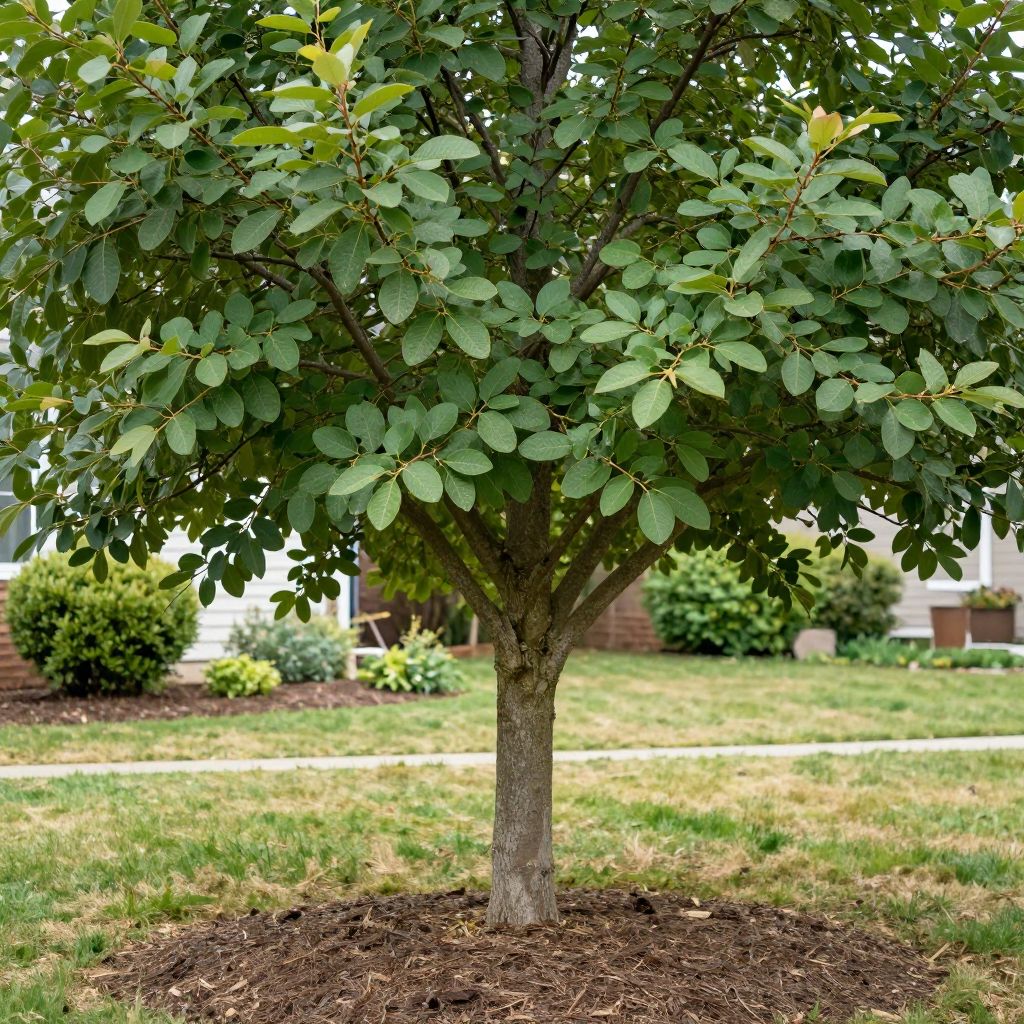
If you’re asking, “What type of tree is this?” the fastest way to identify it is to look at the whole plant, not just one feature. Leaf shape, bark, branching pattern, fruit, flowers, and where it is growing all matter.
Once you narrow down the tree type, you can make better decisions about pruning, watering, pest control, and whether it belongs in your landscape. A careful identification also helps you avoid damaging a young tree by treating it like the wrong species.
What type of tree is this?
To identify a tree, compare its leaves, bark, buds, flowers, fruit, and overall shape. Start with broad clues such as whether it is deciduous or evergreen, then narrow it down using leaf arrangement, needle or broadleaf type, and any cones, berries, nuts, or seed pods.
Start with the easiest identification clues
Before you focus on tiny details, step back and look at the tree as a whole. Many common landscape trees can be separated into a few broad groups by their overall form and foliage.
1. Decide if it is deciduous or evergreen
- Deciduous trees drop their leaves in autumn or during dry seasons.
- Evergreen trees keep foliage year-round, though they still shed older leaves or needles.
- Some trees are semi-evergreen or behave differently depending on climate.
2. Look at the leaves or needles
Leaf shape is one of the most useful clues. Broad leaves often point to hardwood trees such as maple, oak, or elm, while needles or scales usually indicate conifers such as pine, spruce, fir, or arborvitae.
- Simple leaves have one blade per leaf stem.
- Compound leaves have several leaflets on one stem.
- Needles may grow singly, in bundles, or in clusters.
- Scaly foliage is common in cypress and arborvitae types.
3. Check the leaf arrangement
On broadleaf trees, leaves usually grow in one of three patterns:
- Alternate – one leaf per node, alternating sides of the twig
- Opposite – leaves grow in pairs directly across from each other
- Whorled – three or more leaves circle the stem at one point
This detail can quickly separate similar-looking trees. For example, maples and ashes often have opposite leaves, while oaks and birches usually have alternate leaves.
How to identify the tree step by step
If you want a reliable answer to “What type of tree is this?”, use a simple process and record what you see. Photos of leaves, bark, flowers, fruit, and the full tree can be very helpful if you later compare them with a plant guide or local extension resource.
- Take a wide photo of the whole tree, including the canopy and trunk.
- Photograph the leaves from the top and underside.
- Note the leaf arrangement on the twig.
- Inspect the bark for texture, color, peeling, ridges, or lenticels.
- Look for flowers, fruit, cones, or seed pods in season.
- Observe the site—sun, shade, soil moisture, and whether it is planted or wild.
Leaf details that matter
Leaf margins and veins can narrow the options further. Smooth edges, serrated edges, lobes, and deeply divided leaves all point to different groups.
- Entire margins: smooth edges, common in magnolia and cherry laurel
- Serrated margins: saw-toothed edges, common in elm and birch
- Lobed leaves: common in oak and maple
- Palmate veins: several major veins radiate from one point, as in maple
- Pinnate veins: one main vein with side veins, common in many deciduous trees
Bark clues for mature trees
Bark becomes especially useful when leaves are absent. Young trees often have smooth bark, while older specimens may develop furrows, plates, peeling strips, or mottled patches.
- Peeling bark may suggest birch, sycamore, or some eucalyptus species.
- Deeply furrowed bark is common on mature oak, ash, and walnut.
- Smooth gray bark can be found on beech, hornbeam, and some young ornamentals.
- Reddish or cinnamon bark may point to certain maples, cherries, or conifers.
Common tree types and what to look for
You do not need to identify every tree to the exact species right away. Often, getting to the right genus or tree group is enough to guide care and prevent mistakes.
Maple trees
Maples usually have opposite leaves, palmate veins, and lobed blades. Many produce paired winged seeds called samaras. Their fall color can be a major clue, but leaf shape and arrangement are more dependable than color alone.
Oak trees
Oaks typically have alternate leaves with lobes or bristle-tipped lobes, depending on the group. Their acorns are the giveaway. Bark on mature oaks is often thick, ridged, and deeply textured.
Pine trees
Pines have needles in bundles rather than single needles attached directly to the twig. They also produce woody cones. Needles are often long, flexible, and grouped in clusters of two, three, or five depending on the species.
Spruce and fir trees
Spruce needles are usually stiff and attach individually, while fir needles are flatter and often feel softer. Cones help too: spruce cones often hang downward, and fir cones are more likely to stand upright on the branches.
Birch trees
Birches often have thin, peeling bark and serrated leaves. Many grow as graceful, upright trees with fine branching. Their bark color may range from white to silver, yellowish, or darker tones depending on the species.
Fruit and nut trees
Apple, pear, plum, cherry, walnut, and pecan trees can be identified by their fruit, flowers, and leaf traits. In home gardens, these trees are often pruned and trained, so their shape may differ from wild specimens.
How growing conditions can change the look of a tree
A tree’s appearance is influenced by light, water, pruning, wind, and soil. A stressed tree may have smaller leaves, sparse growth, dead twigs, or unusual color, which can make identification harder.
- Shade can cause stretched, sparse growth.
- Poor drainage may lead to yellowing leaves, dieback, or stunted growth.
- Compacted soil can reduce vigor and leaf size.
- Heavy pruning can create dense, upright shoots that obscure the natural form.
If the tree is planted in a lawn, nearby turf competition may also reduce its growth. Trees in dry, hot sites often look different from the same species in cooler, moister conditions.
Practical care once you know the tree type
Correct identification matters because different trees have different needs. A conifer, a shade tree, and a fruit tree should not be managed the same way if you want healthy growth.
Watering
Newly planted trees usually need more consistent moisture than established trees, but the soil should never stay soggy. Water deeply and less often so moisture reaches the root zone.
- Check soil 2 to 4 inches below the surface before watering.
- Water when the soil is starting to dry, not when it is already bone-dry for long periods.
- Use mulch to help conserve moisture and moderate soil temperature.
Avoid frequent shallow watering. It encourages surface roots and weak establishment.
Mulching and soil care
A 2- to 4-inch layer of organic mulch around the root zone can help most landscape trees. Keep mulch a few inches away from the trunk so the bark stays dry and healthy.
- Good mulch options include shredded bark, wood chips, or leaf mold.
- Do not pile mulch against the trunk in a “volcano.”
- Improve compacted soil carefully; avoid deep digging near roots.
Pruning
Prune according to the tree’s natural growth habit and season. Many trees are best pruned during dormancy, while some species are better pruned after flowering or at a specific time to avoid sap loss or disease risk.
- Remove dead, damaged, or crossing branches first.
- Use clean, sharp tools.
- Do not remove too much canopy at once.
- Make cuts just outside the branch collar.
If you are unsure of the species, keep pruning light until you know whether the tree flowers on old wood, new wood, or has special timing needs.
Common pests and diseases to watch for
Some tree problems are easier to spot once you know the tree type. A few issues are common across many landscape trees, while others are more species-specific.
General warning signs
- Leaf spots or blotches
- Premature leaf drop
- Chewed leaves or notches
- Sticky honeydew on leaves or pavement
- Branch dieback
- Cracked bark or oozing sap
What to do first
- Check whether the problem is on one branch or throughout the tree.
- Inspect the underside of leaves and the trunk base.
- Look for insects, frass, fungal growth, or cankers.
- Remove only clearly dead wood if needed.
- Improve growing conditions before reaching for treatments.
Many tree problems are made worse by stress from drought, poor drainage, root damage, or planting too deeply. Healthy trees usually recover better than trees that are already struggling.
Propagation and planting considerations
If you are trying to grow a new tree of the same type, the propagation method matters. Some trees grow reliably from seed, while others are usually propagated by cuttings, grafting, or layering to preserve the desired traits.
- Seeds are common for many native and woodland trees, but seedlings may vary from the parent tree.
- Cuttings work for some ornamental and evergreen trees, depending on the species.
- Grafted trees are common for fruit trees and some ornamentals.
When planting any tree, match it to the site. Consider mature size, root space, sun exposure, drainage, and nearby structures before putting it in the ground.
Planting mistakes to avoid
- Planting too deep
- Leaving roots circling in the pot
- Choosing a tree too large for the site
- Ignoring drainage problems
- Failing to mulch correctly
When you still cannot tell what type of tree it is
Some trees are difficult to identify from a single photo or out of season. If the tree has no leaves, no fruit, and no flowers, bark and branching may not be enough for a confident answer.
In that case, gather a better set of clues: a close-up of the twig, buds, leaf scars, full canopy shape, and any fallen leaves or fruit on the ground. Local nursery staff, arborists, and extension services can often help if you bring clear photos.
If you are comparing options online, use trusted plant identification guides and local resources rather than relying on a single image search result. Regional differences can be significant, especially for native trees and ornamental cultivars.
Conclusion: identify first, care second
When you ask, “What type of tree is this?”, the best approach is to identify the tree by several features at once, then match its care to its actual needs. Start with leaves or needles, check bark and fruit, and note the site conditions before pruning or treating any problem.
For more help with tree care after identification, you may also want to read about how to prune young trees correctly and choosing the right mulch for landscape trees.