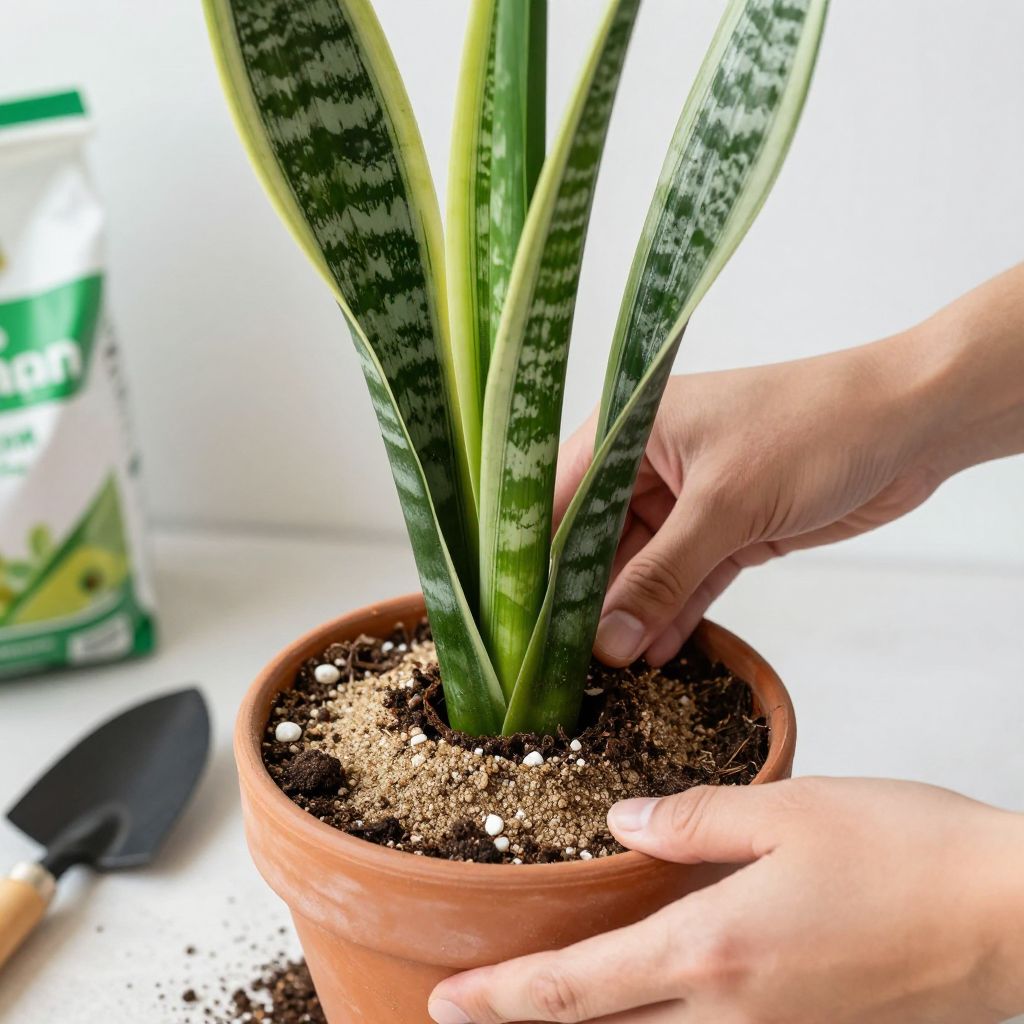
What kind of soil for snake plant should you use if you want it to stay healthy indoors? The short answer is a fast-draining, airy mix that dries out between waterings. Snake plants, or Dracaena trifasciata (formerly Sansevieria), rot easily in heavy, wet soil, so the goal is to give the roots plenty of air and very little standing moisture.
If your plant is yellowing, soft at the base, or staying wet for days after watering, the soil is often the problem. The right mix can make a dramatic difference in growth, root health, and how often you need to water.
What kind of soil for snake plant?
Snake plants do best in a loose, gritty, well-draining potting mix that dries quickly but still holds a little moisture. A cactus or succulent mix works well, especially when amended with perlite, pumice, or coarse sand. Avoid dense garden soil or moisture-retentive potting mixes that stay soggy around the roots.
Why soil matters so much for snake plants
Snake plants store water in their thick leaves and rhizomes, so they do not need rich, heavy soil. In fact, soil that holds too much water is one of the most common reasons they decline indoors.
When roots sit in wet soil for too long, they lose oxygen and begin to rot. That can lead to mushy leaves, a foul smell in the pot, and slow collapse of the plant.
What the roots need
- Air space so roots can breathe.
- Quick drainage so excess water moves away fast.
- Moderate moisture retention so the mix does not become bone-dry immediately after watering.
Best soil mix for snake plant
The easiest option is a commercial cactus and succulent potting mix. If that mix still feels too fine or dense, improve it with extra drainage material.
Simple DIY snake plant soil recipe
- 2 parts cactus/succulent potting mix
- 1 part perlite or pumice
- Optional: up to 1 part coarse horticultural sand if you want a grittier texture
This creates a light, open mix that drains well without becoming too dry too fast. Perlite and pumice are usually better choices than fine sand because they improve structure without compacting the soil.
What to look for in a bagged mix
- Labelled for cacti or succulents
- Lightweight and chunky rather than peat-heavy
- Fast-draining ingredients such as perlite, pumice, bark, or coarse sand
Soil ingredients to use and avoid
Good ingredients
- Potting mix made for succulents
- Perlite
- Pumice
- Coarse horticultural sand
- Small amounts of fine orchid bark, if you want more air space
Ingredients to avoid or use sparingly
- Heavy topsoil or garden soil
- Large amounts of peat-heavy potting soil
- Compost-heavy mixes that stay wet
- Water-retaining gels or moisture-control products
Garden soil is a poor choice for containers. It compacts easily, drains slowly, and can introduce pests or pathogens into a houseplant pot.
Do snake plants need compost?
Snake plants do not need much compost, and too much can make the mix too rich or moisture-holding. If you want to improve the soil, use only a small amount of well-finished compost blended into a gritty base mix.
For most indoor snake plants, compost is optional rather than necessary. If you use it, keep it to a minor ingredient, not the main component.
When compost can help
- Your base mix is very lean and you want a little more organic content.
- You are refreshing an older mix that has become exhausted.
- You are growing the plant in a warmer, brighter spot where the pot dries faster.
When to skip compost
- The pot already stays damp for a long time.
- You tend to overwater.
- You are using a small pot with limited evaporation.
Pot choice and drainage matter as much as soil
Even the best soil will struggle in a pot without drainage holes. Snake plants should always be grown in a container with at least one drainage hole so excess water can escape.
A terracotta pot can be especially helpful because it allows moisture to evaporate through the sides. Plastic pots can work too, but they usually stay wet longer, so the soil mix needs to be even freer draining.
Best container features
- Drainage hole at the bottom
- Pot size only slightly larger than the root ball
- Stable shape so tall leaves do not tip the plant over
Do not move a snake plant into a very large pot “for future growth.” Extra soil holds extra water, which increases the risk of root rot.
How to repot a snake plant with the right soil
Repotting is the best time to correct poor soil. If the plant is crowded, top-heavy, or the mix has broken down into a dense mass, refresh it with a fast-draining blend.
- Choose a pot with drainage holes that is only 1 to 2 inches wider than the current one.
- Remove the plant gently and shake off loose old soil.
- Trim away any black, mushy, or foul-smelling roots with clean scissors.
- Fill the bottom with fresh, gritty mix.
- Set the plant at the same depth it was growing before.
- Backfill around the roots and lightly firm the soil.
- Wait a few days before watering if you removed damaged roots, especially in cool weather.
If the soil was very wet or the roots were damaged, giving the plant a short dry rest after repotting can reduce the chance of rot.
How often should you water snake plant soil?
Water only when the soil has dried out well. The exact timing depends on light, temperature, pot size, and season, so it is better to check the soil than follow a strict schedule.
Insert a finger a couple of inches into the mix. If it still feels damp, wait. In brighter light and warmer rooms, soil dries faster; in winter or low light, it dries much more slowly.
Signs the soil is too wet
- Leaves feel soft or mushy at the base
- Soil smells sour or stagnant
- Pot stays heavy for many days after watering
- Lower leaves yellow and collapse
Signs the soil is too dry for too long
- Leaves wrinkle or curl
- Growth slows noticeably
- The plant becomes very light and rootbound
Snake plants tolerate dryness better than wetness, so when in doubt, wait a little longer before watering.
Indoor vs. outdoor soil needs
Most snake plants are grown indoors, where soil dries more slowly and drainage becomes even more important. Outdoors, the same plant may need a grittier mix if it is exposed to rain or humidity.
Indoor growing
- Use a cactus/succulent mix with extra perlite or pumice.
- Keep the plant in a bright spot but out of harsh midday sun unless it has been acclimated.
- Watch for slow drying in winter, especially near cool windows.
Outdoor growing
- Use very free-draining soil in containers or raised beds.
- Protect from prolonged rain and cold, wet conditions.
- Make sure the site never becomes waterlogged after storms.
If your climate is humid or rainy, lean even more heavily toward a gritty mix and excellent drainage.
Common soil mistakes and how to fix them
Mixing in too much moisture-holding soil
If your plant is sitting in peat-heavy potting mix, repot it into a lighter blend. You may notice an improvement in root health within weeks, but damaged roots can take longer to recover.
Using a pot without drainage
Move the plant immediately into a container with holes. A decorative cachepot is fine only if the inner pot drains freely and you empty excess water after watering.
Watering on a fixed schedule
Instead of watering every week or every two weeks, check the soil first. The plant’s needs change with season, light, and pot size.
Letting the mix compact over time
Old potting mix breaks down and holds more water. Refresh the soil every couple of years, or sooner if it becomes dense, crusty, or slow to dry.
Can snake plants grow in poor soil?
Snake plants are tough, but they do not thrive in poor drainage. They can survive in lean soil, yet they perform best in a mix that is airy, stable, and not overly rich.
If you are planting in a container, think “dry and open” rather than “fertile and heavy.” For snake plants, good structure matters more than high nutrient content.
Quick soil checklist before you plant
- Fast-draining cactus or succulent mix
- Added perlite or pumice for extra air space
- Pot with drainage holes
- Container only slightly larger than the root ball
- No standing water in saucers or cachepots
Conclusion
If you are wondering what kind of soil for snake plant works best, choose a light, gritty, fast-draining mix and avoid anything that stays wet for long. A cactus or succulent potting mix amended with perlite or pumice is usually the safest, simplest choice.
Check your pot drainage, repot if the soil is dense, and water only when the mix has dried out well. If you want to keep learning about low-maintenance houseplants, look for more practical guides on container drainage and succulent care.