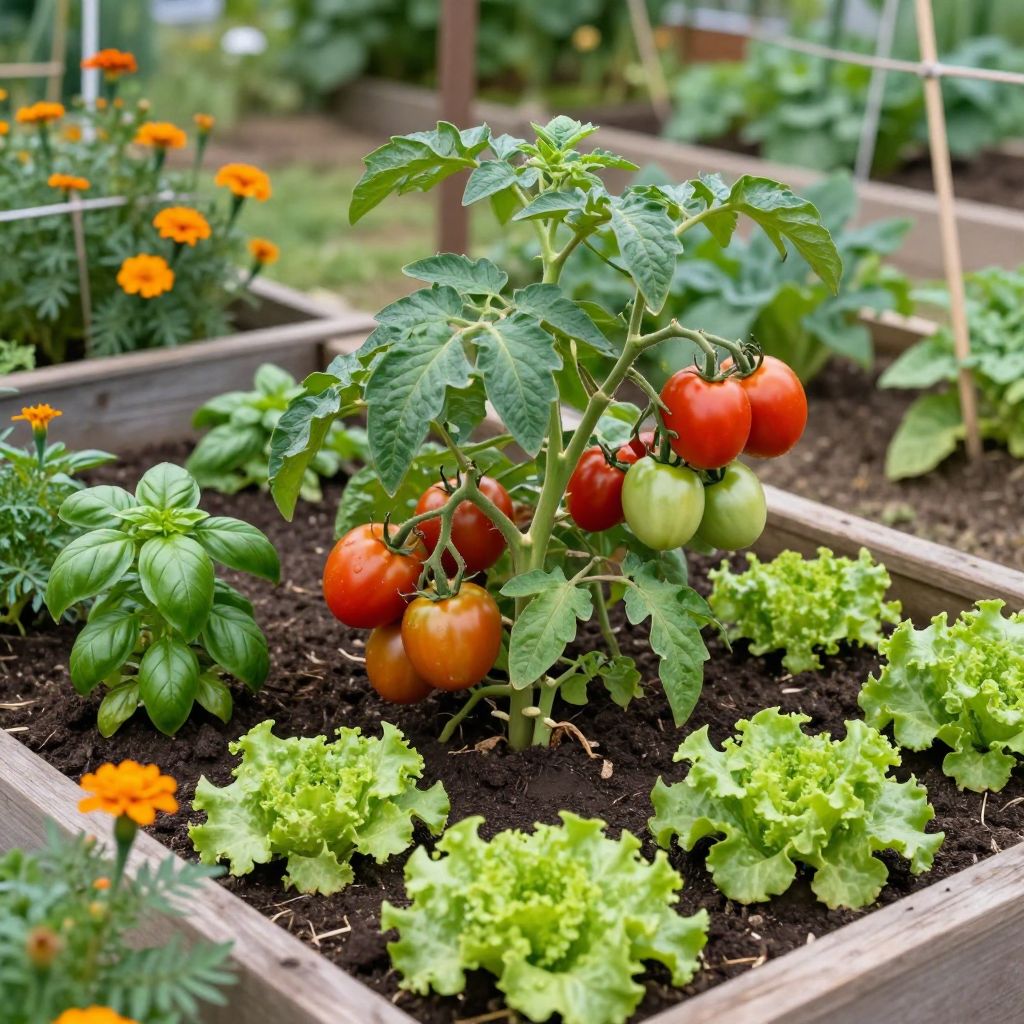
Wondering what to grow with tomatoes so your plants stay healthier and your garden space works harder? The best companions for tomatoes can help shade the soil, attract beneficial insects, confuse pests, and make better use of bed space without competing too aggressively.
The key is choosing plants that like similar growing conditions and won’t crowd tomato roots or block airflow. With the right companions, you can improve harvests, reduce pest pressure, and keep your tomato patch easier to manage.
What to grow with tomatoes?
The best companions for tomatoes are plants that share similar sun, warmth, and moisture needs while helping with pest control or ground cover. Good choices include basil, marigolds, onions, garlic, chives, carrots, lettuce, parsley, nasturtiums, and some beans. Avoid overcrowding, and give tomatoes enough airflow and root space.
Best companion plants for tomatoes
Herbs that fit well in a tomato bed
Herbs are often the easiest companions because many stay compact and can be tucked around tomato plants without stealing much light.
- Basil — A classic tomato companion that grows well in warm conditions and can be planted near the base of tomatoes if you leave room for airflow.
- Chives and garlic chives — Their narrow growth habit makes them useful along bed edges or between larger plants.
- Parsley — Works well in partial shade created by tomato foliage, especially in hot climates.
- Oregano and thyme — Low-growing herbs that can help cover bare soil, though they prefer slightly drier conditions than tomatoes, so place them where drainage is good.
Herbs are especially useful in raised beds and containers because they can fill small gaps without requiring much extra root room.
Flowers that support tomato growing
Flowers do more than decorate a tomato bed. Some can help attract pollinators and beneficial insects, while others may help reduce pest pressure by adding scent and variety.
- Marigolds — Commonly used around tomatoes because they are easy to grow and add color at the bed edge.
- Nasturtiums — Often planted as a trap crop or border plant; they can draw aphids away from tomatoes in some gardens.
- Calendula — A useful cool-season flower that can fit near tomatoes in milder weather or at the edges of a mixed bed.
Flowers should not crowd the tomato stems. Keep them as borders, corner plants, or interplants with enough space for pruning and harvesting.
Vegetables that share space well
Some vegetables can be grown alongside tomatoes if you manage spacing carefully and choose varieties that mature at different heights or speeds.
- Lettuce — A good early-season companion that can grow beneath young tomatoes before the canopy closes in.
- Spinach — Similar to lettuce, it can use partial shade in warmer weather.
- Carrots — Their root growth is compatible with tomatoes if the soil is loose and not heavily compacted.
- Radishes — Quick to mature and useful as a short-term filler crop between tomato plants early in the season.
- Beans — Bush beans can work in some gardens, but give them enough light and avoid crowding. Pole beans are usually a poor match because they compete for support and light.
Leafy greens are often the safest choice because they finish early or tolerate some shade as tomatoes grow larger.
How to arrange companion plants around tomatoes
Good spacing matters more than the companion list itself. Tomatoes need airflow to reduce disease, and crowded beds can quickly become humid and hard to manage.
- Place tall tomatoes first. Set stakes, cages, or trellises before planting companions so you know where shade and foot traffic will fall.
- Keep the main stem area open. Leave a clear ring around each tomato plant so you can water at the base and inspect for pests.
- Use low growers at the edges. Herbs, lettuce, and flowers work best along borders or between widely spaced tomato plants.
- Match water needs. Put drought-tolerant herbs like thyme where the soil drains well, not in the wettest spot around tomatoes.
- Plan for mature size. Small seedlings can look harmless, but many companions spread quickly once temperatures rise.
A simple rule: if a companion plant would make pruning, tying, or harvesting tomatoes harder, it is probably too close.
Plants to avoid growing with tomatoes
Not every plant is a good neighbor. Some compete too strongly, invite similar pests, or create growing conditions that make tomato care harder.
- Potatoes — They share many of the same diseases and pests as tomatoes, which increases risk in the same bed.
- Fennel — Known for inhibiting many nearby plants and generally best grown on its own.
- Large brassicas such as cabbage or broccoli — They can crowd tomatoes and prefer different seasonal conditions.
- Heavy climbers like pole beans — These can tangle with tomato supports and make maintenance awkward.
Also be cautious with aggressive groundcovers or sprawling plants that trap moisture around tomato stems. Wet, crowded foliage is a common setup for fungal problems.
Why companion planting helps tomatoes
Companion planting is not magic, but it can make a tomato bed more balanced and easier to maintain. The main benefits come from better use of space, improved biodiversity, and easier pest monitoring.
Pest management support
Some companion plants may help confuse pests or attract beneficial insects such as hoverflies and parasitic wasps. That does not eliminate pests, but it can reduce pressure in a mixed planting.
For example, flowers like calendula and nasturtiums can make a bed more insect-friendly, while herbs such as basil and chives add diversity around the crop.
Soil coverage and moisture control
Low-growing companions can shade bare soil, which helps reduce evaporation and suppress weeds. This is especially useful in hot weather, when tomato roots benefit from more even moisture.
That said, mulch still matters. A 2 to 3 inch layer of straw, shredded leaves, or composted material around tomatoes often does more for moisture retention than companion plants alone.
Efficient use of space
If you garden in a raised bed, small plot, or large containers, companion planting helps you use every corner well. Short-lived crops like lettuce and radishes can be harvested before tomatoes reach full size.
Growing conditions tomatoes and companions usually need
To grow well together, tomatoes and their companions should share similar basic conditions: full sun, reasonably fertile soil, and good drainage. Tomatoes usually perform best with at least 6 to 8 hours of direct sun, though some companions tolerate a bit less once the tomato canopy develops.
- Soil: Loose, well-drained soil enriched with compost
- Watering: Deep, even watering at the base rather than frequent shallow sprinkling
- Airflow: Enough spacing to let leaves dry after rain or irrigation
- Mulch: Helpful for moisture retention and weed control
If your soil stays soggy, choose companions that tolerate moisture without rotting, and improve drainage before planting. In heavy clay, raised beds or mounded rows can make a big difference.
Container gardening: what to grow with tomatoes in pots
Container tomatoes need companions that stay compact and do not compete too heavily for water. In pots, the root zone is smaller, so overcrowding becomes a bigger problem than in open ground.
Good container companions
- Basil
- Chives
- Thyme
- Leaf lettuce
- Small marigolds
Choose a large enough container for the tomato first, then add only one or two companions around the edge. A crowded pot dries out unevenly and can stress the tomato quickly in warm weather.
Container mistakes to avoid
- Mixing too many plants in one pot
- Using shallow containers for indeterminate tomatoes
- Letting trailing companions cover the soil so tightly that airflow is reduced
- Ignoring drainage holes
Practical planting tips for mixed tomato beds
When you plant companions matters almost as much as what you plant. Early-season crops can fill space before tomatoes get large, while warm-season herbs and flowers can be added once the soil has warmed.
- Prepare the bed with compost and loosen the soil before planting.
- Set tomato transplants at proper spacing for their type and support them early.
- Add small companions after the tomatoes are established so you can see the final spacing.
- Mulch around plants, but keep mulch a little away from stems.
- Check weekly for pests, yellowing leaves, and overcrowding.
Do not let companions hide tomato problems. Dense plants can make it harder to spot early blight, aphids, hornworms, or leaf yellowing.
Common problems and how to fix them
Tomatoes are shaded too much
If companion plants block too much light, move them to the bed edge or remove the tallest extras. Tomatoes need strong light to flower and ripen well.
Airflow is poor
Thin dense foliage, prune excess tomato suckers if appropriate for your growing style, and remove companions that are pressing against stems. Good airflow helps reduce fungal disease.
Soil dries out too fast
Use mulch, water deeply, and avoid planting too many thirsty companions in the same root zone. In hot climates, low-growing companions may need extra watering until established.
Pests keep returning
Companion planting can help, but it will not replace inspection. Remove damaged leaves, hand-pick larger pests like hornworms, and avoid letting weeds or dead foliage build up around the bed.
Simple companion planting combinations that work
- Tomatoes + basil + marigolds — A classic, compact combination for beds and large containers.
- Tomatoes + lettuce + chives — Good for early-season planting and partial shade under maturing tomatoes.
- Tomatoes + carrots + parsley — Useful in loose soil where root crops can develop well.
- Tomatoes + nasturtiums + calendula — A colorful border planting that supports beneficial insects.
These combinations work best when you keep the tomatoes as the main crop and treat companions as supporting plants, not equal competitors.
Conclusion
If you are deciding what to grow with tomatoes, start with compact, useful companions like basil, chives, lettuce, marigolds, and nasturtiums. Plant them with enough space for airflow, keep the soil evenly moist, and avoid crowding the tomato stems. For your next step, sketch your bed or container layout before planting so every plant has room to grow well.
For more practical planning, it can also help to read about how to space vegetable plants in raised beds and how to improve garden soil with compost if those topics fit your garden setup.