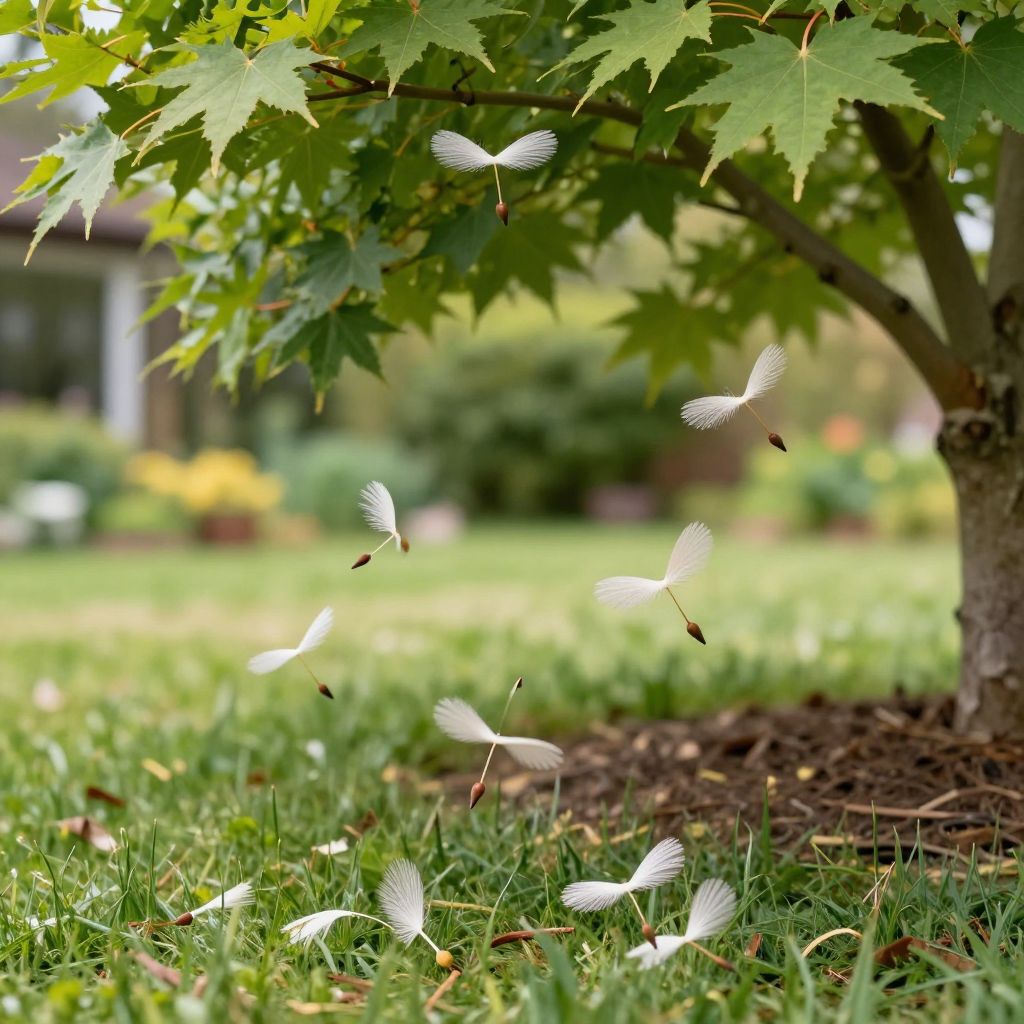
What tree has helicopter seeds? In most gardens, the answer is a maple tree. Those spinning seeds are called samaras, and they’re especially familiar on Norway maple, red maple, silver maple, and many other Acer species. A few other trees also make similar winged seeds, so the shape is a clue, not a guarantee.
If you’re trying to identify a tree in your yard or decide whether to plant one, it helps to look at more than the “helicopters.” Leaf shape, bark, growth habit, and seed timing all matter. Here’s how to tell common helicopter-seed trees apart and what to expect if you want to grow one.
What tree has helicopter seeds?
Most often, helicopter seeds come from maple trees (Acer spp.). Their paired winged seeds, called samaras, spin as they fall and help the tree spread naturally. Some ashes, elms, and a few other trees also produce winged seeds, but maples are the classic “helicopter seed” tree in home landscapes.
How to tell which tree it is
Because several trees make winged seeds, use the seeds as a clue rather than the only identifier. A maple usually has opposite leaves, palmate leaf shape, and paired samaras that hang in clusters. Other trees with similar seeds often have different leaf arrangement, bark texture, or fruiting habits.
Common trees with helicopter-like seeds
- Maples (Acer spp.) — the most recognizable helicopter seeds.
- Ash (Fraxinus spp.) — single-winged seeds in clusters, often less “twirl-like” than maple.
- Elm (Ulmus spp.) — flat, roundish winged seeds that can flutter.
- Boxelder (Acer negundo) — technically a maple, with abundant paired samaras.
Quick ID clues for maples
- Leaves are usually opposite on the twig.
- Leaves are often lobed, though some species are more deeply cut than others.
- Seeds come in pairs, joined at one end, forming a “V” or “T” shape.
- Seed clusters may turn from green to tan, brown, or reddish as they mature.
Why trees make helicopter seeds
Winged seeds are an adaptation for dispersal. The wing slows the seed’s fall and helps wind carry it farther from the parent tree. For gardeners, that means seedlings can appear in beds, lawns, gutters, and pots if the tree is producing heavily nearby.
This is normal and not usually a sign of a problem. In some years, trees produce far more seeds than in others, especially after favorable weather or when the tree is mature and healthy enough to flower heavily.
Should you plant a tree that drops helicopter seeds?
Yes, if you like the tree’s shade, seasonal color, and form. Many maples are excellent landscape trees, but some species can be messy in small yards because of seed drop and volunteer seedlings. The right choice depends on your space, climate, and how much cleanup you want to do.
Good reasons to choose a maple
- Fast or moderate shade, depending on species.
- Reliable fall color in many climates.
- Useful as a specimen, street, or shade tree when properly sited.
- Wildlife value for birds and insects.
Reasons to be cautious
- Heavy seed drop can be messy on patios, roofs, and pools.
- Seedlings may sprout in mulch, lawns, and containers.
- Some species get large and need room for roots and canopy.
- Weak branch structure in poorly grown trees can create maintenance issues.
Best growing conditions for maple trees
Most maples do best in well-drained soil and a site that matches the species’ light and moisture needs. Some tolerate full sun, while others prefer afternoon shade in hotter climates. Always match the tree to your region rather than assuming all maples grow the same way.
Soil and drainage
Maples generally prefer soil that holds moisture but does not stay soggy. If water pools after rain or irrigation, improve drainage before planting, or choose a different site. In heavy clay, planting on a slight mound or broad raised area can help roots establish.
Before planting, loosen soil in a wide area rather than digging a deep “pot hole.” A broad planting hole with intact root flare exposed is usually better than burying the trunk too deeply.
Sunlight
- Full sun is best for many maples in cooler climates.
- Partial shade can help in hot regions, especially for young trees.
- Avoid deep shade if you want strong growth and good branching.
Watering
Newly planted trees need consistent moisture while roots spread, but they should not sit in wet soil. Water deeply when the top few inches of soil begin to dry, then let the soil partially dry again before the next watering.
Once established, many maples are moderately drought tolerant, but they still perform better with occasional deep watering during prolonged dry spells. Mulch helps conserve moisture and reduce stress.
How to plant a maple tree correctly
Proper planting matters more than fertilizer in the first year. A tree planted too deeply or in compacted soil may struggle, even if it gets plenty of water.
- Choose a site with enough room for mature height and spread.
- Check drainage by watering the area or observing after rain.
- Dig a hole 2 to 3 times as wide as the root ball, but no deeper than the root flare.
- Remove circling roots from container-grown trees if needed.
- Set the tree so the root flare sits at or slightly above soil level.
- Backfill with native soil unless your local conditions require a specific amendment strategy.
- Water thoroughly to settle soil and remove air pockets.
- Apply 2 to 4 inches of mulch, keeping it a few inches away from the trunk.
Do not pile mulch against the trunk. That can trap moisture, invite decay, and encourage pests.
Pruning and maintenance
Most maples need only light, thoughtful pruning. The best time is usually when the tree is dormant or just after leaf drop, though local climate and species can affect timing. Avoid heavy pruning in spring if the tree is actively “bleeding” sap, since that can be messy and stressful.
What to prune
- Dead, broken, or rubbing branches.
- Crossing limbs that may damage bark.
- Low branches that interfere with mowing or walking.
- Weakly attached stems on young trees.
What not to do
- Do not top the tree.
- Do not remove too much canopy at once.
- Do not prune during extreme heat or drought unless necessary for safety.
If you want fewer seedlings, remove spent seed clusters when practical on small ornamental trees. This won’t stop all self-seeding, but it can reduce the number of volunteers around the tree.
Common problems with helicopter seeds
Most issues are more about cleanup than plant health. Still, seed production can signal a mature tree that may need better care, or a nearby tree that’s becoming too large for the space.
Too many seedlings
Maple seedlings often sprout in mulch beds, lawn edges, and cracks in paving. Pull them when the soil is moist, before roots deepen. For larger flushes, a hoe or hand weeder works best in loose mulch.
Mess on patios and roofs
Heavy seed drop is normal in some years. Sweep or blow seeds off hard surfaces before they become slippery or start germinating in debris. If the tree overhangs a roof, consider whether pruning, thinning, or eventually replacing the tree would improve the site.
Weak or stressed growth
If a maple produces lots of seeds but has sparse leaves, dieback, or poor color, look for root stress, compacted soil, drought, or disease. Seed production alone is not a reliable health indicator.
Pests and diseases to watch for
Maples can face aphids, scale insects, leaf spot, tar spot, verticillium wilt, and root stress from poor drainage. Not every leaf blemish needs treatment, but repeated decline deserves attention.
Practical troubleshooting
- Aphids: sticky leaves and sooty mold may show up; encourage beneficial insects and rinse small infestations with water.
- Leaf spots: remove fallen leaves and improve airflow around the tree.
- Wilt or dieback: check drainage and avoid wounding roots or trunk.
- Sun scorch: young trees in hot sites may need extra water and temporary shade protection.
If a tree is declining, avoid guessing. A local extension office or certified arborist can help identify the problem, especially when roots, trunk damage, or vascular disease may be involved.
Can you grow a maple from helicopter seeds?
Yes, many maple seeds can be grown, but germination varies by species and freshness. Some need a cold period to sprout well, while others germinate more readily. If you collect seed, sow it soon after it matures or follow species-specific stratification guidance for your region.
Simple propagation approach
- Collect mature seeds when they turn brown and begin to separate easily.
- Remove debris and sow in a pot or seed bed with moist, well-drained mix.
- Keep the medium evenly moist, not soggy.
- Protect seedlings from hot sun, drying wind, and rodents.
- Transplant only after roots are established and weather is suitable.
Keep in mind that seedlings may not match the parent tree exactly if the tree is a hybrid or cultivar. If you want a specific ornamental form, buying a named tree is usually more reliable than growing from seed.
Choosing the right maple for your yard
If you want a tree with helicopter seeds, think beyond the seed itself. Consider mature size, root spread, fall color, shade density, and how much cleanup you can handle. A large maple in a small yard can become a maintenance problem, while the right tree can be a long-lived asset.
Before planting, measure the space above and below ground. Check for overhead wires, nearby structures, sidewalks, and underground utilities. A tree that fits the site will need less pruning and cause fewer problems later.
Conclusion
If you’ve been wondering what tree has helicopter seeds, the most common answer is a maple. Once you identify the tree, you can decide whether to keep it, prune it, or plant a better-suited one for your space. Start by checking leaf arrangement, seed shape, and mature size before making any changes.
For more help identifying a mystery tree in your yard, you may also find this guide useful: what type of tree is this?