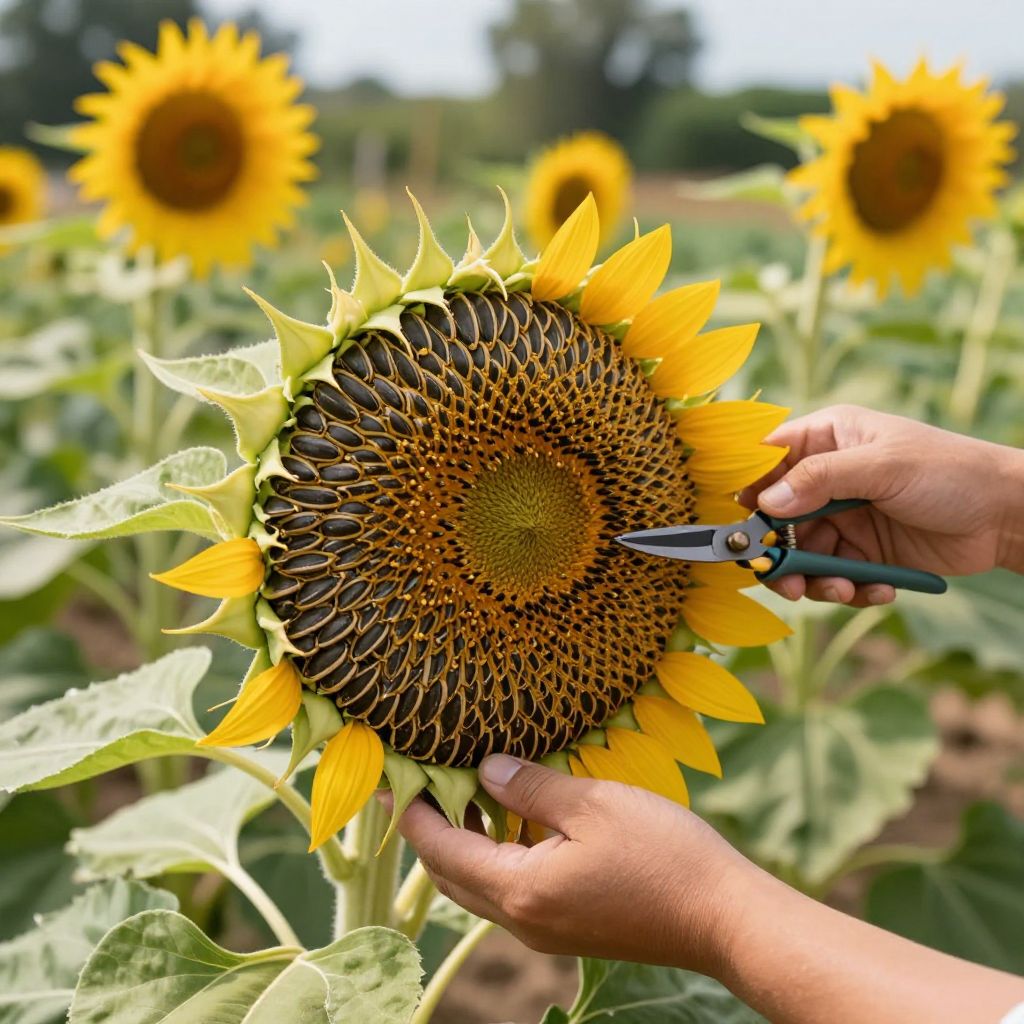
Wondering when to harvest sunflower seeds so they’re full, dry, and worth saving? The right timing makes a big difference: harvest too early and the seeds may be soft and immature; wait too long and birds, squirrels, rain, and mold can reduce your crop.
The good news is that sunflowers give clear signals when they’re ready. With a little observation, you can pick heads at the right stage for snacking, roasting, or saving seed for planting next year.
When to harvest sunflower seeds?
Harvest sunflower seeds when the back of the flower head turns yellow-brown, the petals have dried and fallen, and the seeds look plump with hard shells. Most heads are ready about 30 to 45 days after flowering, but the exact timing depends on variety, weather, and how quickly the plant dries down.
How to tell sunflower seeds are ready
Sunflower heads don’t all mature at the same pace, so use several signs together rather than relying on one clue.
Visual signs of maturity
- Petals have faded, dried, and dropped from the head.
- The back of the flower head turns from green to yellow, then tan, brown, or yellow-brown.
- The seeds look full and firm, not pale, flat, or soft.
- The tiny florets in the center are dry and shriveled.
- The head begins to droop naturally, especially on large varieties.
Touch and sound clues
- Ripe seeds feel hard when pressed with a fingernail.
- The seed shells are well formed and often show clear striping or color, depending on the variety.
- If you rub a few seeds, they should separate easily from the head.
If the seeds are still soft or the shells dent easily, give the head more time. If the back of the head is dry and birds are already pecking at it, it may be time to harvest or protect it quickly.
How long sunflowers take to mature
Most sunflowers need roughly 70 to 120 days from sowing to seed harvest, depending on the cultivar and growing conditions. Large ornamental types often take longer than dwarf or branching varieties. Warm weather, good sunlight, and steady moisture usually help the plants mature more evenly.
Weather matters a lot. A cool, cloudy season can slow ripening, while hot, dry conditions may speed it up. If you garden in a short-season climate, choose early-maturing varieties and watch the heads closely as autumn approaches.
Best time of day and weather for harvesting
Choose a dry day for harvesting sunflower seeds. Morning is often best after dew has dried, or you can harvest later in the day if the heads are fully dry.
Avoid cutting heads during rain or when the plants are wet. Extra moisture can encourage mold during drying and storage. If wet weather is coming and the heads are nearly ready, it’s usually better to harvest a little early than to lose the seeds to rot or birds.
Step-by-step: how to harvest sunflower seeds
- Check the head for maturity. Confirm that the petals are gone, the back is dry, and the seeds are plump.
- Cut the stem. Use clean pruners or a sharp knife to cut the stem 6 to 12 inches below the head.
- Leave a bit of stem attached. This makes handling and drying easier.
- Carry the head carefully. Mature seeds can loosen and fall out if the head is bumped.
- Dry the head further if needed. Hang it in a warm, airy, dry place, or lay it on a screen where air can circulate.
- Remove the seeds. Once fully dry, rub the seed head with your hand or a stiff brush to release the seeds.
For large harvests, place a bucket, tray, or tarp under the head while you work. That makes cleanup easier and helps catch loose seed.
Should you harvest sunflower seeds before they dry on the plant?
Yes, you can harvest sunflower heads before every seed is fully dry on the stalk, especially if birds, squirrels, or wet weather are a problem. In that case, cut the head when the seeds are mature but the back of the head is still slightly soft or only partly dry, then finish drying indoors.
This approach is especially useful in damp climates, where leaving mature heads outside too long can lead to mold or seed loss. It also helps if you want to protect a prized variety from wildlife.
How to dry sunflower heads after cutting
Drying is important whether you plan to eat the seeds or save them for planting. Sunflower heads should finish drying in a place with good air movement and low humidity.
Simple drying options
- Hang the heads upside down in a shed, garage, or porch that stays dry and airy.
- Place heads on a screen or rack so air can move around them.
- Keep them out of direct rain and strong sun to reduce mold and cracking.
If you’re drying several heads, leave space between them. Crowding traps moisture and slows the process. Check them every few days for any sign of mildew, soft spots, or insect activity.
How to protect ripening sunflower seeds before harvest
Birds and squirrels often discover sunflower heads just as they’re reaching peak ripeness. If you want to leave heads on the plant longer, a little protection can help.
Practical protection methods
- Cover the head with a breathable mesh bag or paper bag once the seeds begin filling out.
- Use garden netting if birds are a serious problem, but make sure wildlife can’t get tangled in it.
- Harvest slightly early and finish drying indoors if pests are persistent.
Do not wrap heads in plastic for long periods. Plastic traps moisture and can encourage rot.
Harvesting sunflower seeds for eating versus saving for planting
The harvest timing is similar for both uses, but your handling afterward may differ. For eating, you want well-filled seeds that dry fully before roasting or storing. For planting, you want mature seeds that are not damaged, moldy, or mixed with debris.
If you want to eat the seeds
- Let the seeds dry completely after harvest.
- Rub off the chaff and store in a cool, dry place.
- Roast or season only after the seeds are fully dry.
If you want to save seed for next year
- Choose open-pollinated varieties if you want true-to-type plants.
- Save seeds from healthy, vigorous plants.
- Dry them thoroughly before storing.
- Label the variety and harvest date.
Be aware that seeds from hybrid sunflowers may not grow into plants identical to the parent. If you want predictable results, open-pollinated seed is the safer choice.
Common mistakes to avoid
- Harvesting too early. Immature seeds are often small, pale, and poor for storage or eating.
- Waiting too long. Birds, insects, rain, and mold can damage the crop.
- Drying in a closed, humid space. Poor airflow slows drying and increases mold risk.
- Storing damp seeds. Moisture shortens shelf life and can ruin saved seed.
- Ignoring wildlife pressure. Sunflower heads are highly attractive to birds and squirrels once the seeds mature.
Troubleshooting harvest problems
Seeds look full but the head is still green
This can happen in cool weather or with some varieties. Wait until the back of the head starts to yellow-brown, or cut the head and dry it indoors if frost or rain is coming.
Seeds are small or empty
Poor pollination, drought stress, nutrient imbalance, or pest damage can reduce seed fill. For future crops, give sunflowers full sun, reasonably fertile soil, and steady moisture while the plant is growing and flowering.
Mold appears on the head during drying
Move the head to a drier place with better airflow. Remove any badly affected parts. If the mold is extensive, discard the head rather than storing compromised seed.
Birds have already eaten part of the crop
Harvest the remaining heads sooner and protect future plants with netting or bags as the seeds begin to mature. In many gardens, early protection is easier than trying to recover a damaged crop.
After harvest: cleaning and storage
Once the seeds are dry, rub them free from the head and remove bits of flower debris. Store them in a labeled paper envelope, jar, or container in a cool, dry place.
If you are storing seeds for planting, keep them away from heat and moisture. If you are storing seeds for eating, make sure they are fully dry before packing them away to help maintain quality.
Final tips for better sunflower harvests
The best harvest starts earlier in the season. Give sunflowers full sun, well-drained soil, and enough water to keep them growing steadily, especially while they’re forming buds and seeds. Healthy plants usually produce fuller heads and more usable seed.
When the heads begin to dry, watch them closely and harvest at the first clear sign of maturity. If you’re unsure, it’s usually safer to cut the head a little early and finish drying indoors than to lose the crop outdoors.
For more practical growing advice, you may also find it helpful to read about how to grow sunflowers successfully and saving seeds from garden plants.