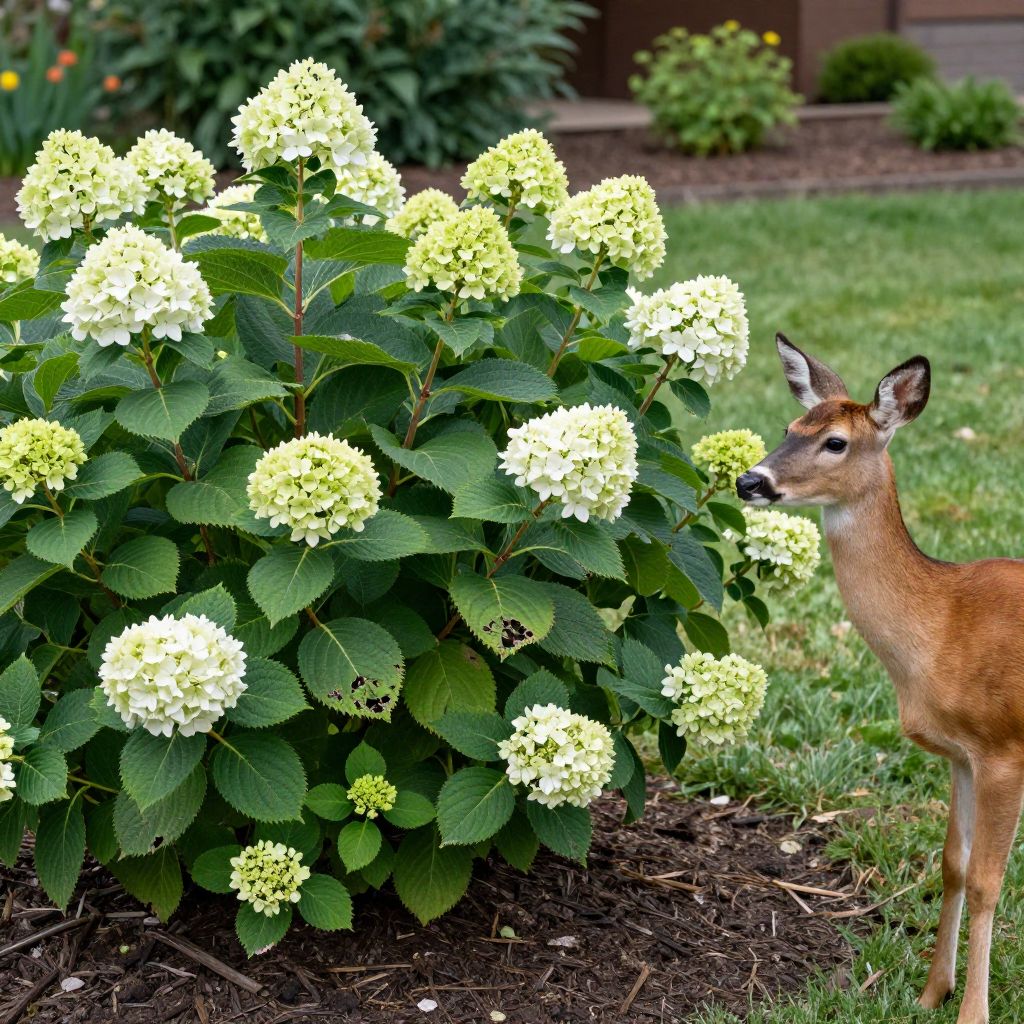
Do deer like hydrangeas? If you’re seeing shredded leaves or browsed flower buds, the answer is often yes—especially when deer are hungry and other plants are scarce. Hydrangeas are not deer-proof, and some types are more tempting than others.
The good news is that you can still grow hydrangeas successfully in deer-prone gardens. With the right placement, plant care, and a few protection strategies, you can reduce damage and help your shrubs recover quickly if deer do browse them.
Do deer like hydrangeas?
Yes, deer often browse hydrangeas, especially tender new growth, flower buds, and soft leaves. They may not eat every plant equally, but hydrangeas are generally considered deer-attractive to deer-prone gardens rather than deer-resistant. In times of drought, winter stress, or heavy deer pressure, damage can be severe.
Why deer may target hydrangeas
Deer are opportunistic browsers. They usually prefer plants with soft, nutritious, easily chewed growth, and hydrangeas can fit that description during the growing season.
What makes hydrangeas appealing
- Soft new shoots are easy to eat.
- Flower buds are tender and often the first part deer sample.
- Young shrubs are more vulnerable because their stems and leaves are lush.
- In spring and early summer, deer may browse more heavily as food sources change.
Which hydrangeas are most at risk
Deer pressure can affect many hydrangea types, including bigleaf hydrangea (Hydrangea macrophylla), smooth hydrangea (Hydrangea arborescens), panicle hydrangea (Hydrangea paniculata), oakleaf hydrangea (Hydrangea quercifolia), and climbing hydrangea (Hydrangea anomala subsp. petiolaris). In many gardens, the more tender and accessible the plant, the more likely deer are to sample it.
How to protect hydrangeas from deer
The most reliable protection is physical exclusion. Repellents can help, but they work best as part of a broader plan, especially where deer are persistent.
1. Use fencing when possible
A properly installed fence is the most dependable solution. For many home gardens, a fence around the planting area is more effective than trying to protect each shrub individually.
- Use a tall fence if deer pressure is high.
- Keep gates closed and check for gaps.
- For small beds, temporary netting or individual shrub cages can help during peak browsing periods.
2. Apply deer repellents strategically
Repellents can reduce browsing, especially when deer are only lightly feeding. They work best when applied before deer start feeding heavily and reapplied after rain or new growth flushes.
- Choose a product labeled for deer control.
- Rotate products if deer become accustomed to one scent or taste.
- Spray both the tops and undersides of leaves when allowed by the label.
Important: repellents are not a guarantee. If deer are very hungry, they may still browse treated plants.
3. Place hydrangeas where deer are less likely to browse
Planting location matters. Deer are less likely to linger near busy areas, hard surfaces, or places with frequent human activity.
- Plant near a porch, walkway, or driveway if space allows.
- Avoid placing young hydrangeas at the edge of woods or open deer trails.
- Use more deer-resistant plants as a buffer around hydrangeas.
4. Protect new growth in spring
New shoots are the most tempting part of the plant. If deer damage is predictable in your area, protect shrubs early rather than waiting for browsing to begin.
- Install cages or netting before buds swell.
- Reapply repellents as soon as new leaves emerge.
- Inspect plants every few days during active growth.
How to grow hydrangeas so they recover better from deer damage
Healthy hydrangeas bounce back more easily from browsing. Good planting and care won’t stop deer, but they can help the shrub replace lost growth and flower more reliably.
Choose the right site
Hydrangeas generally do best with morning sun and afternoon shade in warmer climates, or more sun in cooler regions. The exact balance depends on your local weather and the type of hydrangea you grow.
- Give them enough light to bloom well.
- Avoid harsh afternoon sun in hot climates.
- Make sure air can move around the plant to reduce disease pressure.
Prepare soil for strong growth
Most hydrangeas prefer fertile, moisture-retentive soil that drains well. Heavy clay that stays wet can stress roots, while very sandy soil may dry too quickly.
- Work in compost to improve soil structure.
- Check drainage before planting.
- Mulch to help hold moisture and moderate soil temperature.
A 2- to 3-inch layer of organic mulch is usually enough. Keep mulch a few inches away from the stems so the crown does not stay wet.
Water consistently, especially after browsing
Hydrangeas recover better when they are not drought-stressed. Water deeply when the top layer of soil begins to dry, adjusting for rainfall, soil type, and plant size.
- Water at the base rather than overhead when possible.
- Newly planted shrubs need closer attention than established ones.
- Wilting from heat is not always the same as drought, so check the soil before watering again.
Pruning and cleanup after deer damage
Deer browsing does not always require immediate pruning. In many cases, the plant can push new growth from remaining buds if you leave healthy stems in place.
What to remove
- Snapped stems with ragged breaks
- Dead or clearly dried tips
- Branches that are crossing or rubbing after damage
What to leave alone
If the stem is still green and firm, it may still support new growth. Avoid over-pruning in spring if you are unsure whether your hydrangea blooms on old wood or new wood.
Tip: If you do not know the hydrangea type, wait until you can identify whether flower buds formed on last year’s stems before making major cuts.
Common problems that look like deer damage
Not every chewed or missing leaf is from deer. Correct identification helps you choose the right fix.
Deer damage vs. other pests
- Deer: torn or cleanly browsed tips, stripped leaves, damage higher up on the shrub.
- Rabbit: cleaner cuts lower to the ground, especially on young stems.
- Insects: holes, stippling, or skeletonized leaves rather than whole shoots missing.
- Disease: spots, wilting, or browning that spreads without obvious chewing.
When hydrangea leaves look scorched
Leaf scorch from heat, wind, or drought can be mistaken for browsing. Scorched leaves usually brown along the edges or between veins, while deer damage tends to remove tissue entirely.
Can you plant hydrangeas in a deer-heavy yard?
Yes, but you should plan for protection from the start. If deer are common in your area, hydrangeas are best treated as a plant that needs management rather than a carefree shrub.
Best approach for deer-prone landscapes
- Pick a site with some natural protection or human activity nearby.
- Improve the soil with compost and mulch.
- Install fencing, cages, or netting before damage starts.
- Use repellents during vulnerable growth periods.
- Monitor the plant regularly and adjust protection as it grows.
Propagation and replacement after repeated browsing
If deer keep setting a hydrangea back, you may want to propagate a healthy plant or replace it with a better-protected specimen. Softwood or stem cuttings can work for many hydrangeas when taken from healthy, non-browsed growth.
Before replacing a plant, consider whether the issue is the shrub itself or simply its location. Sometimes moving the plant to a more protected spot solves the problem better than changing varieties.
Practical mistakes to avoid
- Waiting until deer have already browsed the plant before protecting it.
- Relying on repellents alone in high-pressure areas.
- Overwatering in heavy soil, which weakens roots and slows recovery.
- Pruning too aggressively after browsing and removing healthy buds.
- Planting hydrangeas on the edge of wooded areas without a protection plan.
Conclusion
Do deer like hydrangeas? Often, yes. But with fencing, repellents, smart placement, and good plant care, you can still enjoy these shrubs in a deer-prone garden. Start by protecting the newest growth, then support recovery with steady moisture, mulch, and careful pruning.
If you want to reduce browsing pressure even more, it also helps to understand what deer prefer when food is scarce; see what to feed deer for related garden context.