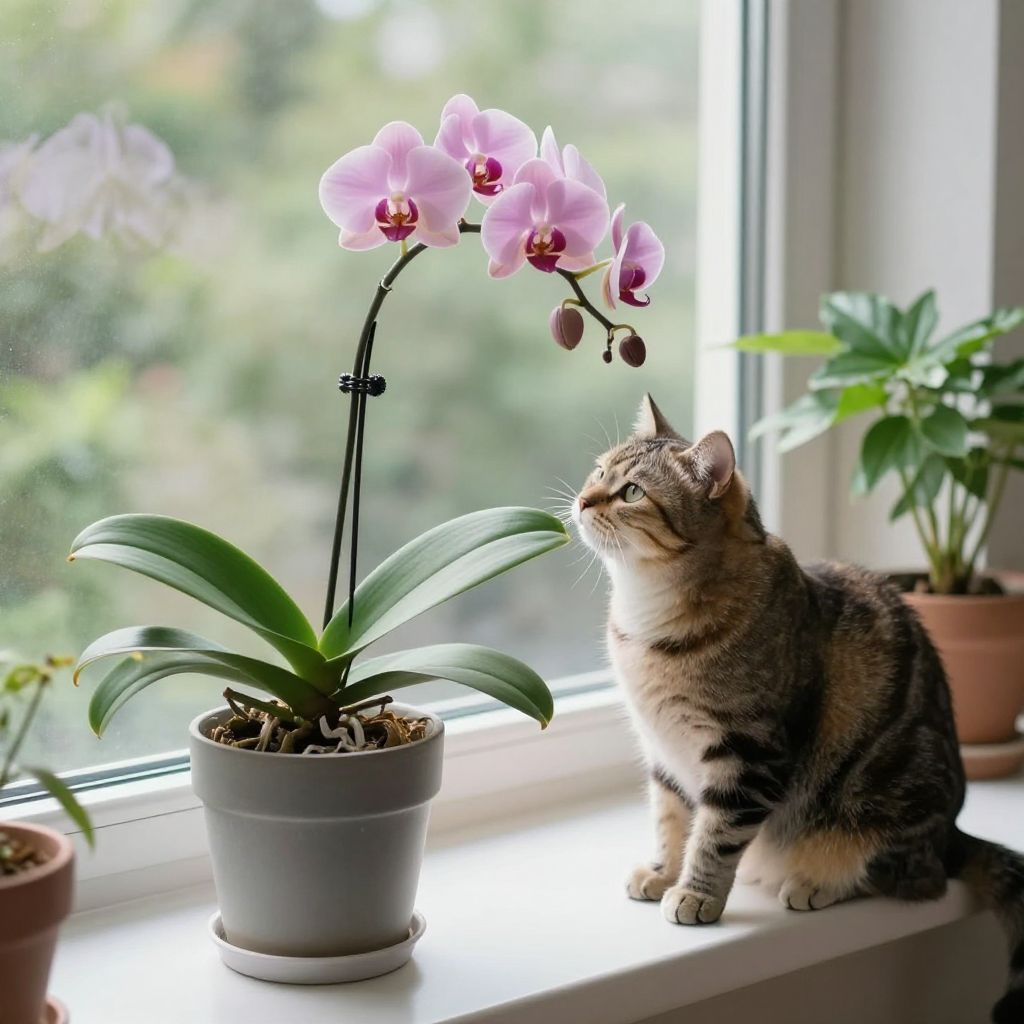
Are orchids cat safe? In most cases, yes. The popular houseplant orchids commonly sold as Phalaenopsis, Dendrobium, and Cattleya are generally considered non-toxic to cats, so they are usually a good choice for pet-friendly indoor growing.
That said, “cat safe” does not mean “cat-proof.” A curious cat can still chew leaves, knock over pots, or eat potting media, so it helps to grow orchids with a few practical safety habits in mind.
Are orchids cat safe?
Yes, most true orchids are considered cat safe and are not known to be toxic to cats. If your cat nibbles an orchid leaf or flower, it is usually more likely to cause mild stomach upset or mechanical irritation than poisoning. The main risks are the potting materials, fertilizers, and any pesticides you use.
Which orchids are usually safe around cats?
Most orchids sold for home growing are from the orchid family and are generally regarded as non-toxic. The common indoor types below are the ones you are most likely to see in garden centers and grocery stores.
- Phalaenopsis (moth orchid)
- Dendrobium
- Cattleya
- Oncidium
- Paphiopedilum (slipper orchid)
If you are unsure about a specific orchid, check the full botanical name rather than relying on a common name alone. Some houseplants are called “orchids” informally but are not true orchids, and toxicity can differ.
What about orchid flowers and leaves?
Both flowers and leaves are generally considered non-toxic to cats. Still, chewing plant tissue can upset a cat’s stomach, especially if your pet eats a lot at once. A cat that is prone to chewing plants may also damage the orchid’s growing point or flower spike.
What risks should cat owners watch for?
Even when the plant itself is safe, the growing setup can create problems. The biggest concerns are ingestion of potting mix, fertilizer residue, sharp stakes, and broken pots. Orchids also dislike being overwatered, which can lead to root rot and moldy media that may attract pets.
Common non-plant hazards
- Orchid bark or sphagnum moss eaten by a cat can cause digestive upset or choking.
- Fertilizer can irritate the mouth and stomach if applied heavily or left on surfaces.
- Pesticides and insecticidal soaps may be harmful if used incorrectly.
- Broken ceramic pots can cut paws and mouths.
- Support stakes and clips can be poked or swallowed if they come loose.
How to grow orchids safely in a home with cats
Growing orchids with cats is easiest when you combine careful placement with simple plant care. Orchids do best when they are healthy and stable, and healthy plants are less likely to drop leaves, spill media, or attract pests.
Choose the right location
- Place orchids on a stable shelf, plant stand, or hanging display out of paw reach.
- Avoid windowsills where a cat can jump directly onto the pot.
- Use a heavy cachepot or a wider saucer to reduce tipping.
- Keep hanging orchids high enough that the leaves and flower spikes do not dangle into a cat’s reach.
Use the right potting medium
Most orchids are not grown in regular potting soil. They usually need a coarse, airy mix such as orchid bark, sphagnum moss, perlite, or a blend made for epiphytic orchids. This helps roots get oxygen and prevents waterlogging.
Do not plant orchids in dense garden soil or standard houseplant compost. Those mixes stay too wet and can quickly rot orchid roots.
Water carefully
Orchids are often harmed by overwatering, not underwatering. Let the potting mix approach dryness according to the orchid type, pot size, home temperature, and humidity. In many homes, bark-based mixes dry faster than moss-based mixes.
- Water thoroughly, then let excess drain completely.
- Never leave the pot sitting in standing water.
- Check the roots and medium before watering again.
- Keep water off the crown of Phalaenopsis orchids to reduce rot risk.
Feed lightly and safely
Use a fertilizer labeled for orchids or a balanced houseplant fertilizer diluted to a gentle strength, following the product label. Overfertilizing can burn roots and leave residue that pets may lick or track around.
After feeding, rinse any spills from saucers, trays, or nearby surfaces. If your cat likes to investigate fresh water or damp media, keep the plant out of reach until the surface is dry.
How to keep cats from chewing orchids
Some cats ignore orchids completely, while others treat them like toys. If your cat is interested in the plant, prevention works better than trying to correct the behavior after damage has started.
- Move the orchid higher or into a room your cat cannot access unsupervised.
- Offer a safer distraction such as cat grass or approved chew toys.
- Remove fallen petals quickly so they are not swatted or eaten.
- Use stable containers that are less likely to topple if bumped.
- Train gently by redirecting your cat away from the plant, not by using harsh deterrents.
Avoid sprays or homemade repellents unless you know they are safe for both the orchid and your cat. Many strong-smelling products can damage the plant or irritate pets.
What if your cat eats part of an orchid?
If your cat takes a small nibble from a true orchid, it is usually not an emergency. Watch for mild vomiting, drooling, or temporary stomach upset, and remove the plant from further access.
If your cat ate a large amount, chewed on fertilizer, or may have swallowed potting media, contact your veterinarian or a pet poison helpline right away. Bring the plant name, any product labels, and a photo if possible. This is especially important if your cat is lethargic, vomiting repeatedly, or having trouble breathing.
Signs to take seriously
- Repeated vomiting or diarrhea
- Drooling that does not stop
- Loss of appetite
- Swelling of the mouth or face
- Difficulty breathing
- Weakness or unusual behavior
Orchid care tips that also help pet safety
Good orchid care and pet safety go hand in hand. A healthy orchid is less messy, less likely to drop leaves, and easier to keep in a secure location.
Light
Most indoor orchids prefer bright, indirect light. An east-facing window or a filtered south or west window often works well, depending on your climate and indoor conditions. Too much direct sun can scorch leaves; too little light can reduce flowering.
Air circulation
Orchids appreciate gentle air movement. Good airflow helps leaves dry after watering and reduces fungal problems. Just avoid placing them where a cat can easily knock them into a drafty, unstable spot.
Pruning and cleanup
Remove dead flowers, yellowing leaves, and spent flower spikes according to the orchid type and the plant’s condition. Clean up fallen petals and bark pieces promptly so your cat is less tempted to investigate.
Pest control
Common orchid pests include mealybugs, scale, spider mites, and fungus gnats. If you need treatment, choose the least disruptive option first and always read pet-safety warnings carefully. Keep treated plants away from cats until surfaces are fully dry and the label says it is safe.
Can orchids be grown outdoors with cats around?
In warm climates, some orchids can be grown outdoors in sheltered, shaded areas, but cats add another layer of risk. Outdoor orchids may be more accessible to digging, chewing, and rough play, and they are also exposed to more pests and weather stress.
If you grow orchids outside, place them where your cat cannot reach them, such as on a high porch shelf or in a protected hanging basket. Make sure the pot drains well and is secure against wind.
Common mistakes to avoid
- Using regular garden soil instead of orchid mix
- Leaving orchids in standing water
- Placing them where a cat can jump directly onto them
- Using strong pesticides without checking pet safety
- Ignoring spilled bark, moss, or fertilizer granules
- Assuming every plant called an orchid is automatically safe
Conclusion: enjoy orchids without stressing your cat
Are orchids cat safe? Usually yes, which makes them one of the better flowering houseplants for pet owners. Keep the plant in a stable, out-of-reach spot, use a proper orchid mix, and avoid messy or risky treatments. If your cat does nibble the plant, monitor for symptoms and contact your vet if the reaction seems more than mild.
If you want to keep improving your indoor plant setup, you may also enjoy reading about how to repot orchids correctly and the best indoor light conditions for flowering houseplants.