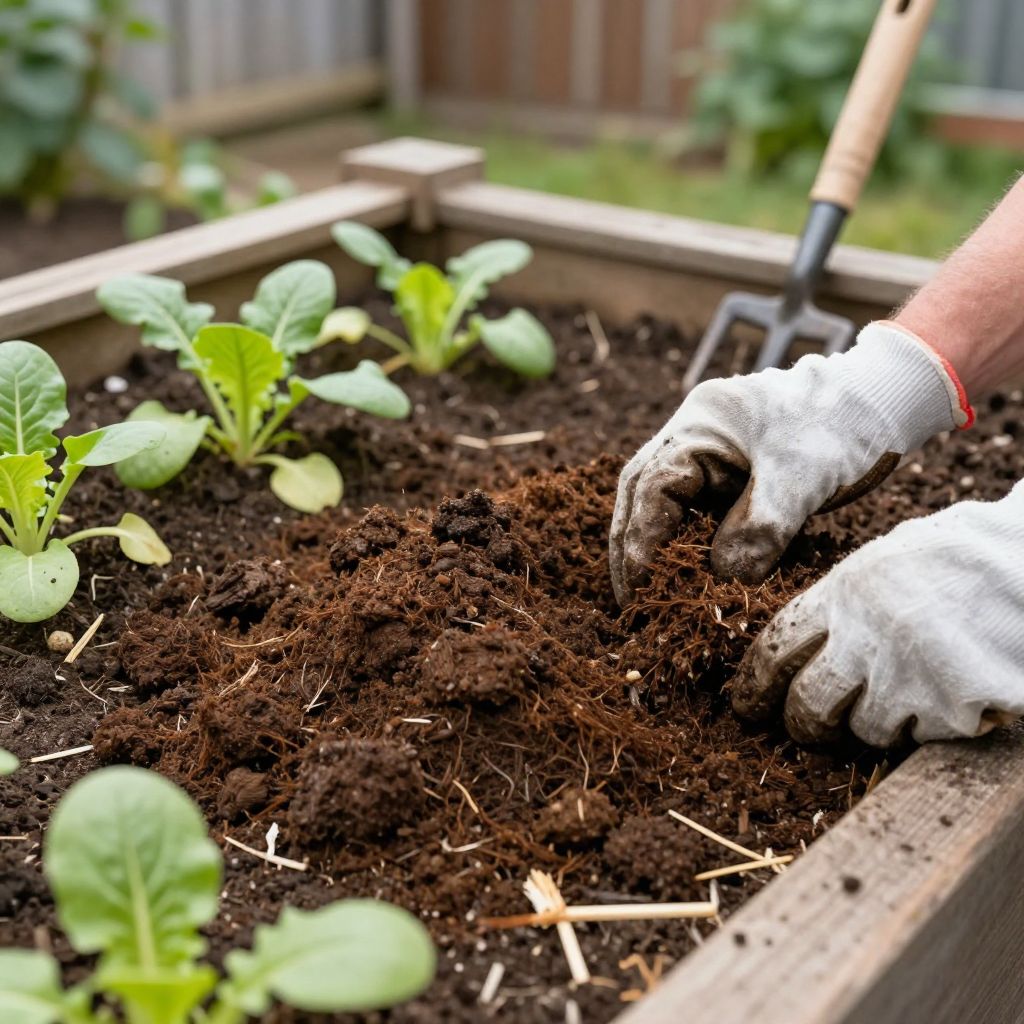
If you’ve seen bags labeled “mushroom compost” and wondered whether it’s a good soil amendment, you’re not alone. It can be a useful addition to many gardens, but it’s not the same as finished compost from a backyard pile.
Understanding what it is, how it’s made, and where it works best will help you use it safely and avoid common planting problems. Here’s how to identify mushroom compost and decide whether it belongs in your beds, borders, containers, or lawn.
What is mushroom compost?
Mushroom compost is the spent growing medium left after mushroom production. It usually contains materials such as straw, manure, peat, gypsum, or other organic ingredients that have already supported mushroom growth. It is best used as a soil amendment, not as a stand-alone potting mix or a substitute for all-purpose garden compost.
How to identify mushroom compost
Fresh mushroom compost is usually dark brown to black, crumbly, and earthy-smelling, though it may also have a slightly salty or ammoniac odor if it is not fully aged. It often looks finer and more uniform than homemade compost because it has been processed for commercial growing.
What it looks and feels like
- Texture: Fine, crumbly, and moist but not muddy
- Color: Dark brown to nearly black
- Smell: Earthy when aged; sharp or “barny” if still fresh
- Debris: May contain bits of straw or fibrous material
Signs it may need more aging
- Strong ammonia smell
- Visible white salts or crusting
- Very hot pile or bag
- Plants react poorly after application
If you are unsure, ask the supplier whether the product is aged or composted mushroom substrate. That matters, because fresh material can be too strong for sensitive plants.
What is mushroom compost made from?
Mushroom compost is made from the growing medium used to cultivate mushrooms, often called spent mushroom substrate. The exact recipe varies by producer, but it commonly includes straw, poultry manure, horse manure, gypsum, and other organic materials that are composted before and after mushroom production.
Because the ingredients vary, mushroom compost is not identical from one bag or bulk pile to another. That is why it’s smart to treat it as a useful amendment with variable nutrient content rather than a guaranteed fertilizer.
Is mushroom compost good for gardens?
Yes, mushroom compost can be helpful in many gardens because it adds organic matter, improves soil structure, and can help sandy soils hold moisture. It is especially useful for improving tired beds that need more humus and better tilth. However, it can be too alkaline or too salty for some plants if used heavily.
Best uses in the landscape
- Amending vegetable beds before planting
- Improving poor or sandy soil
- Topdressing established beds lightly
- Blending into new raised beds
- Refreshing lawn soil in thin layers
Where to be cautious
- Acid-loving plants such as blueberries, azaleas, and camellias
- Seed starting mixes
- Container plants that need a low-salt medium
- Very heavy clay soils if used alone instead of mixed in
For most home gardens, mushroom compost works best when mixed with existing soil rather than applied as a thick layer on top.
How to use mushroom compost in the garden
The safest approach is to work mushroom compost into the top layer of soil and then observe how plants respond. It should improve structure and water retention without overwhelming roots or changing soil chemistry too abruptly.
Step-by-step: amending a bed
- Clear weeds and debris from the area.
- Spread a layer of mushroom compost about 1 to 2 inches deep over the bed.
- Mix it into the top 4 to 6 inches of soil with a fork or spade.
- Water the bed lightly to settle the soil.
- Plant after the soil has been blended and checked for drainage.
For very poor soil, you can repeat light applications over time rather than trying to fix everything in one season. That approach is gentler on plants and easier to manage.
For raised beds
Mushroom compost can be part of a raised-bed blend, but it should not be the only ingredient. A balanced mix usually includes topsoil, compost, and a drainage-friendly component such as coarse organic matter or a structured soil blend suited to your crops.
For lawns
Use only a thin topdressing if you apply mushroom compost to turf. A light layer can help improve surface soil, but thick applications may smother grass or create uneven patches.
When not to use mushroom compost
Some plants dislike the pH or salt content of mushroom compost, especially if it is fresh or used in large amounts. This is one of the most important things to know before you add it to your garden.
Plants that may struggle
- Blueberries
- Rhododendrons
- Azaleas
- Camellias
- Heathers
- Other acid-loving plants
These plants generally prefer acidic soil, while mushroom compost is often closer to neutral or slightly alkaline. If you grow them, choose an acid-forming amendment instead.
Why seedlings need caution
Seedlings are sensitive to salts and uneven nutrient levels. For seed starting, use a fine, low-salt seed-starting mix rather than mushroom compost. You can add a small amount to mature transplants later if the crop tolerates it.
How much mushroom compost should you use?
There is no universal rate that suits every soil and climate, but moderation is the key. In most home gardens, a 1- to 2-inch layer mixed into the topsoil is enough for general improvement. For containers, use it only as part of a blended potting mix unless the label specifically says it is suitable for pots.
Adjust based on your soil type:
- Sandy soil: Use a little more to improve water retention, but still mix thoroughly.
- Clay soil: Use in moderation and combine with other organic matter to improve structure.
- Already rich soil: Use lightly or skip it if the bed is performing well.
If you have not tested your soil recently, a basic soil test can help you decide whether mushroom compost is a good fit, especially if you grow crops with specific pH needs.
Can mushroom compost be used in containers?
Only with care. Mushroom compost can be too dense or salty for many container plants if used on its own. Containers need excellent drainage and a mix that stays airy, so mushroom compost should usually be a minor ingredient rather than the main one.
Container-friendly approach
- Use a quality potting mix as the base
- Blend in a small amount of aged mushroom compost if appropriate
- Make sure pots have drainage holes
- Watch for crusting, poor drainage, or leaf scorch
If your container plants begin to yellow, wilt despite moist soil, or develop leaf edge burn, the mix may be too heavy or salty. Repotting into a lighter blend may be the best fix.
Common problems and how to fix them
Problem: strong smell
A sharp ammonia smell usually means the compost is not fully aged. Let it sit and air out before use, or choose a better-composted batch. Fresh material can stress roots and young plants.
Problem: white crust on the surface
White crusting can indicate salt buildup. If you already applied it, water deeply to help leach excess salts, and avoid adding more until the soil has been tested or the plants recover.
Problem: plants grow poorly after application
Too much mushroom compost, especially in containers or around sensitive plants, may be the issue. Remove and replace the affected soil if needed, then replant in a more balanced mix.
Problem: soil stays too wet
Mushroom compost can improve moisture retention, which is helpful in sandy soil but problematic in poorly drained beds. If drainage is already slow, add coarse organic matter and avoid overapplying compost.
Mushroom compost vs. other composts
Not all composts do the same job. Mushroom compost is often valued for improving soil texture and adding organic matter, while other composts may be better for specific crops or soil conditions.
- Garden compost: Often more variable, but useful for general soil building
- Manure compost: Usually richer and may be stronger for feeding hungry crops
- Leaf mold: Excellent for improving structure and moisture-holding in a gentler way
- Mushroom compost: Convenient, uniform, and useful for many beds, but not ideal for every plant
Think of mushroom compost as one tool in your soil-improvement kit, not a one-size-fits-all product.
Best gardening practices when using mushroom compost
To get the best results, match the amendment to the plant and the soil. Good gardening is less about adding more and more organic matter, and more about adding the right material in the right amount.
- Use aged product whenever possible
- Mix it into soil instead of leaving it in a thick surface layer
- Avoid overusing it around acid-loving plants
- Check drainage before planting
- Monitor plant response after application
In vegetable gardens, it can be especially helpful before planting crops that appreciate improved soil structure, such as many leafy greens and fruiting vegetables, provided the soil is not already rich or alkaline.
Conclusion
What is mushroom compost? It is the spent growing medium from mushroom production, and it can be a valuable soil amendment when used wisely. Identify it by its dark, crumbly texture and earthy smell, then apply it lightly and mix it into the soil rather than using it as a stand-alone medium.
If you’re planning a garden bed, start with a small test area and watch how your plants respond. For more practical soil-building ideas, you may also want to read about how to improve garden soil and using compost in raised beds.