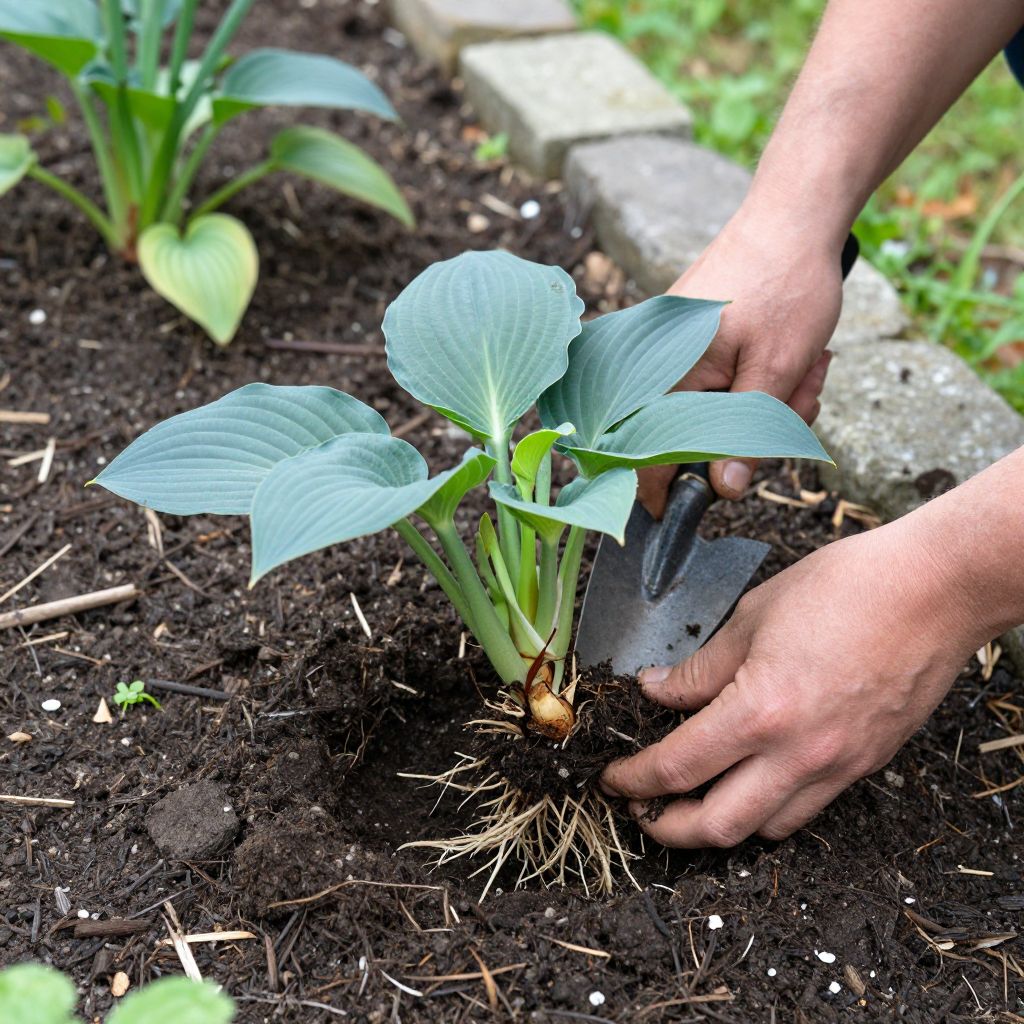
If you’re wondering when to split hostas, the short answer is: do it when the plant is actively growing but not stressed by extreme heat or drought. In most gardens, that means early spring as new shoots emerge or early fall after summer heat eases.
Splitting hostas is one of the easiest ways to rejuvenate crowded clumps, create more plants, and keep foliage looking full and healthy. The best timing depends on your climate, the size of the clump, and how quickly you can replant and water the divisions.
When to split hostas?
The best time to split hostas is usually early spring, just as the eyes are emerging and before leaves unfurl, or early fall when temperatures cool and soil stays moist. Avoid splitting during hot, dry weather. Hostas recover fastest when roots can regrow in mild conditions with consistent moisture.
Why split hostas at all?
Hostas don’t need dividing every year. In fact, many do best when left alone until the clump becomes crowded, the center starts thinning, or the plant has outgrown its space.
Splitting helps you:
- Rejuvenate older clumps
- Control size in borders and shade gardens
- Improve airflow around crowded crowns
- Create new plants for other areas of the garden
- Reduce competition for water and nutrients
A healthy hosta can often go several years before it truly needs dividing. If the plant still looks vigorous and fits its spot, you may not need to split it at all.
Best seasons for dividing hostas
Early spring
Early spring is often the easiest and safest time to divide hostas. The plant is waking up, the soil is workable, and cooler temperatures reduce transplant stress.
Look for small shoots just breaking through the soil. At this stage, the crown is easier to divide, and the plant can quickly rebuild roots and foliage.
Best for: gardeners in regions with hot summers, because spring divisions have more time to establish before heat arrives.
Early fall
Early fall can also be a good time, especially in climates with long, mild autumns. The soil is still warm enough for root growth, but the air is cooler and the plant is no longer pushing out tender new leaves in summer heat.
Choose fall only if you have enough time before hard frost for the divisions to settle in. In colder regions, divide early enough that roots can establish before the ground freezes.
Best for: cool, moist climates or gardens where spring is too busy or too wet to work the soil.
When not to split hostas
Avoid dividing hostas during midsummer unless it is absolutely necessary. Heat, sun exposure, and dry soil can cause wilting and slow recovery.
Also avoid dividing when:
- The plant is drought-stressed
- The soil is frozen or waterlogged
- A heat wave is forecast
- The hosta is flowering heavily and already under stress
How to tell if a hosta needs dividing
Not every hosta needs to be split on a schedule. Instead, watch the plant for signs that the clump is getting too crowded or aging out.
Common signs
- The center of the clump is thinning or dying out
- Leaves are smaller than they used to be
- The plant is spreading into paths or neighboring plants
- Flowering has become sparse
- The clump is so dense that water runs off instead of soaking in
If the hosta still looks full and healthy, you can leave it alone. Many gardeners divide only when the plant clearly needs it.
How to split hostas step by step
Dividing hostas is straightforward, but a careful approach helps the plant recover quickly. Work on a cool, cloudy day if possible, and replant divisions as soon as you can.
- Water the plant well the day before. Moist soil makes digging easier and reduces root damage.
- Dig around the clump. Use a spade or garden fork to lift the root ball, working several inches away from the crown.
- Lift the entire clump. Shake or gently wash off excess soil so you can see the crowns and roots.
- Separate the divisions. Pull the clump apart by hand if it is loose, or use a clean sharp knife, spade, or pruning saw for dense clumps.
- Keep each division large enough. Aim for a piece with at least a few healthy shoots and roots attached. Very tiny pieces may take longer to recover.
- Replant promptly. Set divisions at the same depth they were growing before, firm the soil, and water thoroughly.
- Mulch lightly. A thin layer of organic mulch helps hold moisture, but keep it away from the crown.
If you are splitting a large, old hosta, you may need to cut it into several sections. That is fine, as long as each section has enough roots and growing points to establish.
Tools that make the job easier
You do not need special equipment, but the right tools make dividing cleaner and less stressful for the plant.
- Spade or digging fork
- Sharp knife or garden saw for tough crowns
- Gloves
- Bucket or tarp for carrying divisions
- Watering can or hose
- Compost for improving planting holes if needed
Clean your cutting tool before and after use, especially if any plant looks diseased. A sharp blade makes cleaner cuts and bruises roots less than a dull one.
Soil, light, and water after splitting
Hostas prefer rich, moisture-retentive soil with good drainage. They do best in part shade to shade, though some varieties tolerate more sun if the soil stays evenly moist.
After dividing, give the new plants conditions that help roots re-establish:
- Moist, not soggy soil
- Consistent watering during the first few weeks
- Some shade from hot afternoon sun
- Loose soil mixed with compost if the ground is poor
Water deeply after planting, then check the soil regularly. The goal is steady moisture while roots settle in, not constant saturation.
How often should hostas be divided?
There is no fixed timetable. Some hostas need dividing every 4 to 6 years, while others can stay in place much longer. Growth rate depends on variety, soil quality, moisture, and available space.
Rather than dividing by the calendar, divide when the plant shows crowding, reduced vigor, or a thinning center. If the clump still looks strong, leave it alone.
Common mistakes to avoid
Most problems after splitting hostas come from timing, handling, or planting conditions rather than the division itself.
- Dividing in hot weather when the plant cannot recover quickly
- Making divisions too small so they dry out or struggle to root
- Planting too deep and burying the crown
- Letting roots dry out while you work
- Overwatering in heavy soil where drainage is poor
- Ignoring sun exposure after transplanting
If a division wilts after planting, check the soil first. Dry soil is a common cause, but soggy soil can also stress roots and lead to rot.
Troubleshooting after division
Leaves wilt or scorch
This usually means the division is losing moisture faster than the roots can supply it. Water deeply, mulch lightly, and provide temporary shade if the site gets strong afternoon sun.
Growth is slow
Slow recovery is normal for a few weeks, especially after a large division. Keep the soil evenly moist and avoid fertilizing heavily right away. The plant needs time to rebuild roots.
The center dies back again
If the center of the clump keeps declining, the plant may have been divided too aggressively, or the site may be too dry, compacted, or sunny for that hosta. Improve the growing conditions before replanting.
Slugs and snails appear
Freshly divided hostas can be especially attractive to slugs and snails. Remove hiding spots, water in the morning, and inspect leaves regularly for chewing damage.
Can you split hostas in summer?
You can, but it is not ideal. If you must move or divide a hosta in summer, choose a cool day, keep the root ball intact as much as possible, and water carefully afterward. Expect more stress and slower recovery than with spring or fall division.
Summer division is most successful when the plant is in a shaded location, the weather is mild, and you can water consistently until it re-establishes.
What to do with the old planting spot
After removing a hosta, refresh the planting hole if needed. Loosen compacted soil, mix in compost if the ground is poor, and check drainage before replanting the divisions.
If the original site is too crowded or too sunny, consider moving the divisions to a better spot rather than putting them back in the same conditions.
Conclusion
When to split hostas comes down to mild weather, moist soil, and a plant that actually needs dividing. For most gardeners, early spring is the easiest choice, with early fall as another good option in suitable climates.
Check your hosta for crowding, choose a cool day, divide it carefully, and replant promptly. If you want to keep improving your shade garden, you may also enjoy reading about shade garden plants and how to divide perennials.