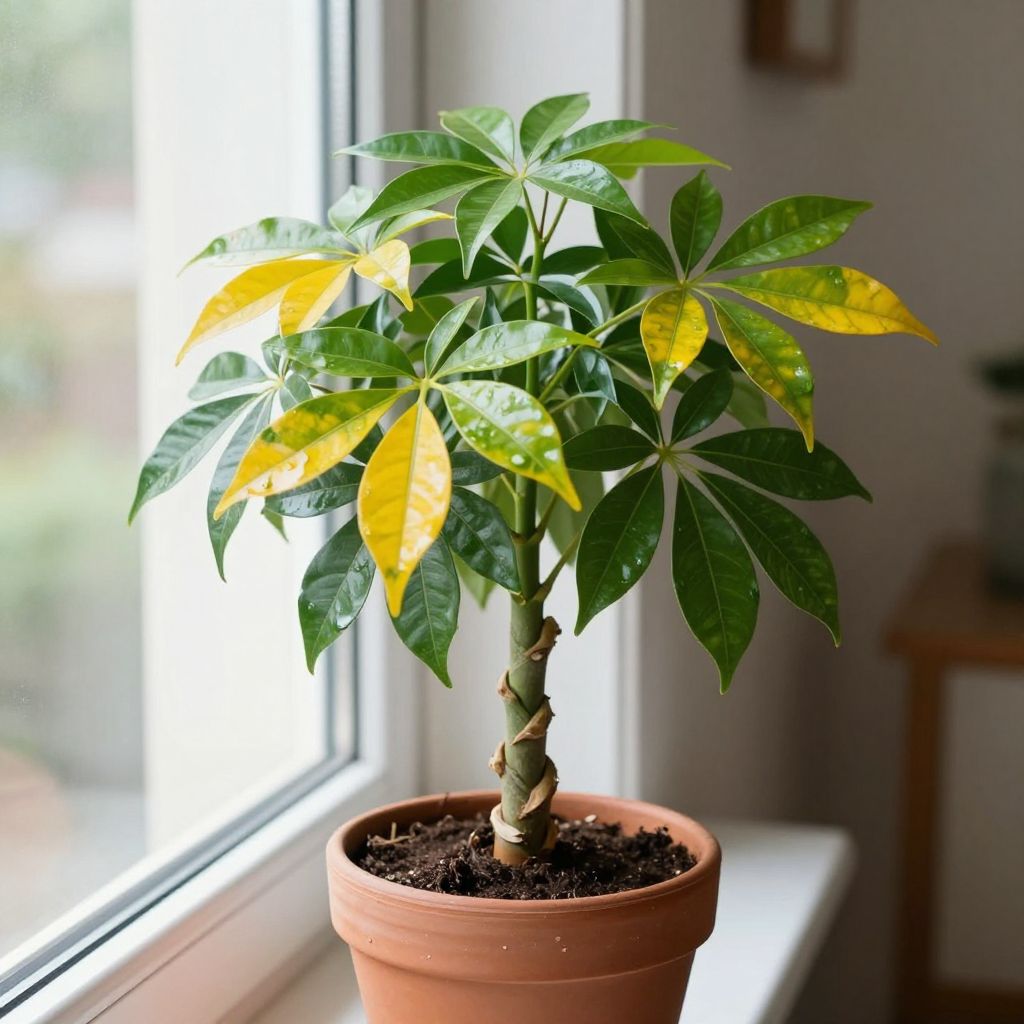
Why is my money tree leaves turning yellow? In most cases, the issue comes down to watering problems, poor drainage, low light, or stress from sudden changes in temperature or humidity. A money tree, Pachira aquatica, usually recovers well if you correct the cause early and avoid making the same mistake repeatedly.
The good news is that yellow leaves are often a warning sign, not a death sentence. By checking the soil, light, pot, and roots in the right order, you can usually narrow down the problem and get your plant growing normally again.
Why is my money tree leaves turning yellow?
Yellow money tree leaves are most often caused by overwatering and poor drainage, though underwatering, low light, root stress, pests, and natural leaf aging can also be responsible. Start by checking soil moisture and drainage first, then review light, temperature, and pest pressure to find the real cause.
Check the most common causes first
1. Overwatering is the top culprit
Money trees dislike staying wet. If the potting mix remains soggy, roots can lose oxygen and begin to decline, which often shows up as yellow leaves that may feel soft or drop easily.
Signs of overwatering include:
- Yellowing leaves, especially lower leaves
- Soil that stays wet for many days
- A heavy pot with little drying between waterings
- Leaf drop after watering
- Possible sour smell from the soil
Fix: Let the top 2 to 3 inches of soil dry before watering again. Make sure the pot has drainage holes and never leave water sitting in a saucer for long.
2. Underwatering can also cause yellowing
Dry soil can stress the plant, especially if the root ball has become too dry to absorb water evenly. In that case, leaves may yellow, curl, or dry at the edges before dropping.
Signs of underwatering include:
- Very dry potting mix pulling away from the pot sides
- Leaves that feel crispy rather than soft
- Wilting between waterings
- Lightweight pot that dries out quickly
Fix: Water thoroughly until excess drains from the bottom. If the mix has become hydrophobic and water runs through too quickly, soak the pot briefly from the bottom or water slowly in several passes so the root ball rehydrates evenly.
3. Poor drainage traps excess moisture
Even if you water carefully, a dense potting mix or a container without drainage can keep roots too wet. Money trees do best in a loose, well-draining mix rather than heavy garden soil or compacted medium.
Check for these drainage problems:
- No drainage holes in the pot
- Heavy, compacted soil
- Water pooling on the surface after watering
- Roots sitting in standing water
Fix: Repot into a container with drainage holes and a light indoor potting mix. A mix designed for houseplants often works well, especially if it includes perlite or bark for extra air space.
4. Low light can weaken the plant
Money trees prefer bright, indirect light. In dim rooms, the plant may slowly weaken, and older leaves can turn yellow as growth slows and the plant struggles to support its foliage.
Signs of insufficient light include:
- Leggy growth with long gaps between leaves
- Pale color and slow new growth
- Yellowing leaves on the shadier side of the plant
Fix: Move the plant closer to a bright window with filtered light. Avoid harsh direct sun, which can scorch leaves, but do give it enough brightness to support steady growth.
5. Temperature swings and dry air add stress
Money trees are sensitive to sudden changes. Cold drafts, heat vents, air conditioning blasts, and very dry indoor air can all contribute to yellowing leaves.
Watch for stress if the plant is near:
- Exterior doors or drafty windows
- Heating vents or radiators
- Air conditioners or fans
- Rooms with very low humidity
Fix: Keep the plant in a stable indoor spot with moderate humidity and steady temperatures. If your home is dry, grouping plants together or using a pebble tray can help slightly, though good watering habits matter more.
6. Natural aging is normal
It is normal for an older leaf or two to yellow and drop occasionally, especially on lower parts of the plant. If the rest of the money tree looks healthy and new growth is normal, this may not be a serious problem.
Natural aging is more likely when:
- Only the oldest lower leaves are affected
- The plant is otherwise growing well
- New leaves are green and firm
Fix: Remove yellow leaves once they loosen naturally or gently prune them off. Focus on overall care rather than reacting to a single leaf.
7. Pests can trigger yellow leaves
Spider mites, scale, mealybugs, and aphids can weaken a money tree by feeding on sap. Early infestations may cause stippling, yellowing, sticky residue, or distorted growth.
Inspect the plant closely, especially:
- Leaf undersides
- Stems and branch joints
- Areas near the soil line
Look for tiny moving dots, cottony clusters, raised bumps, or sticky leaves. If you see pests, isolate the plant from others right away.
Fix: Wipe visible pests off with a damp cloth or cotton swab, then treat with insecticidal soap or horticultural oil according to the label. Repeat as needed because pests often hatch in cycles.
8. Root problems after repotting or transplant shock
If your money tree was recently repotted, moved indoors from a greenhouse, or relocated to a different light level, yellowing leaves can happen while it adjusts. Disturbed roots may temporarily absorb water less efficiently.
Signs of transplant stress include:
- Yellow leaves soon after repotting or moving the plant
- Leaf drop without obvious pest damage
- Slow growth for several weeks
Fix: Keep the plant stable, avoid overwatering, and do not fertilize immediately after repotting. Give it time to recover in consistent conditions.
How to diagnose the problem step by step
If you are not sure why your money tree leaves are turning yellow, use this simple troubleshooting order. It helps you rule out the most common causes without guessing.
- Check the soil moisture. Insert a finger 2 to 3 inches into the mix. If it feels wet, hold off on watering. If it feels dry and the plant is wilting, water thoroughly.
- Inspect the pot. Make sure it has drainage holes and that no water is trapped in a decorative outer cachepot.
- Look at the light. Is the plant in a bright spot with indirect light, or is it tucked into a dim corner?
- Examine the leaves and stems. Check for pests, sticky residue, webbing, or unusual spots.
- Consider recent changes. Repotting, drafts, heating, or moving the plant can all trigger temporary yellowing.
What to do right now
Once you identify the likely cause, act quickly but calmly. Money trees respond best to steady, moderate care rather than dramatic changes.
- Remove yellow leaves that are fully damaged.
- Adjust watering based on soil moisture, not a fixed calendar.
- Move the plant to brighter indirect light if it has been too dim.
- Repot only if the soil stays wet too long or the pot lacks drainage.
- Treat pests promptly if you find any.
If the plant has several yellow leaves but the stems are still firm and the roots are healthy, there is a good chance it will recover with better care.
How to water a money tree correctly
Watering is the most important part of money tree care. The goal is to keep the root zone lightly moist, not soggy and not bone dry.
A better watering method
- Check the top few inches of soil before watering.
- Water slowly until excess drains from the bottom.
- Empty the saucer after a few minutes.
- Wait until the upper soil dries again before repeating.
The exact timing depends on pot size, light, humidity, temperature, and season. In brighter, warmer conditions, the plant may dry faster. In cooler months or low light, it will usually need less frequent watering.
When to repot or prune
Repotting
Repot if the soil stays wet for too long, the roots are crowded, or the mix has broken down and become compacted. Choose a pot only slightly larger than the current one, because an oversized container can hold too much moisture.
Pruning
Prune only dead or badly yellowed leaves and weak stems. Light pruning can improve airflow and appearance, but avoid heavy cutting when the plant is already stressed.
Preventing yellow leaves in the future
Prevention is mostly about consistency. Money trees do best when their environment changes slowly and their roots are never left in stagnant water.
- Use a well-draining indoor potting mix.
- Choose a pot with drainage holes.
- Place the plant in bright, indirect light.
- Water only when the soil begins to dry.
- Keep it away from drafts and heating vents.
- Inspect regularly for pests.
Healthy new growth is the best sign that your care routine is working. If new leaves are green and firm, the plant is likely on the right track even if a few older leaves have yellowed.
Conclusion
If you have been asking, “Why is my money tree leaves turning yellow,” start with the soil and roots first. In most cases, correcting watering, improving drainage, and giving the plant brighter indirect light will solve the problem. Check your plant today, make one careful adjustment at a time, and watch for new healthy growth over the next few weeks.
For more houseplant troubleshooting, you may also want to read about how to fix overwatered houseplants and the best indoor light conditions for houseplants.