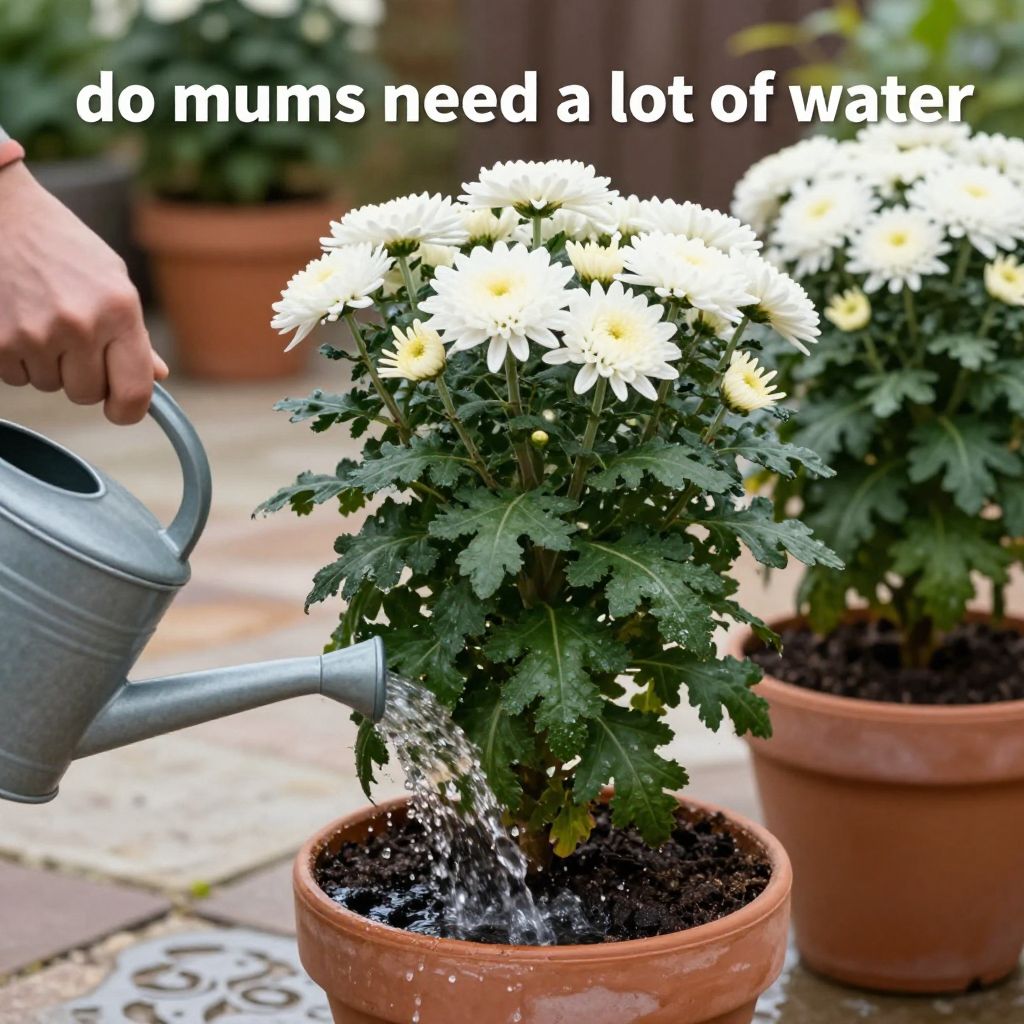
Do mums need a lot of water? The short answer is: they need consistent moisture, not soggy soil. Chrysanthemums can dry out quickly in pots and during warm, windy weather, but they also suffer if their roots sit in wet ground for too long.
The right watering amount depends on whether your mums are in the ground or in containers, plus your soil type, sun exposure, and local climate. If you learn to check the soil and water at the right time, mums are usually easy to keep healthy and blooming well.
Do mums need a lot of water?
Mums do not need heavy, constant watering, but they do best when the soil stays evenly moist. Water deeply when the top 1 inch of soil feels dry; avoid letting the root ball dry out completely or stay waterlogged. Container mums usually need water more often than garden mums, especially in hot, sunny, or windy conditions.
How much water mums need in different growing situations
In garden beds
Established mums planted in the ground usually need less frequent watering than potted plants because roots can explore a larger soil area. In average garden soil, a deep soak once or twice a week may be enough during dry weather, but sandy soil may need more frequent watering and clay soil may need less.
The goal is to moisten the root zone, not just dampen the surface. A slow, thorough watering is better than a quick sprinkle.
In containers and hanging baskets
Potted mums dry out much faster because containers heat up and drain quickly. During warm weather, they may need water every day, and sometimes twice a day in very hot, sunny, or windy conditions. Always check the soil first rather than watering on a fixed schedule.
If the pot feels very light or the top inch of soil is dry, it is time to water. Make sure excess water can drain freely from the bottom.
Newly planted mums
Freshly planted mums need more attention while their roots settle in. Keep the soil evenly moist for the first few weeks after planting, especially if the weather is warm. Once established, they usually become more tolerant of short dry spells.
How to tell when mums need water
The best method is to check the soil with your finger. If the top 1 inch feels dry, water. If it still feels cool and moist, wait a little longer. This simple test is more reliable than watering by calendar alone.
- Dry, crispy leaves can mean the plant is too dry.
- Wilting in hot sun may be temporary, but if the soil is dry, water right away.
- Yellowing leaves and soft stems can suggest overwatering or poor drainage.
- Drooping blooms may happen from underwatering, heat stress, or natural aging.
Try to check plants in the morning, when you can still correct moisture problems before the day heats up.
The best way to water mums
Water at the base of the plant
Direct water to the soil, not the flowers or leaves. Wet foliage can encourage disease, especially in humid weather or crowded plantings. A watering can with a spout, drip irrigation, or a soaker hose works well.
Water deeply, then let the surface dry slightly
Give enough water to soak several inches into the soil. Then wait until the top inch dries before watering again. This encourages stronger roots and helps prevent shallow, weak growth.
Mulch garden mums
A 2-inch layer of organic mulch, such as shredded bark or compost, can help garden mums hold moisture more evenly. Keep mulch a little away from the stems so the crown does not stay wet.
Soil, drainage, and why they matter
Watering is only part of the picture. Mums grow best in soil that drains well but still holds some moisture. If water pools around the roots, the plant may decline even if you are not watering often.
Before planting, improve heavy soil with compost to help it drain better. In containers, use a high-quality potting mix and a pot with drainage holes. Never let mums sit in saucers full of water.
Signs drainage is too poor
- Soil stays wet for days after watering
- Lower leaves turn yellow
- Stems become soft or black at the base
- Plants wilt even though the soil feels wet
If you see these signs, reduce watering and check whether the planting site needs better drainage.
Common watering mistakes to avoid
- Watering on a rigid schedule instead of checking soil moisture
- Giving shallow, frequent splashes that never reach the roots
- Letting pots dry out completely and then flooding them
- Overwatering mums in cool weather when evaporation is slow
- Watering late in the day and leaving foliage wet overnight
One of the biggest mistakes is assuming wilt always means thirst. Mums can wilt from heat stress in the afternoon even when the soil is still moist, so check the soil before watering again.
Seasonal watering tips for mums
Spring
As mums begin active growth, keep the soil lightly and evenly moist. Young shoots are vulnerable to drought stress, especially if spring is dry and windy.
Summer
Heat increases water use quickly. Container mums may need daily attention, while garden mums may need deeper watering during dry spells. Mulch and morning watering help reduce stress.
Fall
Many gardeners notice mums blooming heavily in autumn, but cooler weather can slow evaporation. Water less often, yet do not let the soil dry out completely, especially if the plants are still flowering.
Winter
Perennial garden mums in cold climates usually need far less water while dormant. In mild or dry winters, occasional watering may still be needed if the soil is dry and the ground is not frozen.
Do mums in pots need different care than mums in the ground?
Yes. Potted mums usually need more frequent watering because the limited soil volume dries quickly. They also depend entirely on you for moisture, while garden mums can draw from a larger root area.
If you grow mums in containers, use these habits:
- Check moisture daily during warm weather
- Use pots with drainage holes
- Choose a potting mix that drains well
- Water until excess runs from the bottom
- Empty saucers after watering
How to troubleshoot watering problems
If mums are wilting
First check the soil. If it is dry, water deeply. If it is wet, the problem may be root stress, poor drainage, or heat rather than lack of water. Move container plants to a cooler spot if possible and improve airflow around garden plants.
If leaves are turning yellow
Yellow leaves can come from overwatering, especially when the soil stays wet for long periods. Let the soil dry slightly before watering again, and inspect the planting area for drainage problems.
If blooms fade quickly
Fast fading can happen when mums are stressed by heat, drought, or inconsistent watering. Keep moisture steady and protect plants from harsh afternoon sun if they are in containers or exposed sites.
Helpful care tips beyond watering
Watering works best when combined with a few other simple care practices. Mums bloom and grow more reliably when they get enough sun, decent airflow, and regular pinching or pruning earlier in the season, depending on the type you are growing.
- Give mums full sun where possible, especially for strong flowering.
- Space plants so air can move around them.
- Remove spent blooms to keep plants tidy.
- Pinch back young growth in spring and early summer if you want bushier plants.
Healthy roots and steady moisture make all of these tasks easier because the plant is less likely to stall or wilt.
Final takeaway
So, do mums need a lot of water? They need steady, well-timed watering more than they need large amounts of water. Check the soil often, water deeply when the top inch is dry, and adjust for heat, wind, pot size, and drainage. If you want to keep learning, read more about growing chrysanthemums and chrysanthemum care basics.