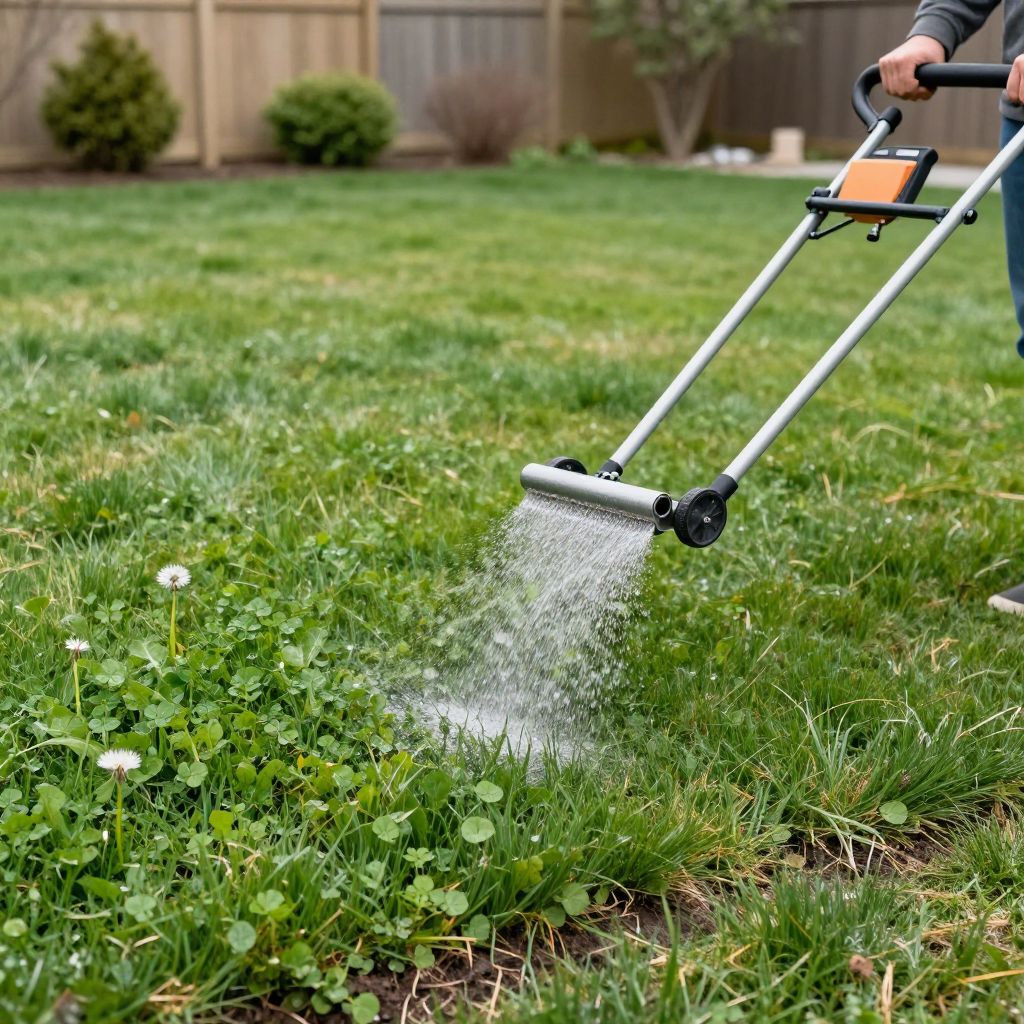
Wondering when to use weed and feed so it actually helps your lawn instead of causing problems? Timing matters more than most gardeners realize, because herbicide and fertilizer work best when weeds are actively growing and your grass is in the right seasonal stage.
The best time depends on your grass type, local climate, and the weeds you’re targeting. Used at the wrong time, weed and feed can waste money, stress turf, or miss the weeds you wanted to control.
When to use weed and feed?
Use weed and feed when your lawn is actively growing, weeds are small and actively growing, and the weather is mild enough for the product to work without stressing grass. For most lawns, that means spring for broadleaf weeds or early fall for cool-season turf, but always match the timing to your grass type and label directions.
How weed and feed works
Weed and feed is a combination product that usually contains a lawn fertilizer plus a selective herbicide for broadleaf weeds such as dandelion, clover, and plantain. It is designed for established lawns, not for new seedbeds or recently sodded areas.
What it can and cannot do
- It can feed grass and suppress or kill certain broadleaf weeds.
- It cannot fix thin turf, compacted soil, poor drainage, or heavy shade.
- It is not effective on grassy weeds like crabgrass in most cases unless the label specifically says otherwise.
- It works best on young, actively growing weeds, not mature, woody, or drought-stressed weeds.
Best seasonal timing by lawn type
Cool-season grasses
If you grow cool-season grasses such as Kentucky bluegrass, perennial ryegrass, tall fescue, or fine fescue, the most useful windows are usually early spring and early fall. Fall is often the better time because grass is recovering from summer stress and many broadleaf weeds are still active.
- Early spring: Use only if weeds are emerging and your lawn has begun active growth.
- Early fall: Often the strongest timing for feeding turf and treating broadleaf weeds.
- Avoid late fall: If the grass has stopped growing, fertilizer is less useful and weed control may be weak.
Warm-season grasses
For warm-season lawns such as Bermuda grass, zoysia, centipede grass, and St. Augustine grass, weed and feed is usually best in late spring through early summer, after the lawn has fully greened up and is growing strongly. Applying too early, when the grass is still dormant or slow to wake up, can lead to poor results.
- Wait until green-up: The lawn should be actively growing before treatment.
- Use caution in heat: Hot weather can increase turf stress and make herbicide injury more likely.
- Check grass sensitivity: Some warm-season grasses are more sensitive to certain herbicides on the label.
Regional and climate differences
Local weather matters more than the calendar. In cooler regions, spring may arrive late and fall may start early. In warmer regions, grass may never fully go dormant, but heat and drought can still make timing tricky. Use the product when both the lawn and weeds are actively growing and the soil is not extremely dry.
When not to use weed and feed
There are several situations where weed and feed is the wrong choice, even if weeds are visible. In these cases, the product may be ineffective or may damage the lawn.
- On newly seeded lawns: Herbicides can interfere with grass seed germination and seedling establishment.
- On recently sodded lawns: New roots need time to settle before herbicide exposure.
- During drought or heat stress: Stressed grass is more likely to burn or thin out.
- Before heavy rain: Rain can wash product off leaves or move granules unevenly.
- On wet foliage if the label says dry application: Granules may stick poorly and apply unevenly.
- When weeds are large or mature: Older weeds often need spot treatment or repeat control.
How to tell if your lawn is ready
Before you apply weed and feed, look at the lawn itself, not just the weeds. A healthy application depends on the right growth stage, moisture level, and mowing condition.
- Check the grass growth: The turf should be actively growing, not dormant or stalled.
- Identify the weeds: Weed and feed targets broadleaf weeds, so confirm the problem weeds are the right type.
- Look at weed size: Small weeds are easier to control than large, mature ones.
- Review the weather: Aim for mild temperatures and no heavy rain in the forecast.
- Read the label: The label tells you which grass types, temperatures, and lawn conditions are safe.
How to apply weed and feed correctly
Good application technique matters as much as timing. Uneven spreading can leave striping, missed weeds, or turf injury.
Step-by-step lawn application
- Mow first if needed: Mow a few days before treatment, and avoid mowing immediately after application unless the label allows it.
- Confirm the lawn is dry or lightly moist: Follow the product directions for granular or liquid use.
- Use the right spreader or sprayer: Calibrate equipment so you do not overapply.
- Apply evenly: Walk at a steady pace and overlap slightly to avoid missed strips.
- Water only if the label instructs it: Some products need watering-in; others work best left on the foliage for a period.
- Keep people and pets off the lawn for the time stated on the label.
Granular vs. liquid products
- Granular weed and feed is commonly spread with a broadcast or drop spreader and may be easier for large lawns.
- Liquid weed and feed can give more targeted coverage, but it still requires careful mixing and even spraying.
- Always follow the label for application rate, timing, and safety precautions.
Common mistakes to avoid
Most weed and feed problems come from poor timing, poor identification, or trying to use one product for every lawn issue.
- Applying too early in spring before grass and weeds are actively growing.
- Using it on new grass seed and damaging seedlings.
- Expecting it to kill crabgrass or other grassy weeds when it is designed for broadleaf weeds.
- Applying during drought when turf is already under stress.
- Overfertilizing by applying more than the label rate.
- Skipping soil problems such as compaction, thatch, or poor drainage that keep weeds coming back.
What to do if weeds keep coming back
If you keep seeing the same weeds after treatment, the issue may be timing, weed type, or lawn health rather than the product itself. Repeated broadleaf weeds often point to thin turf, bare spots, or soil conditions that favor weed germination.
Improve the lawn, not just the weeds
- Overseed thin areas when your grass type and season allow it.
- Aerate compacted soil if water puddles or roots struggle to grow.
- Topdress with compost in thin areas if your soil needs organic matter.
- Water deeply but infrequently when appropriate for your grass type and local climate.
- Mow at the correct height so the lawn shades out weed seedlings.
Spot-treat when needed
If only a few weeds remain, a spot treatment may be better than reapplying weed and feed across the whole lawn. This reduces chemical use and lowers the risk of stressing healthy turf.
Special situations to consider
New lawns
Do not use weed and feed on newly seeded lawns unless the product label specifically says it is safe for your situation. Young grass is vulnerable, and herbicides can interrupt establishment. Focus first on good soil contact, steady moisture, and mowing after seedlings are well rooted.
Shady lawns
In shade, turf often grows more slowly and weeds can fill in where grass thins out. Weed and feed may help temporarily, but the long-term fix is usually improving light, choosing a shade-tolerant grass where appropriate, and reducing competition from tree roots and compacted soil.
Lawns with drainage problems
If your lawn stays wet after rain, weed and feed will not solve the underlying issue. Poor drainage weakens grass and encourages weeds. Improve grading, relieve compaction, or adjust irrigation before relying on lawn treatments.
Quick timing guide
- Cool-season grass: Early spring or early fall, with fall often best.
- Warm-season grass: Late spring to early summer after full green-up.
- New seed or sod: Usually avoid weed and feed.
- Drought-stressed lawns: Wait until turf recovers.
- Big, mature weeds: Consider spot treatment or a different control method.
Conclusion
The best answer to when to use weed and feed is simple: apply it only when your grass and weeds are actively growing, your lawn is not stressed, and the label matches your grass type. If you time it well and apply it evenly, you give your lawn a better chance to thicken up and crowd out weeds.
If you want to improve results even more, read up on how to overseed a lawn and how to aerate compacted soil so your turf has a stronger foundation before the next weed season.