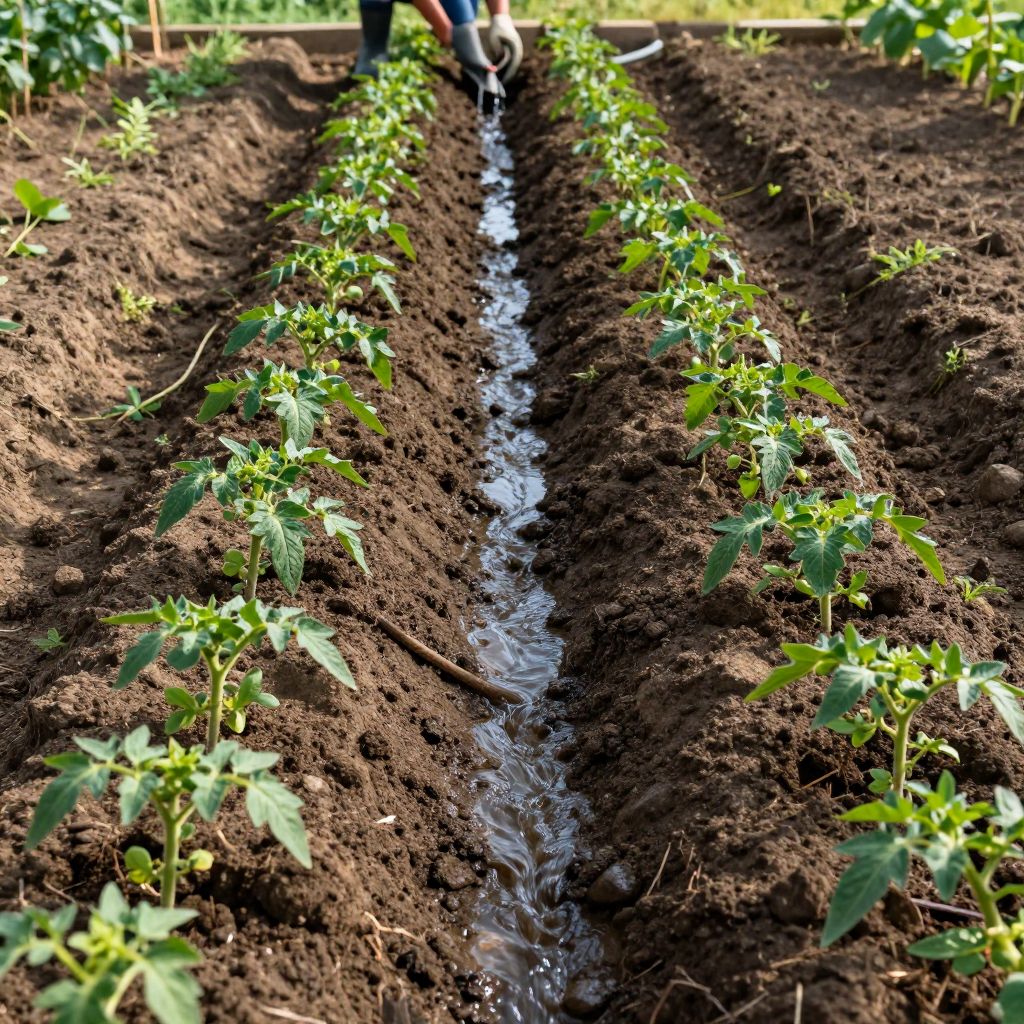
If you’ve seen rows of crops with shallow channels between them and wondered, “What is furrow irrigation?” you’re looking at one of the oldest ways to water a garden or field. It works by moving water through small trenches so it soaks into the soil around plant roots.
Furrow irrigation can be simple and effective in the right garden, especially for row crops and well-leveled beds. But it only works well when soil, slope, and water flow are managed carefully, or you can end up with uneven watering, erosion, or root problems.
What is furrow irrigation?
Furrow irrigation is a surface-watering method where water runs along shallow channels between crop rows and infiltrates sideways into the root zone. It is best suited to level or gently sloping ground, row-planted vegetables, and soils that can absorb water without flooding or crusting too quickly.
How furrow irrigation works in a garden
Instead of watering directly over the plant crown, you water the soil in the furrow beside the plants. The water moves down the channel and slowly soaks into the ridges where roots are growing.
This method is common for crops such as corn, beans, potatoes, tomatoes, and other row vegetables. It is less useful for densely planted beds, containers, or plants that dislike having wet stems and foliage.
Basic setup
- Ridges hold the plants.
- Furrows carry the water.
- Gravity moves the water along the row.
- Soil texture controls how quickly the water soaks in.
When furrow irrigation makes sense
Furrow irrigation is most useful when you are growing plants in straight rows and want to keep water off the leaves and stems. It can also be a practical choice where drip irrigation is not available or where the garden layout already favors row watering.
It tends to work best in medium-textured soils, such as loam, that absorb water steadily. Very sandy soil may let water move too quickly and unevenly, while heavy clay may cause runoff, pooling, or slow infiltration.
Good candidates
- Row crops in a vegetable garden
- Plants with moderate to deep roots
- Gardens with a slight, controlled slope
- Areas where surface watering is easier than overhead watering
Poor candidates
- Raised beds with no room for channels
- Very steep slopes
- Compacted clay with poor drainage
- Shallow-rooted plants that need very even moisture
How to set up furrow irrigation
Good setup matters more than most beginners expect. The goal is to let water move evenly without racing to the end of the row or eroding the soil.
- Prepare the bed so the rows are straight and the ground is as level as possible.
- Form ridges for planting and shallow furrows between them.
- Make the furrows deep enough to carry water, but not so deep that water pools for long periods.
- Plant on the ridge or slightly above the water line, depending on the crop.
- Introduce water slowly so it moves down the furrow without washing soil away.
- Watch the first irrigation closely and adjust the flow if the water runs too fast or too slowly.
Tip: A gentle, controlled flow is usually better than a strong rush. If water reaches the end too quickly, the top of the row may be overwatered while the bottom stays dry.
Tools that help
- Hoe or garden rake for shaping furrows
- Garden hose or irrigation line for controlled flow
- Shovel for adjusting small slopes
- Mulch for reducing evaporation after watering
Soil, slope, and drainage considerations
Furrow irrigation depends heavily on soil structure. Loamy soil usually gives the most balanced results because it holds water long enough to soak in, but still drains well enough to avoid waterlogging.
If your soil is compacted, loosen it before planting so water can move downward instead of running off the surface. Adding compost can improve structure, but it will not fix a badly graded bed or a drainage problem by itself.
How slope affects performance
- Too flat: water may stagnate and soak unevenly.
- Too steep: water may rush downhill and erode the furrow.
- Gentle slope: usually gives the best balance of movement and infiltration.
If your garden has uneven ground, water may collect in low spots and leave high spots dry. In that case, re-leveling the bed or switching to drip irrigation may be a better long-term solution.
Best plants for furrow irrigation
Furrow irrigation works best for crops that are planted in rows and can tolerate moisture in the root zone without wetting the foliage constantly. Many vegetable crops do well with this method when the soil and spacing are right.
Common row crops
- Beans
- Corn
- Potatoes
- Tomatoes
- Peppers
- Squash, if rows are wide enough
- Carrots and beets in carefully managed beds
Plants that are prone to crown rot, or that dislike wet stems, usually benefit from being planted on the ridge rather than in the furrow itself. Always match the method to the crop’s root depth and moisture needs.
How much water to apply
There is no single correct amount of water for furrow irrigation because soil type, weather, plant size, and root depth all affect the result. The practical goal is to moisten the root zone thoroughly without leaving the soil saturated for long periods.
Check the soil after watering by digging a small test hole near the root zone. The soil should be moist several inches down, not muddy or dripping wet. If the top dries quickly but the lower soil stays wet, you may be applying too much at once.
Signs of too little water
- Wilting during warm parts of the day
- Dry soil several inches below the surface
- Slow growth or small fruit and leaves
Signs of too much water
- Water standing in the furrow for a long time
- Yellowing leaves from stressed roots
- Soft, weak stems
- Root rot or fungal problems
Common mistakes to avoid
Most problems with furrow irrigation come from uneven flow, poor bed preparation, or watering too often. The method can work very well, but it is less forgiving than some gardeners expect.
- Making furrows too deep and exposing roots or causing pooling.
- Letting water rush and erode the row.
- Ignoring soil type and using the same approach in sand and clay.
- Watering too frequently before the soil has partially dried.
- Allowing weeds to grow in the furrows and compete for water.
- Failing to check the end of the row for dry spots.
Troubleshooting furrow irrigation problems
Water reaches the end too fast
This usually means the flow is too strong or the slope is too steep. Reduce the water output and, if possible, shorten the row or improve leveling.
Water never reaches the end
The soil may be absorbing water too quickly, especially in sandy ground. You may need shorter rows, slower irrigation, or a different watering method such as drip lines.
Plants near the top grow better than those at the bottom
This often points to uneven distribution. Recheck the slope and watch how quickly water moves. Rows may need to be reshaped so the water stays in contact with the soil long enough to soak in evenly.
Leaves yellow or plants look weak
Overwatering can reduce oxygen in the root zone. Let the soil dry somewhat before watering again, and make sure the furrows drain properly after each irrigation.
Seasonal and climate considerations
Hot, windy weather increases evaporation, so furrow irrigation may need closer monitoring during summer. In cooler or rainy periods, the same system can easily overwater plants if you do not adjust for rainfall.
In humid climates, keeping foliage drier can help reduce disease pressure, which is one reason some gardeners prefer furrow irrigation for certain crops. In arid climates, however, evaporation losses can be higher, so mulching and efficient row design become more important.
Helpful adjustments
- Use mulch on the ridge to slow moisture loss.
- Water early in the day when possible.
- Monitor rainfall and skip irrigation when the soil is already moist.
- Recheck rows after heavy rain, since erosion can change water flow.
Furrow irrigation compared with other watering methods
Compared with overhead watering, furrow irrigation keeps water off leaves and can reduce splash-related disease. Compared with drip irrigation, it is usually simpler and cheaper to set up, but it is also less precise and more dependent on slope and soil conditions.
If you want the most efficient water use, drip irrigation is often better. If you want a low-tech method for a row garden and can manage the layout carefully, furrow irrigation can still be a good fit.
Maintenance for a healthy furrow system
Once your rows are established, the system still needs attention. Furrows can collapse, weed over, or become uneven after repeated watering and cultivation.
- Reform furrows as needed after heavy rain or hoeing.
- Keep weeds out so they do not steal water and nutrients.
- Check for erosion at the head of the row.
- Watch for compacted soil and loosen it between crops.
- Adjust the irrigation flow as plants mature and root deeper.
Conclusion
Furrow irrigation is a practical, old-fashioned watering method that can work very well in the right garden. If you use it, focus on level rows, controlled flow, and soil that drains evenly so your plants get moisture without stress.
For more help planning efficient garden watering, you may also want to read about drip irrigation in the home garden and vegetable garden soil preparation.