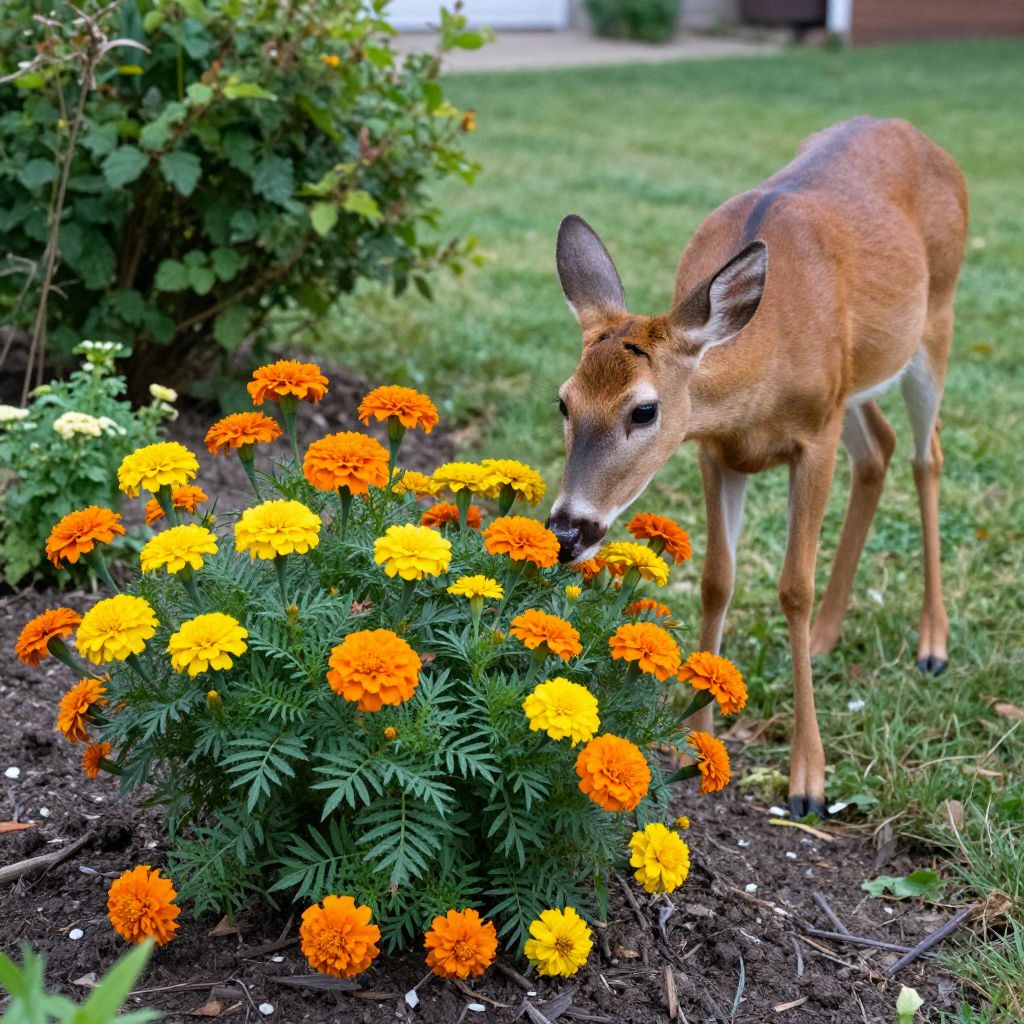
Do deer like marigolds? If you’re hoping these bright annuals will keep deer out of your beds, the short answer is: usually not much. Marigolds are often treated as deer-resistant, but they are not deer-proof, and hungry deer may still browse them, especially when other food is scarce.
The good news is that marigolds can still be useful in a garden plan. They’re easy to grow, bloom for a long season, and can help fill borders and containers with color. If you want to use them around deer-prone areas, it helps to know when they work, when they fail, and how to grow them well enough to make the most of them.
Do deer like marigolds?
Deer usually avoid marigolds because of their strong scent, textured foliage, and slightly bitter taste, but they will still eat them if they are hungry enough. Marigolds are better described as deer-resistant than deer-proof, so they may reduce browsing pressure but will not guarantee protection.
Why deer sometimes avoid marigolds
Deer choose plants based on availability, season, and hunger. Marigolds often rank lower on their preferred menu because of their smell and taste, but that does not mean deer never touch them.
What makes marigolds less appealing
- Strong scent: The foliage and flowers have a noticeable odor that many gardeners find useful, but deer often dislike.
- Coarse texture: The leaves are not as tender as many plants deer prefer.
- Seasonal abundance: When deer have plenty of native browse, they may ignore marigolds more often.
When deer may still eat them
- During drought or late winter, when food is limited
- In heavily browsed gardens with little protection
- When deer are young, curious, or habituated to garden plants
- If marigolds are planted near highly preferred plants that attract deer first
How to use marigolds in a deer-prone garden
Marigolds work best as part of a broader planting strategy, not as a stand-alone deer barrier. Use them to support other defenses, such as fencing, plant selection, and smart placement.
Good placement ideas
- Edge vegetable beds with marigolds, but do not rely on them to protect crops on their own.
- Mix them into containers on patios or porches where deer pressure is lighter.
- Plant them near less-preferred ornamentals to add color without increasing deer attraction.
- Use them as a visual filler in borders where you want a low-maintenance annual.
What not to expect
- They will not stop deer from entering a garden.
- They will not protect tender seedlings by themselves.
- They will not reliably shield roses, hostas, tulips, or other deer favorites.
Growing marigolds for the best results
Healthy marigolds are more likely to keep their foliage and flowers intact, and well-grown plants are easier to replace if deer or pests damage them. Give them warm conditions, good drainage, and enough sun.
Sunlight and temperature
Marigolds grow best in full sun, which usually means at least 6 hours of direct light each day. They tolerate heat well once established, but they are sensitive to frost and cold soil.
Soil and drainage
Use soil that drains well and does not stay soggy after rain. Rich, loose garden soil is ideal, but marigolds also do well in raised beds and containers if the mix is airy and drains freely.
- Work in compost if your soil is poor or compacted.
- Avoid heavy, wet spots where roots can rot.
- In containers, use a quality potting mix rather than garden soil.
Watering
Water marigolds deeply after planting, then let the top layer of soil dry slightly before watering again. Established plants usually prefer moderate moisture over constant wetness.
- Water at the base to keep foliage drier.
- Reduce watering if the weather is cool or rainy.
- Container plants may need more frequent checks because pots dry faster.
Spacing and airflow
Give plants enough space so air can move through the foliage. Good spacing helps reduce mildew and keeps plants looking tidy, which matters if you are using marigolds as a border or edging plant.
Planting marigolds step by step
Whether you start from seed or buy transplants, marigolds are straightforward to plant. The key is waiting for warm weather and planting them in a sunny, well-drained spot.
- Choose a site with full sun and loose, draining soil.
- Remove weeds and mix in compost if needed.
- Set transplants at the same depth they were growing in their pots.
- Space plants according to their mature size so they do not crowd each other.
- Water thoroughly after planting.
- Mulch lightly if your climate is hot and dry, but keep mulch away from the stems.
Starting from seed
Marigolds are often easy to start from seed directly outdoors after frost danger has passed, or indoors if you want an earlier start. If you sow indoors, harden seedlings off gradually before moving them outside.
Pruning, deadheading, and maintenance
Regular maintenance helps marigolds bloom longer and stay compact. It also makes the plants less likely to flop or look ragged if deer nibble nearby.
Deadheading
Remove spent flowers to encourage more blooms. Pinch or snip off faded blossoms just above a set of leaves or side shoots.
Light pruning
If plants become leggy, trim them back lightly to encourage branching. Avoid cutting away too much at once, especially in hot weather, since stressed plants may slow down.
Seasonal cleanup
At the end of the season, remove tired plants and debris to reduce disease carryover. If you garden in a mild climate where marigolds can last longer, keep an eye out for declining growth and replace plants when flowering slows.
Common problems with marigolds in deer areas
Deer are only one possible issue. Marigolds can also struggle with pests, disease, and weather stress, especially if they are planted too densely or in poorly drained soil.
Browsing damage
If deer nibble marigolds, the plants may look clipped or stripped, especially on tender new growth. In some cases, deer may take a few bites and move on; in others, they may keep returning.
Best fix: Combine marigolds with a physical barrier, such as fencing, or use deer-resistant plants as the main defense, not marigolds alone.
Slugs, aphids, and mildew
- Slugs: More likely in damp, shady, or mulched areas.
- Aphids: Can cluster on tender growth and buds.
- Powdery mildew: More common when plants are crowded or airflow is poor.
To reduce these problems, keep plants spaced well, water at the soil line, and remove damaged leaves when needed.
Root rot and yellowing
If marigold leaves yellow and plants wilt despite moist soil, drainage may be the issue. Move container plants to a better-draining mix or improve garden soil with organic matter and raised planting areas.
Better deer control strategies to pair with marigolds
If deer are a regular problem, think of marigolds as one small part of a larger plan. The most reliable deer control combines barriers, plant choice, and garden design.
- Use fencing: Physical barriers remain the most dependable protection.
- Layer plantings: Put less palatable plants around more vulnerable ones.
- Choose deer-resistant companions: Add other plants deer tend to avoid in your area.
- Protect new growth: Young plants are often the first to be browsed.
- Change tactics if needed: Deer habits vary by neighborhood and season.
Are marigolds worth planting if deer are around?
Yes, if you want an easy annual with bright color and modest deer resistance. They are especially useful in mixed borders, vegetable gardens, and containers where you want a tough, cheerful filler plant. Just do not count on them to solve a deer problem by themselves.
If deer pressure is high in your garden, combine marigolds with stronger protection and read more about what to feed deer only if you are managing wildlife responsibly and not trying to attract them to planted areas.
In the end, the answer to “Do deer like marigolds?” is usually “not much, but they may still eat them.” Plant marigolds for their color and easy care, then back them up with smart deer control so your garden has the best chance of staying intact.