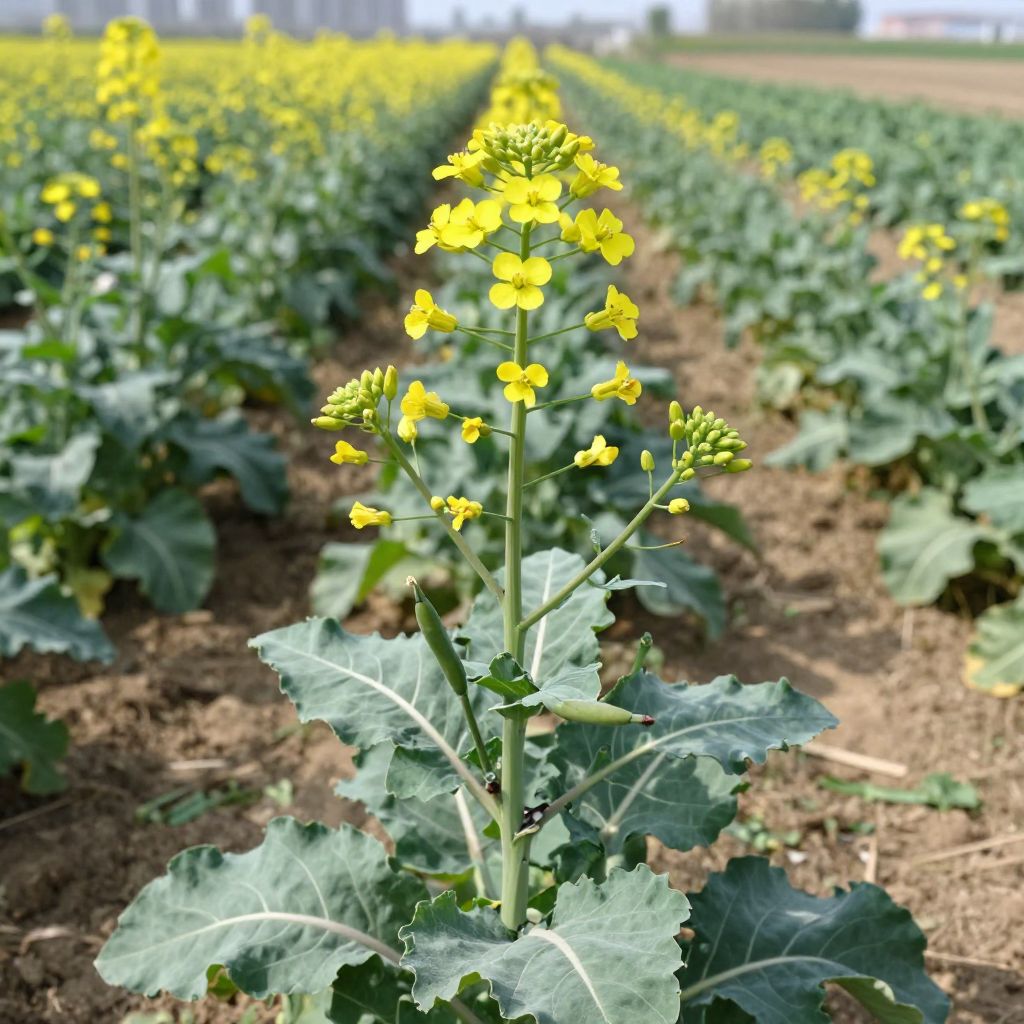
If you’re asking, “What does a canola plant look like?” the short answer is that it resembles a tall, slender mustard-family crop with smooth green stems, narrow blue-green leaves, and clusters of small yellow flowers. As it matures, the flowers give way to long seed pods called siliques.
Canola is grown for its oil-rich seeds, but it’s also an attractive cool-season crop in the garden or field. Knowing its growth stages helps you identify it correctly, avoid confusing it with similar brassicas, and understand what it needs if you’re growing it for seed, wildlife, or cover crop use.
What does a canola plant look like?
A canola plant usually has an upright central stem, branching near the top, with smooth leaves that may be lightly lobed or toothed. Mature plants produce bright yellow four-petaled flowers in loose clusters, followed by long, thin seed pods. Most varieties look airy and tall rather than bushy.
Key visual features of canola
Leaves and stems
Young canola plants form a low rosette first, with leaves close to the soil. These leaves are often blue-green to deep green, slightly waxy, and may have a few shallow lobes. The stems are smooth and usually pale green, not hairy or woody.
As the plant grows, the stem elongates quickly and the lower leaves may drop off. That is normal and often makes mature canola look sparse near the base.
Flowers
Canola flowers are one of the easiest ways to identify it. They are small, bright yellow, and have the classic brassica flower shape with four petals arranged in a cross-like pattern. Flowers appear in clusters at the top and along branch tips.
The bloom period is often the most showy stage, and a field of canola can look like a yellow haze from a distance.
Seed pods
After flowering, canola forms narrow seed pods, usually called siliques. These pods are long, slender, and green at first, then dry to tan or brown as seeds mature. If left too long, they can split and scatter seed.
This pod stage is important if you are growing canola for harvest, because timing matters a great deal once the pods begin drying.
How to identify canola from similar plants
Canola belongs to the Brassica family, so it can look similar to mustard, rapeseed, turnip greens, and some wild brassicas. The combination of smooth stems, yellow four-petaled flowers, and long seed pods is the best clue.
- Mustard greens often have more textured or deeply lobed leaves.
- Rapeseed can look very similar; canola is a low-erucic-acid type bred from rapeseed lines.
- Turnips usually form a swollen root, which canola does not.
- Wild mustard may be shorter, rougher, or more weedy in appearance.
If you are unsure, look at the whole plant rather than one feature. Leaf shape, stem texture, flower color, and pod form together give a much more reliable identification than any single trait.
Canola growth stages you may see
Seedling stage
New seedlings are small and delicate, with rounded to slightly elongated cotyledons followed by the first true leaves. At this stage, canola can be easy to overlook or mistake for another brassica weed.
Rosette stage
Before the stem stretches upward, the plant often stays low and leafy. This rosette stage is common in cool weather and is when the plant builds root and leaf mass.
Bolting and flowering
When days lengthen and temperatures suit the crop, the stem elongates and flower buds form. Once flowering begins, the plant may grow quickly and become much taller in a short time.
Pod fill and maturity
After pollination, pods enlarge and seeds develop inside. Mature canola is usually ready when pods are dry enough to rattle slightly, but not so dry that they split easily.
Growing conditions canola prefers
Canola grows best in cool conditions with full sun and well-drained soil. It generally prefers fertile soil with steady moisture during early growth, but it does not like waterlogged ground. Poor drainage can weaken roots and increase disease problems.
- Sunlight: Full sun is best for strong growth and flowering.
- Soil: Loose, fertile, and well-drained soil helps roots establish.
- pH: Slightly acidic to neutral soil is commonly suitable.
- Moisture: Even moisture is helpful, especially during germination and early growth.
Because climate varies, adjust planting and care to your local season. In cooler regions, canola is often grown as a cool-season crop. In warmer areas, heat can shorten flowering and reduce performance.
How to plant canola if you want to grow it
Canola is usually grown from seed sown directly outdoors, since it does not transplant well once established. Choose a site with full sun and soil that drains well after rain or irrigation.
- Prepare the bed by loosening the topsoil and removing large clods or competing weeds.
- Work in compost if your soil is low in organic matter, but avoid making the soil overly rich or soggy.
- Sow seed at the depth recommended for the specific seed packet or local guidance, usually shallowly.
- Keep the seedbed evenly moist until germination.
- Thin seedlings if they are crowded, so plants have room to branch and air can move through the stand.
Do not bury canola seed too deeply. Small brassica seeds need good seed-to-soil contact, but they can struggle if planted too far down.
Watering, feeding, and maintenance
Canola needs consistent moisture while it is establishing, but it should not sit in wet soil. Once plants are established, they usually tolerate short dry periods better than soggy conditions.
Watering tips
- Water deeply when the top layer of soil begins to dry, especially during early growth.
- Avoid frequent shallow watering, which encourages weak roots.
- Reduce stress during flowering and pod fill if rainfall is scarce.
Feeding tips
If your soil is poor, a balanced soil-building approach is better than overfeeding. Compost, well-rotted organic matter, and a soil test are the safest starting points. Excess nitrogen can produce lush leaves with weaker stems and delayed maturity.
Weed and spacing care
Young canola competes poorly with weeds, so early weed control matters. Keep the bed clear while seedlings are small, and allow enough spacing for airflow to reduce disease pressure.
Common pests and diseases
Like many brassicas, canola can attract insect pests and fungal problems. The most common issues depend on your region, but early monitoring is always worthwhile.
Typical pest problems
- Flea beetles: Small holes in leaves, especially on seedlings.
- Aphids: Clusters of soft-bodied insects on stems or buds.
- Caterpillars: Chewed leaves or damaged flower buds.
Typical disease problems
- Root and stem rots: More likely in wet, poorly drained soil.
- Leaf spots: Often encouraged by crowded plants and wet foliage.
- Blackleg and related brassica diseases: Can be serious where brassicas are grown repeatedly in the same ground.
Good prevention starts with crop rotation, clean seed, healthy soil, and avoiding overhead watering late in the day. If a problem keeps returning, do not plant canola or other brassicas in the same spot every season.
Practical mistakes to avoid
- Confusing canola with any yellow-flowering weed: Check the stem, leaf shape, and pod form.
- Planting in heavy, wet soil: Poor drainage can weaken plants and invite disease.
- Letting seedlings compete with weeds: Early competition can stunt the crop.
- Waiting too long to harvest: Dry pods can shatter and drop seed.
- Overfertilizing: Too much nitrogen can create lush growth with poorer balance.
Harvesting canola seed
If you are growing canola for seed, harvest timing is one of the most important parts of the process. Pods should be mature and mostly dry, but not so brittle that they split at the slightest touch.
Watch for lower pods to dry first while upper pods may still be slightly green. In many gardens, cutting plants and finishing them in a dry, airy place can help reduce seed loss, but the exact method depends on your climate and scale of planting.
After harvest, dry the seed thoroughly before storage. Keep it in a cool, dry place in a sealed container to protect against moisture and pests.
Canola in the landscape or garden
Canola is not usually grown as an ornamental, but its bright yellow bloom can be striking in larger spaces. It may also be used in crop rotations, pollinator-supporting plantings, or as a cover crop in some systems, depending on local practice.
Because it can grow tall and broad at flowering, give it room away from small beds or low-growing plants. It can shade nearby crops if planted too densely or in the wrong spot.
Quick identification checklist
- Upright, branching brassica plant
- Smooth green stem
- Blue-green to green leaves, often slightly lobed
- Bright yellow four-petaled flowers
- Long, narrow seed pods after flowering
- Usually sparse near the base at maturity
If you want to identify canola confidently, compare the plant at more than one stage. Seedling, flowering, and pod stages each reveal different clues, and together they give the clearest picture.
For more brassica-growing guidance, you may also find it helpful to read about how to grow mustard greens and common vegetable garden pests and diseases.