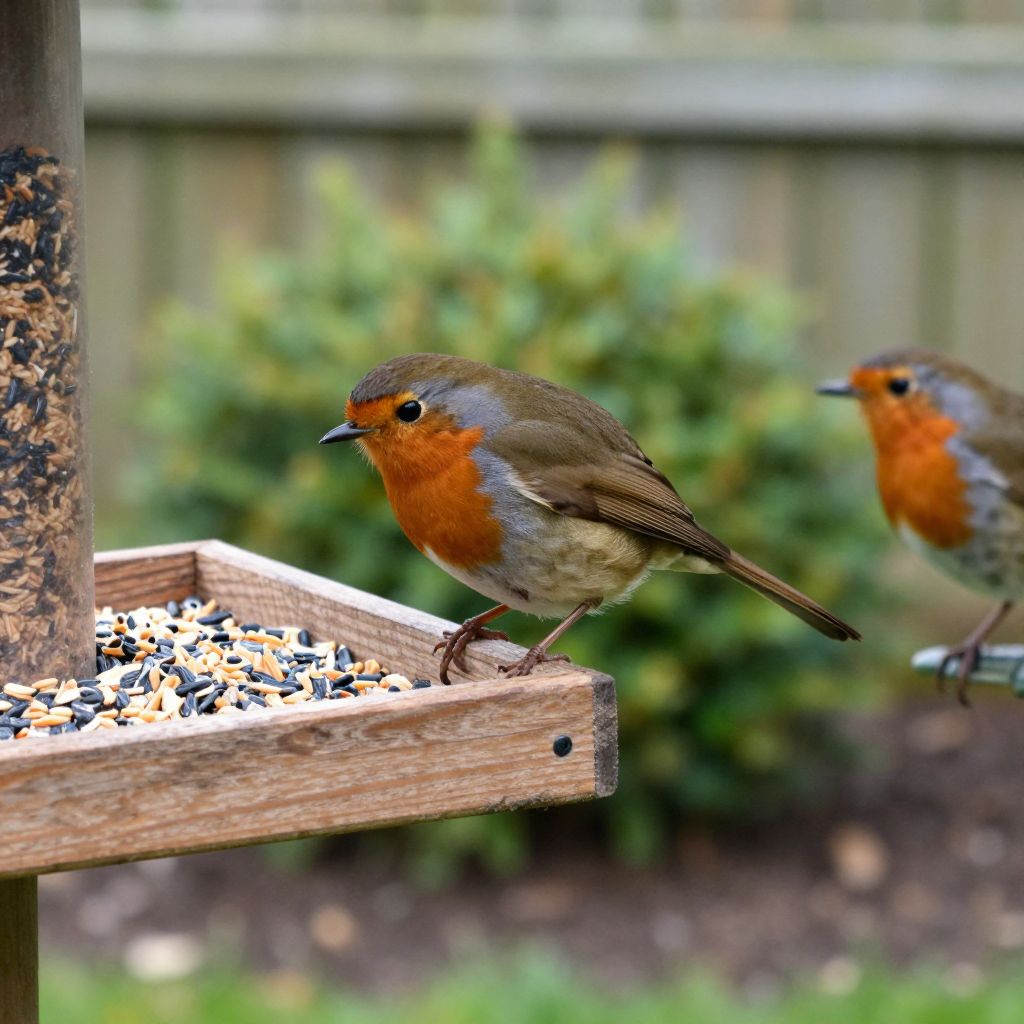
Do robins eat bird seed? Yes, they can, but they usually prefer softer foods like worms, insects, berries, and fruit. If you see robins at your feeder, they are often picking at small seeds on the ground rather than cracking large sunflower seeds at a hanging feeder.
For gardeners, that means the best way to attract robins is not the same as feeding finches or chickadees. A robin-friendly yard focuses on open ground, berry-producing plants, clean water, and a feeding setup that matches how robins naturally forage.
Do robins eat bird seed?
Robins will eat bird seed, especially small seeds that fall to the ground, but seed is not their main food. They are ground foragers and usually do best with mealworms, fruit, berries, and access to short grass or mulched areas where they can hunt insects and worms.
What robins actually prefer to eat
American robins (Turdus migratorius) are omnivores. In the breeding season, they rely heavily on insects and earthworms, then shift toward fruit and berries later in the year.
Common foods robins choose first
- Earthworms and soil insects
- Beetles, caterpillars, and other soft-bodied insects
- Berries such as serviceberry, dogwood, holly, and juniper
- Soft fruit, including crabapples and berries from ornamental shrubs
- Small seeds on the ground, especially when other foods are scarce
If you offer a classic mixed bird seed blend in a feeder, robins may ignore it. If some seed drops to the ground, they are more likely to investigate that area.
Why robins behave differently at feeders
Robins are not built like typical feeder birds. Their beaks are suited to grabbing worms and fruit, not shelling large seeds. They also prefer to feed on open ground where they can watch for predators and move quickly.
Feeder habits to expect
- Ground feeding is normal for robins.
- They may visit platform feeders more readily than tube feeders.
- They often prefer live or soft foods over dry seed mixes.
- They may appear in yards after rain, when worms are easier to find.
If your goal is to see more robins, think less about hanging feeders and more about habitat. A robin-friendly landscape is often a healthier garden overall, too.
Best ways to feed robins in a garden
You do not need to force robins onto bird seed. Instead, provide foods and conditions that fit their natural feeding style.
1. Offer mealworms
Mealworms are one of the easiest supplemental foods for robins. Use a shallow dish or platform feeder set low to the ground or on a stable ledge.
- Use dried mealworms for convenience or live mealworms for stronger attraction.
- Keep the dish shallow so birds can reach the food easily.
- Place it in a quiet spot with clear sightlines.
2. Use fruit and berries
Robins are strongly drawn to fruiting plants. In many gardens, this is the most natural way to support them.
- Plant native berry shrubs where appropriate for your region.
- Leave some crabapples or ornamental berries on the plant if birds are using them.
- Offer chopped grapes, blueberries, or raisins only if you are comfortable maintaining a clean feeding area.
Always remove spoiled fruit quickly. Fermenting or moldy fruit can attract pests and create sanitation problems.
3. Let them forage naturally
Robins often feed best in yards that are not overly manicured. A little leaf litter, a mulched border, and some open lawn can support insect life and make foraging easier.
- Leave a few leaf piles in out-of-the-way spots during fall if local conditions allow.
- Keep a section of lawn healthy but not overly treated with chemicals.
- Allow some groundcover and shrub layers for shelter and insect habitat.
Garden conditions that attract robins
Robins are more likely to visit gardens that offer food, water, and safe perches. You can encourage them without changing your whole landscape.
Sunlight and open space
Robins like open feeding areas where they can spot danger. They often use lawns, paths, and low planting beds more than dense cover.
- Keep some open ground visible from the air.
- Combine open lawn with shrubs and trees nearby for quick shelter.
- Avoid crowding every corner with dense planting if you want bird activity.
Water matters
Fresh water is often more attractive than seed. A shallow birdbath can bring robins in for drinking and bathing.
- Use a bath with a shallow slope or add stones for footing.
- Change water regularly to keep it clean.
- Place it where birds can see approaching predators.
In hot weather, water may be more valuable than food. In dry spells, robins may visit more often if your garden has a reliable source.
How to set up a robin-friendly feeding area
If you want to support robins without creating a mess, keep the setup simple and low to the ground. Robins are comfortable with platform-style feeding and open access.
- Choose a low platform feeder, tray, or clean ground-feeding area.
- Place it near cover, but not inside dense shrubs where predators can hide.
- Offer mealworms, chopped fruit, or a little spilled seed rather than a large seed mix.
- Clean the area often to prevent mold and buildup.
- Watch how the birds use it and adjust the location if needed.
Important: If you feed on the ground, keep the area dry and tidy. Wet seed and fruit spoil quickly and can spread disease.
What kind of bird seed might robins eat?
Robins are not picky in the same way seed-eating birds are, but they are selective. They may pick at small seed pieces, millet, or seed that has fallen from other feeders. They are less interested in large, hard seeds unless the food is mixed with something softer.
More likely to be accepted
- Small seed fragments on the ground
- Millet in mixed ground feed
- Softened seed mixes after rain, though these spoil quickly and should not be left out
Less likely to be accepted
- Large sunflower seeds
- Nyjer seed in tube feeders
- Hard, dry commercial mixes meant for finches or sparrows
If your feeder is designed for small perching birds, robins may visit only occasionally. A tray feeder or a ground feeding station is usually a better match.
Common mistakes when trying to feed robins
Many gardeners unintentionally make the feeding area less appealing. A few simple adjustments can improve both bird visits and garden hygiene.
1. Using the wrong feeder
Tall tube feeders are not ideal for robins. They are better suited to birds that cling and perch on small ports.
Fix: Use a platform feeder, low tray, or open feeding spot instead.
2. Leaving food out too long
Fruit, mealworms, and damp seed can spoil fast, especially in warm weather.
Fix: Put out only what birds can eat in a short period and clean leftovers promptly.
3. Feeding in a hidden spot
Robins want visibility. Dense cover may feel unsafe to them.
Fix: Place food where birds can see the area around them, with nearby escape cover but not overhead clutter.
4. Overusing pesticides
Robins depend on insects and worms, so heavy pesticide use can reduce the very food they need most.
Fix: Use the least disruptive pest management you can, and protect beneficial insects whenever possible.
Seasonal care tips for robin food and habitat
Robins’ feeding behavior changes through the year, so your garden support should change too.
Spring
In spring, robins are often focused on nesting and feeding chicks. They need protein-rich food, especially insects and worms.
- Keep lawn and soil healthy enough to support earthworms and insects.
- Avoid broad pesticide use in nesting areas.
- Provide clean water for drinking and bathing.
Summer
Fruit and water become especially useful in hot weather. Robins may also feed young birds during this time.
- Offer berries, soft fruit, or mealworms in moderation.
- Refresh birdbaths often.
- Watch for spoiled food in warm conditions.
Fall and winter
As insects become scarce, robins may turn more heavily to berries and sheltered feeding spots. In mild winters, they may still remain active in the garden.
- Keep berry-producing shrubs in the landscape if space allows.
- Leave some fruit on ornamental trees and shrubs when appropriate.
- Use a clean ground tray for supplemental food if robins are present.
Plants that help robins visit your garden
If you want a long-term robin habitat, choose plants that provide food and structure across the seasons. Native species are often the best starting point because they support insects as well as fruit production.
- Serviceberry
- Dogwood
- Hawthorn
- Juniper
- Viburnum
- Crabapple
When selecting plants, match them to your local soil, moisture, and sunlight. A shrub that thrives in your climate will support birds better than one that struggles.
Cleaning and safety tips for bird feeding areas
Good garden hygiene matters as much as food choice. Clean feeding stations reduce the risk of mold, pests, and disease spread.
- Wash feeders regularly with hot water and mild soap, then rinse well.
- Remove wet, moldy, or fermented food immediately.
- Keep feeding areas away from places where cats can ambush birds.
- Do not overcrowd the area with too many feeders.
If birds seem hesitant to return, check for stale food, slippery surfaces, or nearby hazards. A simple, clean setup often works better than a complicated one.
Conclusion
So, do robins eat bird seed? Yes, but usually only small amounts and mostly from the ground. If you want to attract them, focus on mealworms, fruit, water, and a safe open feeding area rather than relying on seed alone.
For more bird-friendly gardening ideas, look for guides on creating a wildlife garden and choosing native berry shrubs for birds.