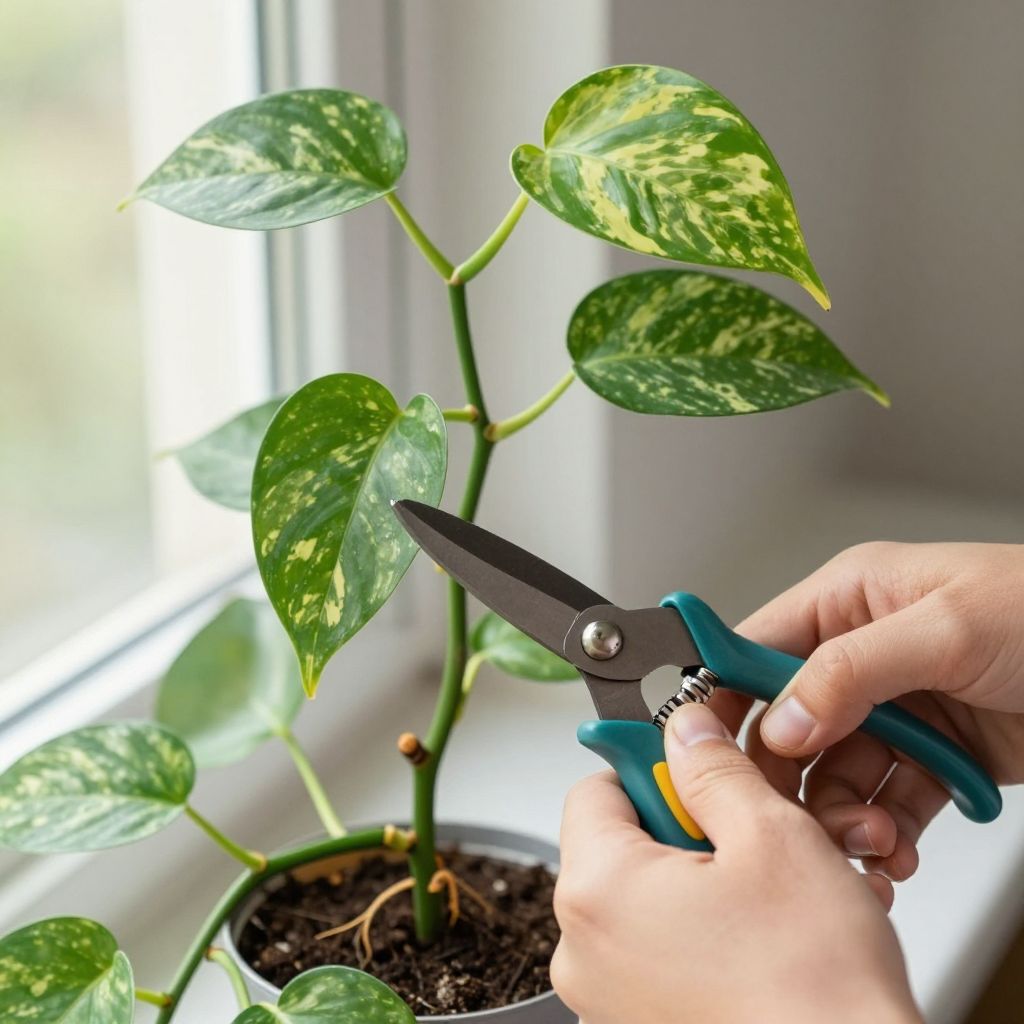
If you’re wondering where to cut pothos, the short answer is to cut just above a node, the small bump on the vine where a leaf and aerial root emerge. That’s the best place for pruning, shaping, and propagation because new growth forms from nodes, not from bare stem sections.
With the right cut, you can make a leggy pothos fuller, keep it in bounds, or turn one long vine into several new plants. The key is knowing which stems to shorten, how much to remove, and how to avoid cutting in the wrong spot.
Where to cut pothos?
Cut pothos just above a node on the vine, ideally 1/4 to 1/2 inch above it. If you want to propagate, make the cut so the stem piece includes at least one node, since roots grow from nodes, not from leaf stems alone. Avoid cutting through the node itself.
What a pothos node looks like
A node is the slightly swollen point along the stem where a leaf attaches. You may also see a little brown nub or aerial root starting there.
When you inspect a pothos vine, you’ll usually notice a repeating pattern:
- Leaf attached to the stem
- Node at the base of that leaf
- Internode the bare stretch between nodes
That node is the important part. If you cut too far below it, the remaining stem may dry back more than you want. If you cut through it, you can damage the plant’s ability to branch or root.
Best places to cut for different goals
To make the plant bushier
Choose a vine that has become long and sparse, then cut it back just above a node closer to the pot. This encourages the plant to send out new growth from lower nodes and can help it look fuller over time.
If the plant is very thin, you can trim several vines at different lengths rather than cutting everything to the same point. That creates a more natural shape.
To propagate new plants
Take a cutting that includes at least one node, and preferably one or two leaves. Make the cut just below a node so the node stays on the cutting. That node is where roots will form in water, moss, or a well-draining potting mix.
If the cutting has multiple nodes, remove the lowest leaf if it would sit in water or soil. Leaves left below the surface are prone to rot.
To control size or shape
Cut back vines that are too long, tangled, or trailing into unwanted spaces. Make your cuts above nodes at the length you want to keep. You can also remove weak, damaged, or awkward stems entirely at the base if needed.
To rejuvenate an overgrown pothos
If the plant has long bare stems with leaves only near the ends, cut several vines back hard, always leaving some nodes on the plant. This can look drastic, but pothos usually respond well if they’re healthy and actively growing.
How to prune pothos step by step
- Inspect the vine. Find the nodes and decide where you want new growth to start.
- Clean your tool. Use sharp scissors, pruners, or snips wiped with rubbing alcohol.
- Make the cut above a node. Leave a small stub, about 1/4 to 1/2 inch above the node.
- Remove damaged growth. Trim yellow, brown, or broken sections back to healthy tissue.
- Shape gradually. Step back and look at the plant before removing more.
- Use cuttings if you want. Place healthy cut pieces in water or a suitable rooting medium.
For a hanging basket or shelf plant, it often helps to prune the longest vines first. For a tabletop pot, you may want to shorten several stems evenly so the plant keeps a balanced shape.
How much can you cut off at once?
Pothos is forgiving, but it’s still wise not to remove too much at one time if the plant is already stressed. A healthy, actively growing plant can usually handle moderate pruning, but if it’s weak, dry, or recovering from root problems, trim more conservatively.
As a practical rule, remove only what you need to improve shape or health. If you want a major reset, do it in stages over several weeks so the plant can keep enough foliage to support recovery.
Where not to cut pothos
- Don’t cut through a node if you want the stem to keep growing well.
- Don’t remove all leaves from a vine and expect it to branch from bare stem sections without nodes.
- Don’t leave cuttings with no node if you want them to root.
- Don’t prune a stressed plant heavily if it is already struggling from low light, root rot, or pests.
Another common mistake is cutting too close to the node. Leave a little stem above it so the node isn’t damaged as the cut dries and heals.
Indoor pothos pruning tips
Most pothos are grown indoors, where light is often the main factor affecting growth. In lower light, vines stretch and become sparse, which makes pruning especially useful.
For indoor plants, place the pot in bright, indirect light after pruning if possible. That helps the plant recover and push new growth from lower nodes. Rotate the pot every week or two so growth stays even.
If the plant is trailing from a hanging basket, you can prune the longest vines first and leave shorter ones alone. That keeps the plant looking full while encouraging fresh side growth.
Outdoor pothos pruning tips
In warm climates where pothos is grown outdoors, pruning works much the same way, but growth can be faster in bright shade and warm weather. Outdoor plants may need more frequent shaping if they’re climbing or spreading across a support.
Be careful not to expose a recently pruned plant to harsh sun. Pothos prefers bright shade or filtered light, and cut stems can dry out faster in hot, windy conditions.
How to root pothos cuttings after pruning
Once you’ve decided where to cut pothos, you can often turn the trimmed stems into new plants. This is one of the easiest houseplant propagation projects for beginners.
Rooting in water
- Use a clean jar or glass.
- Place the node or nodes in water, not the leaves.
- Change the water regularly to keep it clear and fresh.
- Move the cutting to soil after roots have formed and begun to branch.
Rooting in soil or moss
- Insert the node into a lightly moist, airy medium.
- Keep humidity moderate and the mix evenly moist, not soggy.
- Give bright, indirect light.
- Check gently for resistance before repotting or moving the cutting.
Whichever method you choose, the cutting needs a node. A leaf alone will not make a new plant.
What to do after cutting
After pruning, give the plant a little extra attention rather than extra water. Fresh cuts do not mean the plant needs soaking.
- Keep the potting mix lightly moist, not wet.
- Make sure excess water drains freely.
- Watch for new buds or shoots near nodes below the cut.
- Remove any cuttings that yellow or rot.
If the plant was rootbound or the soil stays wet too long, pruning alone won’t solve the problem. In that case, consider repotting into a fresh, well-draining houseplant mix with added perlite or bark for airflow.
Common problems after pruning
Leaves yellowing after a cut
A little stress is normal, but widespread yellowing can point to overwatering, poor drainage, or too little light. Check the roots and potting mix if the plant declines after pruning.
Stems shriveling back
If you cut too close to a node or the stem tissue was already weak, the end may dry back slightly. That’s usually minor, but if it keeps traveling down the vine, trim back to healthy green tissue.
Slow regrowth
Pothos often pauses after pruning, especially in cooler months or lower light. New growth usually resumes when conditions improve. Bright indirect light and moderate warmth help most.
Rotting cuttings
Rot usually means the cutting had no node above the waterline, the medium stayed too wet, or the container was dirty. Start over with a healthy cutting and a clean setup.
Tools that make pruning easier
- Sharp scissors or hand pruners
- Rubbing alcohol for cleaning blades
- Small jar or glass for cuttings
- Gloves if you prefer cleaner handling
Sharp tools matter more than fancy tools. Clean cuts heal better and reduce the chance of crushing the stem.
Simple rule to remember
If you only remember one thing, remember this: cut above a node to shape the plant, and cut below a node to make a cutting. That one habit will help you prune pothos confidently and avoid the most common mistakes.
Once you know where to cut pothos, the plant becomes much easier to manage. Trim a few vines, root the healthy pieces, and let the remaining nodes push fresh growth for a fuller plant. If you’d like to keep improving your indoor jungle, look for more practical houseplant care guides on watering, repotting, and propagation.