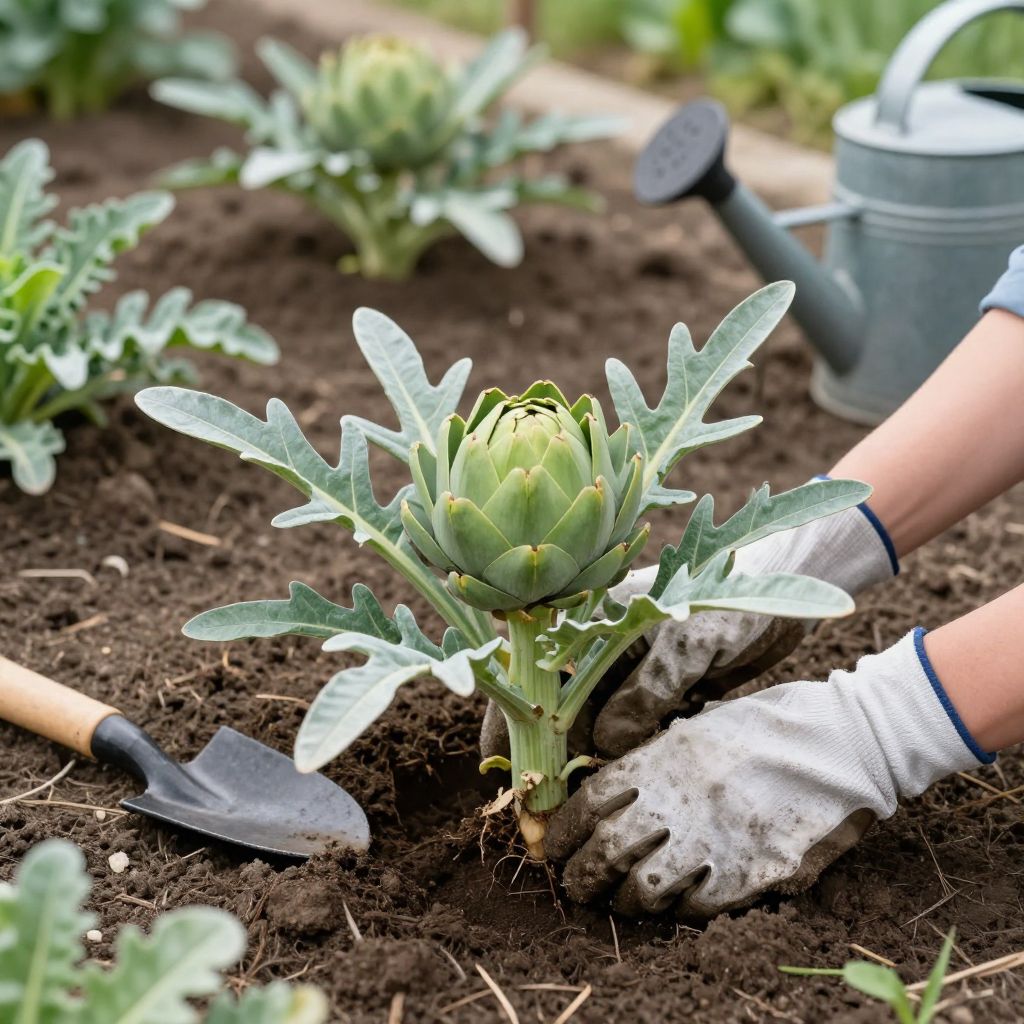
Wondering when to plant artichokes so they establish well and produce tender buds? Timing matters because artichokes are cool-season perennials in mild climates and usually grown as annuals where winters are cold. Plant too early in cold, wet soil and roots struggle; plant too late and summer heat can reduce growth and bud quality.
The best planting time depends on your climate, whether you’re starting from seed, crowns, or transplants, and how much summer heat your garden gets. With the right timing and a sunny, well-drained site, artichokes can become a striking, productive feature in the vegetable garden.
When to plant artichokes?
Plant artichokes in early spring after the danger of hard frost has passed in cold climates, or in fall in mild-winter regions where plants can root in cool weather and grow through winter. If you’re starting from seed, begin indoors 8 to 12 weeks before your local planting window so transplants are ready at the right time.
Best planting time by climate
Artichokes are sensitive to both frost and prolonged heat, so the “best” time is really the season that gives them cool establishment weather. Think in terms of your local first and last frost dates, plus how hot your summers get.
Cool and cold climates
If your winters are cold and summers are short, plant artichoke transplants outdoors in spring after the soil has started to warm and nights are no longer hard-frost cold. Starting plants too early in cold, soggy soil often leads to slow growth and root problems.
In these regions, artichokes are often treated as annuals unless you can overwinter them with protection. Spring planting gives them the longest possible season to size up before summer heat or early frost arrives.
Mild-winter climates
In areas with mild winters and cool springs, fall planting is often ideal. Plants can establish roots during cool weather, then grow strongly in late winter and spring when conditions are favorable for bud formation.
Where winters are wet, make sure the site drains well. Artichokes dislike sitting in cold, saturated soil for long periods.
Hot-summer climates
If summers are very hot, aim for the coolest part of the year that still gives plants time to establish. In many warm regions, that means fall or late winter planting rather than spring, so young plants can avoid peak heat during their early growth.
Heat stress can cause weak growth, smaller buds, and tougher texture. Mulch and consistent moisture become especially important.
How to plant artichokes successfully
Artichokes need rich soil, room to spread, and steady moisture. They are large plants, so good spacing and site preparation are just as important as planting date.
- Choose a sunny site. Give artichokes at least 6 to 8 hours of direct sun daily.
- Prepare fertile, well-drained soil. Work in compost or well-rotted organic matter before planting.
- Space generously. Allow about 3 to 4 feet between plants, and more if your variety grows large.
- Set plants at the same depth they were growing before. Avoid burying the crown too deeply.
- Water in thoroughly. Keep the root zone evenly moist while plants establish.
- Mulch after planting. Use an organic mulch to conserve moisture and suppress weeds.
Starting from seed
If you grow artichokes from seed, start indoors 8 to 12 weeks before your intended outdoor planting time. Use a bright, cool location or grow lights, and transplant seedlings carefully once they have several true leaves and outdoor conditions are suitable.
Seed-grown artichokes can be slower to reach harvest than transplants, but they are often the best option where plants are treated as annuals.
Planting crowns or transplants
Many gardeners use crowns or nursery-raised transplants because they establish faster. These should go into the garden only when the soil is workable and the weather is mild enough for root growth.
If you buy transplants too early, keep them in bright light and avoid letting them become rootbound. Harden them off gradually before planting outdoors.
Soil, drainage, and compost needs
Artichokes are heavy feeders and perform best in deep, fertile soil with excellent drainage. They do not like compacted ground or waterlogged beds.
- Soil texture: Loamy soil is ideal, but sandy or clay soils can work if improved.
- Drainage: Raised beds help in heavy or wet soils.
- Organic matter: Compost improves moisture balance and fertility.
- pH: A near-neutral to slightly alkaline soil is generally suitable.
If your soil is dense clay, mix in compost and consider planting on a slight mound or raised bed. In very sandy soil, compost helps hold moisture and nutrients so plants don’t dry out too quickly.
Watering, feeding, and mulching after planting
Newly planted artichokes need consistent moisture while they establish, but they should never sit in soggy soil. Aim for even watering rather than alternating drought and flood conditions.
Watering tips
Water deeply enough to moisten the root zone, then let the surface begin to dry slightly before watering again. During hot spells, check plants more often because large leaves lose moisture quickly.
Irregular watering can lead to poor bud development and stressed plants. A mulch layer helps keep conditions steadier.
Feeding tips
Because artichokes are long-season, leafy plants, they benefit from fertile soil and occasional feeding if growth slows. Compost is a good baseline amendment, and a balanced organic fertilizer can be useful if your soil is naturally poor.
Avoid overfeeding with nitrogen alone, which can encourage lots of leafy growth with fewer buds.
Mulching
Apply 2 to 4 inches of organic mulch around plants, keeping it a little away from the crown. Mulch reduces weeds, moderates soil temperature, and helps the soil stay evenly moist.
Pruning and maintenance for better harvests
Artichokes can become large and unruly if left completely alone. Light maintenance improves airflow, plant health, and bud quality.
- Remove damaged or yellowing leaves as needed.
- Keep weeds down so young plants aren’t competing for water and nutrients.
- Watch for side shoots if your variety produces them and decide whether to keep the strongest ones.
- Cut spent stalks after harvest to encourage tidy growth and reduce disease pressure.
In perennial plantings, some gardeners cut back older growth after the main harvest to refresh the plant. In colder regions, winter protection may be needed if you want the plant to survive beyond one season.
Common problems when planting artichokes too early or too late
Planting time affects more than survival. It can influence vigor, bud set, and how much work the plant needs from you afterward.
Too early
Planting into cold soil can slow rooting, invite rot, and stunt growth. Young artichokes also dislike cold winds and frost damage, especially right after transplanting.
Too late
If you plant after warm weather has already settled in, the plant may struggle to establish before heat stress arrives. That can mean smaller plants, fewer buds, and more frequent watering needs.
How to correct timing mistakes
- If planted too early, protect with row cover or cloches during cold nights.
- If planted too late, mulch well and water consistently to reduce stress.
- If the site is too wet, improve drainage or move future plantings to raised beds.
- If heat is the main issue, use afternoon shade in very hot climates if needed.
Pests and diseases to watch for
Healthy timing and good spacing reduce many artichoke problems, but a few pests and diseases can still appear.
Common pests
Aphids, slugs, snails, and occasional caterpillars may feed on young growth or buds. Check plants regularly, especially in damp weather or dense plantings.
Common diseases
Root rot and crown rot are the biggest concerns in poorly drained soil. Powdery mildew can also show up if plants are crowded or airflow is poor.
To reduce risk, keep the crown dry, avoid overhead watering late in the day, and give plants enough space for air to move through the foliage.
Harvest timing and what to expect
Artichokes are harvested before the buds open. The best time is when the buds are firm, plump, and still tightly closed. If you wait too long, the bracts begin to separate and the texture becomes less tender.
Use a sharp knife or pruners to cut the bud with a short section of stem. Harvesting regularly can encourage the plant to keep producing side buds where the climate allows.
Growing artichokes as annuals or perennials
Whether to treat artichokes as annuals or perennials depends on your climate. In colder regions, many gardeners grow them as annuals because winter survival is unreliable. In mild climates, they can persist for several years with proper care.
If you want perennial performance, choose a site with excellent drainage and enough room for the plant to mature. Older plants may need division or replacement after a few productive seasons.
Quick planting checklist
- Wait for the right season: spring in cold climates, fall in mild-winter areas.
- Choose full sun and well-drained soil.
- Improve the bed with compost before planting.
- Space plants 3 to 4 feet apart.
- Water consistently and mulch after planting.
- Protect young plants from frost, heat, and standing water.
If you’re planning your vegetable garden now, start by matching artichoke planting time to your local climate, then prepare a rich, well-drained bed before you set out seedlings or crowns. For more seasonal vegetable-growing guidance, you may also want to read related advice on how to grow asparagus or when to plant broccoli.