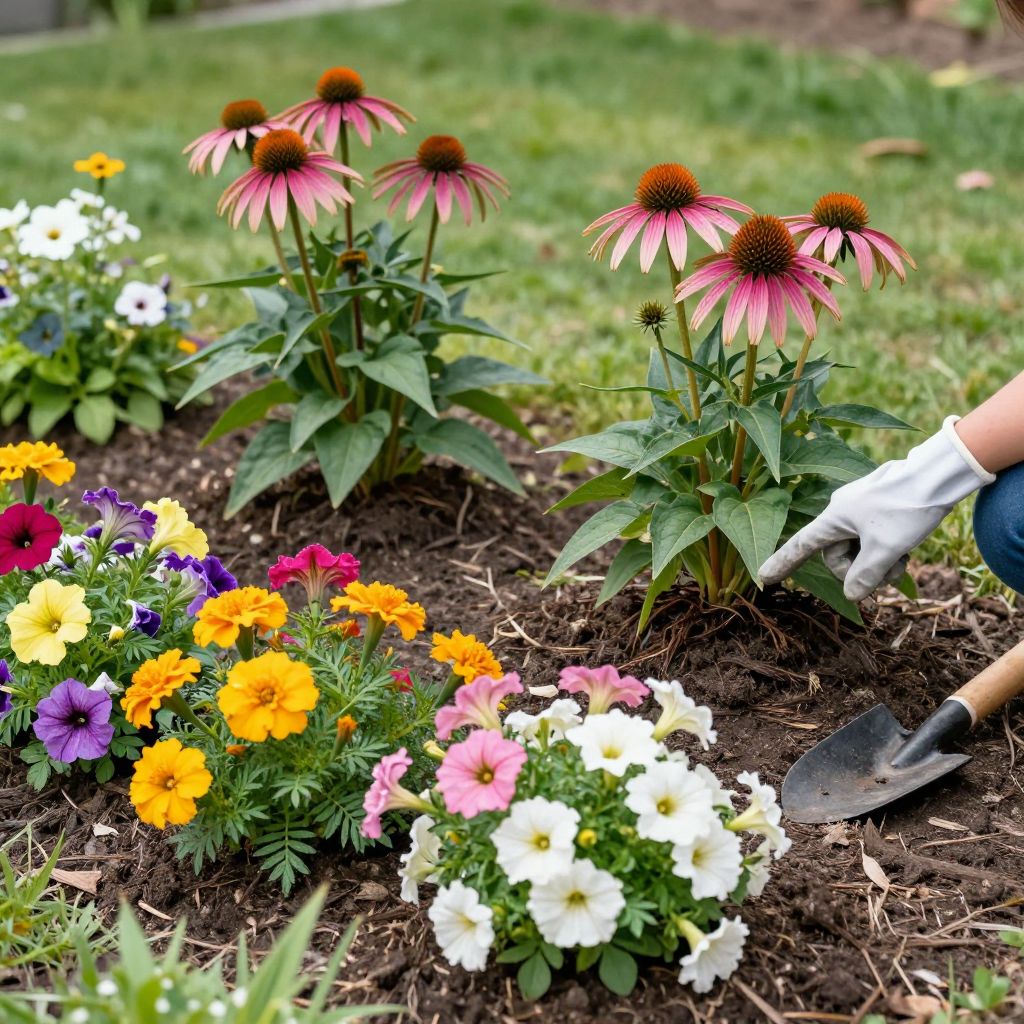
What is the difference between annuals and perennials? The simplest answer is that annuals complete their life cycle in one growing season, while perennials return for multiple years. That difference affects how you plant, water, prune, and plan your garden, because each type grows, flowers, and dies back differently.
Once you know how to tell them apart, you can choose plants that fit your climate, maintenance level, and design goals. You will also avoid common mistakes like expecting a short-lived annual to come back next spring or treating a perennial like a one-season flower.
What is the difference between annuals and perennials?
Annuals germinate, grow, flower, set seed, and die in one season. Perennials live for more than two years and usually return from their roots, crowns, or bulbs each season. Annuals give quick color and flexibility; perennials build long-term structure and often need less replanting once established.
How to identify annuals and perennials in the garden
Plant labels are the easiest clue, but you can also identify many plants by how they behave through the seasons. If a plant blooms heavily, sets seed, and then disappears after frost, it is often an annual. If it dies back and regrows from the same root system next year, it is a perennial.
Common signs of annuals
- They flower quickly after planting.
- They usually bloom for a long stretch until frost or heat ends the season.
- They often look tired or collapse after seed production.
- Many are grown from seed every year, such as zinnias, marigolds, and cosmos.
Common signs of perennials
- They may take longer to establish and bloom.
- They often die back in cold weather or drought, then regrow.
- They usually have thicker crowns, woody stems, tubers, rhizomes, or spreading roots.
- Examples include peonies, daylilies, hostas, and coneflowers.
Watch for these look-alikes
Some plants are confusing because they behave differently depending on climate. A plant that is perennial in a warm region may be grown as an annual in a colder one. Tender plants such as impatiens, geraniums, and coleus can be perennial in frost-free areas but are often treated as annuals elsewhere.
Why the difference matters for gardeners
Knowing whether a plant is annual or perennial helps you match your expectations to the plant’s natural life cycle. It also affects how much space you give it, how you prepare the soil, and how you plan for bloom timing, winter survival, and garden cleanup.
- Annuals are useful when you want instant color, seasonal change, or a gap-filler in beds and containers.
- Perennials are best when you want repeat performance and a more permanent garden framework.
- Some annuals self-seed, which can make them seem perennial even though the original plant dies.
- Some perennials need a year or two to settle in before they look their best.
Annuals: what to expect and how to grow them
Annuals are ideal if you want fast results. They usually spend their energy on leaves, flowers, and seed production in a single season, so they are often more colorful over a longer stretch of summer than many perennials.
Best growing conditions for annuals
Most annuals prefer well-drained soil, regular moisture, and full sun, although some tolerate part shade. Because they grow quickly, they often benefit from compost worked into the top layer of soil before planting. Containers need drainage holes and a potting mix that stays moist without becoming soggy.
Planting and maintenance tips
- Choose a sunny or partly shaded spot based on the plant label.
- Loosen the soil and mix in compost if the bed is poor or compacted.
- Plant at the same depth the plant was growing in its pot.
- Water thoroughly after planting to settle the roots.
- Deadhead spent flowers if the plant responds well, to encourage more blooms.
Many annuals flower better when you remove faded blooms before they set seed. However, some gardeners leave a few flowers to mature if they want self-seeding plants or seed for next year.
Common annual problems
- Leggy growth: often caused by too little light.
- Wilting: may mean underwatering, heat stress, or root trouble.
- Powdery mildew: can appear in crowded plantings with poor airflow.
- Aphids and whiteflies: may cluster on tender new growth.
To reduce problems, space annuals properly, water at the soil level when possible, and avoid overfeeding with high-nitrogen fertilizer, which can produce lots of leaves but fewer flowers.
Perennials: what to expect and how to grow them
Perennials are a long-term investment. Some bloom heavily the first year, but many spend the first season building roots. Once established, they can become reliable parts of your garden design for years.
Best growing conditions for perennials
Perennials vary widely, so always match the plant to your site. Some want rich, moist soil; others prefer dry, lean conditions. Good drainage is especially important because many perennial roots rot in soggy ground, especially through winter.
Planting and maintenance tips
- Select a perennial suited to your sun exposure and local climate.
- Prepare the planting area by loosening soil and adding compost if needed.
- Dig a hole wide enough to spread the roots without bending them.
- Set the crown at the correct level; do not bury it too deeply.
- Water deeply after planting, then keep the soil evenly moist while the plant establishes.
Many perennials benefit from a layer of mulch to moderate soil temperature and conserve moisture. Keep mulch a little away from the crown to reduce rot and pest problems.
Pruning and dividing perennials
Some perennials need deadheading to prolong bloom, while others are best left alone until late winter or early spring. Over time, clumping perennials may need division if they become crowded, bloom less, or die out in the center. Division is usually done when the plant is dormant or just beginning active growth, depending on the species.
Annuals vs perennials in containers, beds, and borders
Annuals and perennials serve different roles in garden design. Annuals are often used for seasonal color in pots, hanging baskets, and front borders. Perennials create the backbone of beds and mixed borders, returning each year with foliage, flowers, and structure.
Container gardening
Annuals are especially useful in containers because they fill pots quickly and can be replaced each season. Perennials can also grow in containers, but they usually need larger pots, more consistent care, and winter protection in cold climates.
Flower beds and landscape design
A common approach is to build the garden with perennials and then tuck annuals into open spaces for extra color. This gives you a stable framework and seasonal flexibility. Annuals can also cover bare soil while young perennials are still filling in.
How climate affects whether a plant behaves as an annual or perennial
Climate matters just as much as plant type. A plant may be perennial in one region and annual in another because winter temperatures, summer heat, humidity, and soil drainage all affect survival. That is why plant tags often mention hardiness or say “grown as an annual in cooler climates.”
If you are unsure, check whether the plant can survive your winters outdoors. In very cold areas, tender perennials are often lifted, stored, or treated as seasonal plants. In frost-free regions, some “annuals” can keep growing for many months or even years.
What to do if you garden in a short season
- Choose fast-growing annuals for reliable color.
- Use early-starting perennials that suit your climate.
- Mulch perennials before winter if appropriate for the species.
- Accept that some tender plants will need replanting each year.
Propagation and saving plants for next year
Annuals are usually restarted from seed or nursery transplants each year, although some gardeners collect seed from favorite varieties. Perennials can often be propagated by division, cuttings, layering, or seed, depending on the plant.
Simple ways to extend your garden
- Annuals: save seed from open-pollinated plants if you want to try growing them again.
- Perennials: divide clumps to create new plants and refresh overcrowded ones.
- Both: take note of which plants thrive in your soil, sun, and watering routine.
Propagation is useful, but it is not always guaranteed to produce identical plants, especially from seed. If you want the same look year after year, division or cuttings are often more reliable for many perennial species.
Common mistakes to avoid
- Assuming every flowering plant is perennial.
- Planting perennials in poorly drained soil and expecting them to survive winter.
- Giving annuals too little light, which leads to weak growth and fewer flowers.
- Overcrowding beds so air cannot move between plants.
- Cutting back perennials at the wrong time for the species.
- Forgetting that local climate can change how a plant behaves.
If a plant fails, first check light, drainage, and winter exposure before blaming the plant itself. Many problems come from a mismatch between the plant’s needs and the site rather than from the annual or perennial label.
Quick comparison: annuals vs perennials
- Life span: annuals live one season; perennials live multiple years.
- Garden role: annuals provide quick color; perennials provide long-term structure.
- Maintenance: annuals are replanted more often; perennials need seasonal care and occasional dividing.
- Bloom timing: annuals often bloom continuously; perennials may have shorter but repeatable bloom periods.
- Climate response: some plants shift behavior depending on winter cold or heat.
Conclusion
When you understand what is the difference between annuals and perennials, you can choose plants with confidence and care for them the right way. Use annuals for fast seasonal impact, and build your garden around perennials for lasting structure. Start by checking the plant tag, then match each plant to your soil, sunlight, and climate before you buy or plant.
For more practical help with choosing and caring for garden plants, you may also want to read about how to choose the right plants for your garden and basic flower bed planning and soil preparation.