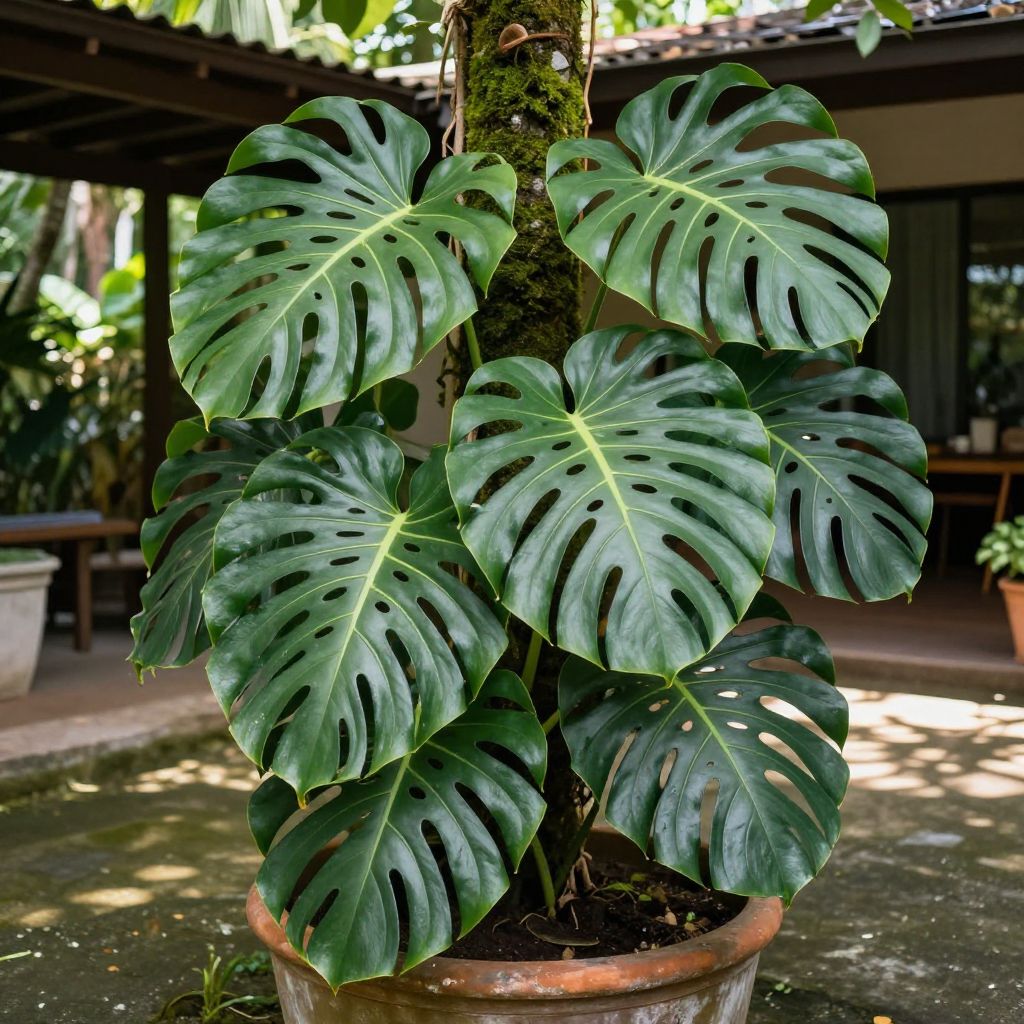
Can Monstera live outside? Yes, in the right climate and with the right care, a monstera can grow outdoors very well. The key is matching its tropical needs to your local weather, especially warmth, humidity, filtered light, and protection from cold, wind, and harsh sun.
Most gardeners grow Monstera deliciosa as a houseplant, but in frost-free or mild subtropical areas it can become a vigorous outdoor climber. If your climate is cooler, you may still move it outside for part of the year and bring it back in before temperatures drop.
Can Monstera Live Outside?
Yes, monstera can live outside if your climate stays warm and frost-free. It grows best outdoors where nights remain mild, the plant gets bright indirect light or dappled shade, and the soil drains well. In colder regions, it can only stay outside seasonally and must be protected from temperatures near freezing.
What Outdoor Conditions Does Monstera Need?
To thrive outdoors, monstera needs conditions that mimic a tropical forest floor. Think warm air, humidity, filtered light, and support to climb.
Light
Outdoor monstera does best in bright, indirect light or dappled shade. Morning sun is usually fine, but harsh afternoon sun can scorch the leaves, leaving pale patches or brown edges.
If you are placing it near a wall, patio, or tree, choose a spot that gets light but not all-day direct sun. Too little light can slow growth and reduce the dramatic leaf fenestrations, or splits.
Temperature
Monstera is a true tropical plant and dislikes cold. It grows best in warm conditions and should be protected from frost and chilly nights.
As a general rule, avoid leaving it outside when temperatures approach the low 50s Fahrenheit, and never expose it to frost. If your area has cool springs or autumns, treat monstera as a warm-season outdoor plant.
Humidity and airflow
Outdoor humidity often helps monstera, especially in coastal or subtropical climates. Still, the plant also needs some airflow to reduce fungal problems.
A sheltered location is ideal: protected from strong wind, but not packed tightly against other plants where air stays stagnant.
Where Should You Plant Monstera Outdoors?
Choose a site that offers shelter, filtered light, and room to grow. Monstera can become large, so do not crowd it into a narrow bed or place it where aerial roots and stems will constantly rub against hard surfaces.
In the ground
If your climate supports year-round outdoor growth, monstera can be planted in the ground in rich, well-drained soil. It performs best in a spot with organic matter and a support structure such as a fence, trellis, or sturdy pole.
Because monstera is a climbing aroid, it naturally wants to attach and ascend. Without support, it can spread awkwardly and become floppy.
In a container
For gardeners in cooler climates, a large container is often the safest option. You can move the plant to a protected porch, patio, or indoors when weather changes.
Use a pot with drainage holes and a chunky, airy potting mix. A container also gives you more control over watering, which is important because outdoor rain can quickly lead to soggy roots.
Best Soil and Drainage for Outdoor Monstera
Monstera needs soil that holds some moisture but never stays waterlogged. Heavy clay or compacted garden soil can suffocate roots and invite rot.
Ideal soil mix
Whether planting in a pot or improving a garden bed, aim for a loose, organic mix. A good monstera soil should include:
- Quality potting mix or loamy soil
- Compost or leaf mold for organic matter
- Perlite, orchid bark, or coarse material for air pockets
This kind of mix helps water drain while still keeping enough moisture around the roots. Drainage matters more than richness alone.
What to avoid
- Heavy, soggy soil that stays wet for days
- Low spots where rain collects
- Overly fine soil with no structure
- Containers without drainage holes
How to Water Monstera Outdoors
Outdoor monstera usually needs less frequent watering than an indoor plant in a dry room, but it may dry out faster in heat, wind, or containers. The right approach is to check the soil rather than follow a fixed schedule.
Simple watering rule
Water when the top inch or two of soil feels dry. Then water deeply so moisture reaches the root zone, and let excess drain away.
If the plant is in a pot, empty saucers so the roots do not sit in standing water. If it is in the ground, make sure runoff does not pool around the base after rain or irrigation.
Signs of watering problems
- Too much water: yellowing leaves, mushy stems, sour-smelling soil, root rot
- Too little water: drooping leaves, crispy edges, slower growth, curling
Outdoor weather can change quickly, so adjust watering after rain, heat waves, or windy spells. Container plants often need closer attention than those planted in the ground.
Can Monstera Stay Outside Year-Round?
Only if your climate stays warm enough throughout the year. In frost-free tropical and subtropical regions, monstera may live outdoors permanently with proper shelter and care.
In areas with winter cold, treat it as a seasonal outdoor plant. Bring potted plants inside before temperatures drop, or be prepared to cover and protect them if a brief cool spell is expected and your local climate allows it.
Best approach by climate
- Warm, frost-free climates: can often grow outdoors year-round
- Mild climates with occasional cool nights: may need seasonal protection
- Cold or temperate climates: best kept in pots and moved indoors
If you are unsure, watch your local nighttime lows rather than daytime highs. Monstera is much more vulnerable to cold nights than many gardeners expect.
How to Acclimate Monstera to Outdoor Life
Do not move a houseplant straight into full outdoor sun. Sudden exposure can shock the plant, burn the leaves, and cause drop or slowdown.
- Start in a shaded or lightly sheltered outdoor spot.
- Introduce outdoor conditions for a few hours at a time over several days.
- Increase exposure gradually, especially to brighter light and wind.
- Keep an eye on leaf color, drooping, and sunburn.
This gradual transition helps the plant adjust to stronger light, changing humidity, and outdoor airflow. It is especially important if the monstera has been living indoors for a long time.
Pruning, Support, and Maintenance Outdoors
Outdoor monstera can grow quickly, so regular maintenance keeps it tidy and healthy. Pruning also helps direct energy into strong new growth.
Pruning tips
- Remove yellow, damaged, or diseased leaves
- Trim back overlong stems if the plant becomes unruly
- Use clean, sharp pruners to reduce tearing
If you cut a stem, make the cut just above a node when shaping the plant. Nodes are the points where leaves and aerial roots emerge.
Support and training
Monstera naturally climbs, so give it a trellis, moss pole, fence, or sturdy post. A climbing plant often produces stronger, more upright growth than one left to sprawl on the ground.
Secure stems loosely with soft plant ties if needed, but do not tie them too tightly. Aerial roots can also be guided into the soil or toward support.
Common Outdoor Problems and How to Fix Them
Outdoor growing brings a few extra challenges. Most problems come from too much sun, too much water, or cold stress.
Sunburn
Symptoms include bleached patches, brown crispy areas, and curled leaves. Move the plant to brighter shade and remove only badly damaged tissue if needed.
Root rot
Usually caused by poor drainage or overwatering. Improve drainage, reduce watering, and repot if roots are black and mushy. In severe cases, you may need to cut away rotted roots and start fresh in a better mix.
Pests
Outdoor monstera can attract mealybugs, scale, spider mites, and thrips. Check the undersides of leaves and along stems regularly.
If you spot pests early, rinse the plant with water and remove visible insects by hand. For heavier infestations, use a suitable horticultural soap or oil according to the product label and local gardening guidance.
Cold damage
Leaves may turn limp, dark, or blotchy after exposure to cold. Move the plant to shelter immediately and remove clearly dead tissue after the weather stabilizes.
Can You Grow Monstera Outdoors in a Pot?
Yes, and for many gardeners this is the easiest way to grow it outside. A pot lets you control soil, move the plant for seasonal protection, and keep it from spreading too aggressively.
Choose a container that is large enough for root growth but not so oversized that the mix stays wet for too long. Repot when roots circle the pot or water runs through too quickly because the root mass has filled the container.
Is Outdoor Monstera Worth It?
If you live in a warm climate or can move the plant seasonally, outdoor monstera can be very rewarding. It often grows faster, looks fuller, and develops a more dramatic presence than it does indoors.
The tradeoff is that it needs more attention to weather, light, drainage, and pests. If you can provide those basics, the plant can thrive and become a striking feature in a shaded patio, tropical border, or container display.
Conclusion
Can Monstera live outside? Absolutely, as long as you match it to warm temperatures, filtered light, good drainage, and protection from frost. Start by choosing the right spot, then watch how your local weather affects watering and light exposure.
If you want to expand your tropical plant knowledge, look for more guidance on monstera care basics and choosing the right light for houseplants before moving your plant outdoors.