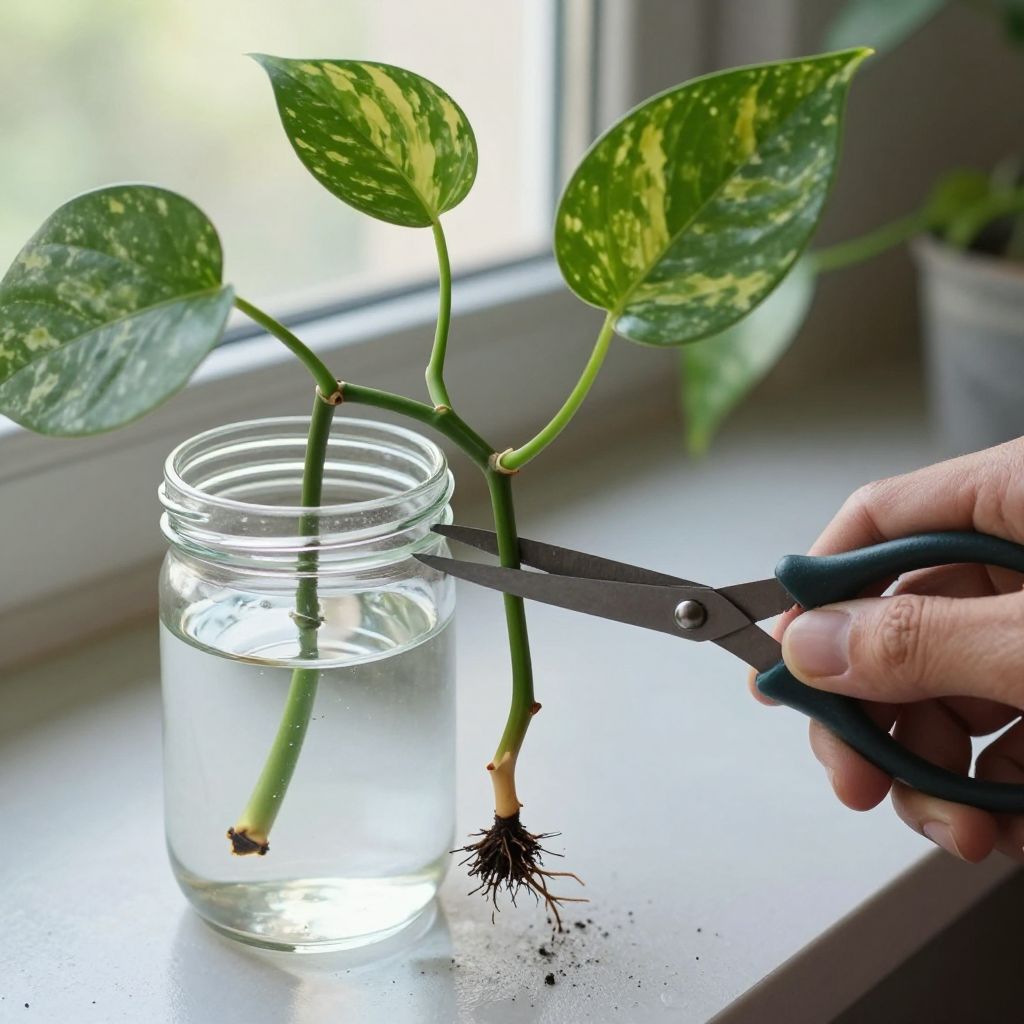
If you’re wondering where to cut pothos to propagate in water, the short answer is: cut just below a node, where a leaf and aerial root emerge from the stem. That node is the part that can make new roots, so placing it in water gives you the best chance of success.
With the right cut and a healthy stem, pothos (Epipremnum aureum) roots quickly in a jar or glass on a bright windowsill. The key is knowing which nodes to include, how long the cutting should be, and how to keep the water fresh while roots develop.
Where to cut pothos to propagate in water?
Make your cut just below a node, ideally 1/4 to 1/2 inch beneath it. Each cutting should include at least one node, and better yet one to three nodes, because roots form from the node rather than the middle of a bare stem. Avoid cutting only between leaves with no node attached.
What counts as a node on pothos?
A node is the slightly swollen point on the vine where a leaf attaches. You may also see a small brown bump or aerial root nub at the node, which is a strong sign you’ve found the right spot.
How to spot the right cutting point
- Leaf attachment point: The node sits where the leaf meets the stem.
- Aerial root: A small root nub or brown bump often grows from the node.
- Stem spacing: The section between two nodes is called an internode and will not root on its own.
If you’re unsure, trace the vine from one leaf to the next. The safest cut is below the lowest node you want included in the cutting.
How long should a pothos cutting be?
A practical cutting is usually 4 to 6 inches long with 2 to 4 leaves and at least one node. Longer cuttings can work too, but they are easier to manage if you keep the leaf count modest and remove any lower leaves that would sit in water.
Best cutting size for water propagation
- Short cuttings: Useful if the vine is young or leggy, but make sure at least one node is present.
- Medium cuttings: Often the easiest for beginners because they balance leaf area and rooting ability.
- Very long cuttings: Can root, but they may wilt more and need a larger container.
For most home gardeners, a few medium cuttings are better than one oversized piece. Multiple cuttings in one jar also make the finished plant look fuller when you pot it up later.
How to take a pothos cutting step by step
- Choose a healthy vine with firm stems and green, undamaged leaves.
- Locate a node and make a clean cut just below it using sharp, sanitized scissors or pruners.
- Remove any leaf that would be below the waterline.
- Place the cutting in a clean glass or jar with enough water to cover the node, but not the leaves.
- Set it in bright, indirect light and refresh the water regularly.
Sharp, clean tools matter. A crushed stem heals poorly and is more likely to rot. Wipe blades with rubbing alcohol or wash them well before cutting.
Which nodes should you choose for the best results?
Choose nodes from healthy, actively growing sections of the vine. Nodes close to the tip often root quickly because they are younger, but older stems can root too if they are firm and not woody or damaged. Avoid stems that are yellowing, mushy, or heavily stressed.
Good cutting locations on the plant
- Tip cuttings: The newest growth is often the easiest to root.
- Mid-vine cuttings: Useful if the plant is getting long and leggy.
- Pruning points: Cutting just above a node on the mother plant also encourages new branching.
If your pothos looks sparse, taking cuttings from the longest vines can improve the shape of the parent plant while giving you propagation material at the same time.
How much of the stem should sit in water?
Only the node and the lower stem need to be in water. Keep the leaves above the waterline to reduce rot and algae growth. If a cutting has several nodes, you can submerge one or two nodes, but avoid drowning the foliage.
Container tips for water propagation
- Use a clear jar if you want to monitor root growth, but rinse it often to reduce algae.
- A narrow-neck bottle can help hold the cutting upright.
- Use room-temperature water when possible.
Change the water every 5 to 7 days, or sooner if it looks cloudy. Fresh water helps prevent bacterial buildup and keeps the cutting healthier while roots form.
How long does pothos take to root in water?
Many pothos cuttings begin forming roots in 1 to 3 weeks, though timing depends on light, temperature, and the health of the cutting. Warmer indoor conditions and bright indirect light usually speed things up, while cool rooms slow rooting.
What to expect as roots develop
- Week 1: The cutting may look unchanged or slightly droopy.
- Week 2 to 3: Tiny white roots often appear at the node.
- After several weeks: Roots lengthen and branch, making the cutting ready for potting.
Wait until roots are several inches long and have some branching before moving the plant to soil. Very short roots can struggle during transplanting.
Best light and temperature for water propagation
Pothos roots best in bright, indirect light. A spot near an east- or north-facing window, or a few feet back from a brighter window, is usually ideal. Direct sun can overheat the water and stress the cutting.
Normal indoor temperatures are usually fine, but avoid cold windowsills, drafts, and hot spots near radiators or vents. Stable conditions help the cutting focus on rooting instead of surviving stress.
Signs the location is working
- Water stays clear for several days.
- Leaves remain firm and green.
- New roots appear without blackening at the stem base.
Common mistakes when propagating pothos in water
Most propagation problems come from cutting in the wrong place or letting the cutting sit in poor conditions. A healthy node, clean tools, and regular water changes solve many of the usual issues.
Mistakes to avoid
- Cutting between nodes: That section cannot produce roots.
- Leaving leaves underwater: This often leads to rot.
- Using dirty water or containers: Bacteria and algae can slow rooting.
- Placing in direct sun: Heat can damage the cutting and encourage algae.
- Moving too quickly to soil: Roots need time to develop enough strength.
If a cutting turns mushy at the base, discard it and start over with a fresh, healthy stem. Rot usually spreads quickly once it begins.
Troubleshooting slow or failed rooting
If your pothos cutting is not rooting, first check that a node is actually submerged. Then look at the stem: firm and green is good, while brown, soft, or slimy tissue usually means trouble.
What to do if roots are slow
- Move the jar to brighter indirect light.
- Refresh the water more often.
- Trim off any rotting tissue below the node.
- Try a younger vine segment with a more active node.
Some cuttings simply take longer than others. If the stem is healthy, patience is often enough, especially in cooler seasons when indoor growth slows.
When and how to pot up rooted pothos cuttings
Once roots are a few inches long and show side branches, you can move the cutting into a well-draining potting mix. A standard indoor potting mix amended with perlite or another airy ingredient is usually a good choice for pothos.
Transplanting tips
- Choose a small pot with drainage holes.
- Fill it with moist, airy potting mix.
- Make a hole and place the rooted cutting in gently.
- Cover the roots, firm the mix lightly, and water once to settle it.
- Keep the soil lightly moist for the first couple of weeks, then water when the top layer dries.
Do not bury the stem too deeply. The node should be under the soil, but the leaves should stay above the surface to prevent rot.
How to keep a propagated pothos growing well after rooting
After potting, give your new pothos the same basic care as the parent plant: bright indirect light, moderate watering, and a pot with drainage. Pothos prefers to dry slightly between waterings rather than stay soggy.
If you want a fuller plant, root several cuttings together in one pot. This creates a bushier look faster than relying on a single vine.
Simple ongoing care
- Rotate the pot occasionally so growth stays even.
- Trim long vines to encourage branching.
- Watch for yellow leaves, which often signal overwatering.
- Inspect for pests such as mealybugs or spider mites, especially indoors.
Final takeaway
To propagate pothos in water, cut just below a healthy node and make sure that node stays submerged while the leaves stay dry. Use clean tools, bright indirect light, and fresh water, then wait for several inches of roots before potting up. If you want, take a few cuttings today and start a small propagation jar on a bright windowsill.
For more practical houseplant care, you may also enjoy reading about indoor plant watering basics and how to prune houseplants for fuller growth.