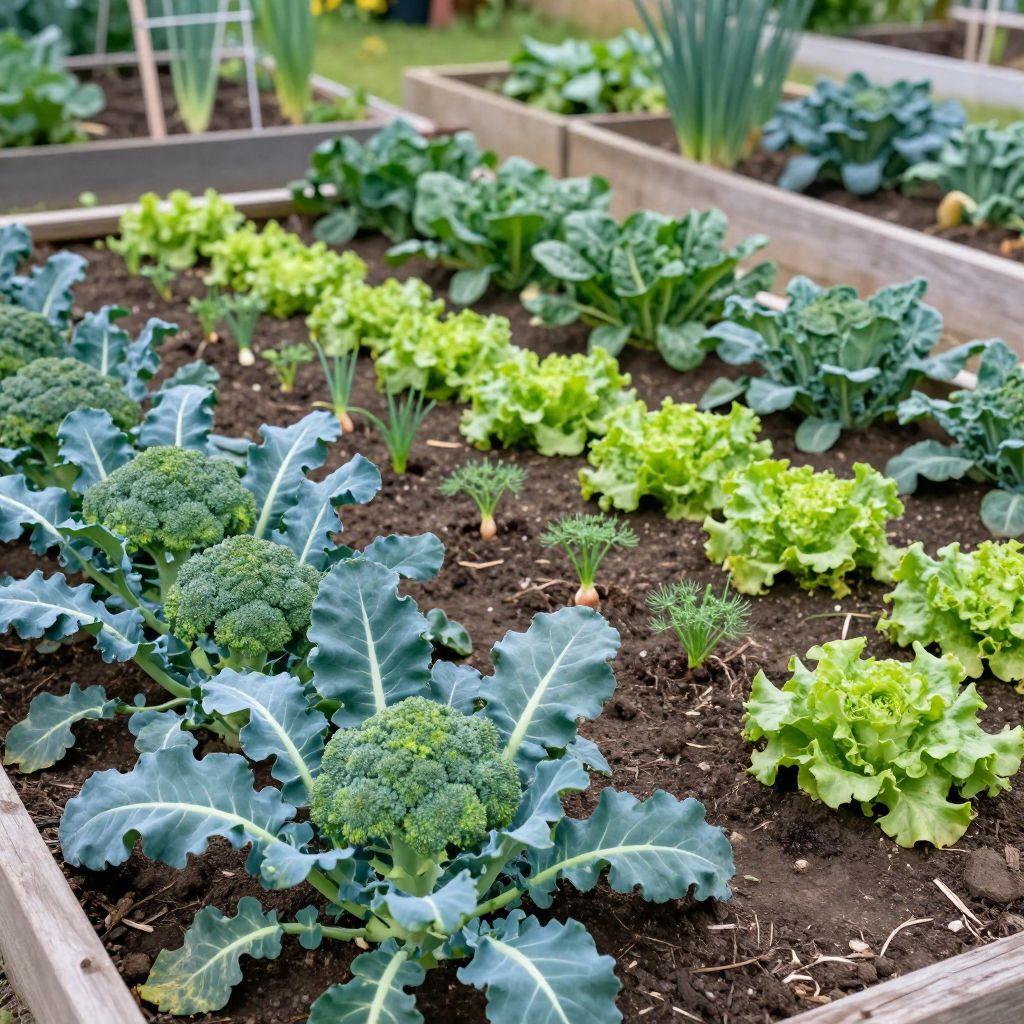
What should you plant with broccoli so it grows well and your vegetable bed stays productive? Broccoli does best with companions that share its cool-season needs, don’t compete too aggressively, and can help you use garden space efficiently.
The best companion plants can also help confuse pests, attract beneficial insects, and fill gaps before or after your broccoli crop. The key is choosing neighbors that won’t crowd broccoli’s roots or shade its heads as they develop.
What to plant with broccoli?
Good companions for broccoli include leafy greens, root crops, alliums, herbs, and a few flowering plants that attract beneficial insects. Choose plants with similar cool-weather needs and modest root competition, and avoid aggressive spreaders or heavy shade. In mixed beds, give broccoli enough room, steady moisture, and full sun for the best heads.
Best companion plants for broccoli
Leafy greens
Leafy crops are some of the easiest and most practical companions for broccoli. They use space efficiently and usually finish before broccoli needs all the room.
- Lettuce grows well in the partial shade broccoli can create in warmer weather.
- Spinach and arugula enjoy the same cool conditions and can be harvested young.
- Swiss chard can work in larger beds if you leave enough space for broccoli’s mature spread.
These crops are useful because broccoli has a relatively upright growth habit, leaving room at ground level. Just avoid letting leafy companions become so dense that they restrict airflow around the broccoli stems.
Root vegetables
Shallow to moderate root crops fit well around broccoli because they occupy different soil space. They also mature quickly, making them ideal for interplanting.
- Radishes are especially good because they mature fast and can be harvested before broccoli expands.
- Beets can work if you thin them properly and keep the bed evenly moist.
- Carrots are a good option in loose, stone-free soil.
- Turnips can be planted early in the season and harvested before broccoli reaches full size.
Root crops are best when your soil is well prepared. If the soil is compacted, broccoli and its companions will both struggle, and roots may fork or stay small.
Alliums
Alliums are classic broccoli companions because they take up little horizontal space and may help reduce pest pressure in mixed plantings.
- Onions
- Garlic
- Chives
- Leeks
These plants are especially useful along bed edges or between broccoli plants if spacing is generous. They are not a cure-all for pests, but they fit neatly into a broccoli bed without competing much for light.
Herbs
Several culinary herbs make excellent neighbors for broccoli, especially when you want to attract beneficial insects and make use of small spaces.
- Dill and cilantro can attract beneficial insects when allowed to flower.
- Thyme and oregano stay low and won’t shade broccoli.
- Chamomile can be a useful pollinator-friendly companion in the garden margin.
Use herbs thoughtfully. Tall herbs can shade broccoli if planted too close, while sprawling herbs can reduce airflow if they are allowed to spread unchecked.
Flowers that support the vegetable bed
Flowers are not just decorative. In a broccoli bed, they can help bring in pollinators and beneficial insects that may reduce pest problems nearby.
- Nasturtiums can act as a trap crop for aphids in some gardens.
- Sweet alyssum attracts small beneficial insects and stays low.
- Calendula can fit well at bed edges and in cool-season gardens.
Keep flowers at the edges or in gaps where they won’t crowd broccoli. The goal is support, not competition.
What not to plant with broccoli
Some plants are poor companions because they compete too strongly, encourage the same pests, or create growing conditions broccoli does not like. Avoid pairing broccoli with crops that need very different care or occupy too much space.
- Other large brassicas such as cauliflower, cabbage, kale, and Brussels sprouts can be planted nearby, but they often attract the same pests and diseases. If you grow them together, monitor closely and rotate crops carefully.
- Tall, shading crops can reduce broccoli’s light exposure and slow head development.
- Very aggressive spreaders can crowd broccoli roots and reduce airflow.
- Heavy feeders planted too densely can compete for nitrogen and moisture.
One of the biggest mistakes is packing too many brassicas into one bed. Broccoli needs room to form strong stems and full heads, and crowded plantings often lead to smaller harvests and more pest trouble.
How to plan a broccoli companion planting bed
Start with broccoli spacing
Broccoli needs enough room to grow without being shaded or crowded. Exact spacing depends on variety and local conditions, but many gardeners allow about 18 to 24 inches between plants, with wider spacing for larger types.
If you are growing in rows, leave enough room between rows for airflow, weeding, and harvesting. Good spacing matters even more in humid climates, where dense plantings dry slowly and disease spreads more easily.
Use fast crops between slower ones
Interplant quick crops like radishes, lettuce, or cilantro between young broccoli plants. These can be harvested before broccoli reaches full size, making the bed more productive without long-term crowding.
This approach works especially well in spring and fall gardens, when cool-weather crops grow fastest and heat stress is lower.
Place taller companions carefully
If you want to include herbs or flowers that may grow taller, place them on the north side of the bed in the Northern Hemisphere, or on the south side in the Southern Hemisphere, so they are less likely to shade broccoli.
Low-growing companions belong near the front edges or in the spaces between plants, provided they do not block airflow.
Soil, sun, and water needs for broccoli companions
Broccoli and its best companions generally prefer rich, well-drained soil and consistent moisture. A bed with loose, fertile soil supports both the main crop and the smaller plants around it.
- Sunlight: Broccoli grows best in full sun, though leafy companions may tolerate a little afternoon shade.
- Soil: Aim for soil that is fertile, crumbly, and drains well. Heavy clay should be improved with compost and careful bed preparation.
- Moisture: Keep the soil evenly moist, especially while broccoli is forming heads. Irregular watering can lead to stress, poor growth, or tough texture.
Mulch can help hold moisture and reduce weeds, but keep it pulled back slightly from stems to reduce rot and pest hiding places. Compost is usually the best soil amendment for broccoli beds because it improves structure and supports steady growth.
Pests and diseases to watch for
Companion planting can help, but it does not replace regular inspection. Broccoli is vulnerable to several common pests and diseases, especially when plants are crowded or stressed.
Common pests
- Cabbage worms and cabbage loopers chew leaves and can damage young plants quickly.
- Aphids cluster on stems and undersides of leaves.
- Flea beetles make small holes in leaves, especially on young seedlings.
Use floating row covers early in the season if pest pressure is high, but remove them when flowering companions need access for beneficial insects or when plants need more space. Check leaf undersides regularly and remove damaged leaves when practical.
Common diseases
- Downy mildew can develop in cool, damp conditions with poor airflow.
- Clubroot is a serious soilborne problem in some gardens and is harder to manage once established.
- Black rot and other bacterial issues can spread through infected debris and wet foliage.
To reduce disease risk, avoid overcrowding, water at the soil level, remove diseased plant debris, and rotate brassicas out of the same bed for several seasons if possible. Good companion planting works best in a clean, well-managed bed.
How to care for broccoli in a mixed bed
Watering
Broccoli prefers steady moisture, especially during transplant establishment and head formation. Water deeply rather than lightly sprinkling the surface, and adjust for rainfall, soil type, and temperature.
In mixed beds, use drip irrigation or a soaker hose if possible. This keeps leaves drier and helps all the companion plants receive water evenly.
Feeding
Broccoli is a relatively heavy feeder, so it benefits from compost-rich soil. If your soil is poor, a balanced, gentle feeding approach may help, but avoid overdoing nitrogen, which can produce lots of leaves and smaller heads.
Companion plants like lettuce and herbs usually need less fertility than broccoli, so focus your soil preparation on the whole bed rather than trying to feed each crop separately.
Weeding and mulching
Keep weeds under control while the broccoli is young. Weeds compete for water and nutrients and can also shelter pests.
A light mulch can reduce weeds and stabilize soil moisture. Just leave a little space around stems so the base of each plant stays dry and airy.
Seasonal tips for companion planting broccoli
Broccoli is a cool-season crop, so companion choices should match the season. In spring, fast greens and roots are especially useful because they can be harvested before heat arrives. In fall, you can often combine broccoli with another round of cool-weather crops as temperatures drop.
In hot climates, broccoli may bolt or form loose heads if planted too late. In that case, choose companions that mature quickly and help you make the most of a short cool window. In cooler regions, you may have more time for longer-season companions, but spacing and airflow still matter.
Simple companion planting combinations that work well
- Broccoli + lettuce + radishes for a quick, space-saving spring bed.
- Broccoli + onions + dill for a tidy bed with pest-management support.
- Broccoli + spinach + chives for a cool-season harvest mix.
- Broccoli + nasturtiums + carrots for a productive bed with flowers at the edge.
These combinations work because they balance root depth, growth speed, and mature size. The best pairing is the one that fits your climate, your soil, and the amount of space you actually have.
Conclusion
If you are wondering what to plant with broccoli, start with lettuce, spinach, radishes, onions, herbs, and low-growing flowers. Keep the bed fertile, evenly watered, and well spaced, and avoid crowding broccoli with plants that compete too strongly. For your next planting, sketch the bed first so every companion has room to grow.
If you want to plan the rest of your cool-season bed, it can help to read more about companion planting for vegetables and how to grow broccoli successfully.