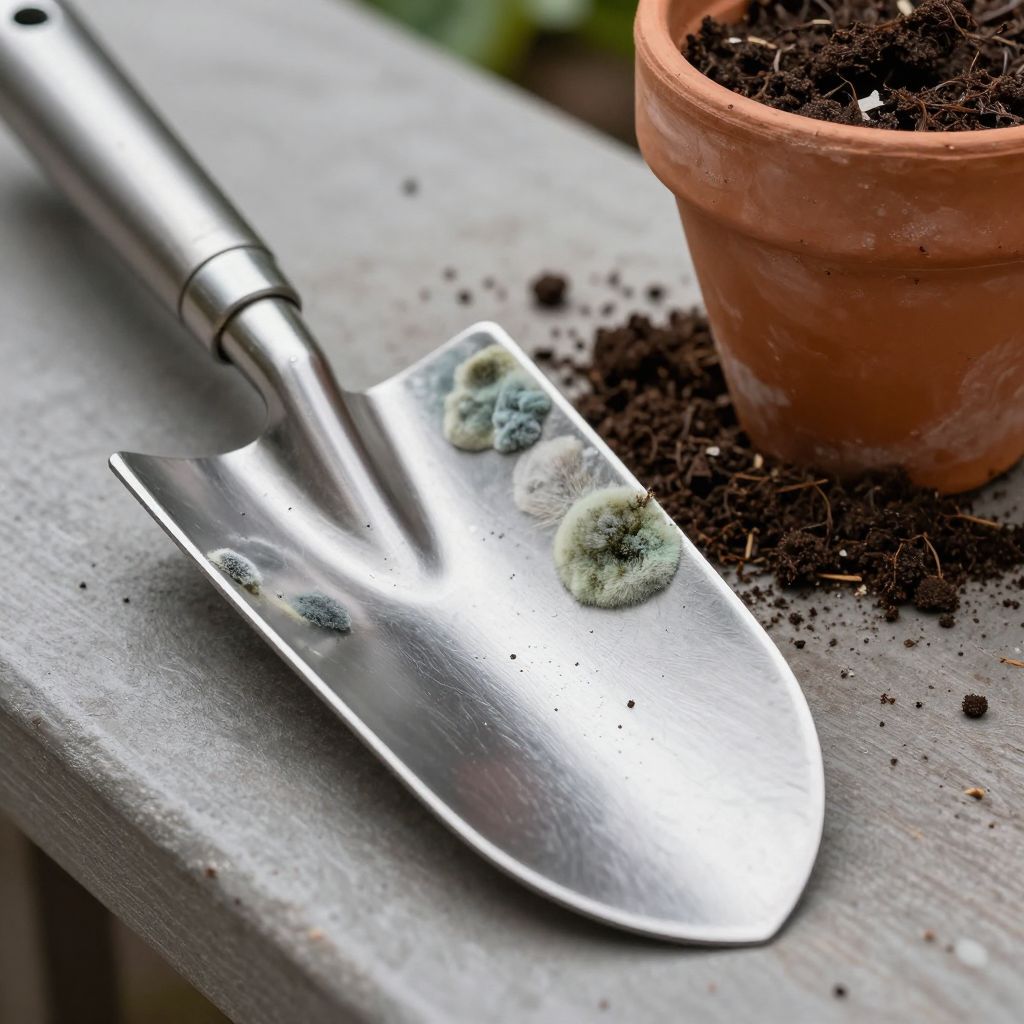
Can mold grow on stainless steel? Yes, it can—especially if the surface stays damp, has food residue, or sits in a humid, poorly ventilated area. Stainless steel itself does not feed mold, but dust, organic debris, and moisture can give mold spores enough to settle and spread.
For gardeners, this matters when using stainless steel tools, potting benches, sinks, watering cans, and plant supports indoors or in greenhouses. The good news is that mold on stainless steel is usually a cleaning and moisture-control problem, not a sign that the metal has “gone bad.”
Can mold grow on stainless steel?
Yes, mold can grow on stainless steel surfaces if moisture and organic residue are present. Stainless steel is nonporous, so mold does not usually penetrate the metal itself. Instead, it grows on dust, sap, soil, algae, fertilizer film, or other debris sitting on the surface. Keeping stainless steel clean, dry, and well ventilated is the best prevention.
Why mold shows up on stainless steel in gardening spaces
In a garden shed, greenhouse, or potting area, stainless steel often comes into contact with water, potting mix, compost, plant sap, and humidity. Those conditions can create a thin film where mold spores can settle.
Common places gardeners notice it
- Potting benches and worktables
- Stainless steel sinks and wash stations
- Pruners, snips, trowels, and hand tools
- Watering cans and spray bottles
- Metal shelves, trays, and plant stands
If you see dark specks, a fuzzy patch, or a slimy film, it is often a mix of mold, mildew, algae, and dirt rather than mold alone. The fix is still the same: remove the residue and reduce moisture.
How to clean mold off stainless steel garden tools and surfaces
Cleaning mold from stainless steel is usually straightforward. The key is to remove the organic film first, then dry the surface thoroughly so the problem does not return.
Step-by-step cleaning method
- Rinse off loose soil, sap, or dust with clean water.
- Wash the surface with warm water and a mild soap or dish detergent.
- Scrub gently with a soft cloth, sponge, or non-scratch pad.
- For stubborn spots, use a diluted white vinegar solution or a cleaner labeled safe for stainless steel.
- Rinse well if needed, especially on tools that may touch plants.
- Dry completely with a clean towel.
- Store the item in a dry, airy place.
What to avoid
- Abrasive steel wool that can scratch the finish
- Leaving tools wet after washing
- Harsh cleaners that may damage coatings, seals, or nearby plants
- Mixing cleaning products unless the label says it is safe
Scratches matter because they can trap moisture and debris, making it easier for mold to cling to the surface over time. A smooth, intact finish is easier to keep clean.
How to prevent mold on stainless steel in the garden
Prevention is mostly about moisture management. Stainless steel is durable, but it still needs regular cleaning and drying, especially in humid growing spaces.
Practical prevention tips
- Wipe tools and surfaces after use, especially after contact with compost or potting mix.
- Do not leave watering cans or trays sitting with standing water.
- Improve airflow in sheds, greenhouses, and indoor growing rooms.
- Store tools off the floor and away from damp walls.
- Clean sap and fertilizer residue promptly.
- Check for leaks under sinks, benches, and irrigation lines.
If your gardening space is naturally humid, use a fan, open vents, or increase spacing between stored items. Mold is much less likely to persist when air can move freely around surfaces.
Does mold on stainless steel harm plants?
Mold on a stainless steel tool or bench does not automatically mean your plants are in danger. The bigger concern is what the mold is growing on and where spores may spread.
When it can become a plant problem
- Dirty pruners can move spores from one plant to another.
- Moldy benches can contaminate pots, trays, or seed-starting supplies.
- Persistent dampness can encourage fungal disease in seedlings and houseplants.
- Nearby organic buildup can attract gnats and other moisture-loving pests.
For edible crops, seed trays, and propagation tools, cleanliness matters even more. A quick wash between uses is often enough to reduce the chance of spreading disease.
Stainless steel tools: care tips for gardeners
Many gardeners choose stainless steel because it resists rust better than ordinary steel. That does not mean it is maintenance-free. Good care keeps tools sharp, clean, and less likely to collect mold.
Routine care checklist
- Remove soil after each use.
- Dry blades and handles before storage.
- Oil moving parts lightly if the manufacturer recommends it.
- Sharpen cutting tools as needed so they do not tear plant tissue.
- Inspect for scratches, pitting, or stuck-on residue.
For pruners and snips, pay special attention to hinges, springs, and blade joints. These small crevices can hold moisture longer than the flat metal surfaces.
Indoor gardening and greenhouse conditions that encourage mold
Indoor growing areas often create the exact conditions mold likes: warmth, humidity, and limited airflow. Stainless steel shelves, trays, and tools can develop moldy residue if condensation or spills are left in place.
Watch for these warning signs
- Condensation on metal surfaces
- Musty smell near benches or storage areas
- White, gray, green, or black patches on residue
- Slippery film on trays or sinks
Seed-starting areas are especially vulnerable because frequent misting and covered trays raise humidity. Remove dome covers when seedlings no longer need them, and wipe excess water from trays and bench tops.
Outdoor gardening uses for stainless steel and mold risk
Outdoors, stainless steel usually dries faster, so mold is less persistent. Still, shaded patios, covered potting stations, and rainy climates can create enough moisture for buildup.
Outdoor situations that increase risk
- Tools stored in closed bins while still damp
- Benches under dense tree cover
- Rainwater sitting in watering cans or trays
- Compost dust and plant debris left on metal surfaces
If you garden outdoors in a wet climate, make drying part of your routine. A few minutes of cleanup after potting or pruning can prevent a lot of mold later.
How to tell mold from rust or mineral buildup
Gardeners sometimes mistake mold for rust, hard water marks, or fertilizer residue. Knowing the difference helps you treat the right problem.
Quick comparison
- Mold or mildew: fuzzy, powdery, or slimy; may be white, gray, green, or black.
- Rust: reddish-brown discoloration, more common on non-stainless or damaged metal.
- Mineral buildup: chalky white film or crust from hard water or fertilizers.
- Soil film: dull gray-brown residue that wipes away with washing.
If a mark does not wipe off easily, try a gentle cleaning first. If the surface is scratched or pitted, residue may cling more stubbornly, and repeated cleaning may be needed.
When to replace a tool or surface
Most mold on stainless steel can be cleaned. Replacement is only necessary if the item is badly damaged, deeply pitted, or no longer safe to use around plants.
Consider replacing if you notice
- Deep corrosion or pitting that traps debris
- Loose parts that cannot be cleaned properly
- Persistent odor after thorough washing and drying
- Damage that affects cutting performance or sanitation
For expensive tools, regular maintenance usually extends their life. For low-cost trays or containers, replacement may be easier if the surface has become difficult to keep clean.
Simple habits that keep stainless steel mold-free
The best long-term approach is consistency. Clean after use, dry thoroughly, and keep the storage area airy and uncluttered.
A practical routine for gardeners
- Brush off soil and plant debris immediately.
- Wash with soap and water after messy jobs.
- Dry with a towel, not just air-dry in a damp room.
- Store tools where air can circulate.
- Inspect weekly during humid weather or heavy watering periods.
Small maintenance habits prevent bigger problems. Once mold gets a foothold in a humid garden space, it is much easier to control if you catch it early.
Conclusion
Can mold grow on stainless steel? Yes, but usually only when moisture and organic residue are present. Keep your tools, sinks, benches, and trays clean and dry, and you will greatly reduce the chance of mold returning. If you want to keep your gardening space healthier, start by wiping down one damp surface today and improving airflow around it.
For more practical garden maintenance help, you may also want to read about cleaning and storing garden tools and preventing humidity problems in greenhouses.