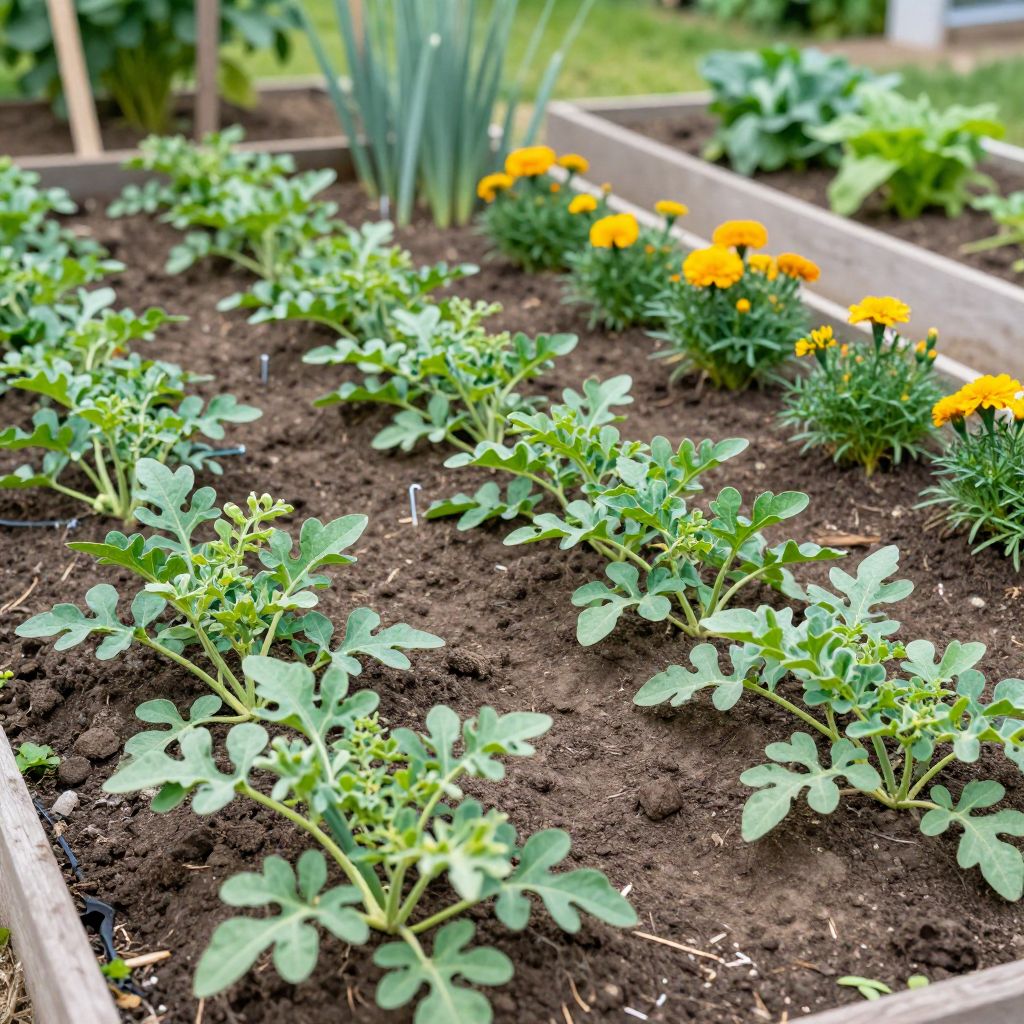
What should you plant with watermelon to help it grow well and make the most of your garden space? The best companions are plants that won’t compete heavily for water, light, or root space, and that can help attract pollinators or shade the soil lightly.
Watermelon is a sprawling, warm-season crop, so companion planting works best when you choose low-growing, compatible plants and give the vines plenty of room. The goal is to support pollination, reduce weeds, and use space efficiently without crowding the melon patch.
What to plant with watermelon?
Good companions for watermelon include bush beans, peas, radishes, nasturtiums, marigolds, dill, and borage, plus other low, quick-growing plants that won’t smother the vines. Avoid aggressive spreaders and tall crops that shade watermelon heavily or compete for moisture and nutrients.
Best companion plants for watermelon
Choose companions that stay relatively compact, mature quickly, or offer a useful garden function. Watermelon needs sun, airflow, and room to crawl, so the best partners are usually small, upright, or short-lived plants placed at the edges of the bed.
1. Bush beans
Bush beans are one of the most practical companions for watermelon. They grow upright, fix nitrogen in the soil, and do not spread aggressively across the bed.
Plant them along the outer edge of the watermelon area so they do not get buried by vines. They can help make efficient use of space early in the season before the melon canopy fills in.
2. Peas
Peas can work well in cooler parts of the season, especially if you plant them before watermelon really takes off. Their short growth cycle makes them useful as a temporary companion in spring.
Once the weather warms, peas usually finish before watermelon needs the full space. That makes them a good early-season interplant in many climates.
3. Radishes
Radishes are fast, shallow-rooted, and easy to tuck between young watermelon plants. They mature quickly, so they are often harvested before vines spread widely.
They are especially helpful if you want to keep soil covered while waiting for watermelon to fill in. Just avoid letting them linger too long and compete with the developing vines.
4. Nasturtiums
Nasturtiums are popular companion flowers because they trail lightly, attract beneficial insects, and may help draw aphids away from more valuable crops. They also add color around the melon patch.
Use them at the border or in nearby open spots, not directly in the center of the planting area. They should complement the watermelon, not tangle with it.
5. Marigolds
Marigolds are a common companion choice for vegetable gardens because they fit neatly around beds and can support pollinator activity. Their compact size makes them easier to place near watermelon than larger flowering plants.
They are best used as edging plants or in nearby rows. Do not expect them to solve pest problems on their own, but they can be a useful part of a mixed planting.
6. Dill and other beneficial-insect herbs
Dill can attract beneficial insects when it flowers, which may help support pollination and natural pest control. Its airy growth habit makes it less competitive than many herbs.
Plant it where it will not shade young watermelon seedlings. If you let it flower, it can also bring in hoverflies and parasitic wasps that help manage garden pests.
7. Borage
Borage is a pollinator-friendly companion with starry flowers that can bring bees into the garden. Since watermelon relies on insect pollination, that can be a real advantage.
It can get fairly large, so give it space and keep it at the edge of the patch. If your garden is small, use just one or two plants rather than a dense planting.
Plants to avoid growing with watermelon
Some plants are poor companions because they compete too strongly, encourage disease, or make it harder to manage the vines. Avoid placing these too close to watermelon:
- Potatoes, which can compete for space and share some disease concerns.
- Other vigorous cucurbits such as squash and cucumbers if space is tight, because they can overcrowd the bed.
- Tall, shading crops that reduce the full sun watermelon needs.
- Heavy root competitors that may rob moisture from the same soil zone.
- Very aggressive groundcovers that can tangle with vines and make maintenance difficult.
If you have a large garden, you can still grow more than one cucurbit family crop nearby, but give each crop enough room and airflow. Crowding is one of the fastest ways to invite mildew and poor fruit set.
How to plant watermelon with companions
Successful companion planting with watermelon depends more on arrangement than on plant lists alone. The melon vines need open ground, so think in terms of borders, edges, and temporary fillers rather than dense interplanting.
Step-by-step planting layout
- Choose a site with full sun and well-drained soil.
- Build or loosen the soil with compost before planting.
- Set watermelon hills, mounds, or rows with enough room for vine spread.
- Plant companions around the edges, not in the center of the vine run.
- Use quick crops like radishes early, then remove them when the vines expand.
- Mulch lightly to reduce weeds and conserve moisture, leaving space around stems.
A simple rule is to let watermelon own the main growing area and let companion plants occupy the margins. That keeps airflow better and makes watering, weeding, and harvesting much easier.
Spacing tips that matter
Watermelon spacing varies by variety and growing method, but the vines generally need generous room. If you are unsure, err on the side of more space rather than less.
Keep companion plants far enough away that you can still see and reach the watermelon crowns. This helps you monitor pests, pollination, and fruit development without stepping on vines.
Soil, water, and sunlight needs
Companion planting works best when the base growing conditions are right. Watermelon is a heat-loving crop that performs best in rich, loose soil with good drainage and consistent moisture.
Soil preparation
Before planting, work in compost to improve soil structure and nutrient availability. Watermelon roots do poorly in compacted or waterlogged soil, so drainage is especially important.
If your soil is heavy clay, consider raised beds or mounded rows. That helps roots stay healthier and reduces the risk of rot after heavy rain.
Watering
Watermelon needs steady moisture, especially while plants are establishing and fruits are sizing up. Irregular watering can cause stress, poor growth, and fruit quality issues.
Water at the base of the plants when possible. Wet foliage can encourage disease, especially in humid climates or crowded plantings.
Sunlight
Watermelon needs full sun, and companion plants should not interfere with that. Avoid tall companions on the south side of the bed if they cast shade during the day.
In cooler climates, maximizing sun exposure is even more important because watermelon needs warmth to grow and ripen well.
How companion plants can help watermelon
Companion plants do not replace good care, but they can support the melon patch in useful ways. The biggest benefits are pollinator support, weed suppression, and better use of garden space.
- Pollinator support: Flowers like borage, marigolds, and nasturtiums can help bring bees to the garden.
- Space efficiency: Fast crops like radishes can be harvested before watermelon needs the room.
- Soil support: Beans and peas can contribute nitrogen, especially in mixed garden systems.
- Weed suppression: Low companions and mulch can help shade out weeds early in the season.
Still, remember that watermelon flowers need active pollinators and healthy plants to set fruit well. If pollination is weak, companion planting alone will not fix it.
Common mistakes to avoid
Many companion planting problems come from crowding or choosing the wrong plant habits. Keep these mistakes in mind when planning your watermelon bed.
- Planting too densely: Crowding reduces airflow and increases disease pressure.
- Using tall companions: Anything that shades watermelon can slow growth and reduce fruiting.
- Letting vines overtake everything: Watermelon will spread aggressively if not guided early.
- Overwatering the whole bed: Saturated soil can stress roots and invite rot.
- Ignoring pollination: Even with good companions, poor bee activity can limit fruit set.
If you are growing in a small space, it is often better to plant fewer companions and keep the watermelon area open. A tidy, breathable layout usually performs better than a crowded one.
Pests and disease considerations
Companion plants can help create a healthier garden environment, but they do not eliminate pest and disease risks. Watermelon is still vulnerable to common cucurbit problems such as aphids, cucumber beetles, powdery mildew, and fungal leaf spots.
To reduce problems, keep the patch clean, remove badly affected leaves, and avoid overhead watering. Good spacing is one of the simplest disease-prevention tools you have.
If you notice pests on nearby flowering companions, inspect the watermelon too. Beneficial insects often visit the same plants that attract pests, so regular checks are important.
Harvesting and end-of-season care
As watermelon vines mature, some companion plants may need to be cut back or removed to keep the patch manageable. Fast crops like radishes are usually harvested long before the melons are ready.
When fruit is nearing harvest, avoid disturbing the vines too much. If a companion plant is competing for space or blocking access, remove it carefully rather than forcing your way through the bed.
At the end of the season, clear out spent vines and plant debris to reduce overwintering pests and disease carryover. Compost only healthy material.
A simple companion planting plan for watermelon
If you want an easy starting point, try this basic layout: watermelon in the main bed, bush beans or peas on one edge, radishes in small gaps early on, and a few marigolds or nasturtiums around the border. Add borage only if you have enough room.
This combination keeps the center of the bed open while still giving you some pollinator support and early-season harvests. It is a practical, beginner-friendly way to answer the question of what to plant with watermelon.
For more help planning a productive vegetable garden, you may also want to read related guides on companion planting basics and timing vegetable planting by season.