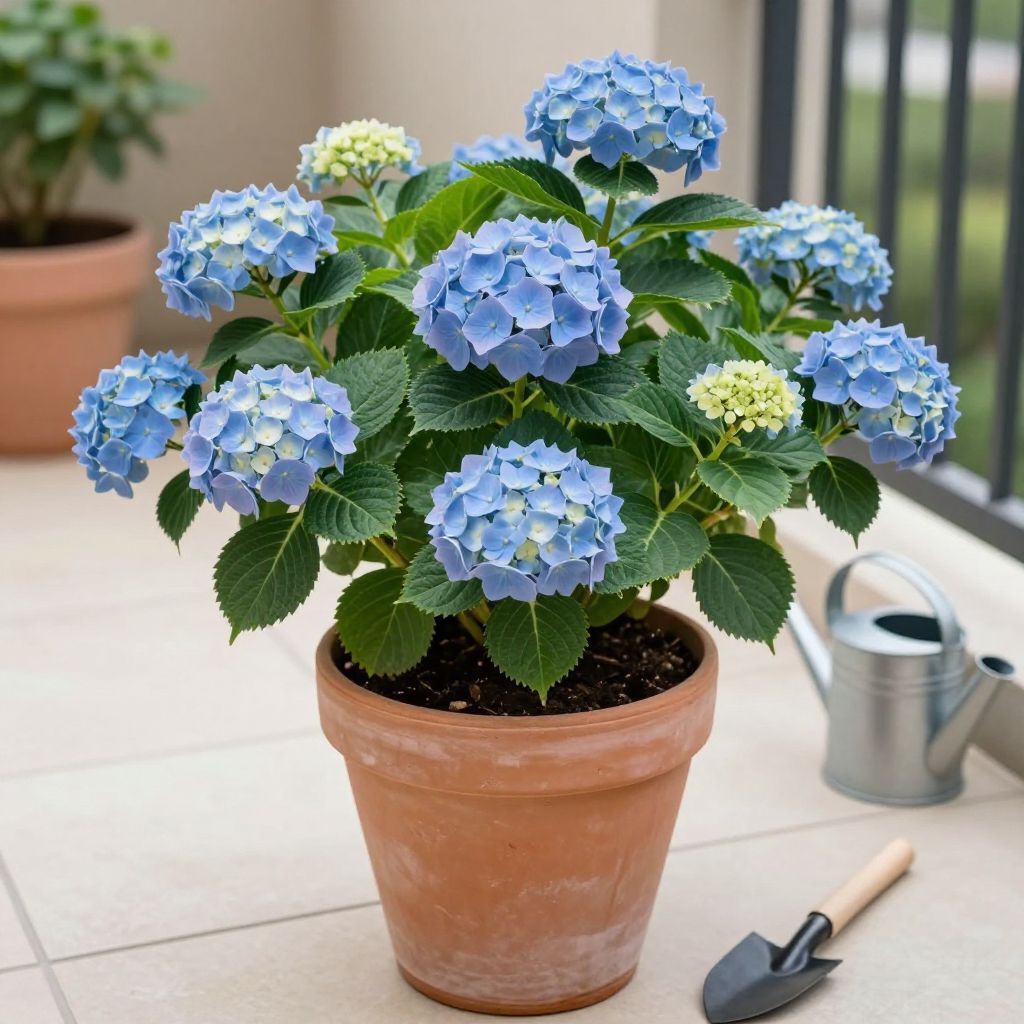
Can you grow hydrangeas in a pot? Yes—many hydrangeas do very well in containers if you give them enough root room, steady moisture, and the right light. The key is choosing a compact variety, using a large pot with excellent drainage, and staying on top of watering and pruning.
Container-grown hydrangeas can be a beautiful patio, balcony, or front-porch feature. They do need a little more care than in-ground plants, but with the right setup you can enjoy big blooms and healthy growth for many seasons.
Can you grow hydrangeas in a pot?
Yes, hydrangeas can be grown successfully in pots, especially compact varieties of Hydrangea macrophylla, smooth hydrangea (H. arborescens), and panicle hydrangea (H. paniculata). The plant must have a roomy container, moisture-retentive but well-drained potting mix, and regular watering because pots dry out faster than garden soil.
Why hydrangeas can work well in containers
Hydrangeas are naturally adaptable shrubs, and many types tolerate container culture better than you might expect. A pot lets you control soil quality, move the plant for better light, and protect it from harsh weather if needed.
That said, container growing changes the plant’s needs. Roots are more exposed to heat, cold, and drying out, so success depends on consistency.
Best reasons to grow hydrangeas in pots
- You can place them where you want a seasonal focal point.
- You can improve drainage and soil quality more easily than in poor garden soil.
- You can move the pot to match sun, shade, or weather conditions.
- You can grow hydrangeas even if you only have a patio, deck, or balcony.
Choosing the right hydrangea for a pot
Not every hydrangea is equally suited to containers. The best choices are usually compact or naturally smaller varieties that won’t quickly outgrow the pot.
Good types for containers
- Bigleaf hydrangea (Hydrangea macrophylla) — popular for large mophead or lacecap flowers.
- Panicle hydrangea (Hydrangea paniculata) — often more sun-tolerant and generally easier to manage in pots.
- Smooth hydrangea (Hydrangea arborescens) — a good choice if you want a sturdy, reliable shrub.
If you are shopping for a plant, look for words like “compact,” “dwarf,” or “patio” on the label. Those are usually better container candidates than large landscape shrubs.
What to avoid
Very vigorous varieties can become root-bound quickly and may need frequent repotting. If you choose a larger shrub, be prepared for a bigger pot and more maintenance.
How to plant hydrangeas in a pot
Planting correctly gives your hydrangea the best chance of settling in and blooming well. A container that is too small or a mix that holds too much water can cause stress fast.
- Choose a large pot with drainage holes. A container at least 18 to 24 inches wide is a practical starting point for many hydrangeas.
- Use a high-quality potting mix, not garden soil. Potting mix stays lighter and drains better in containers.
- Add compost if needed to improve moisture retention, but do not make the mix heavy or muddy.
- Set the plant at the same depth it was growing in its nursery pot.
- Water thoroughly until excess drains from the bottom.
- Finish with mulch on the surface to help slow evaporation.
Important drainage tip
Never let a pot sit in a saucer full of water for long periods. Hydrangeas like moisture, but they do not like soggy roots.
Soil and compost for potted hydrangeas
Hydrangeas in pots need a mix that holds moisture without becoming compacted. A good container blend should feel rich, airy, and slightly springy, not dense and sticky.
A quality potting mix with added compost is usually enough. If your climate is hot and dry, a mix that retains moisture a little better can help. If your area is rainy or humid, prioritize drainage and avoid heavy mixes.
What the soil should do
- Hold enough moisture to keep roots evenly damp.
- Drain freely so roots do not sit in water.
- Stay loose enough for strong root growth.
Some gardeners like to use a slow-release fertilizer formulated for flowering shrubs, but the exact product and timing should match your climate and the plant’s growth stage. Avoid overfeeding, which can create lots of leaves but fewer flowers.
Sunlight and placement
Most hydrangeas in pots do best with morning sun and afternoon shade, especially in warm climates. Too much hot afternoon sun can wilt leaves and dry the pot quickly.
In cooler regions, more sun is often acceptable, and panicle hydrangeas can usually take more light than bigleaf types. If your plant looks scorched or droops every afternoon, move it to a gentler location.
Where to place the pot
- Near a patio or entryway where you can water it easily.
- In a spot protected from strong wind, which can dry out leaves and soil.
- Where it gets enough light for flowering but not harsh all-day sun unless the type tolerates it.
Watering hydrangeas in pots
Watering is the most important part of container hydrangea care. Pots dry out much faster than garden beds, and hydrangeas are quick to wilt when they get too dry.
Check the soil often by feeling the top inch or two. If it feels dry, water deeply until water runs from the drainage holes. In hot weather, this may mean checking daily or even more often, depending on pot size, wind, and sun exposure.
Signs of watering problems
- Too dry: leaves droop, flowers wilt, and the pot feels light.
- Too wet: leaves yellow, growth slows, and the soil stays soggy.
If the plant wilts in the afternoon but recovers by evening, that can be a sign of heat stress rather than permanent drought. Still, do not ignore it—container plants can decline quickly in hot weather.
Pruning potted hydrangeas
Pruning depends on the type of hydrangea you are growing. This matters because some bloom on old wood and others on new wood.
Simple pruning guidance
- Bigleaf hydrangeas often bloom on old wood, so avoid hard pruning unless you know the variety and the plant needs shaping or dead stems removed.
- Panicle hydrangeas are usually more forgiving and can be pruned more confidently at the right time.
- Smooth hydrangeas are also generally easier to prune than bigleaf types.
For most container plants, the safest approach is light pruning: remove dead stems, spent flower heads if desired, and any weak or crossing growth. If you are unsure, prune less rather than more.
Fertilizing container hydrangeas
Potted hydrangeas can benefit from regular but moderate feeding because nutrients leach out of containers faster than from garden soil. The goal is steady growth, not lush, floppy foliage.
Use a balanced fertilizer or one intended for flowering shrubs, following the label directions. If you prefer organic care, compost and a gentle slow-release feed can support growth without pushing too hard.
Common fertilizer mistakes
- Feeding too heavily, which can reduce flowering.
- Fertilizing late in the season when the plant should be slowing down.
- Using lawn fertilizer, which is usually too high in nitrogen for flowering shrubs.
Overwintering hydrangeas in pots
Winter is often the biggest challenge for container hydrangeas. Roots in pots are more exposed to freezing temperatures than roots in the ground.
If you live in a cold climate, move the pot to a sheltered place such as a garage, unheated porch, or protected corner, depending on your conditions. In milder climates, a pot may stay outside with some insulation around the container.
Winter protection ideas
- Group pots together to reduce exposure.
- Wrap the container with burlap, bubble wrap, or another insulating material.
- Place the pot on feet or bricks so it drains well.
- Keep the soil barely moist, not wet.
Do not let the pot freeze solid for long periods if you can avoid it, especially with bigleaf hydrangeas. The top growth may survive, but roots are the most vulnerable part.
Common pests and diseases
Container hydrangeas can still get the same pests and diseases as garden plants. Good airflow, proper watering, and clean pots help reduce problems.
Watch for these issues
- Aphids on soft new growth.
- Spider mites in hot, dry conditions.
- Powdery mildew when air circulation is poor.
- Leaf spots if leaves stay wet too long.
If you see pests, isolate the plant if possible and treat early. Remove badly affected leaves, improve airflow, and avoid overhead watering late in the day. Severe or repeated disease problems often mean the plant needs better light, drainage, or spacing.
Repotting and long-term care
Hydrangeas in pots eventually outgrow their containers. You may notice roots circling inside the pot, water running straight through too quickly, or weaker flowering over time.
When to repot
Repot when roots fill the container or the plant seems cramped. You can move it into a larger pot or refresh the root zone by trimming lightly and replacing some of the old mix with fresh potting soil and compost.
Choose a container that is only moderately larger than the old one. A pot that is far too large can stay wet too long and stress the roots.
Best care tips for healthy blooms
To get the best results from a potted hydrangea, focus on consistency. These shrubs respond well when their basic needs are met without big swings in moisture or temperature.
- Use a large pot with drainage holes.
- Keep the soil evenly moist, not soggy.
- Give morning sun and afternoon shade in hot climates.
- Protect the pot from extreme heat, wind, and winter cold.
- Prune according to the hydrangea type.
- Feed lightly and avoid excess nitrogen.
Common mistakes to avoid
Most potted hydrangea problems come from a few simple errors. Avoiding these can make the difference between a short-lived plant and a thriving container shrub.
- Using a pot that is too small.
- Planting in heavy garden soil instead of potting mix.
- Letting the container dry out completely.
- Leaving the pot in full hot sun all day in warm climates.
- Pruning the wrong type at the wrong time.
- Overwintering without protecting the roots in cold regions.
Conclusion
Yes, you can grow hydrangeas in a pot, and they can be stunning container plants when you give them enough space, moisture, and the right light. Start with a suitable variety, use a roomy pot with drainage, and stay attentive to watering. If you want a low-stress first try, choose a compact hydrangea and set it where you can check it often.
If you’d like to expand your container garden, you may also enjoy reading more about container plant care and how to choose the right potting mix.