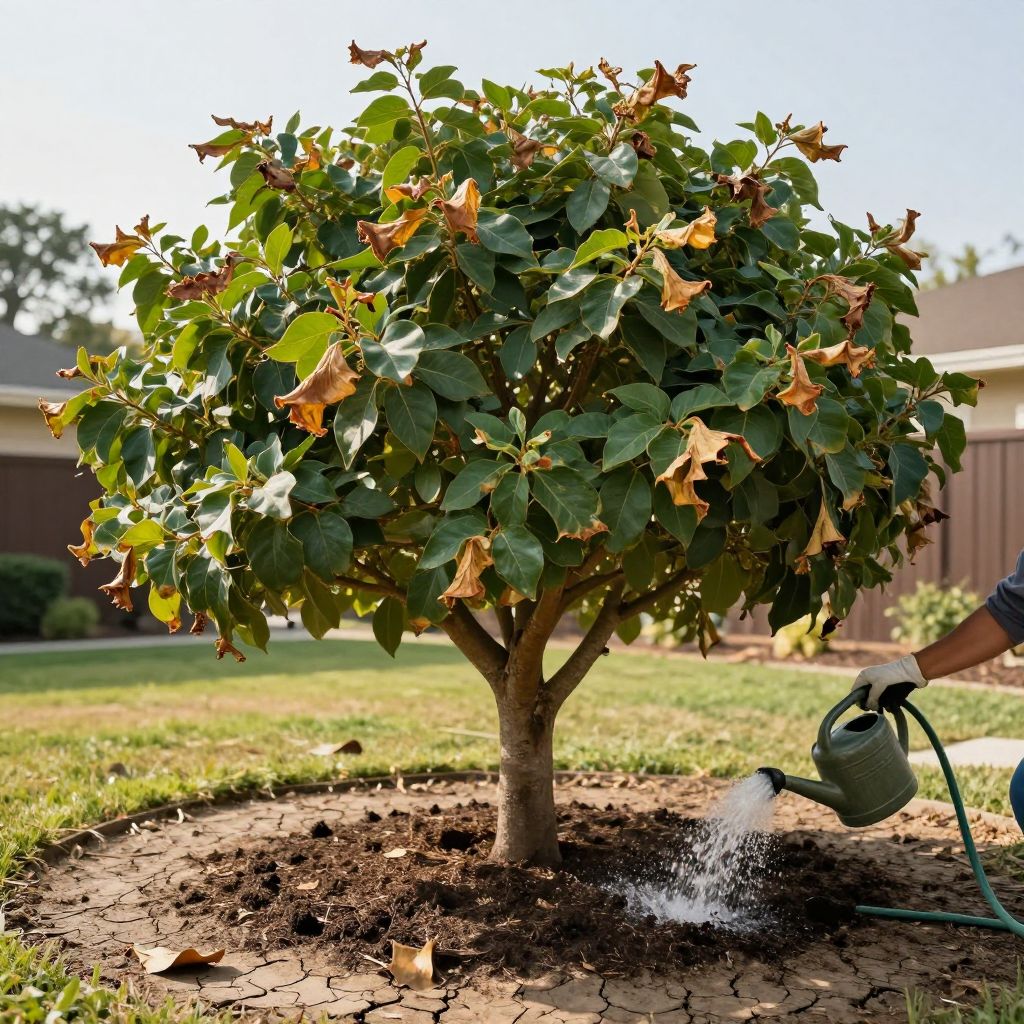
Can trees recover from heat stress? Yes, many can—if the damage is caught early and the tree gets steady, sensible care. Heat stress usually shows up as wilting, scorched leaves, premature leaf drop, or slowed growth, but those symptoms do not always mean the tree is dying.
The key is to reduce stress, protect the roots, and avoid making the problem worse. Recovery depends on the tree species, how long the heat lasted, whether the roots were already dry, and how quickly conditions improve.
Can trees recover from heat stress?
Most trees can recover from moderate heat stress if their roots are still alive and the trunk and major branches are not badly damaged. Recovery is more likely when you restore even soil moisture, reduce further heat exposure, and avoid pruning or fertilizing too soon. Severe, repeated heat stress can cause dieback or long-term decline.
How to tell if a tree is heat stressed
Heat stress often looks like drought stress because the two usually happen together. In hot weather, trees lose water faster than their roots can replace it, especially in compacted or shallow soil.
Common signs to watch for
- Leaves wilting or curling during the hottest part of the day
- Leaf edges turning brown or crispy
- Premature yellowing or leaf drop
- New growth looking small, weak, or scorched
- Thin canopy or sparse foliage
- Cracks or sunscald on thin-barked trunks
Important: A tree that droops in the afternoon but perks up overnight may be stressed, not dead. That is your cue to act quickly, not to panic.
Heat stress vs. permanent damage
Temporary heat stress usually affects leaves first. Permanent damage is more likely if you see dead twigs, bark splitting, major branch dieback, or a tree that stays wilted even after thorough watering and cooler weather.
What helps a heat-stressed tree recover
The best recovery plan is simple: water deeply, keep the root zone cooler, and reduce extra stress. Trees rarely bounce back from heat stress overnight, so think in terms of weeks, not days.
- Water deeply and slowly. Soak the root zone so moisture reaches 6 to 12 inches into the soil, where many feeder roots live.
- Mulch the root area. Apply 2 to 4 inches of organic mulch over the soil, but keep it a few inches away from the trunk.
- Pause pruning unless there is dead, broken, or hazardous wood. Leaves help shade the tree and support recovery.
- Avoid fertilizing during active stress. Fertilizer can push tender growth that is even more vulnerable to heat.
- Protect from reflected heat. South- and west-facing walls, pavement, and rock beds can intensify stress.
Watering the right way
Shallow, frequent watering encourages roots near the surface, where heat is worst. Instead, water less often but more deeply so the tree develops a stronger root system.
For young trees, use a slow trickle from a hose or a soaker hose around the drip line or slightly beyond it. For established trees, water the area under the canopy and a little beyond, since many roots extend outward farther than the branches.
If the soil is already saturated or the site drains poorly, do not keep adding water. Trees can suffer from low oxygen around the roots just as much as from heat.
Mulch for cooling and moisture retention
Mulch is one of the most effective tools for heat-stressed trees. It helps stabilize soil temperature, reduces evaporation, and improves soil structure over time as it breaks down.
- Use shredded bark, wood chips, leaf mold, or similar organic mulch
- Keep mulch 2 to 4 inches deep
- Leave a gap of several inches around the trunk
- Refresh mulch as it decomposes, but do not pile it up
Avoid mulch volcanoes. Piling mulch against the trunk traps moisture, invites pests, and can contribute to bark decay.
Why trees get heat stress in the first place
Heat alone is not always the full problem. Trees are more likely to struggle when heat combines with dry soil, compacted ground, root damage, reflected heat, or poor planting conditions.
Common site problems that make heat worse
- Poor drainage or compacted soil that limits root growth
- Recently planted trees with limited root systems
- Thin soil over concrete, rock, or construction debris
- Full sun exposure in extreme afternoon heat
- Damage from lawn mowers, string trimmers, or digging
- Competition from turfgrass or aggressive nearby roots
If your tree is in a harsh site, recovery may require changing the growing conditions around it, not just watering more.
What not to do when a tree is heat stressed
Well-meaning care can sometimes make things worse. When a tree is already struggling, avoid sudden changes that force it to spend energy on new growth or expose more tissue to heat.
- Do not prune heavily. Removing too much canopy can increase sun exposure on branches and trunk.
- Do not fertilize as a rescue step. Nutrients do not fix heat injury and may stress roots further.
- Do not overwater blindly. Check soil moisture before watering again.
- Do not paint wounds or bark with random products. Most trees recover better with proper care than with coatings.
- Do not ignore irrigation runoff. Water should soak in, not run off hard soil or pavement.
How to help young trees recover faster
Newly planted trees are especially vulnerable because their root systems are still small. They dry out quickly and have less stored energy to recover from stress.
Best care for young trees
- Check soil moisture regularly during hot spells
- Water the root ball and surrounding soil thoroughly
- Keep mulch in place to reduce evaporation
- Stake only if needed, and remove stakes once the tree is stable
- Provide temporary shade if the tree is in a very exposed site
Temporary shade cloth or a strategic barrier can help during extreme heat, especially for newly planted ornamental trees. Make sure any covering allows airflow and does not trap heat against the foliage.
How to tell whether the tree is improving
Recovery is often gradual. You are looking for signs that the tree is maintaining water balance and producing healthy tissue again.
Positive signs
- Leaves stay turgid longer during the day
- New growth appears after stress conditions ease
- Leaf color improves and scorching stops spreading
- Twigs remain flexible and green under the bark
- Canopy density stabilizes instead of thinning further
If the tree continues losing leaves after the weather cools, or if dieback spreads along branches, the problem may be more serious than heat stress alone.
When to call an arborist
Some trees need professional assessment, especially large landscape trees or trees with safety risks. An arborist can check for root failure, trunk injury, pests, and disease that may be worsening the heat damage.
Get help sooner if you notice
- Large dead limbs over structures, walkways, or play areas
- Cracks, splitting, or peeling bark on the trunk
- Rapid branch dieback
- Fungal growth at the base or on roots
- Severe leaning or signs of root instability
Safety matters: A heat-stressed tree with brittle branches can shed limbs unexpectedly, especially after storms or sudden wind.
Preventing heat stress in future seasons
Prevention is easier than recovery. Good planting and maintenance practices make trees much more resilient when hot weather returns.
Long-term prevention tips
- Plant the right tree for your climate and site
- Choose a location with enough root space and good drainage
- Use mulch consistently, but keep it away from the trunk
- Water deeply during dry periods rather than lightly every day
- Protect the root zone from compaction and construction damage
- Reduce reflected heat from paving or walls where possible
Healthy soil is a major part of heat tolerance. Trees growing in loose, biologically active soil with enough organic matter usually handle stress better than trees in compacted or depleted ground.
Special note on different tree types
Not all trees respond the same way. Young trees, shallow-rooted trees, and species adapted to cooler or moister climates often show stress sooner than drought-tolerant trees.
Evergreens may show browning or needle drop, while deciduous trees may scorch, wilt, or shed leaves. Even if the symptoms differ, the basic response is the same: protect roots, reduce stress, and avoid overcorrecting.
Conclusion: give the tree time and steady care
So, can trees recover from heat stress? In many cases, yes. The best chance of recovery comes from deep watering, mulch, reduced heat exposure, and patience while the tree rebuilds its strength.
If you are unsure how severe the damage is, start by checking soil moisture and inspecting the canopy for dieback. For more practical tree care guidance, you may also want to read about watering trees and shrubs correctly and mulching trees and shrubs.