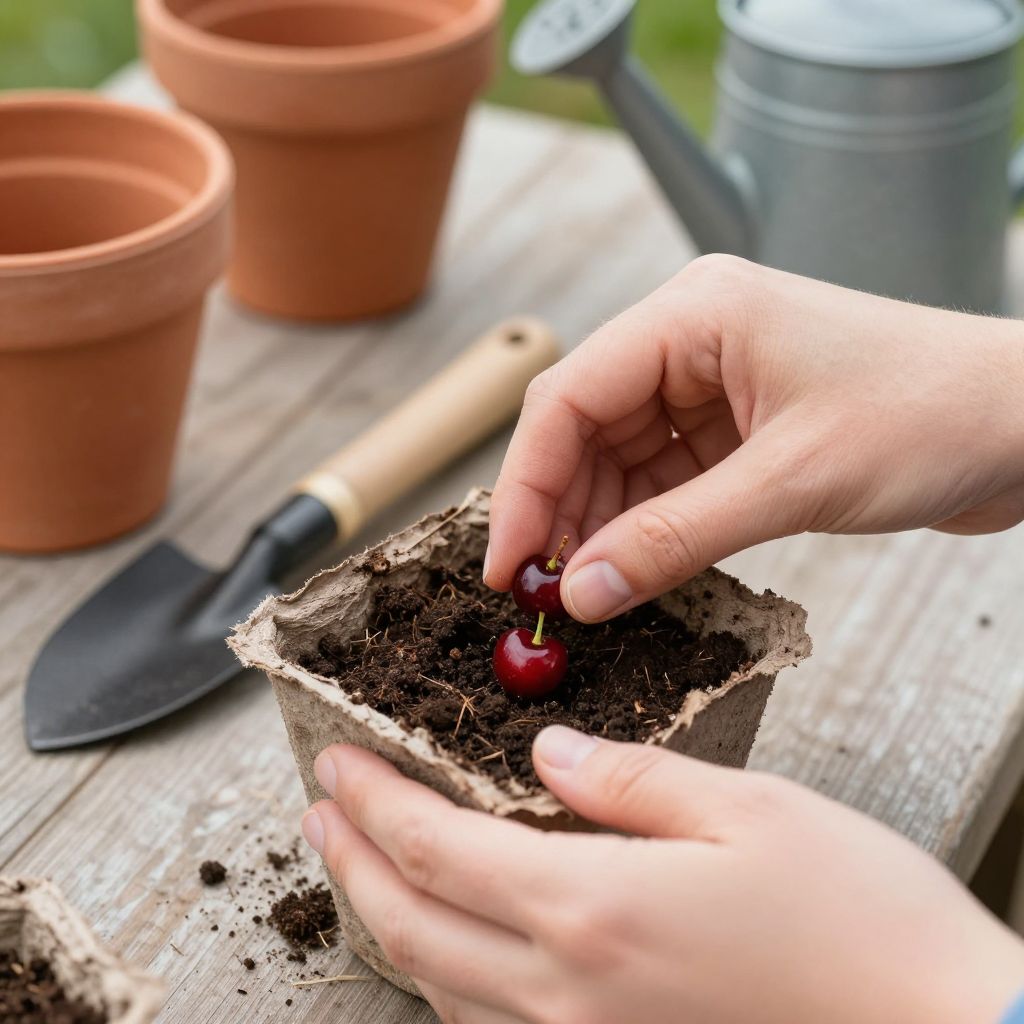
Can you grow a cherry tree from a pit? Yes, you can, but the tree you get may not be the same as the cherry you ate, and it can take several years before it flowers or fruits. Growing from seed is a fun, low-cost project, but it is less predictable than buying a grafted tree.
If you want an edible backyard cherry, the pit is best treated as a learning project rather than a guaranteed harvest plan. With the right preparation, plenty of patience, and good site conditions, you can raise a healthy young cherry tree from seed.
Can You Grow A Cherry Tree From A Pit?
Yes, a cherry pit can sprout into a cherry tree, but the seedling will not reliably produce the same fruit as the parent tree. Most homegrown cherry trees from pit take years to mature, and fruit quality is unpredictable. For dependable harvests, gardeners usually choose grafted trees instead.
How Cherry Pits Grow Into Trees
A cherry pit contains a seed that needs a period of cold, moist conditions before it can germinate. In nature, this happens outdoors over winter. If you want to grow one at home, you usually need to mimic that cold period, then plant the sprouted seed in a pot or prepared bed.
Why the fruit may be different
Many cherries are cross-pollinated, so the seed carries mixed genetics. That means a tree grown from a pit may produce smaller fruit, different flavor, or no useful fruit at all. It may still make an attractive ornamental tree, though.
What to expect for timing
Cherry seedlings are slow compared with many garden plants. Even when germination goes well, it can take several years before a seedling becomes large enough to flower. Fruiting, if it happens, is often much later and not guaranteed.
How To Prepare A Cherry Pit For Planting
The best chance of success comes from starting with a fresh pit, cleaning it well, and giving it a cold stratification period. Avoid using pits from fruit that has been cooked, dried, or heavily processed, since the seed may no longer be viable.
- Remove the pit from a ripe cherry and rinse off all fruit flesh.
- Dry it briefly on a paper towel for a day or two.
- Cold-stratify the pit in a slightly moist medium such as peat-free seed mix, vermiculite, or damp paper towel inside a bag.
- Keep it refrigerated, not frozen, for several weeks to a few months depending on the seed and conditions.
- Check regularly for mold or sprouting roots.
Do not let the pit dry out completely during stratification, but also avoid soggy conditions that encourage rot.
Can you crack the pit first?
Some gardeners carefully crack the hard shell to remove the seed inside, which may speed germination. This is risky, because damaging the seed can ruin it. If you are a beginner, it is usually safer to stratify the intact pit first.
Best Planting Conditions For Cherry Seeds
Cherry seedlings do best in loose, well-drained soil and full sun once they are planted outside. Whether you start them in pots or directly in the ground, drainage matters more than rich soil at the beginning. Waterlogged soil is one of the fastest ways to lose a young cherry.
Soil and drainage
Use a light seed-starting mix or a free-draining potting mix for germination. Once the seedling is established, transplant it into soil that drains well and is not compacted. If your garden soil stays wet after rain, consider planting on a raised bed or mound.
Sunlight
Cherry trees need full sun for strong growth and future flowering. Aim for at least 6 to 8 hours of direct sunlight daily once the tree is outdoors. In lower light, seedlings may become leggy and weak.
Climate considerations
Cherry species vary in cold tolerance, and not every type suits every region. If you are planting outdoors, choose a cherry type that matches your local winter temperatures and summer heat. If you are unsure, ask a local nursery or extension service for guidance before planting out a seedling.
Step-By-Step: Growing A Cherry Tree From A Pit Indoors
Starting indoors gives you more control over moisture and temperature. It also lets you protect the seedling during its earliest, most delicate stage.
- Cold-stratify the pit until you see a root tip or the seed is ready to plant.
- Fill a small pot with moist, well-draining seed-starting mix.
- Plant the pit about 1 inch deep, or just deep enough to cover it well.
- Place the pot in a bright location with moderate warmth.
- Keep the mix evenly moist, not saturated.
- Watch for germination, which may take weeks.
- Pot up carefully once the seedling has several true leaves and roots are filling the pot.
Use a pot with drainage holes. A container that traps water can quickly cause root problems, especially in cool indoor conditions.
Indoor seedling care
Give the young plant bright light, such as a sunny window or grow light, so it does not stretch toward the light source. Rotate the pot every few days if it leans. Water when the top layer of mix begins to dry, but never let the pot sit in a saucer of water.
How To Move A Cherry Seedling Outdoors
Once the seedling is sturdy enough and local weather is suitable, you can gradually move it outside. Hardening off is important, because indoor-grown plants can scorch in direct sun or dry out quickly in wind.
Hardening off
Set the pot outdoors in a sheltered spot for a few hours a day, then slowly increase time outside over 7 to 14 days. Start with morning sun or dappled shade, then move toward full sun.
Transplanting
Choose a site with good drainage and enough room for the tree to mature. Dig a hole wide enough for the root system, but avoid burying the trunk too deeply. Keep the soil level similar to the pot level, then water thoroughly to settle the roots.
Care Tips For A Young Cherry Tree
Young cherry trees need consistent, moderate care more than heavy feeding or frequent pruning. The goal is to build a strong root system and a balanced framework.
- Water deeply when the top few inches of soil dry out, especially during dry spells.
- Mulch lightly around the base to conserve moisture, but keep mulch away from the trunk.
- Protect from animals such as rabbits, deer, and rodents if they are common in your area.
- Stake only if needed; a lightly flexible trunk often grows stronger than one held rigidly.
- Feed sparingly unless a soil test shows a need, because excess nitrogen can push weak, leafy growth.
For the first year or two, focus on steady growth rather than fruit. A strong young tree is more valuable than a fast-growing but stressed one.
Pruning And Training A Seed-Grown Cherry Tree
Pruning helps shape the tree and remove damaged growth, but young cherry trees should not be overpruned. Make clean cuts with sharp, sanitized pruners and avoid heavy pruning in hot weather or when the tree is stressed.
What to remove
- Dead, broken, or diseased branches
- Crossing branches that rub together
- Low shoots that interfere with the main trunk
- Weak, crowded growth in the center of the tree
If you are training the tree for a garden space, aim for an open, balanced structure that lets air and light move through the canopy. Good airflow can help reduce disease pressure later.
Common Problems When Growing Cherries From Seed
Cherry seeds are not difficult to start, but several common issues can stop them before they become trees. Most problems come from moisture, temperature, or expectations about fruiting.
Seed does not sprout
This usually means the pit did not get enough cold stratification, dried out, rotted, or was not viable to begin with. Try a fresh pit and a longer, properly moist cold period if germination fails.
Mold during stratification
Mold often appears when the seed is too wet or stored in stale conditions. Use barely moist medium, check the seed periodically, and replace the medium if needed.
Seedling becomes tall and weak
That usually points to insufficient light. Move the plant to a brighter window or use supplemental lighting so it grows sturdier stems and fuller leaves.
Leaves yellow or growth stalls
Poor drainage, overwatering, or compacted soil are common causes. Let the top layer dry slightly between waterings and make sure the container or planting site drains well.
Pests And Diseases To Watch For
Young cherry trees can be affected by the same pests and diseases as older trees, though seedlings are especially vulnerable if they are already stressed. Healthy growing conditions are the best prevention.
- Aphids can cluster on tender new growth and distort leaves.
- Spider mites may appear in hot, dry conditions.
- Fungal leaf spots can develop if foliage stays wet for long periods.
- Root rot is a risk in heavy or poorly drained soil.
Check the undersides of leaves regularly and remove badly affected growth if needed. Avoid overhead watering late in the day, since wet leaves can encourage disease.
Should You Grow From A Pit Or Buy A Grafted Tree?
If your goal is dependable fruit, a grafted cherry tree is usually the better choice. Grafted trees are selected for known fruit quality, size, and pollination needs. A pit-grown tree is better if you enjoy experimenting, want a low-cost project, or are happy with an ornamental tree that may or may not fruit well.
- Choose a pit if you want the experience of growing from seed and do not mind uncertainty.
- Choose a grafted tree if you want faster, more predictable harvests.
Conclusion
So, can you grow a cherry tree from a pit? Yes, and it can be a rewarding project if you are patient and realistic. Start with a fresh pit, give it the cold period it needs, and grow the seedling in well-drained soil with plenty of sun. If you want a reliable crop, consider a grafted tree for your main planting and keep the seed-grown tree as a bonus experiment.
For more practical fruit-tree guidance, you may also find it helpful to read about fruit tree pruning basics and how to choose a grafted fruit tree.