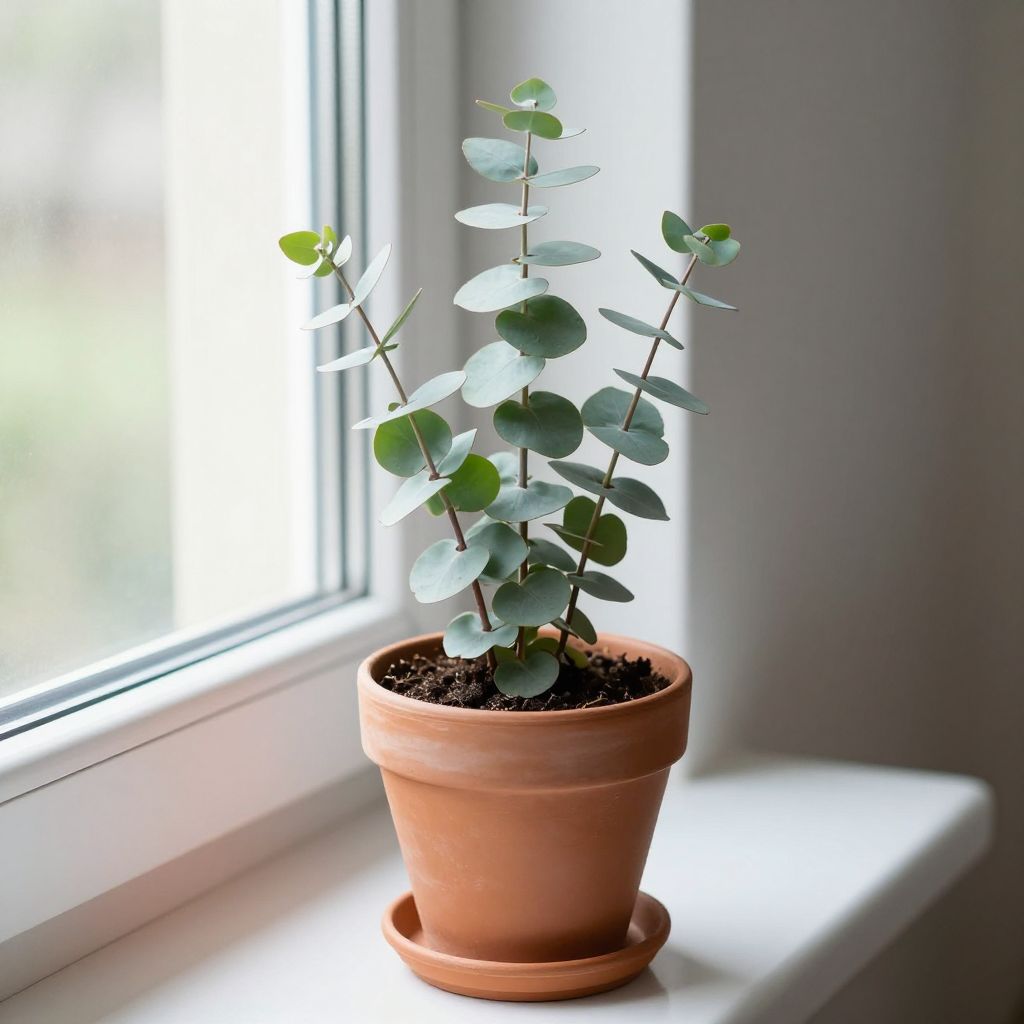
Can you grow eucalyptus indoors? Yes, but only if you can give it very bright light, excellent drainage, and regular pruning to keep it from outgrowing your space. Eucalyptus can be a rewarding indoor plant for a sunny room, conservatory, or bright greenhouse, but it is not a low-light houseplant.
If you want healthy growth indoors, think of eucalyptus as a fast-growing tree or shrub that is being temporarily managed in a pot. The goal is to mimic its native conditions as closely as possible while controlling size and preventing common houseplant problems.
Can you grow eucalyptus indoors?
Yes, you can grow eucalyptus indoors, but success depends on light, airflow, and restraint. Most eucalyptus species want full sun, dry-ish roots, and lots of space, so they do best indoors only in very bright windows, sunrooms, or under grow lights. Without enough light, they become leggy and weak.
What eucalyptus needs indoors
Light is the deciding factor
Eucalyptus needs the brightest spot you have. A south-facing window is usually best, with east or west exposure as a second choice if the plant gets several hours of direct sun.
If natural light is limited, use a strong grow light placed close enough to prevent stretching. The plant should not need to lean toward the window to find light.
Warmth, airflow, and humidity
Average indoor temperatures are usually fine, but eucalyptus dislikes stuffy air. Good airflow helps reduce pest issues and fungal problems.
Normal household humidity is usually acceptable, and you do not need to mist constantly. In fact, overly damp foliage can encourage disease if the room is already humid and still.
Container and soil requirements
Use a pot with drainage holes and a free-draining potting mix. Eucalyptus roots do poorly in soggy soil, so avoid heavy garden soil or dense mixes that stay wet too long.
A quality houseplant mix amended with perlite, pumice, or coarse bark works well. The mix should hold some moisture but drain quickly after watering.
Choosing the right eucalyptus for indoor growing
Not every eucalyptus is equally suitable for indoor culture. Many species become large trees very quickly, which makes them difficult to maintain in a home.
Look for a compact or slower-growing type if possible, and expect to prune regularly. Even then, indoor eucalyptus is best treated as a living architectural plant that needs management, not a set-and-forget houseplant.
What to expect from growth
Indoor eucalyptus may grow more slowly than outdoor plants, but it can still outgrow a room if conditions are ideal. If you want a manageable plant, plan to repot carefully and prune often enough to keep the canopy compact.
Important: if the plant starts reaching for light, producing long gaps between leaves, or dropping lower foliage, it is telling you the indoor conditions are not bright enough.
How to plant eucalyptus in a pot
- Choose a pot only slightly larger than the root ball.
- Fill it with a fast-draining potting mix.
- Set the plant at the same depth it was growing before.
- Water thoroughly, then let excess water drain away completely.
- Place it in the brightest possible location right away.
Do not bury the stem too deeply. Good drainage matters more than a large container, because oversized pots can stay wet too long and increase the risk of root rot.
Watering eucalyptus indoors
Water when the top layer of mix has dried and the pot feels lighter, but do not let the plant wilt repeatedly. Eucalyptus prefers a cycle of thorough watering followed by partial drying, not constant moisture.
How often that happens depends on pot size, light, temperature, season, and how actively the plant is growing. A plant in strong sun will usually need water more often than one in a cool room, but the soil should still drain freely every time.
Signs you are overwatering
- Yellowing leaves that drop while the soil stays wet
- Soft or darkened stems near the base
- Musty-smelling potting mix
- Slow growth despite warm conditions
Signs you are underwatering
- Leaves curling or becoming dry and brittle
- Rapid leaf drop after the soil dries out too much
- Wilting that improves after watering
When in doubt, check the root zone instead of guessing. Insert a finger into the mix or lift the pot to judge moisture before watering again.
Feeding eucalyptus in a container
Container-grown eucalyptus uses nutrients faster than plants in the ground, but it still does not need heavy feeding. Too much fertilizer can push weak, leafy growth that is more prone to pests and stretching.
A balanced, diluted fertilizer used during active growth is usually enough, but follow the product label and adjust for your plant’s vigor. If the plant is already growing strongly and the leaves look healthy, avoid overfeeding.
Tip: If the plant is in low light, fertilizing more will not fix the real problem. Increase light first.
Pruning and controlling size indoors
Pruning is essential if you want eucalyptus indoors for more than a short time. Without it, the plant can become too tall, too sparse, or awkwardly top-heavy.
How to prune
- Use clean, sharp pruners.
- Remove weak, damaged, or crossing stems first.
- Cut back long shoots to encourage bushier growth.
- Trim gradually rather than removing too much at once.
Prune during active growth when the plant can recover more quickly. Avoid hard pruning on a stressed plant that is already struggling with low light, poor drainage, or pests.
Why pruning matters indoors
Pruning helps keep the plant compact, improves airflow, and reduces the risk of the stems becoming spindly. It also makes the plant easier to move, repot, and maintain indoors.
Repotting and root care
Eucalyptus generally prefers being potted on before it becomes badly rootbound, but it does not like being moved into an excessively large container. Choose the next pot size up only when roots are filling the current one.
If roots circle tightly around the pot, gently loosen them only as much as needed. Be careful not to damage the root ball too aggressively, especially if the plant has been under indoor stress already.
Repot when the plant is actively growing, if possible. After repotting, keep conditions steady and avoid overwatering while roots re-establish.
Common pests and diseases indoors
Pests to watch for
Indoor eucalyptus can attract spider mites, aphids, and scale, especially when air is dry or the plant is weakened by poor light. Inspect the undersides of leaves and stem joints regularly.
- Spider mites: fine webbing, stippled leaves, and dull color
- Aphids: clusters of soft-bodied insects on new growth
- Scale: small, immobile bumps on stems or leaves
Start with physical removal, a strong rinse, or a suitable insecticidal soap if needed. Improve light and airflow so the plant is less inviting to pests.
Diseases and stress problems
The most common indoor disease issue is root rot from excess moisture. Leaf spot and mildew can also appear if the plant is kept too wet or in stagnant air.
Prevent problems by using a drainage-friendly mix, watering carefully, and never letting the pot sit in standing water.
Propagation: can you start eucalyptus indoors from seed or cuttings?
Yes, but propagation indoors can be tricky. Seed is often the more realistic option for home gardeners, while cuttings may be less reliable depending on the species and the plant’s age.
From seed
Sow seed in a clean, well-drained seed-starting mix and keep it lightly moist, not wet. Bright light is important once seedlings emerge, because they stretch quickly in low light.
From cuttings
Cuttings can work best from healthy, non-flowering growth, but results vary. Use sterile tools, remove lower leaves, and place the cutting in a humid but airy environment with bright indirect light.
For most home gardeners, buying a young plant is easier than starting one from scratch indoors.
Indoor versus outdoor eucalyptus care
Outdoor eucalyptus usually grows faster and stronger because it gets more light, more airflow, and more root space. Indoors, the same plant must be managed far more carefully to avoid weak growth and pest issues.
If your climate allows, many gardeners keep eucalyptus in a container outdoors during warm months and move it inside only when temperatures drop. This can give the plant the light it needs while still protecting it from cold.
Seasonal adjustments
In brighter, warmer months, the plant may need more water and more frequent pruning. In lower-light seasons, growth slows, so watering should be reduced and the plant should be monitored closely for stretching.
Best practices for long-term success
- Give it the brightest light available.
- Use a pot with excellent drainage.
- Water only when the mix begins to dry.
- Prune regularly to control size.
- Inspect for pests often.
- Repot before it becomes severely rootbound.
These basics matter more than any special treatment. If one of them is missing, the plant will usually show stress fairly quickly.
Common mistakes to avoid
- Growing eucalyptus in a dim room
- Using a pot without drainage holes
- Keeping the soil constantly wet
- Letting the plant become too large to manage
- Expecting it to behave like a typical low-light houseplant
If you avoid these mistakes, your chances of keeping eucalyptus healthy indoors improve a lot. Most failures come from too little light and too much water.
Conclusion
So, can you grow eucalyptus indoors? Yes, if you can provide very bright light, sharp drainage, and regular pruning to keep it compact. Treat it like a fast-growing woody plant rather than a casual houseplant, and it can do well in the right indoor space.
If you are planning your next step, start by checking your brightest window, choosing a pot with drainage holes, and setting up a free-draining mix before you bring the plant home. For more container-growing guidance, you may also want to read about choosing the right potting mix for houseplants and how to prune woody plants in containers.