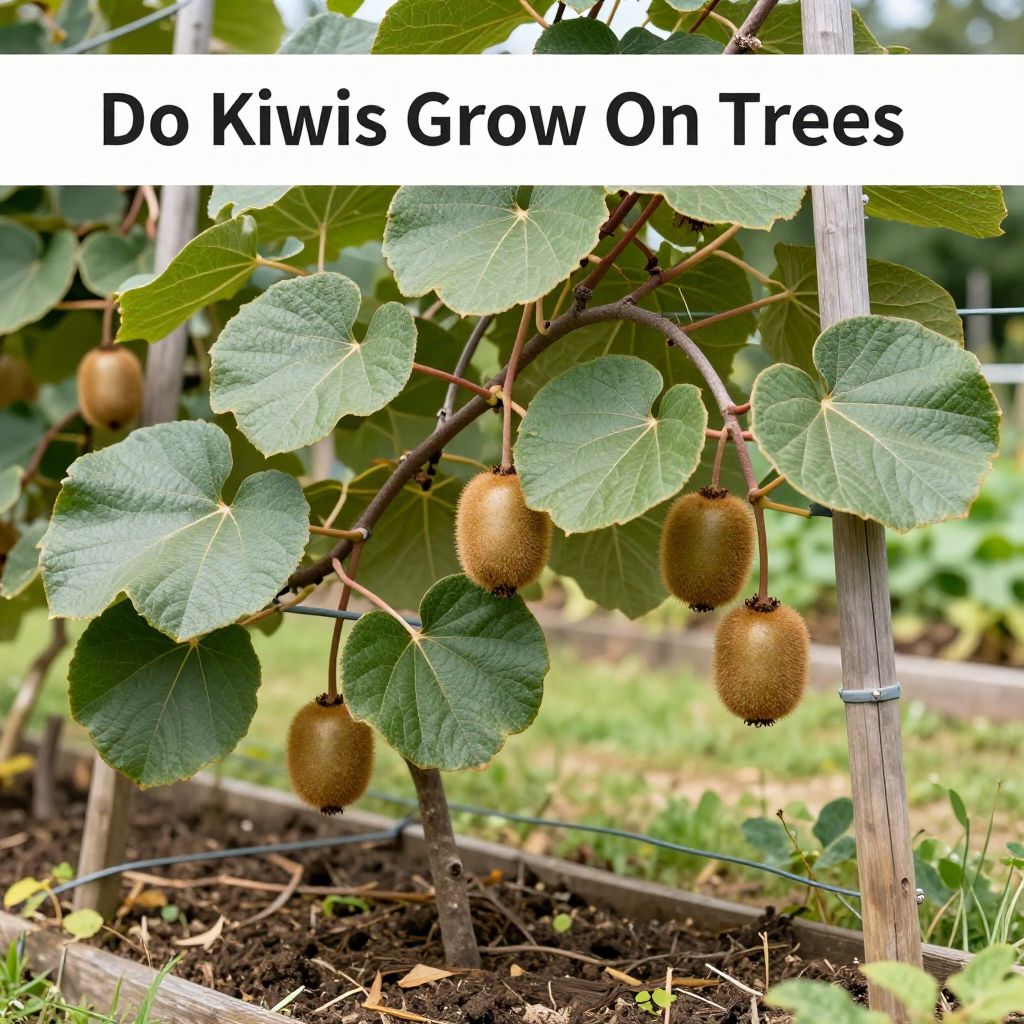
Do kiwis grow on trees? Not exactly. Kiwifruit grow on vigorous woody vines, not true trees, and they need strong support to climb and spread. If you want fruit, the plant’s structure, pruning, and pollination matter as much as soil and sunlight.
With the right conditions, kiwifruit can be a rewarding home crop. The key is matching the plant to your climate, giving it room to grow, and training it properly from the start.
Do Kiwis Grow On Trees?
Kiwifruit do not grow on trees. They grow on climbing vines in the genus Actinidia, which can become large, woody, and long-lived. In home gardens, they are usually trained over a trellis, arbor, pergola, or fence. The fruit hangs from these vines, so support and pruning are essential for healthy growth and harvests.
What a Kiwi Plant Needs to Grow Well
Kiwifruit are vigorous plants that perform best in a site with full sun, fertile soil, and excellent drainage. They prefer a spot protected from strong winds, since young shoots and heavy vine growth can be damaged easily. In many gardens, the biggest challenge is not keeping them alive, but managing their size and ensuring they fruit well.
Sunlight and temperature
Choose a location with at least 6 to 8 hours of direct sun daily if possible. More sun usually means better flowering and sweeter fruit, but in very hot climates some afternoon protection can reduce leaf scorch.
Kiwifruit are sensitive to late frosts, especially when buds and young shoots have emerged. If your area has unpredictable spring weather, a sheltered site can make a big difference.
Soil and drainage
Kiwifruit like rich, moisture-retentive soil that still drains well. Heavy clay that stays wet can cause root problems, while very sandy soil may dry out too quickly unless improved with organic matter.
- Work in compost or well-rotted organic matter before planting.
- Aim for soil that holds moisture but does not stay soggy.
- Avoid low spots where water collects after rain.
How to Plant Kiwifruit Vines
Planting correctly gives the vine a strong start and reduces future problems. Because kiwifruit are long-term plants, it is worth preparing the site carefully before you set them in the ground.
- Pick a permanent support first. Install a trellis, arbor, or wire system before planting so roots are not disturbed later.
- Improve the planting area. Mix compost into the topsoil and loosen compacted ground.
- Set the vine at the same depth it was growing in the pot. Do not bury the stem too deeply.
- Water thoroughly after planting. This settles soil around the roots.
- Mulch around the base. Keep mulch a few inches away from the stem to prevent rot.
If you are planting more than one vine, check whether the variety needs a separate male plant for pollination. Many kiwifruit are dioecious, meaning male and female flowers are on different plants. Without a compatible male nearby, female vines may bloom but set little or no fruit.
Pollination basics
For traditional kiwifruit, one male plant can pollinate several female plants if they bloom at the same time and are planted close enough for bees to move pollen between them. Some newer cultivars are self-fertile, but even then, fruit set can improve with good pollinator activity.
Training Kiwis on a Trellis or Arbor
Because kiwifruit are vines, support is not optional. A weak fence or lightweight stake will not hold a mature plant for long. Strong horizontal wires, a sturdy pergola, or a well-built arbor are better choices.
Simple support systems
- T-wire or post-and-wire trellis: useful for training vines in a productive row.
- Arbor or pergola: attractive for patios and walkways, but it must be strong enough for heavy growth.
- Fence training: possible if the fence is sturdy and receives enough sun.
Train one main trunk upward, then select lateral arms to spread along the support. This framework helps keep the vine manageable and improves light penetration, which supports flowering and fruiting.
Watering, Feeding, and Mulching
Kiwifruit need consistent moisture, especially while establishing and during active growth. They do not like drought stress, but they also dislike waterlogged roots. The best approach is to water deeply when the top layer of soil begins to dry, then let the soil drain well before watering again.
How to water wisely
- Water newly planted vines more often until roots spread.
- Water deeply rather than giving frequent light sprinklings.
- Adjust for rainfall, soil type, and heat.
- Use mulch to help the soil stay evenly moist.
A 2- to 4-inch layer of organic mulch, such as shredded bark, leaf mold, or composted wood chips, can reduce moisture loss and suppress weeds. Keep mulch away from direct contact with the trunk to reduce rot and pest issues.
Feeding the vine
Rich soil is helpful, but too much nitrogen can push excessive leafy growth at the expense of flowers and fruit. Compost is often enough for established vines in fertile soil. If growth is weak, a soil test can help you decide whether your garden needs extra nutrients.
Pruning Kiwifruit for Better Growth and Fruit
Pruning is one of the most important parts of kiwi care. These vines grow vigorously, and without regular pruning they can become tangled, shaded, and less productive. Pruning also helps keep the plant within the space you have.
Why pruning matters
- Encourages fruiting wood and better light exposure
- Prevents the vine from becoming overcrowded
- Makes harvesting easier
- Helps maintain a strong framework
In general, kiwifruit are pruned during dormant periods and again in summer if growth becomes too dense. Exact timing depends on your climate and the type of kiwi you grow, so avoid pruning too late in a season with hard frosts or extreme heat.
What to remove
- Dead, damaged, or diseased wood
- Weak shoots that crowd the main framework
- Long, tangled growth that blocks light
- Old fruiting canes that no longer produce well
Use clean, sharp pruners or loppers. For larger vines, a pruning saw may be needed. Disinfect tools if you are cutting diseased wood, and remove prunings from the garden to reduce pest and disease carryover.
Common Problems When Growing Kiwis
Most kiwi problems come from poor site choice, weak support, overgrowth, or pollination issues. If the vine looks healthy but does not fruit, the cause is often one of these simple but important factors.
No fruit
If your vine flowers but does not set fruit, check the pollination setup first. You may have only a female vine without a male nearby, or the flowering times may not overlap well. Low bee activity can also reduce fruit set.
Excessive leafy growth
Too much nitrogen, too much shade, or too little pruning can lead to a vine that looks lush but produces little fruit. Reduce high-nitrogen feeding and open the canopy so sunlight reaches the fruiting wood.
Yellowing leaves or weak growth
Poor drainage, compacted soil, or root stress can cause leaves to yellow. Check whether the soil stays wet for long periods after rain. If so, improve drainage before the problem worsens.
Pests and diseases
Kiwifruit can be bothered by common garden pests such as aphids, scale, and spider mites, depending on your region. Birds may peck fruit as it ripens, and fungal problems are more likely in humid, crowded canopies.
- Encourage airflow with pruning.
- Inspect leaves regularly, especially undersides.
- Remove heavily infested shoots when practical.
- Use netting if birds are taking ripening fruit.
Growing Kiwis in Containers or Small Spaces
Kiwifruit are not ideal for tiny pots, but they can be grown in large containers for a while if you have a strong support and are willing to manage growth carefully. Container plants dry out faster and usually need more attentive watering than in-ground vines.
Choose a very large container with drainage holes and use a quality potting mix that drains well. Even then, container-grown kiwis may need more frequent pruning and repotting as roots fill the space. For long-term success, in-ground planting is usually better.
Harvesting Kiwifruit
Kiwifruit are typically harvested when they have reached mature size but are still firm. They often finish ripening after picking, so do not wait until they are fully soft on the vine unless your climate and variety are known to allow that safely.
Signs they are ready
- Fruit reaches full size for the variety
- Seeds inside are dark rather than pale
- Fruit detaches more easily
- Flavor improves after indoor ripening
Because ripening behavior varies by type and climate, it is best to learn the habits of your specific vine. Handle fruit gently, since bruising can shorten storage life.
Propagation and Long-Term Care
If you want more vines, kiwifruit can be propagated from cuttings or layering, though success depends on the type and your skill level. For many home gardeners, buying a healthy young plant is the simplest route.
Long-term care is mostly about keeping the vine balanced: enough growth to renew fruiting wood, but not so much that the plant becomes a thicket. Regular pruning, sturdy support, and good pollination are the foundation of success.
Quick Checklist for Growing Kiwis
- Plant in full sun with sheltered conditions.
- Use rich, well-drained soil with added compost.
- Install a strong trellis, arbor, or wire support.
- Water consistently, especially while establishing.
- Prune regularly to control size and improve fruiting.
- Check whether you need both male and female plants.
- Watch for pests, poor drainage, and overcrowding.
If you are planning a kiwi vine, start by choosing the right support and confirming whether your plant needs a pollinator. Then focus on sun, drainage, and pruning, and your vine will have a much better chance of producing healthy fruit for years to come.