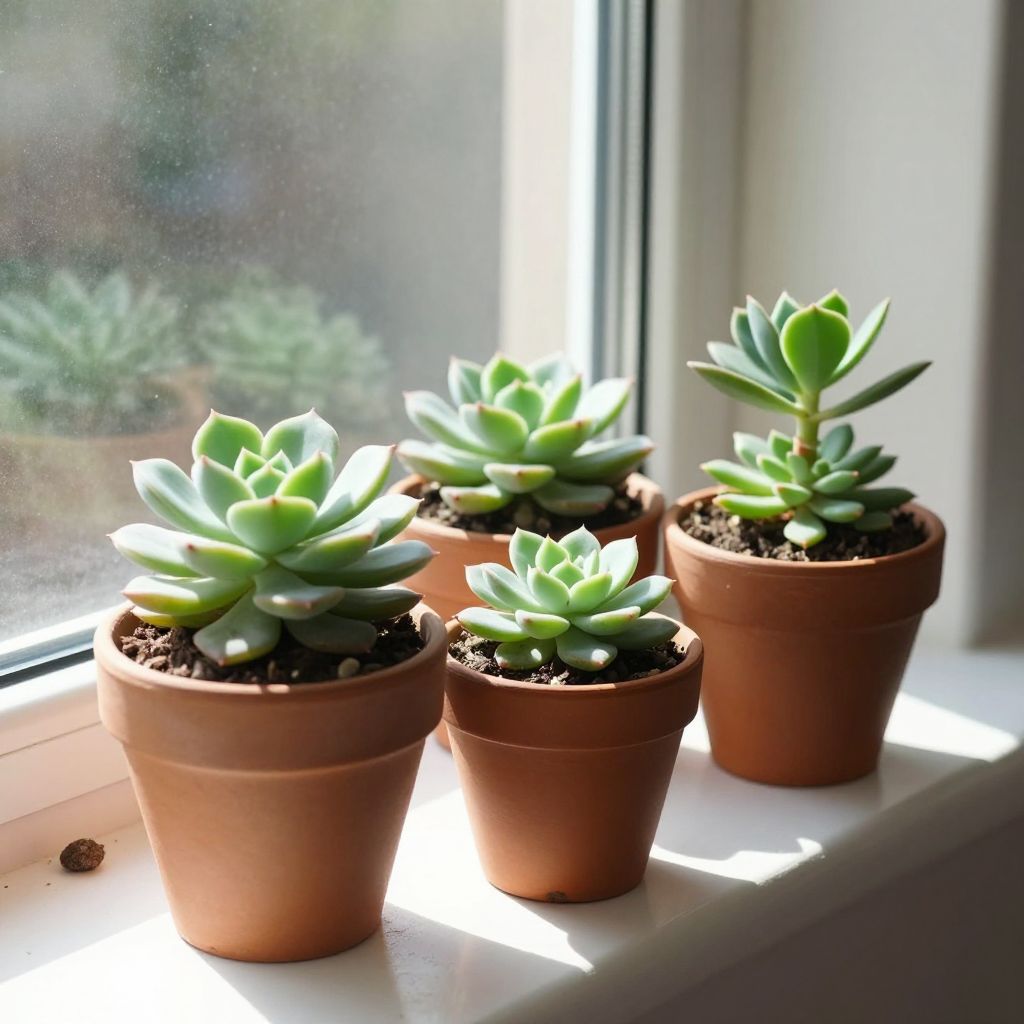
Do succulents need a lot of light? In most cases, yes, but not harsh all-day sun. Most succulents grow best with bright light, several hours of direct sun, or very strong indirect light, depending on the species and whether they’re indoors or outdoors.
If your succulent is stretching, fading, or leaning toward a window, it probably needs more light. If it’s getting scorched, it may need gentler exposure or a gradual move into brighter conditions.
Do succulents need a lot of light?
Yes, most succulents need bright light to stay compact, colorful, and healthy. Many indoor succulents do well with a south- or west-facing window and several hours of sun, while some outdoor types prefer morning sun and afternoon shade. The exact amount depends on the species, your climate, and how quickly you acclimate the plant.
How much light succulents really need
“Succulent” is a broad group, so light needs vary. Some types, such as Echeveria, Sedum, and many Sempervivum, usually want stronger light than shade-tolerant succulents like snake plant (Dracaena trifasciata) or haworthia (Haworthiopsis spp.).
As a practical rule, most succulents need:
- Bright light every day to maintain compact growth
- Several hours of direct sun for sun-loving species
- Protection from intense afternoon sun in very hot climates
- More light in winter if they’re grown indoors
If you are growing succulents indoors, a bright window is usually better than a room with only ambient light. Outdoors, sun exposure must be matched to temperature, humidity, and the plant’s prior exposure.
Best light conditions for indoor succulents
Window direction matters
For most homes in the Northern Hemisphere, a south-facing window offers the strongest light. West-facing windows can also work well, though afternoon sun may be hotter. East-facing windows give gentler morning sun, which is helpful for more tender succulents.
North-facing windows are often too dim for many succulents unless the plant is very close to the glass and the room is exceptionally bright. In lower-light homes, a grow light can make a big difference.
Signs your indoor succulent has enough light
- Leaves stay tight and evenly spaced
- Growth is slow but steady, not stretched
- Color stays rich for the variety
- The plant grows upright instead of leaning
Signs it needs more light
- Long gaps between leaves, called etiolation
- Stem leaning toward the window
- Pale or washed-out color
- Leaves dropping as the plant weakens
When a succulent is etiolated, it will not “tighten up” again. New growth may improve with better light, but the stretched stem usually stays stretched. You can prune and re-root the top if the plant has become leggy.
How much direct sun outdoor succulents need
Outdoor succulents generally need more light than indoor ones because the light outdoors is much stronger. Many sun-loving succulents do best with morning sun and bright afternoon light, while some need protection during peak summer heat.
In hot, dry, or high-altitude areas, even sun-loving succulents can scorch if they move too quickly from shade to full sun. In cooler coastal or temperate climates, they may tolerate more direct exposure.
Morning sun vs. afternoon sun
Morning sun is usually gentler and safer for many succulents. Afternoon sun is stronger and can be beneficial for light-hungry species, but it also raises the risk of leaf scorch, especially during heat waves or if the plant is newly planted.
If you’re unsure, start with morning sun and bright filtered light later in the day. Then increase exposure gradually if the plant shows good color and no damage.
How to tell if your succulent is getting too much light
Too much light can be just as harmful as too little. Sunburn on succulents often shows up as bleached, tan, brown, or crispy patches on leaves, usually on the side facing the sun.
Common signs of excess light include:
- White or pale patches that later turn brown
- Wrinkled, dry-looking leaf tissue
- Leaf edges that crisp in hot sun
- Sudden damage after moving the plant outdoors
If you see scorch, move the plant to brighter shade or filtered light right away. Damaged tissue will not recover, but the plant can often recover if the stem and roots are still healthy.
How to move succulents into brighter light safely
One of the biggest mistakes gardeners make is moving a succulent from a dim room or store shelf straight into full sun. Even sun-loving plants need time to adjust to stronger light.
- Start with a few hours of gentle morning sun or bright shade.
- Increase exposure every few days or each week, depending on the weather.
- Watch for bleaching or crisping on the outer leaves.
- Pause or reduce exposure if symptoms appear.
- Keep newly moved plants slightly drier while they adjust, but do not let them shrivel.
This gradual transition is especially important in spring, after winter indoors, or after buying a new plant from a greenhouse or store.
Grow lights for succulents: when they help
Grow lights are useful when natural light is limited, especially in apartments, offices, or rooms with small windows. They are also helpful in winter when daylight is shorter and weaker.
Look for a bright full-spectrum LED grow light and place it close enough to be effective, usually within a reasonable distance recommended by the manufacturer. If the light is too far away, the plant may still stretch.
When to consider a grow light
- Your succulent is stretching despite being near a window
- Winter days are short and cloudy
- You only have north-facing windows
- You want to grow light-hungry succulents indoors year-round
Rotate the pot every week or two so growth stays even. If a plant leans toward one side, that’s a sign the light source is still not balanced enough.
Light, soil, and watering work together
Light does not act alone. Succulents in brighter light usually use water faster, while those in lower light dry more slowly and are more prone to rot if watered too often.
For healthy growth, use a fast-draining mix made for cacti and succulents, or amend regular potting mix with coarse mineral material such as pumice or perlite. A pot with drainage holes is strongly recommended.
Why poor drainage becomes a bigger problem in low light
When a succulent gets less light, it grows more slowly and the soil stays wet longer. That combination increases the risk of root rot. If your plant is in dim light, be even more cautious with watering.
Before watering, check that the top few inches of mix are dry for larger pots, or that the pot feels noticeably lighter. Do not water on a fixed calendar if the plant’s light level, temperature, and pot size vary through the season.
Practical care tips based on light level
If your succulent gets bright light
- Water only when the soil has dried appropriately
- Watch for faster drying in warm weather
- Use a gritty, well-drained potting mix
- Check for sunburn during heat waves
If your succulent gets medium light
- Choose more tolerant species such as haworthia or gasteria types
- Expect slower growth
- Water less often than you would in brighter light
- Move the plant closer to a window if it starts stretching
If your succulent gets low light
- Expect weaker, slower growth
- Reduce watering significantly
- Use a grow light if possible
- Avoid fertilizing heavily, since weak growth can worsen
Common mistakes to avoid
- Assuming all succulents want full sun when some prefer bright shade
- Moving plants from indoors to intense sun too quickly
- Keeping succulents in dim corners and watering them like houseplants
- Ignoring seasonal changes in sun strength
- Using deep containers without drainage
Another common mistake is mistaking stretch for “healthy growth.” A succulent that is reaching for light is not thriving, even if it is still green. Compact growth is usually a better sign of good conditions.
What to do if your succulent is already stretched
If the plant has grown leggy from low light, improve the light first. Then decide whether to keep the stretched stem or prune and propagate the top.
- Move the plant to brighter light gradually.
- Wait for new growth to show improvement.
- If the stem is very tall and bare, cut the top rosette or crown.
- Let the cut end dry and callus before replanting.
- Root the top in dry, well-draining mix, then water lightly after roots form.
This is a useful way to reset an overgrown succulent, but it works best when the new location has enough light to prevent the problem from returning.
Seasonal light changes to watch for
Light changes through the year, and your care should change with it. In winter, indoor succulents often need more direct light or supplemental lighting. In summer, outdoor plants may need protection from extreme afternoon sun, especially after rain, transplanting, or a move from indoors.
If you live in a very hot climate, a succulent that tolerates full sun in spring may still need afternoon shade in midsummer. In cooler climates, the same plant may handle more sun without stress.
Conclusion: give succulents bright light, but match the plant to the spot
So, do succulents need a lot of light? Usually yes, but the best amount depends on the species, the season, and whether the plant is indoors or outdoors. Start with bright light, watch for stretching or scorch, and adjust gradually.
If you want your succulent to stay compact and healthy, check its current light today and move it a little closer to the right conditions if needed. For more practical succulent care, you may also find it helpful to read about growing succulents indoors and how to water succulents correctly.