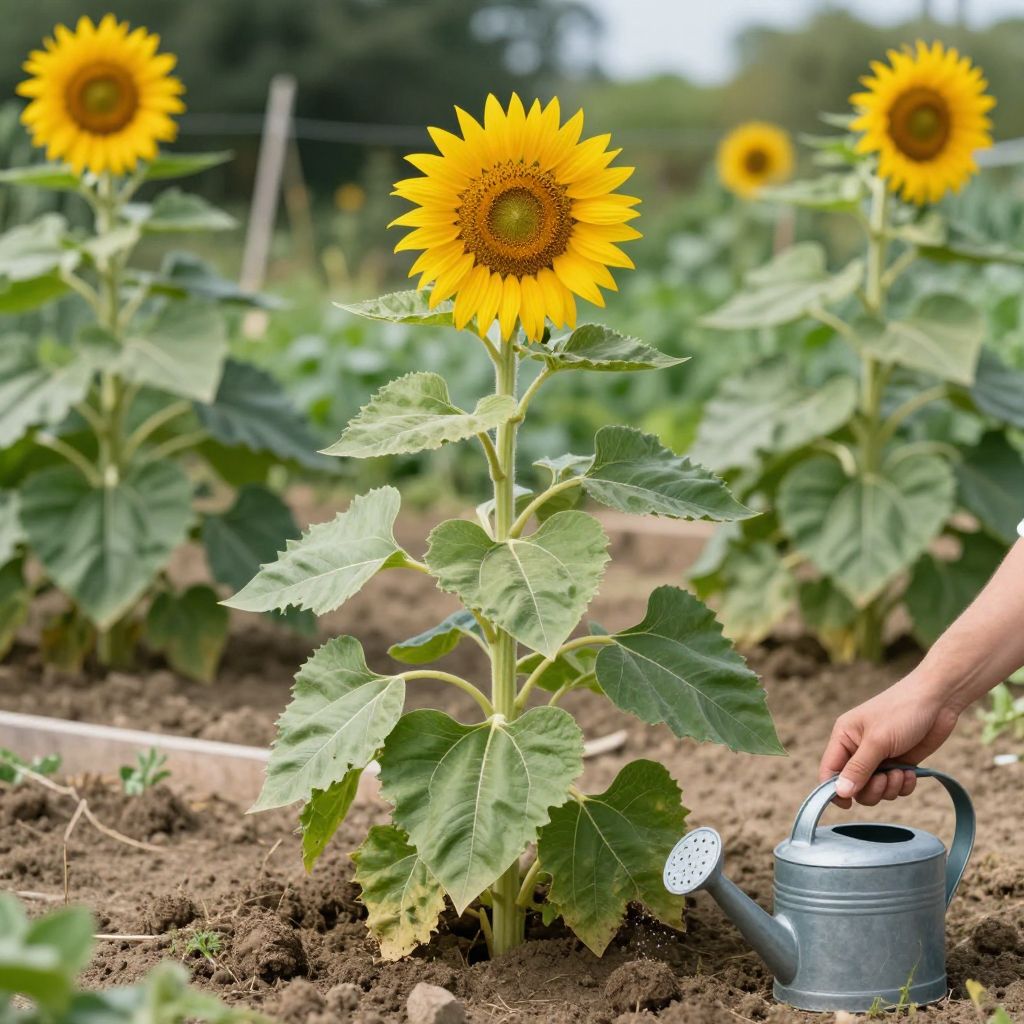
Do sunflowers need a lot of water? The short answer is: they need regular moisture while they’re getting established, but mature sunflowers are fairly drought-tolerant and usually do not need constant soaking. The key is to water deeply when the soil starts to dry, rather than keeping the ground wet all the time.
How much water they need depends on plant size, soil type, weather, and whether they’re growing in the ground or a container. If you match watering to those conditions, sunflowers grow sturdier stems, larger blooms, and fewer problems with rot or stress.
Do sunflowers need a lot of water?
Sunflowers do not need excessive water, but they do need consistent moisture during germination, early growth, and flowering. Young plants dry out quickly, especially in warm or windy weather. Once established, most sunflowers prefer deep, infrequent watering that lets the topsoil dry slightly between soakings.
How much water sunflowers actually need
There is no single schedule that fits every garden. A sunflower in sandy soil during a hot spell will need water far more often than one in rich, moisture-retentive loam during mild weather.
What “enough water” looks like
- The soil feels moist, not soggy, a few inches below the surface.
- Leaves stay firm during the day instead of drooping early.
- New growth looks healthy and upright.
- The plant is not sitting in standing water.
As a general rule, sunflowers do best with deep watering rather than frequent light sprinkling. Light watering encourages shallow roots, which makes plants more vulnerable during heat and dry weather.
Seedlings and young plants
Newly planted sunflower seeds and seedlings need the most attention. Keep the seed-starting area evenly moist until germination, then water whenever the top layer begins to dry. Young plants have smaller root systems and can wilt quickly if neglected.
Mature sunflowers
Established sunflowers are tougher than many gardeners expect. In average garden soil, they often only need supplemental watering during dry stretches, especially if rainfall is inconsistent. Taller varieties may need more water because they produce more foliage and a larger bloom.
Best watering method for healthy sunflowers
The best approach is to water slowly at the base of the plant so moisture reaches the roots. Wetting the leaves repeatedly is less helpful and can increase disease pressure in humid conditions.
- Check the soil with your finger 2 to 3 inches deep.
- If it feels dry at that depth, water thoroughly.
- Apply water at the base until the soil is moist several inches down.
- Let excess water drain away before watering again.
If you use a hose, a watering can, or drip irrigation, aim for even moisture around the root zone. A mulch layer can help hold moisture and reduce how often you need to water.
How much to water at one time
Instead of focusing on a fixed amount, watch how the soil responds. In most gardens, a thorough soaking is better than a quick splash. The goal is to moisten the root zone deeply enough that roots grow downward in search of water.
Soil, drainage, and why they matter
Sunflowers tolerate many soil types, but they perform best in well-drained soil. Poor drainage is one of the most common reasons sunflowers struggle, because roots that stay wet for too long can rot.
Ideal soil conditions
- Well-drained soil that does not stay muddy after watering or rain.
- Moderately fertile soil with some compost worked in.
- A loose texture that allows roots to spread easily.
If your soil is heavy clay, water less often and more carefully. If it is sandy, you may need to water more often because it dries out quickly. Adding compost can improve water retention in sandy soil and improve drainage in heavier soil.
How sunlight and weather affect watering
Sunflowers are true sun lovers, and full sun increases their water use. Hot afternoons, wind, and low humidity all dry soil faster, so plants may need extra watering during summer heat.
Watch for weather changes
- Hot, dry weather: water more often.
- Cool, cloudy weather: water less often.
- Windy sites: soil dries faster and young plants may wilt.
- Rainy periods: hold off unless the soil is drying out.
Container-grown sunflowers usually need the most frequent watering because pots dry out much faster than garden beds. In warm weather, a container may need daily checking.
Signs your sunflowers need water
Sunflowers usually show stress before serious damage occurs. Learning the signs helps you water at the right time instead of guessing.
Common underwatering signs
- Leaves droop or look limp in the heat of the day.
- Lower leaves yellow and dry out early.
- Flower heads or buds develop more slowly.
- Stems may look less sturdy in prolonged drought.
Some temporary drooping on very hot afternoons can be normal, especially for young plants. If the plant perks up by evening, it may be responding to heat rather than true drought stress. Check the soil before watering again.
Signs of overwatering
- Soil stays wet for days after watering.
- Leaves turn yellow and growth looks weak.
- Stems may soften near the base.
- Mold or fungus appears on the soil surface.
Overwatering is often more harmful than underwatering for sunflowers. Constantly wet soil can limit oxygen around the roots and invite disease.
Watering sunflowers in containers
Container sunflowers need closer attention than those planted in the ground. Pots heat up quickly and lose moisture fast, especially in sun and wind.
Container care tips
- Use a pot with drainage holes.
- Choose a container large enough for the mature root system.
- Check moisture daily during warm weather.
- Water until excess drains from the bottom.
If the container is small, the plant may dry out very quickly and become root-bound. Larger pots hold moisture more evenly and reduce stress.
Mulch and compost: helping soil hold the right amount of moisture
A thin mulch layer can reduce evaporation and keep roots cooler. This is especially helpful in hot climates or exposed gardens where the soil dries quickly.
Good mulch choices
- Shredded leaves
- Straw
- Fine bark mulch
- Composted plant material
Keep mulch a little away from the stem so moisture does not sit directly against the base of the plant. That helps prevent rot and discourages pests from hiding right at the stem.
Common watering mistakes to avoid
Most sunflower watering problems come from either too much water at once or too little water too often. A few simple habits can prevent both.
- Do not water on a fixed schedule without checking the soil.
- Do not keep the soil constantly soggy.
- Do not rely on shallow sprinkling alone.
- Do not let seedlings dry out completely.
- Do not ignore drainage in pots and raised beds.
Another common mistake is watering the leaves late in the day. Wet foliage can stay damp overnight, which is not ideal in humid weather.
How watering affects flowering and seed production
Sunflowers need steady moisture as they form buds and blooms. If the plant gets too dry during this stage, flowers may be smaller and seed development can be reduced.
That said, mature plants do not need to be pampered. Once they are established, a healthy sunflower can handle short dry spells better than many annual flowers. The goal is to avoid repeated stress, not to keep the soil saturated.
Troubleshooting poor growth
If your sunflowers are not thriving, watering may be part of the problem, but it is not always the only issue. Light, soil, spacing, and pests can all play a role.
If plants are wilting
- Check the soil depth before watering.
- If dry, water deeply and recheck later the same day.
- If the soil is wet, look for root stress or poor drainage.
If leaves are yellowing
- Make sure the plant is not sitting in water.
- Check for compacted soil or poor drainage.
- Look for pest damage or nutrient issues if watering seems correct.
If stems are weak
- Make sure the plant gets full sun.
- Avoid overwatering, which can encourage floppy growth.
- Stake very tall varieties if wind is a problem.
Practical care tips for stronger sunflowers
Watering works best when it is part of a simple care routine. Healthy sunflowers are easier to maintain when they have enough sun, room, and support.
- Plant in full sun for strong growth.
- Space plants so air can move around them.
- Use compost to improve soil structure.
- Water deeply during dry periods.
- Monitor containers more closely than garden beds.
If pests such as birds, slugs, or chewing insects become a problem, healthy watering will not solve everything, but it does help plants stay vigorous enough to recover from minor damage.
Conclusion: the simple rule for watering sunflowers
So, do sunflowers need a lot of water? Not usually. They need consistent moisture when young and deep watering when established, but they dislike soggy soil. Check the soil before watering, adjust for heat and container size, and keep drainage in mind. If you want stronger blooms, start by watering less often but more deeply.
If you’re growing more summer flowers, it can also help to read about how to water annuals in hot weather and the best soil mix for container plants for more practical garden care tips.