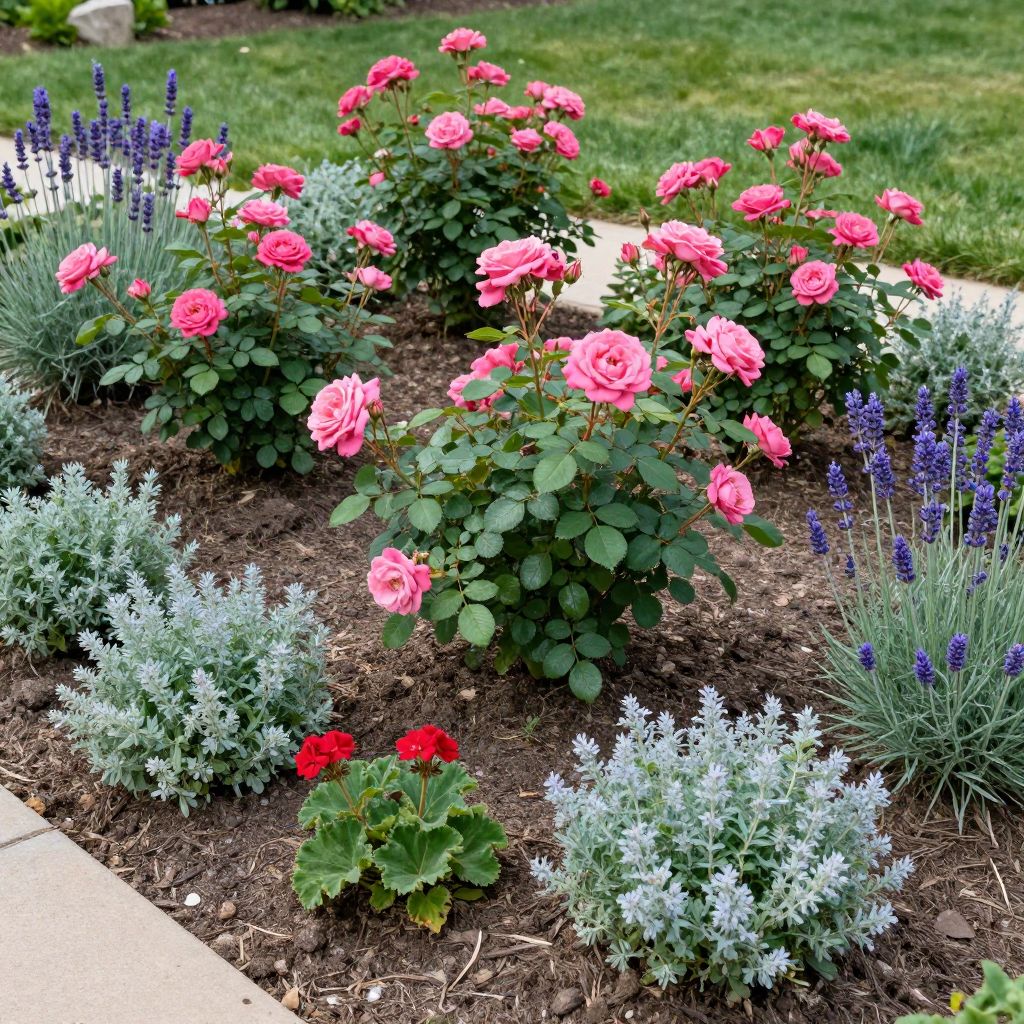
What should you plant with Knock Out roses so the bed looks full, healthy, and easy to maintain? The best companions are plants that enjoy similar sun, drainage, and moderate watering, while not crowding the roses or competing too aggressively for root space.
Good companions also help soften the rose canes, extend bloom time, and reduce the “bare ankles” look many shrub roses develop. The key is choosing plants that stay lower, tolerate bright light, and leave enough airflow around the roses to help prevent disease.
What To Plant With Knockout Roses?
Choose sun-loving, well-behaved companions such as catmint, salvia, lavender, daylilies, ornamental grasses, salvia, coreopsis, geraniums, and low-growing perennials. Keep plants 18 to 36 inches away from the rose crown, depending on mature size, so air can move freely and maintenance stays simple.
Best companion plants for Knock Out roses
The best partners for Knock Out roses are plants that thrive in full sun, tolerate average garden soil, and won’t shade the rose or tangle into its canes. Aim for a layered look: roses as the main shrub, medium-height perennials around them, and low edging plants at the front.
Perennials that pair well
- Catmint (Nepeta) — airy, drought-tolerant, and long-blooming; its soft texture contrasts beautifully with roses.
- Salvia — upright flower spikes add color and pollinator appeal without crowding the rose.
- Lavender (Lavandula) — works well in sunny, well-drained beds, especially where summers are warm and dry.
- Coreopsis — cheerful, low-maintenance color that blends well in mixed borders.
- Daylilies (Hemerocallis) — dependable foliage and seasonal bloom, especially useful for filling space behind or beside roses.
- Geraniums — hardy perennial geraniums make a tidy, weed-suppressing ground layer.
Ornamental grasses and structural plants
Ornamental grasses can make Knock Out roses look more polished by adding movement and texture. Choose clumping types rather than spreading grasses so they don’t invade the rose root zone.
- Little bluestem
- Blue fescue
- Japanese forest grass in part sun or filtered light, if your site is not intensely hot
Annuals for quick color
If you want instant impact while the roses are still filling in, annuals can bridge the gap. Use them as seasonal fillers, not permanent companions.
- Annual salvia
- Sweet alyssum at the edge of the bed
- Dusty miller for silver foliage contrast
- Zinnias in a separate sunny strip nearby, where airflow is good
How to choose the right companion plants
Before planting, think about mature size, light, water needs, and maintenance. A beautiful rose bed can fail if the companions become too tall, too thirsty, or too dense.
Match the growing conditions
- Sun: Knock Out roses bloom best in full sun, so companions should tolerate at least 6 hours of direct light.
- Soil: Use plants that like well-drained soil rather than boggy or constantly moist conditions.
- Water: Pick plants that can handle regular watering while establishing, then moderate moisture.
- Airflow: Avoid dense shrubs or sprawling plants that trap humidity around the rose foliage.
Choose plants with a similar scale
Knock Out roses are shrub roses that can become fairly wide. Avoid tiny plants that will disappear or aggressive plants that will smother the rose base.
- Use low growers in front of the rose.
- Place medium-height perennials 18 to 24 inches from the crown.
- Keep larger companions farther out so pruning access remains easy.
What not to plant with Knock Out roses
Some plants look attractive at first but create problems later. The biggest mistakes are overplanting, choosing shade lovers, or mixing in plants that spread too aggressively.
Avoid these common pairings
- Heavy shade plants such as hostas in full sun, which will struggle and may invite stress-related issues.
- Thirsty plants that need consistently wet soil, because roses prefer drainage and can suffer in soggy ground.
- Invasive spreaders that creep into the rose root zone and make pruning difficult.
- Tall, dense shrubs that block light and airflow.
- Plants with thorns or very stiff stems close to the rose, since they make deadheading and pruning awkward.
How to plant around Knock Out roses
Planting around roses is easier if you work from the outside in. Give the rose room first, then fill the surrounding space with companions that can grow without pressing against the canes.
- Clear weeds and grass from the planting area.
- Check drainage by watering the bed and seeing whether water soaks in within a reasonable time. If it puddles, improve drainage before planting.
- Mark the mature spread of the rose and leave space around it.
- Dig planting holes for companions slightly wider than their root balls.
- Set plants at the same depth they were growing in their containers.
- Backfill with native soil mixed with a modest amount of compost if the soil is poor or compacted.
- Water deeply after planting to settle the soil.
- Mulch lightly, keeping mulch a few inches away from the rose crown and stems.
Spacing tips that matter
Good spacing reduces disease and makes pruning much easier. As a general guide, leave at least 18 inches between the rose crown and smaller companions, and more for larger perennials or grasses. If your climate is humid, give even more room for airflow.
Soil, compost, and mulch for mixed rose beds
Knock Out roses do best in fertile, well-drained soil that is not constantly wet. Compost helps improve structure, but too much rich amendment can create overly soft growth or poor drainage in some soils.
How to improve the bed
- Work in compost if your soil is sandy, thin, or compacted.
- Avoid burying the rose crown too deeply.
- Use mulch to conserve moisture and suppress weeds.
- Keep mulch shallow near the base of the rose to avoid rot and pest hiding spots.
If your soil is heavy clay, focus on improving drainage rather than simply adding more compost. In very sandy soil, compost helps hold moisture long enough for both roses and companions to establish.
Watering and feeding a rose companion bed
Roses and their companions usually do best with deep, less frequent watering rather than shallow daily sprinkling. Water at the soil level when possible so foliage stays drier, especially in humid climates.
Practical watering approach
- Water newly planted companions more often until roots establish.
- Once established, water when the top few inches of soil begin to dry.
- Adjust for heat, wind, rainfall, and soil type.
- Use drip irrigation or a soaker hose if you want to keep foliage dry.
Feeding should be moderate. Overfertilizing can push soft growth that is more prone to pests and disease. If your soil is already fertile, compost and a light annual topdressing may be enough for many mixed beds.
Pruning and maintenance around companion plants
One reason to choose the right companions is to make rose care easier. Knock Out roses still need periodic pruning, deadheading if desired, and cleanup of spent or diseased foliage.
Keep the bed accessible
- Leave room to reach the rose from all sides if possible.
- Use low edging plants that do not block pruners.
- Trim companions if they start leaning into the rose canopy.
- Remove fallen leaves and debris to reduce disease pressure.
In late winter or early spring, prune the roses according to your climate and plant size. Then cut back companion plants as needed so new rose growth is not crowded by old stems or dead foliage.
Pests, diseases, and how companions can help
Companion planting will not prevent every rose problem, but the right layout can reduce stress. Airflow, sunlight, and clean spacing are your best defenses against common issues such as black spot, powdery mildew, aphids, and Japanese beetles.
Ways to reduce problems
- Do not overcrowd the bed.
- Avoid overhead watering late in the day.
- Remove diseased leaves promptly.
- Choose companions that do not create a dense, humid thicket.
- Inspect new plants before adding them to the bed.
Some gardeners like to include nectar-rich flowers such as salvia or catmint to attract beneficial insects. That can help create a more balanced garden, but it is not a substitute for good sanitation and proper spacing.
Design ideas for different garden styles
You can plant Knock Out roses in formal beds, cottage-style borders, or simple foundation plantings. The best companion choice depends on the look you want and how much maintenance you are willing to do.
Simple and low-maintenance
Pair roses with catmint, lavender, and a clump of ornamental grass. This creates a clean, drought-tolerant look with minimal fuss.
Soft and colorful
Use salvia, coreopsis, and hardy geraniums for a loose, pollinator-friendly border that blooms over a longer season.
More structured
If you want a neater landscape bed, use repeated drifts of one or two companion plants instead of mixing too many varieties. Repetition makes the planting look intentional and easier to maintain.
Common mistakes to avoid
- Planting too close to the rose crown.
- Choosing companions that need shade or constant moisture.
- Letting aggressive plants invade the root zone.
- Using thick mulch piled against the stems.
- Ignoring mature size and ending up with a crowded bed.
- Overfeeding, which can create lush but weak growth.
Conclusion
When deciding what to plant with Knock Out roses, choose sun-loving companions that stay tidy, allow airflow, and share similar soil and water needs. Start with one or two reliable perennials, space them generously, and keep the rose base open for easy care. If you want more help planning a balanced flower bed, consider reading more about garden planning basics and perennial planting and spacing.